

PM pulled out of deal for demilitarized Palestine, shared Jerusalem, in 2011
Peres — acting with Netanyahu’s support — was set to finalize framework with Abbas when PM changed his mind, sources say; PMO denies account

 Add ToI as a Preferred Source on Google
Avi Issacharoff, The Times of Israel's Middle East analyst, fills the same role for Walla, the leading portal in Israel. He is also a guest commentator on many different radio shows and current affairs programs on television. Until 2012, he was a reporter and commentator on Arab affairs for the Haaretz newspaper. He also lectures on modern Palestinian history at Tel Aviv University, and is currently writing a script for an action-drama series for the Israeli satellite Television "YES." Born in Jerusalem, he graduated cum laude from Ben Gurion University with a B.A. in Middle Eastern studies and then earned his M.A. from Tel Aviv University on the same subject, also cum laude. A fluent Arabic speaker, Avi was the Middle East Affairs correspondent for Israeli Public Radio covering the Israeli-Palestinian conflict, the war in Iraq and the Arab countries between the years 2003-2006. Avi directed and edited short documentary films on Israeli television programs dealing with the Middle East. In 2002 he won the "best reporter" award for the "Israel Radio” for his coverage of the second intifada. In 2004, together with Amos Harel, he wrote "The Seventh War - How we won and why we lost the war with the Palestinians." A year later the book won an award from the Institute for Strategic Studies for containing the best research on security affairs in Israel. In 2008, Issacharoff and Harel published their second book, entitled "34 Days - The Story of the Second Lebanon War," which won the same prize.
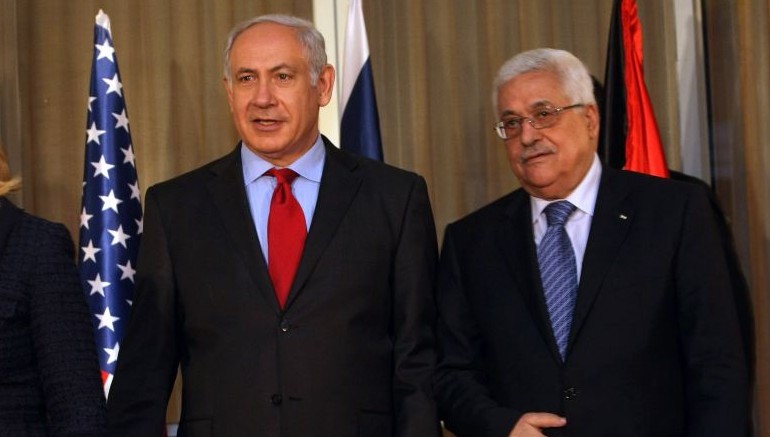
In the summer of 2011, then-president Shimon Peres and Palestinian Authority President Mahmoud Abbas were close to reaching a framework agreement that would have enabled Israel and the PA to restart peace negotiations, Israeli and Palestinian sources told The Times of Israel.
In conversations in various European capitals and in Amman over the course of a year, the two reached far-reaching informal understandings, with the knowledge and support of Prime Minister Benjamin Netanyahu.
But according to numerous Israeli and Palestinian sources, on July 28 of that year, right before an important meeting between Peres and Abbas in which the president was due to present the PM’s formal authorization of the understandings, Netanyahu backtracked and pulled his support for the initiative.
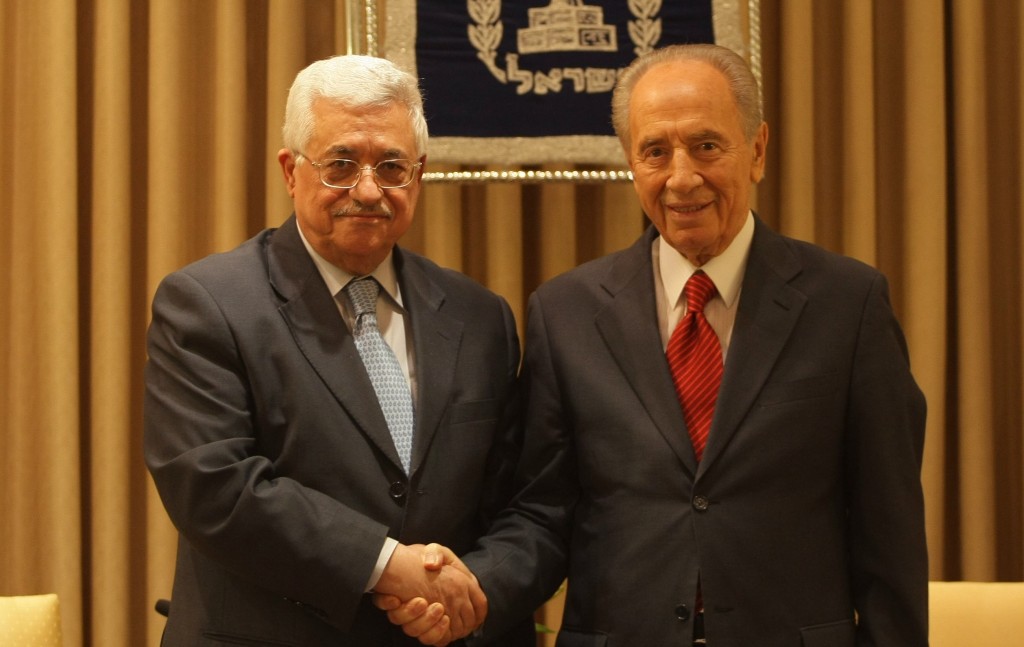
Abbas, who was en route to Amman at the time, turned back to Ramallah following a conversation with one of Peres’s aides.
The general framework reached by Peres and Abbas — with Netanyahu’s support — held the following key points, not dissimilar to the framework that US Secretary of State John Kerry sought to finalize last year:
* The creation of a demilitarized Palestinian state alongside Israel, based on the 1967 lines with equal land swaps.
* Jerusalem would be the shared, open capital of both countries, with the Palestinian neighborhoods under Palestinian sovereignty and the Jewish neighborhoods under Israeli sovereignty.
* A mutually agreed, just solution to the Palestinian refugee issue would be found.
In the course of the negotiations, the Palestinians showed significant flexibility on the refugee issue but refused to budge on the holy sites in Jerusalem. It was decided to leave the issue of the status of Jerusalem’s “Holy Basin” for negotiations on a future permanent agreement.
According to senior Palestinian officials, the PA suggested the refugees be presented with four options: (1) to remain where they were, with a compensation package; (2) to move to a third country in addition to compensation; (3) to return to a Palestinian state based no the 1967 lines; (4) and to “return” to Israel, subject to the approval of the Israeli government.
There are an estimated 5,000,000 registered refugees as defined by the United Nations Relief and Works Agency, the UN body set up in 1949 to provide humanitarian aid to the Arabs who fled or were expelled during the 1948 War of Independence. That figure includes the descendants of the original estimated 720,000 who left. UNRWA defines a Palestinian refugee as a person “whose normal place of residence was Palestine between June 1946 and May 1948, who lost both their homes and means of livelihood as a result of the 1948 Arab-Israeli conflict.”
The officials said Abbas proposed to let Israel decide each year how many refugees it would allow in. (In later negotiations, Abbas requested that Israel absorb 10,000 Palestinian refugees per year for 15 years, a total of 150,000.)
Abbas was ready to agree to a clause that would indicate a mutual end of claims, and an end of conflict, contrary to statements made by various figures in the Israeli right that he had refused to do so.
The Prime Minister’s Office told The Times of Israel in response that “the prime minister never agreed” to any of the points described above.
Peres’s office refused to comment.
The full story will be published on Friday.






The Times of Israel Community.