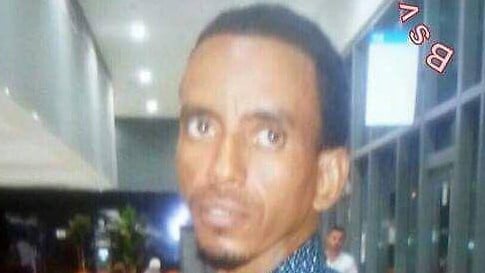
Haftom Zarhum, 29, died of his wounds on October 19, 2015, a few hours after he was shot and beaten by a mob that mistook him for an assailant in the terror attack in Beersheba on October 18, 2015. (Courtesy)
Israel Police are planning further arrests in the brutal beating of an Eritrean man who was mistaken by Israeli security forces for a terrorist during an attack on October 18 at the Beersheba bus station.
Haftom Zarhum, aged 29, died in the hospital after he was shot by a security guard who thought he had just taken part in a terror attack that left an Israeli soldier dead and another 11 people wounded. While writhing on the floor, he was repeatedly beaten by an enraged mob.
According to the Hebrew-language Walla website, those summoned for questioning include two IDF soldiers and an Israeli civilian who are shown on security camera footage beating Zarhum as he lay on the ground. The military police are involved in the investigation into the beating.
Four suspects in the attack, including two members of the Israel Prison Service, were arrested by police Wednesday for aggravated assault. The four were released on bail Thursday and have been banned from making contact with one another.
Pathologists determined the cause of his death was internal bleeding from a gunshot wound, not the repeated blows to the head he subsequently suffered.
Get The Times of Israel's Daily Editionby email and never miss our top stories
The head of the Israel Prison Service condemned the alleged actions of its employees, saying that “violence contradicts the values of the organization.”
A graphic video posted on the Channel 10 website showed the severity of the attack on Zarhum, with a number of people — including the two soldiers — repeatedly kicking him in the head as a bus driver tries to protect him.
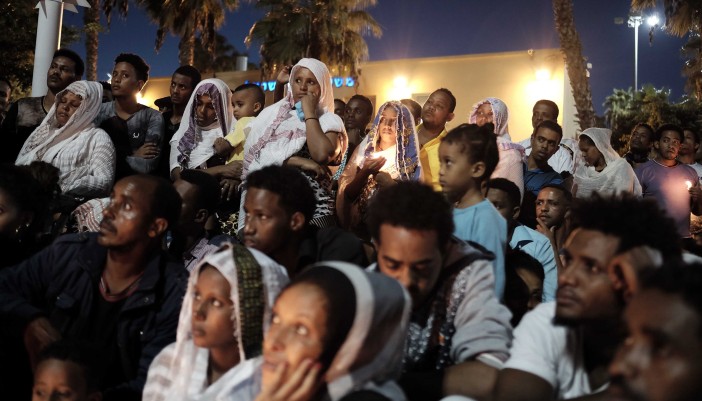
Hundreds attend a memorial ceremony for Haftom Zarhum from Eritrea, held by the Eritrean asylum seekers community in southern Tel Aviv, on October 21 2015. (Tomer Neuberg/Flash90)
Raoul Wootlif contributed to this report.
We can't do this work alone.
The war with Iran has been draining for all of us in Israel. But when I heard about a high casualty incident – ballistic missile impacts in Arad and Dimona that left nearly 200 people wounded – I drank a cup of coffee, packed a bag, and headed south.
There, I spoke with Shilgit, the head of an after-school program for underprivileged youth. Standing outside her destroyed center, Shilgit said it was a miracle that no children were hurt and spoke about the community coming together in the hours since.
As a Times of Israel reporter, I’m committed to telling stories of resilience like Shilgit’s. But my colleagues and I can't do this alone. If you value work like this,please consider joining our reader support group, The Times of Israel Community. Your financial support is essential to keep real human reporting like this going.
We’re really pleased that you’ve read X Times of Israel articles in the past month.
That’s why we started the Times of Israel - to provide discerning readers like you with must-read coverage of Israel and the Jewish world.
So now we have a request. Unlike other news outlets, we haven’t put up a paywall. But as the journalism we do is costly, we invite readers for whom The Times of Israel has become important to help support our work by joining The Times of Israel Community.
For as little as $6 a month you can help support our quality journalism while enjoying The Times of Israel AD-FREE, as well as accessing exclusive content available only to Times of Israel Community members.
Thank you, David Horovitz, Founding Editor of The Times of Israel