Qatar emir decries ‘unprecedented’ campaign against country hosting soccer World Cup
Sheikh Tamim bin Hamad al-Thani says his Gulf state had been targeted by ‘fabrication and double standards’; controversial tournament set to kick off November 20
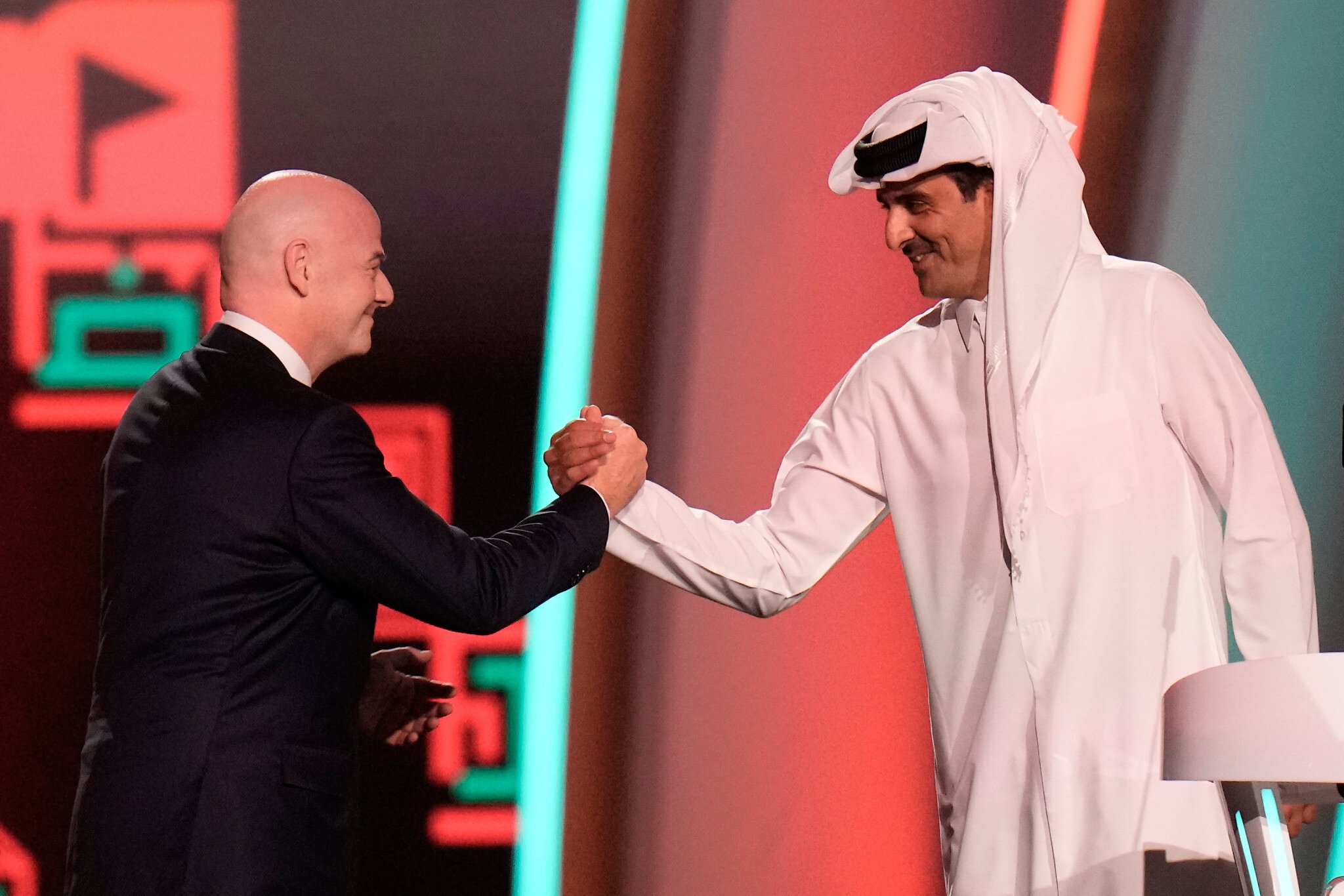
FIFA President Gianni Infantino, left, and Emir of Qatar Sheikh Tamim bin Hamad Al Thani shake hands before the 2022 soccer World Cup draw at the Doha Exhibition and Convention Center in Doha, Qatar, April 1, 2022. (AP Photo/Hassan Ammar)
DOHA, Qatar — Qatar has been hit by an “unprecedented campaign” of criticism over preparations for the soccer World Cup, its ruler Sheikh Tamim bin Hamad al-Thani said Tuesday.
“Since we won the honor of hosting the World Cup, Qatar has been subjected to an unprecedented campaign that no host country has ever faced,” the emir said in a speech.
FIFA awarded the World Cup to Qatar in 2010 and it has since spent tens of billions of dollars on preparations.
But the energy-rich Gulf state has faced constant scrutiny over its treatment of foreign workers as well as LGBTQ and women’s rights.
“We initially dealt with the matter in good faith, and even considered that some criticism was positive and useful, helping us to develop aspects of ours that need to be developed,” the emir told Qatar’s legislative council.
Get The Times of Israel's Daily Editionby email and never miss our top stories
“But it soon became clear to us that the campaign continues, expands and includes fabrication and double standards, until it reached an amount of ferocity that made many question, unfortunately, about the real reasons and motives behind this campaign,” he said.
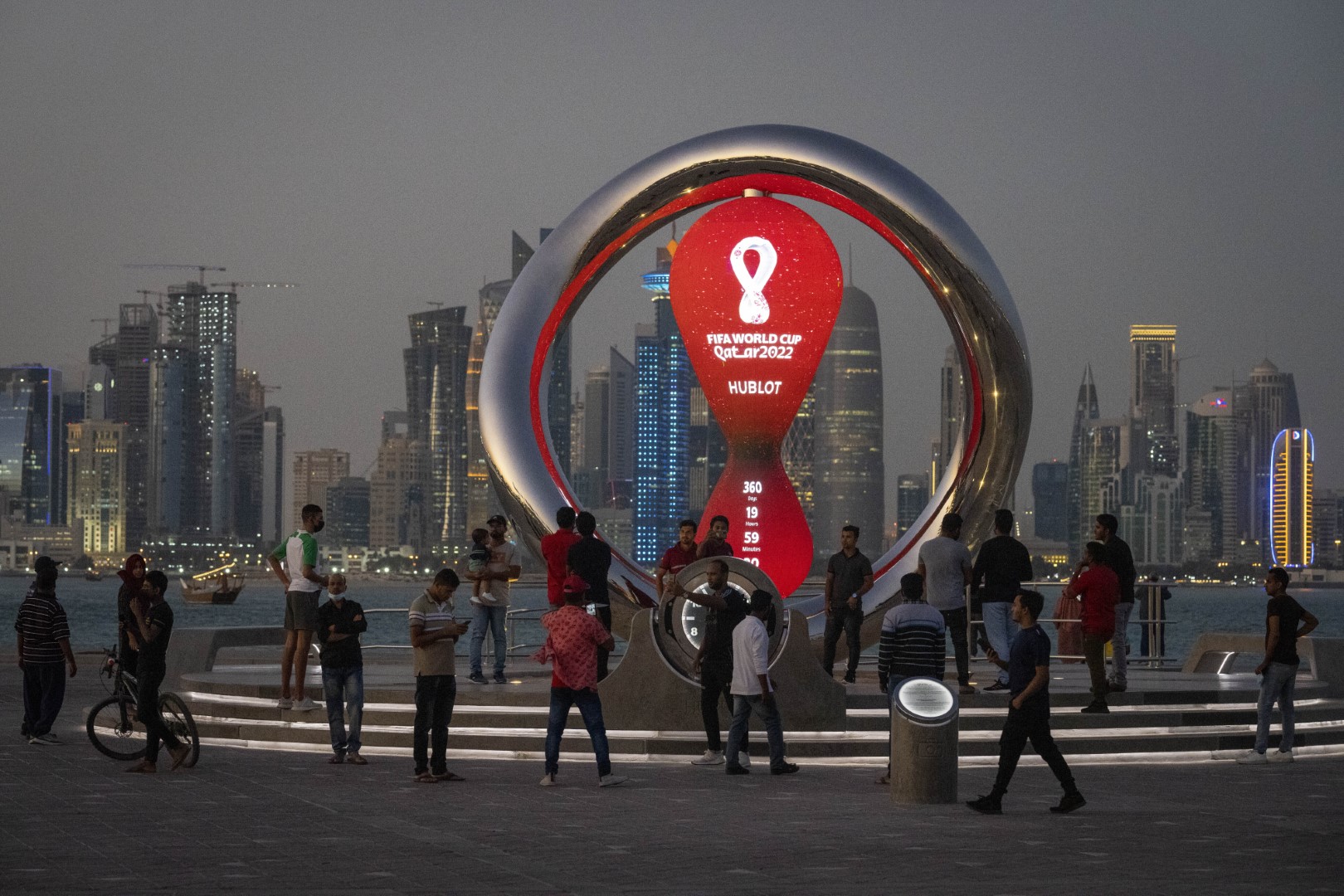
People gather around the official countdown clock showing remaining time until the kick-off of the World Cup 2022, in Doha, Qatar, November 25, 2021. (AP Photo/Darko Bandic, File)
FIFA president Gianni Infantino has said the Qatar World Cup, the first in an Arab nation, will be the “best ever.”
Advertisement
Help us report truthfully on social media
As a multimedia journalist, my job is to take the quality, fact-based journalism produced by The Times of Israel newsroom and make it accessible across every platform — from Instagram posts to podcasts to short-form videos.
This is how many, especially young people, consume news these days. But misinformation is rampant on social media. Our team at ToI produces accurate, responsible short-form reporting on Israel and the Jewish world.
If you believe in the importance of factual social media journalism, please consider joining our reader support group, The Times of Israel Community. Your financial support is essential to sustain responsible multimedia reporting.
We’re really pleased that you’ve read X Times of Israel articles in the past month.
That’s why we started the Times of Israel - to provide discerning readers like you with must-read coverage of Israel and the Jewish world.
So now we have a request. Unlike other news outlets, we haven’t put up a paywall. But as the journalism we do is costly, we invite readers for whom The Times of Israel has become important to help support our work by joining The Times of Israel Community.
For as little as $6 a month you can help support our quality journalism while enjoying The Times of Israel AD-FREE, as well as accessing exclusive content available only to Times of Israel Community members.
Thank you, David Horovitz, Founding Editor of The Times of Israel


 Add ToI as a Preferred Source on Google