

Rivlin: Segregating West Bank buses ‘unthinkable’
President attacks now-canceled idea that would have kept Palestinian laborers off Israeli buses
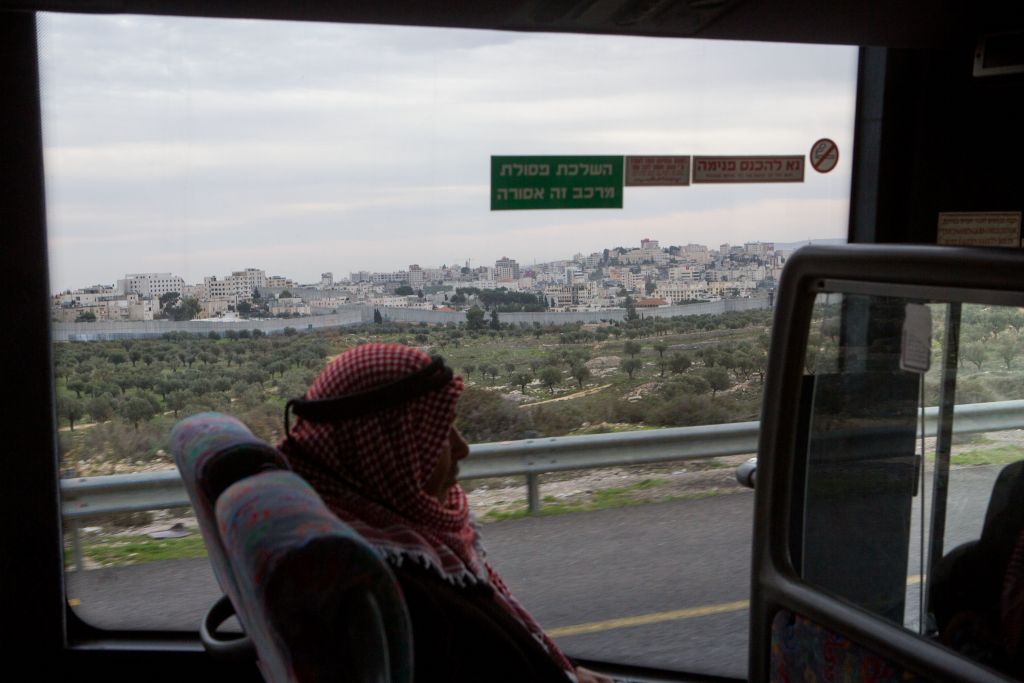
President Reuven Rivlin came out firmly Wednesday against a plan that would have prevented Palestinians from traveling on Israeli bus lines in the West Bank Wednesday, saying the idea, now shelved, would be unthinkable.
Rivlin said a suspected vehicular terror attack in Jerusalem earlier in the day could not be used as justification to undermine Israeli democracy.
In speaking out, the president joined a chorus of politicians from across the political spectrum who criticized a three-month pilot project, approved Tuesday by Defense Minister Moshe Ya’alon, that would have disallowed Palestinians with work permits from using Israeli buses to reenter the West Bank.
“As we witnessed the terror attack in Jerusalem we received a painful reminder of the complex security situation Israel faces and the price we pay for our basic principles. We must confront terrorism firmly, while defending our democratic values as a country and as a people,” Rivlin said in a statement.
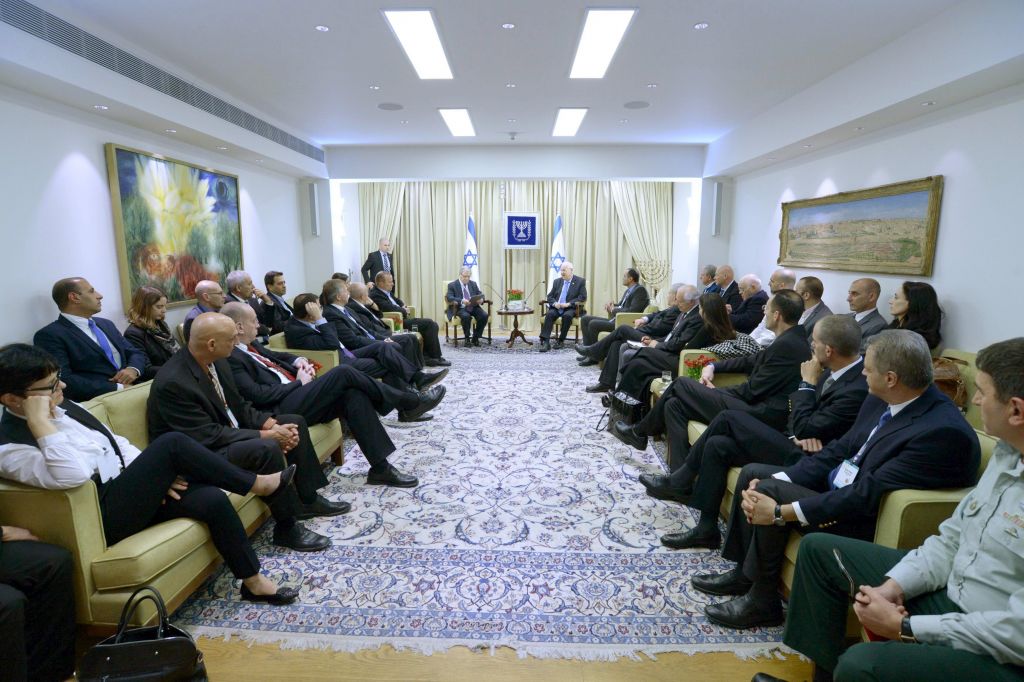
“I spoke this morning with the defense minister, and I welcomed halting the process that could have led to an unthinkable separation between bus lines for Jews and Arabs,” he said.
The comments came about an hour after Prime Minister Benjamin Netanyahu put a halt to the plan, following the outcry.
“The proposal is unacceptable to the prime minister. He spoke with the defense minister this morning and it was decided that the proposal will be frozen,” an official in Netanyahu’s bureau told AFP.
Under the pilot project, Palestinian laborers entering Israel for work would have had to go through one of five Israeli checkpoints and then return home through the same checkpoint they entered. The move would have effectively barred them from boarding Israeli buses traveling from central Israel, where they work, to the settlements of Samaria, or the northern West Bank, near to laborers’ homes, because the buses do not stop at those checkpoints.
“The division between Palestinians and Jews on public transportation is an unnecessary humiliation and a stain on the face of the state and its citizens,” opposition leader Isaac Herzog wrote on his Facebook page. “It would be better to avoid measures that unnecessarily damage the name and image of the State of Israel at such a sensitive time. Israel needs at this time considerate and responsible leadership.”
Yesh Atid party chairman Yair Lapid said the plan had already given Israel a black eye in the international arena.
“It’s good that the prime minister canceled this scandalous decision, but you cannot imagine the damage that’s been done to us abroad. Every network in the world is reporting on Israel as if we are implementing this segregation.”
Rivlin was not the only voice from the Israeli right wing to come out against the decision.
Notably, among the critics was Gideon Sa’ar, a former senior minister from Netanyahu’s Likud party who retired from politics last year.
Sa’ar said in a tweet that the decision was “wrong, and causes great damage to the settlement [project] in Judea and Samaria and to Israel’s image abroad.”
Rivlin, a member of the Likud party and once characterized as a political hawk, has become known for his efforts since the beginning of his presidency to build bridges between Israel’s Jews and Arabs.
He has criticized former foreign minister Avigdor Lieberman’s plan to transfer Arab towns to a Palestinian state, critiqued Jews and Arabs for not interacting enough, and took part in a ceremony to mark the 58th anniversary of the Kfar Kassem massacre.
“As one who loves the Land of Israel, I have nothing but regret for the discordant voices that we heard this morning, supporting the separation between Jews and Arabs on the basis of ideas that have no place being heard or said,” Rivlin continued in his statement.
“Such statements go against the very foundations of the State of Israel, and impact upon our very ability to establish here a Jewish and democratic state. Such statements cause great damage to the State of Israel, and to the settlement movement. It is important we remember that our sovereignty obligates us to prove our ability to live side by side.”
In October, Defense Minister Moshe Ya’alon defended his plan to the Knesset.
“I have not prohibited Arabs in Judea and Samaria from traveling on public transportation and have no intention to do so,” Ya’alon said, but added that “you don’t have to be a security expert to realize that when you have 20 Arabs in a bus driven by a Jew, and maybe two or three other [Jewish] passengers and a soldier carrying a weapon, you are guaranteed a terror attack.”
Separate transportation systems for Israelis and Palestinians existed in the northern West Bank up until four years ago, when Major General Nitzan Alon, then commander of the Judea and Samaria Division and former head of the IDF’s Central Command, deemed it safe for Israelis and Palestinians to travel together. Ever since, settler organizations in Samaria have been fighting the decision through demonstrations and government lobbying.
“Over the past three years they’ve occupied the buses, not out of malice. They’ve scared away the Jews for whom this bus service was created,” Ofer Inbar, a spokesman for the Samaria Settlers’ Committee, told The Times of Israel at a demonstration last September, referring to the Palestinian workers.
Israeli politicians on Wednesday blasted the decision as racist, comparing it to the segregation laws separating whites and blacks in apartheid South Africa.
“The only reason for separating Jewish and Palestinian buses is pure racism, a victory for the violent campaign by the Samaria settlers in recent years not to be ‘contaminated’ through traveling with Arabs,” Meretz chairwoman Zahava Gal-on wrote on her Facebook page, posting a photograph of a sign in apartheid South Africa indicating, in English and Afrikaans, separate bathrooms for “whites and non-whites.”
MK Zoheir Bahloul, an Arab member of the Zionist Union, said the new rules were humiliating for Palestinians like himself.
“Since this is the continuation of a process of racial separation and segregation, I fear we are not far from the day when it will seep into [Israel]. One of the representatives here in Knesset may separate me and transport me in buses marked ‘Arabs only.’ What would that be if not South Africa during the good old days?” he said in a press statement.
Saeb Erekat, a chief Palestinian negotiator, said the Netanyahu government was creating “an apartheid regime” through the decision.






The Times of Israel Community.