

At West Bank rally, settlers demand Palestinian-free buses
Citing rising Arab nationalism and sexual harassment, Jewish residents of Samaria reject ‘racist’ label
 Add ToI as a Preferred Source on Google
Elhanan Miller is the former Arab affairs reporter for The Times of Israel
![Ariel resident Ilanit Sheik holds a sign reading ironically "not letting Arabs on the bus is racism, not letting Israelis on the bus is not racism," September 4, 2014 [photo credit: Elhanan Miller/Times of Israel]](https://static-cdn.toi-media.com/www/uploads/2014/09/2014-09-04-17.32.47-e1410086378676.jpg "Ariel resident Ilanit Sheik holds a sign reading ironically \"not letting Arabs on the bus is racism, not letting Israelis on the bus is not racism,\" September 4, 2014 [photo credit: Elhanan Miller/Times of Israel]")
ARIEL, West Bank — “Don’t focus on us, look over there!” cried Ilanit Sheikh, pointing excitedly at a row of Palestinian laborers who had just alighted from an Israeli bus and were making their way to a nearby village. “Imagine forty of them and one soldier on a bus.”
Sheikh was among some two dozen residents of Ariel gathered at an intersection outside the West Bank city on Thursday evening to protest the fact that the IDF had given permission for Palestinian laborers to travel on public buses to and from central Israel.
In the past, Palestinian laborers did not ride the same buses as did Samaria settlers to get to work. But that changed three years ago, when Major General Nitzan Alon, then commander of the Judea and Samaria Division and now head of the IDF’s Central Command, decided to do away with the separate transportation systems and allow the Palestinians to ride alongside Israelis, said Ofer Inbar, a spokesman for the Samaria Settlers’ Committee.
“Over the past three years they’ve occupied the buses, not out of malice. They’ve scared away the Jews, for whom this bus service was created,” Inbar told The Times of Israel. “People are scared to travel on these buses next to their neighbors who don’t exactly love them.”
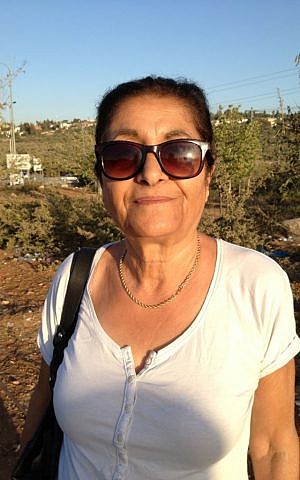
Yael Sip, a 20-year resident of Ariel who works as a typist in Ramat Gan, complained of overcrowded buses that often don’t stop for her at rush hour, and of sexual harassment by Palestinians, mostly directed at young Jewish women. Sip insisted she was not a racist but she thought the Palestinians should get “their own bus lines to work and back.”
“The ride is a real nightmare,” she said. “They take up entire seats at the front. I’m not willing to sit next to them, I’m scared. We have no security; they messed with my daughter once. Girls have gone to the police to file complaints. One day they’ll blow up a bus, and then what?”
Sip said her daughter once sat next to a Palestinian who said she could rest her head on his shoulder. Feeling uncomfortable, she got up and sat on the bus steps.
“It’s madness. Young girls stand at the bus stop and won’t get on if they see an Arab driver. They’ll wait to see a Jew and then get on.”
Benny Katzover, head of the Samaria Settlers’ Committee, said that public transportation from Ariel to Tel Aviv and its suburbs is subsidized by the state in order to discourage hitchhiking, which is considered a security threat. For over 20 years, Dan, another Israeli bus company, had provided transportation services for Palestinian day laborers, picking them up from a roadblock in Samaria and dropping them off in their workplaces within the Green Line. Katzover would like to see that arrangement restored.
While the problem of crowded buses was mitigated six months ago when Transportation Minister Yisrael Katz increased the frequency of buses to the area, the security threat remains of prime concern to Jewish commuters, he said.
“Jews are wary of traveling on buses full of Arab workers from Judea and Samaria,” Katzover said. “A large number of them support terror. No one knows when one of them may pull out a knife for this or that reason… your average good Jew is scared to travel.”
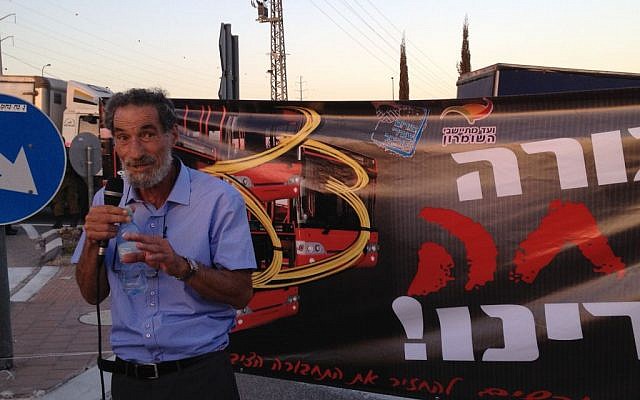
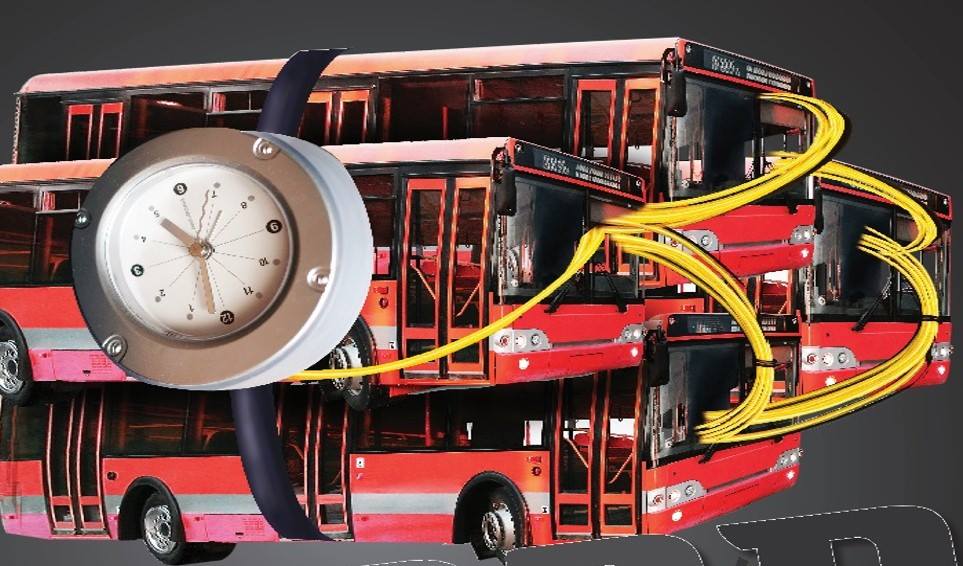
Katzover, who founded the Jewish settlement in Hebron following the 1967 Six Day War and led Jewish communities in Samaria since the 1970s, noted that his organization had recently published a video of some 40 Palestinian laborers stepping off a bus near Ariel with only one “brave” Jewish woman who “dared” ride the bus. He cited a recent Palestinian poll indicating that 60 percent of West Bank residents support Hamas’s Ismail Haniyeh as prime minister.
“Nationalistic chants directed at Jewish bus drivers have increased since the end of Operation Protective Edge. Since Hamas declared victory they feel like they’ve won.”
“What parent would allow his daughter to travel on a bus full of Arabs?” he mused.
For Katzover, the IDF decision to allow Palestinians on the buses was not a question of pragmatics, but a politically motivated move to harm Jewish settlers in Judea and Samaria.
“They’ve been looking for ways to weaken us, to harass us,” he told the crowd in his speech. Central Command chief Nitzan Alon has “more than once acted in ways that we deemed militarily unprofessional and motivated by his worldview,” Katzover added diplomatically. The IDF spokesman’s office would not comment on Katzover’s allegations.
Like Yael Sip, Katzover denied that the demonstration he organized was essentially racist.
“All allegations of racism or apartheid are patently false,” he said. “Take the Barkan industrial zone [west of Ariel], which has 10,000 workers, half of them Arabs. Everything can be worked out. We have a glorious university [in Ariel] with many Arab students who use the buses; never have any complaints been voiced against them.”
Hilla Nacson, 27, a native of Ariel who physiotherapy at the local university, said she came to the demonstration despite believing that claims of harassment were exaggerated.
“I use the buses on a daily basis and never have I come across altercations with Palestinians, but I do think there should be [security] screening at the entrance to the buses. I have no way of knowing if the guys boarding the buses have [Israeli entry] permits or not… I’m sure many illegals get on.”
It would be wrong to completely ban Palestinian laborers from the buses, Nacson added. “After all, they work here; we can’t expect them to hitchhike or something like that.”
Segregation, Nacson admitted, could not be a model for the State of Israel, which would ideally include Judea and Samaria.
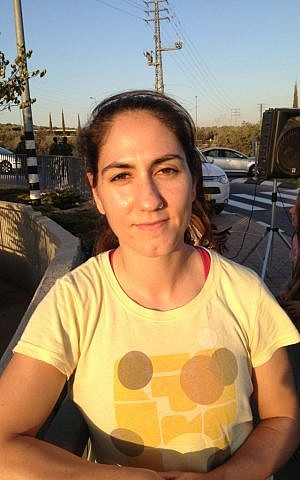
“I would like the entire Eretz Israel (land of Israel) to be ours, the Jews, alone, and not have any Palestinians. But as long as there are Palestinians they need to go through very rigorous screening which would subject them to the rights and duties of any citizen, like army or civil service. They need to feel like equals in order for there to be coexistence. Though I’d rather they weren’t here.”
Nacson was aware of the paradox in the demonstration. It was Israel, she said, which needed the daily influx of Palestinian laborers for its economy no less than the laborers who want to make a living.
“It’s not only their need to travel [on the buses]; we pretty much live off these guys. They go work in factories, in construction. Jews don’t work in construction or in factories. Who will work there? Excuse me, but who will work in cleaning?”
As the demonstration drew to a close, Nacson crossed the street to buy an ice cream cone at Abed’s, a Palestinian minimarket at the intersection.
“Everyone here talks of separation and then they go shopping at Abed’s or Abul-Ali’s. It’s absurd,” she said.




The Times of Israel Community.