

Obama sold the Sunnis down the river, Saudi media say
Gulf states are prepared to ‘go it alone’ against Iran if need be, writes prominent Arab journalist
 Add ToI as a Preferred Source on Google
Elhanan Miller is the former Arab affairs reporter for The Times of Israel
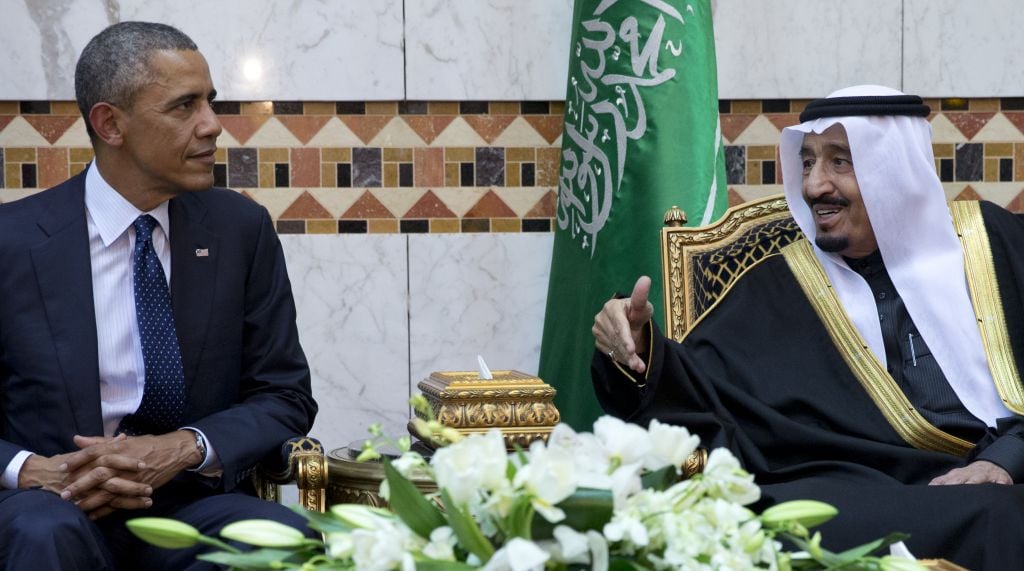
Saudi officials may have been masking their dismay over the framework nuclear agreement reached last week in Switzerland between world powers and Iran, but the kingdom’s official media outlets are expressing a sense of betrayal loud and clear.
“Gulf states — and especially Saudi Arabia, the Emirates, Qatar, Kuwait and Bahrain — have been experiencing the nightmare of an Iranian attack for decades,” the former editor-in-chief of Saudi-owned daily A-Sharq Al-Awsat, Abdul Rahman Rashed, wrote in an op-ed titled “Iran vs. Saudi Arabia” on Monday. “Now, after the nuclear agreement, there is no doubt that the danger has doubled. People are angry with the Obama administration for selling this region cheaply. He left it to its own devices to face an evil state.”
US President Barack Obama’s vague recent promise to defend Saudi Arabia’s borders from possible Iranian aggression requires better clarification, Rashed insisted.
“As long as the Americans don’t explicitly state their commitment to defend Saudi Arabia from Iran and Iraq, we will face large-scale regional anarchy as a result of the nuclear deal,” he asserted. “The Iranians are claiming that Obama is uninterested in the security of the Gulf and his American allies in the region. This Iranian thinking will lead to more regional wars.”
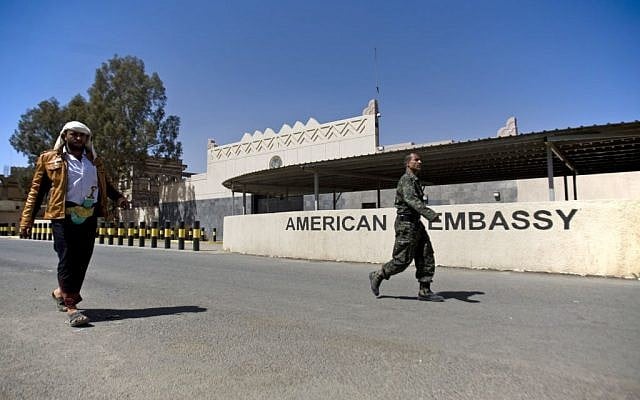
By regional wars, Rashed was referring primarily to the Shiite Huthi insurgency in Yemen, believed to be politically backed and funded by Iran. Saudi Arabia is leading a Sunni Arab coalition in a campaign of aerial strikes against Huthi strongholds across the country.
Frustrated with America’s perceived weakness, Rashed threatened that Gulf Arabs could “go it alone,” but at a terrible cost.
‘Iran’s wars were always against Gulf states; not against Israel,’ wrote Rashed
“Saudi Arabia, together with four Arab states — the Emirates, Qatar, Kuwait and Bahrain — are able, if need be, to confront Iran. But such a war will be very costly, leading to anarchy and destruction. People are angry with the Obama administration because it has limited the conflict to the nuclear issue, while Tehran continues to mull further geographic gains. Iran’s wars were actually always against Gulf states; not against Israel.”
Iran has actually been emboldened even before the agreement was signed merely by its negotiating posture, argued Ghassan Charbel, the editor-in-chief of Al-Hayat, the London-based Saudi-owned liberal newspaper of record.
“In the shadow of the latest round of nuclear negotiations, Iran has launched the most dangerous episode of its regional onslaught, namely the Houthi revolution, which has reached the borders of Aden and [the strait of] Bab el-Mandeb,” wrote Charbel in Al-Hayat’s apocalyptic editorial Monday, titled “It is a regional battle.”
“Perhaps [Iran] relied on three things: first, Obama’s reluctance to take a firm position that would hamper negotiations. Second, that Saudi Arabian anger would not reach the point of deciding to go to war. And third, that Egypt and Turkey’s resolve would not match Saudi Arabia’s.”
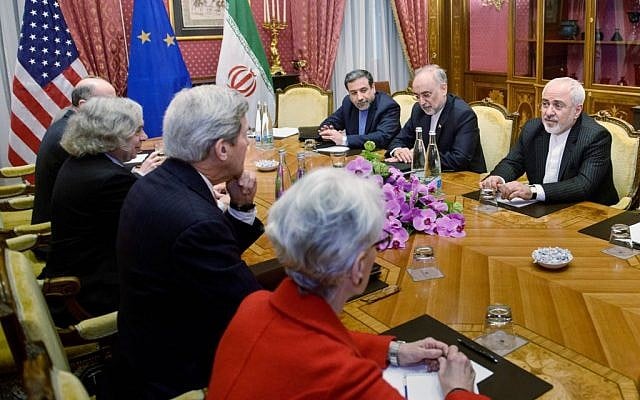
“It is a regional battle,” Charbel concluded. “It is too early to predict how the ramifications of the nuclear deal will affect it. Experience has shown that the international management of the region is lacking, poor, or transitional. Regional players can make the big ones face new facts.”
One of those regional players, King Salman of Saudi Arabia, met on Sunday in Riyadh with another, the president of Azerbaijan, Ilham Aliyev, Iran’s northern neighbor and an ally of Israel. According to a cryptic report by the official Saudi news agency, the two leaders “discussed developments in the region and the world.”
Indeed, an op-ed published Monday in the Saudi daily al-Watan clearly demonstrated that self-reliance is the new name of the game for Gulf Arabs, led by Saudi Arabia.
‘America and Iran both know that objections by Congress, Israel or Iran to the agreement signed are worthless, since the agreement touches on Arab and Gulf national security’
“America and Iran both know that objections by Congress, Israel or Iran to the agreement signed are worthless, since the agreement touches on Arab and Gulf national security,” wrote columnist Ahmad al-Ghaz. “The world has clearly witnessed how Iran has violated Arab states, declaring its control of four Arab capitals, after having kidnapped the Palestinian cause by supporting the political divide [between Fatah and Hamas].”
“Obama… has allowed these states to crumble and collapse without lifting a finger, under the slogan of ‘protecting [the nuclear] negotiations.’ Now, the Arabs will no longer allow the American silence to continue in the face of Iran’s tampering with the security of Arab nations,” he concluded.







The Times of Israel Community.