

Showdown looms between Russia, West over Syria chemical weapons probe
Countries to vote Wednesday on annual budget of international watchdog, with Moscow threatening to cut funding if it includes money for team probing Assad attacks
 Add ToI as a Preferred Source on Google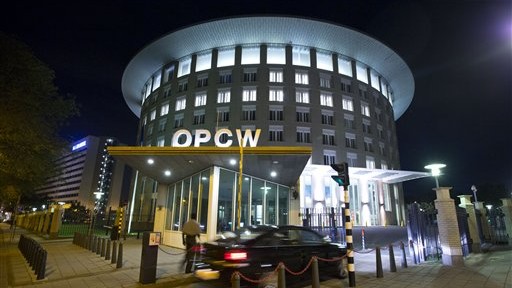
THE HAGUE, Netherlands (AFP) — Russia and the West are braced for a fresh showdown at the world’s chemical weapons watchdog this week over a new team that will name culprits for attacks in Syria for the first time.
The investigators’ first report identifying perpetrators is expected early next year, and tensions are already rising at the Organization for the Prohibition of Chemical Weapons (OPCW).
Moscow is threatening to block next year’s budget for the OPCW at the annual meeting in The Hague if it includes funding for the new team, which could effectively shut down the watchdog.
But the United States, Britain, France and other allies believe they have enough support for it to pass with a large majority.
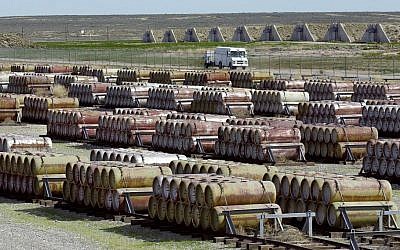
Despite fierce objections from Syria and its allies, OPCW member states agreed in 2018 to give the organization new powers to pin blame on culprits for the use of toxic arms.
Previously the watchdog — which won the Nobel Peace Prize in 2013 and has eliminated 97 percent of the world’s chemical weapons — only had a mandate to say whether or not an attack had occurred.
“Everyone is waiting for the [IIT Investigation and Identification Team] results,” a senior diplomat told AFP on condition of anonymity.
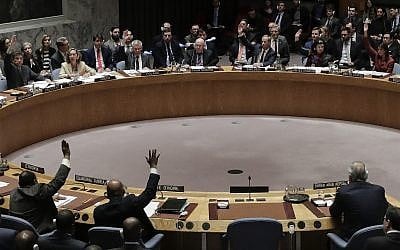
Russia, Iran and China led efforts to block the budget last year but it passed by a majority of 99-27.
Western diplomats hope to improve on that figure this year to show international support for the OPCW. A vote is expected on Wednesday.
Muddy the waters
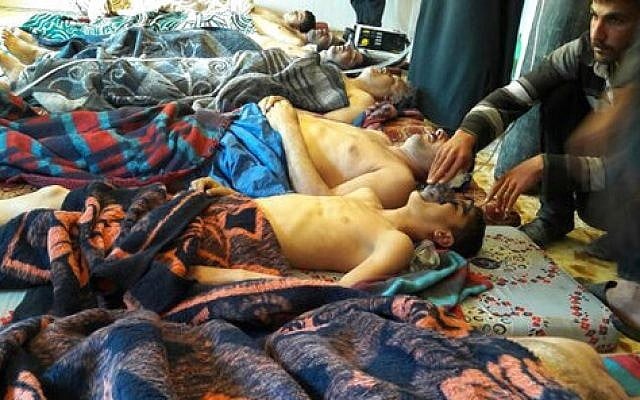
Moscow has consistently raised doubts over chemical attacks in Syria or insisted they were staged, and has recently highlighted a leaked report raising questions about a deadly chlorine attack in the Syrian town of Douma in April 2018.
Western diplomats, however, say the Russians and Syrians are trying to muddy the waters about alleged attacks by President Bashar Assad’s forces.
Tensions have also been high since four Russian spies were expelled from the Netherlands in 2018 for allegedly trying to hack into the OPCW’s computers.
The eagerly-awaited first reports by the new investigations team are expected in the next few months, OPCW chief Fernando Arias said recently. Diplomats say they expect it to be released in February or March.
Syria agreed to hand over its chemical arsenal in 2013, narrowly avoiding US and French air strikes in retaliation for a suspected sarin attack that killed 1,400 people in the Damascus suburb of Ghouta.
Russia and the West may however reach agreement on the thorny issue of whether to extend the list of banned chemical weapons to include new “novichoks” — the nerve agent used in the 2018 Salisbury attacks.
London blamed Moscow for the poisoning of former Russian double agent Sergei Skripal and his daughter, and said novichok, a military-grade poison developed by the Soviet Union during the Cold War, was used.
The United States, the Netherlands and Canada have called for the addition of two novichoks, but Moscow wants to add similar chemicals that it says Western nations were experimenting with.
Diplomats said a compromise now appeared to be on the cards.



The Times of Israel Community.