

The accidental desert crowdsourcing pioneers
The Klingers had intended to exchange their urban professions for Golan agriculture. Instead they built a Fountain of Youth on an ancient Nabatean route in the Negev
 Add ToI as a Preferred Source on Google
Jessica Steinberg, The Times of Israel's culture and lifestyles editor, covers the Sabra scene from south to north and back to the center
FOUNTAIN OF YOUTH RANCH — The pebbly road leading from a one-lane highway to the chained gate at the entrance of the Fountain of Youth ranch in the Negev region was pitch-black by 8 p.m., the only source of light emanating from the canopy of stars and a sliver of moon glowing in the vast desert sky above.
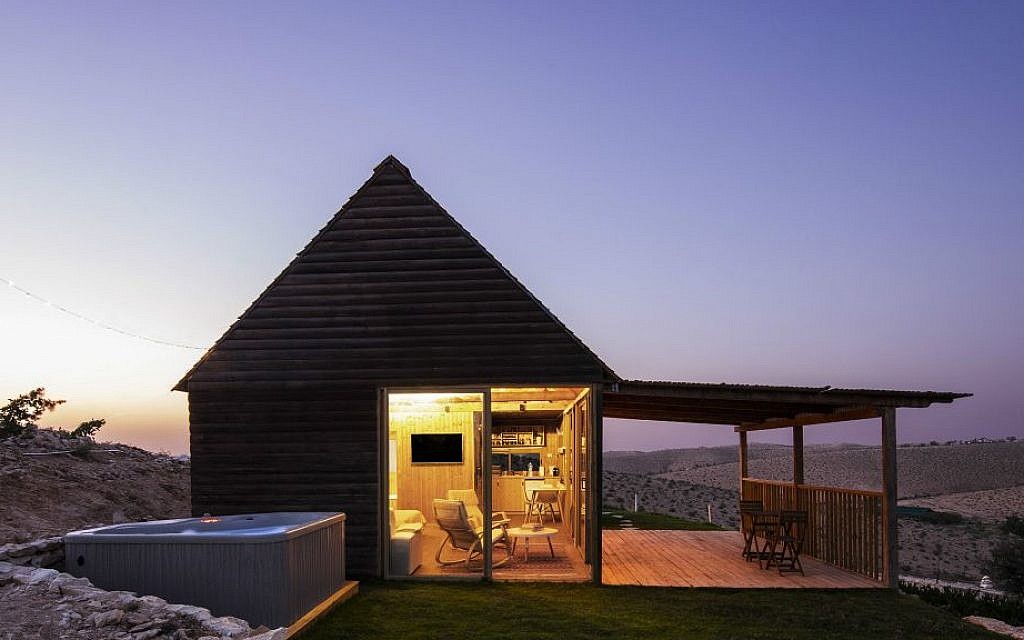
But once we were seated in the warm, lone cabin high on the hill, the floor-to-ceiling windows overlooking the man-made lake below, it was clear we had found an oasis.
This refuge was created by the Klinger family, who moved to the desert 11 years ago from Ramat Hasharon, a suburban enclave north of Tel Aviv. The parents were both professionals; she was a lawyer in a Tel Aviv firm and he helped run his family’s industrial aluminum business. They have five sons with a 20-year spread between the oldest and youngest. When they moved south, only the youngest was still living at home.
The Negev hadn’t been part of their original plan. The Klingers wanted to be pioneers of a sort and have a closer connection to nature — but on the Golan plateau at Israel’s northern reaches. By the time they were ready to become pioneers, however, the Golan was overrun with agricultural and tourist endeavors. So they decided to try the desert.
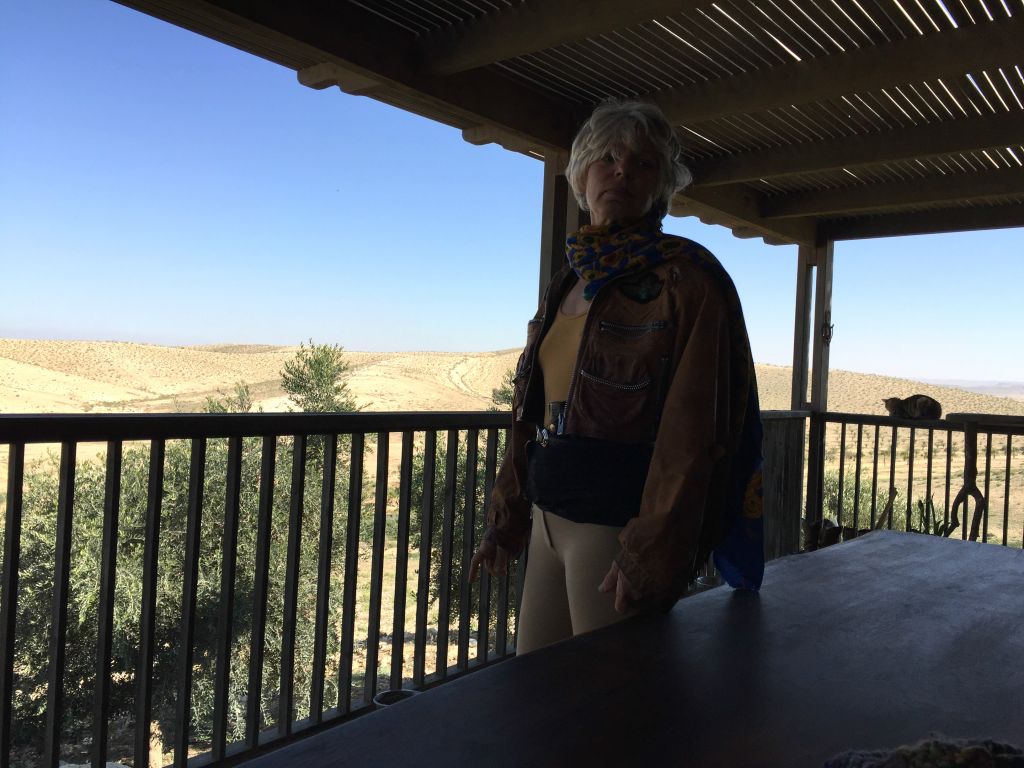
“We’re here because God brought us here,” said Tchia Efron Klinger, a slim, muscular woman of 58 who rides her horses daily and tucks a pistol into the front of her jodhpurs. “I do believe in God; God for me is everything, it’s nature, my conversation with the horses, my relationship with Dudu,” her husband of 41 years.
God — and the government, which gave parcels of land to Israelis willing to settle on this barren stretch that was once an ancient Nabatean thoroughfare called the Wine Route, to grow grapes, plant olive trees or make goat cheese.
The Klingers are part of a project of 30 family farms originally initiated in the early 1990. The plan was to bolster the settlement of the Negev according to founding father David Ben-Gurion’s vision. Newspaper announcements sought interested homesteading families, and the project was joined by the National Parks Authority, which designated 30 sites, as well as the local Ramat Negev regional council.
The Klingers were accepted after a long application process, said Efron Klinger, and now lease the land from the government for an annual fee.
Efron Klinger isn’t religious; nor are her husband David, known as Dudu, and their sons. They’re secular Israelis of a certain stripe — apparent in the way they speak about their land, in the sets of Israeli flags flying on the hills of their 600-dunam spread, and in the massive oil can menorah set on one of those hills, lit during each the eight nights of Hanukkah for all the surrounding communities to see.
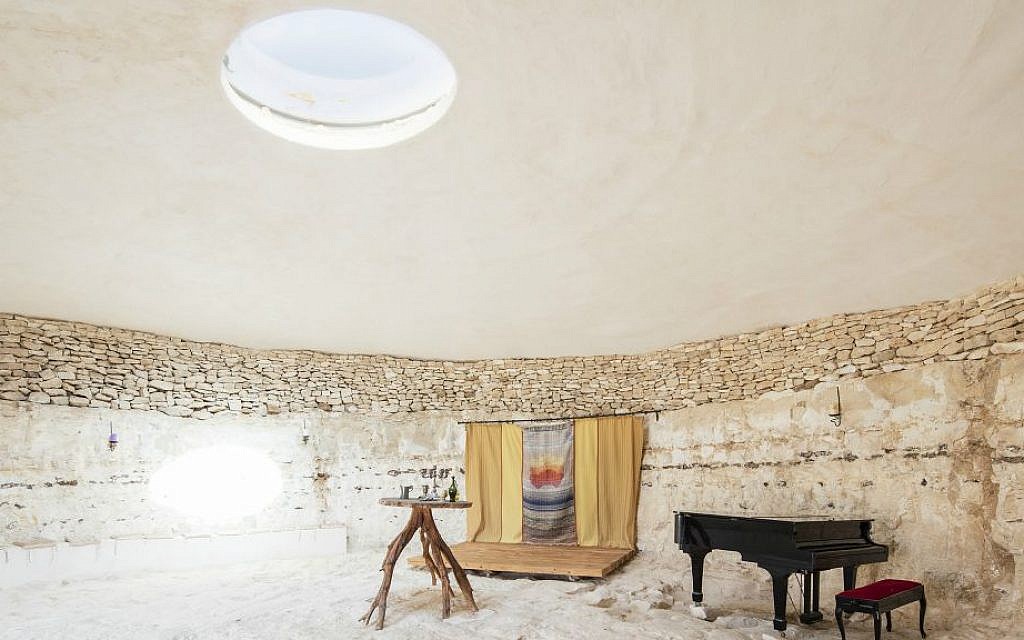
They built a synagogue on their land for their youngest son’s bar mitzvah, digging a round cave deep inside one of the hills, with the blue sky visible from a glass dome at the top. A grand piano and an ark holding a Torah scroll sit on the stone floor inset with hand-laid mosaic tiles representing some of the seven species.
But first they put up a barbed wire fence around the perimeter of their ranch, to keep out their nomadic Bedouin shepherd neighbors, and installed a pipeline leading from the nearby water carrier to their ranch, the man-made lake and the cabins.
They spent the first year living in a trailer with just a few hours of electricity a day, using water they hauled in.
The believers
These are people who are devoted to their mission, having dedicated much sweat and energy to building their dream on this wide open desert plain.
“We are believers,” said Efron Klinger. “I see this place, how it’s going to look in four or five generations. With God’s help, we’re going to have 20,000 trees.”
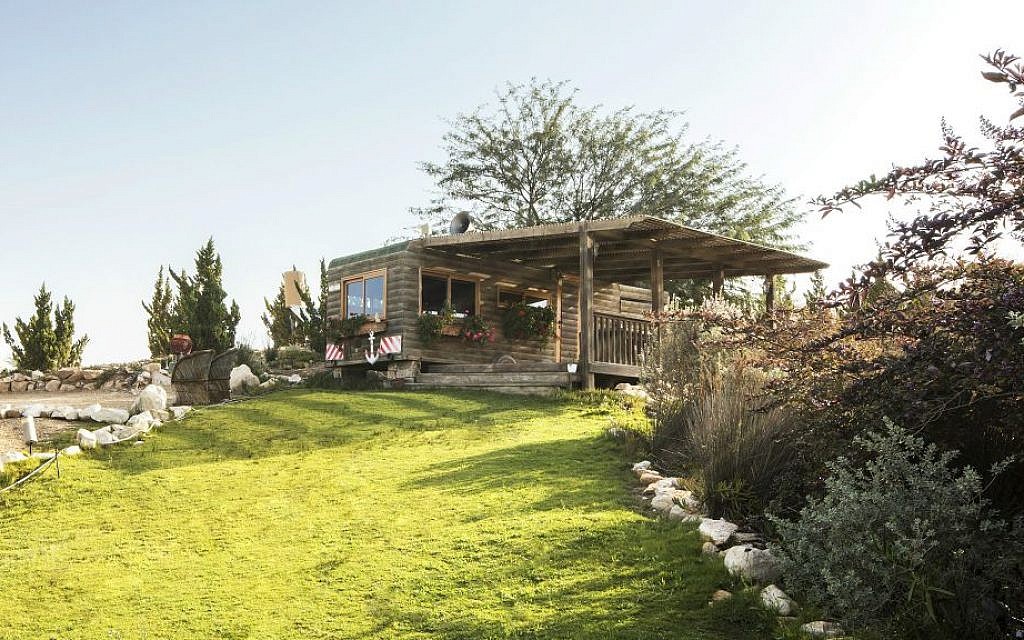
“This,” she said, pointing to their hills from the wide veranda of their simple, sturdy ranch house — “will all be covered with trees, either olive trees or carob trees, everything that grows with brackish water.”
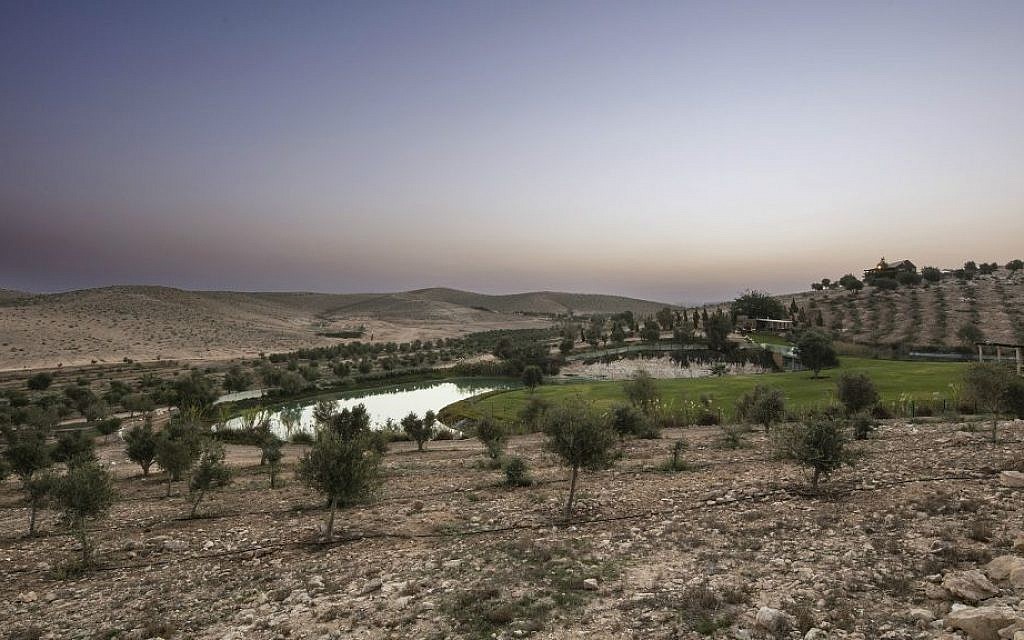
Their hills are already covered with a faint brushing of fir green, and there are groves of eucalyptus and olive trees throughout the ranch. There are also limans — brackish water-filled mud formations that bring moisture to the flora they have planted.
The Klingers’ plan is to green the entire parcel and “change the microclimate,” she said.
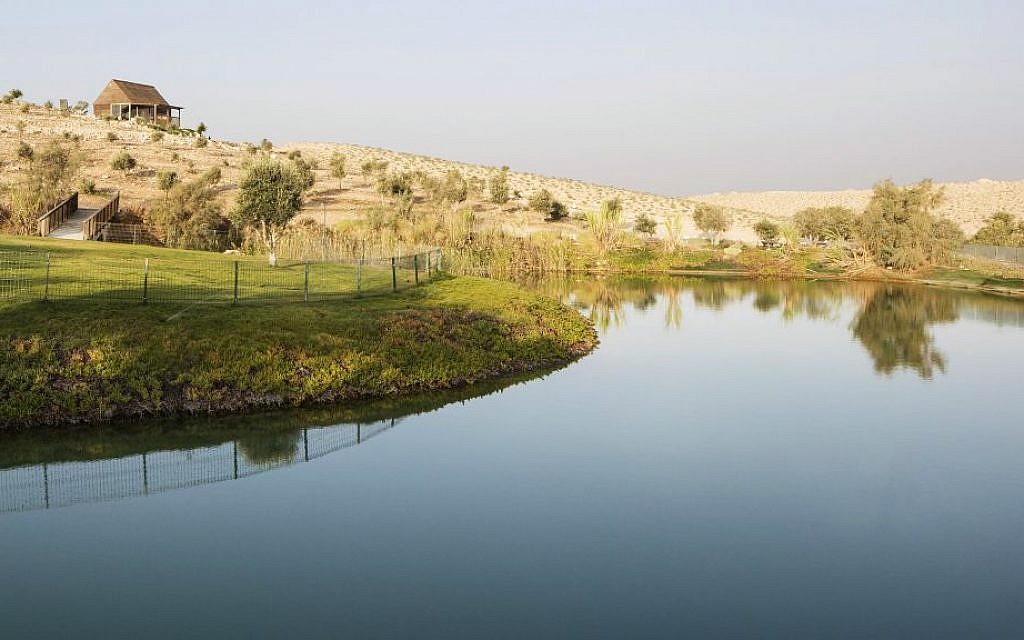
The man-made lake, an early addition, is a significant factor in that plan. It is a spacious pond made for swimming and relaxing as well as a source of water for their farm, with a large, grassy area around it. The Klingers have used the site for wedding and bar mitzvah parties, including the weddings of their own sons.
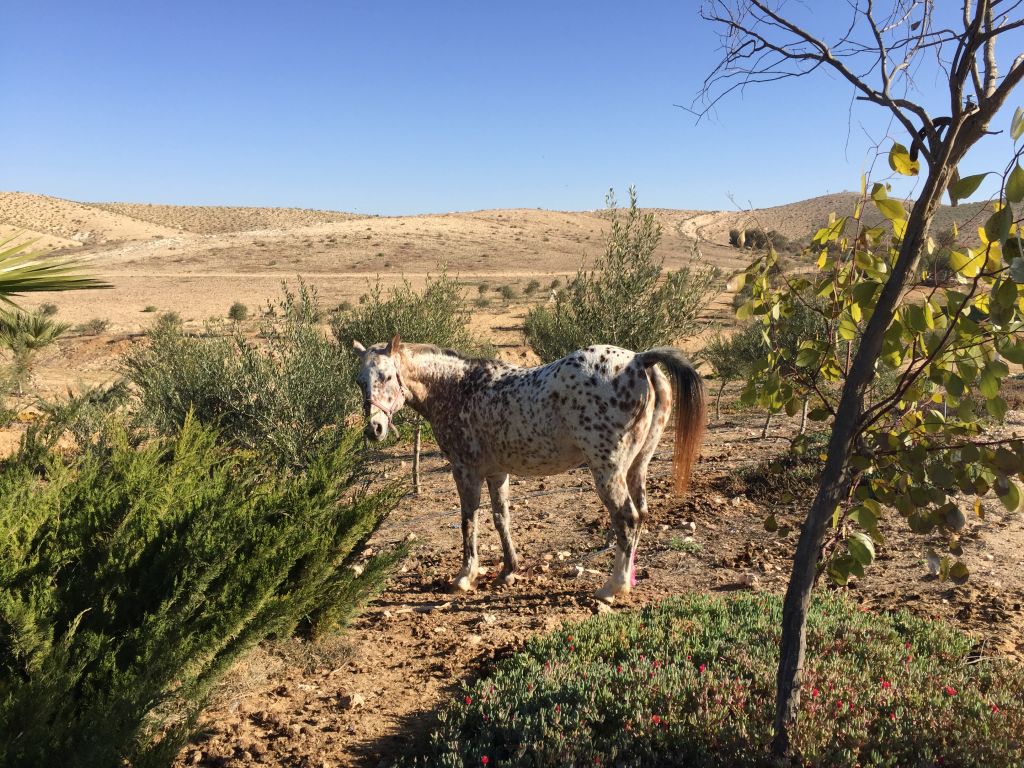
Most mornings, however, it’s a draw for the animals and wildlife in the area, as rabbits hop to its edges, sometimes joined by foxes and the Klinger’s four horses, who wander around freely for a good part of each day. There’s also a donkey on the ranch that spends much of his time with what Ben Klinger, son number two, calls a “lady friend” on a nearby ranch, as well as the Klingers’ nine dogs and numerous cats.
The lake is the reason they call their ranch Fountain of Youth, Maayan HaNeurim in Hebrew. A group of young men who worked on the ranch called it the Matchmaking Spring because many of them met and formed long-term relationships with young women they met while living in the region.
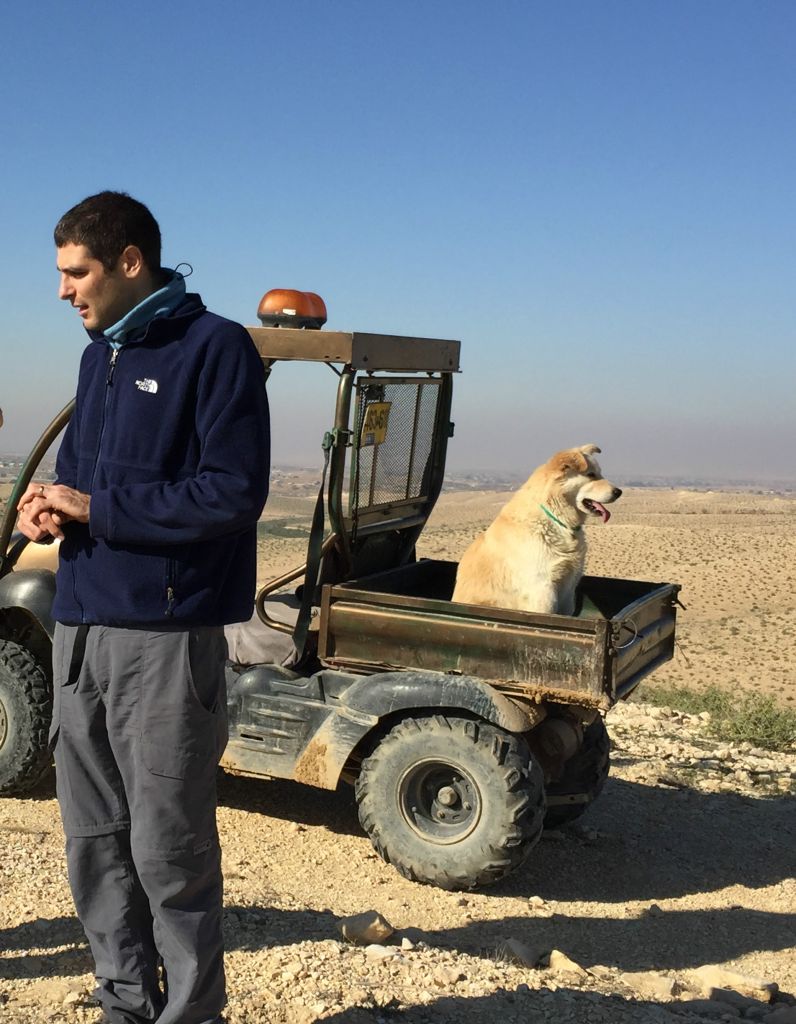
It was those post-army young men, along with the Klinger sons — three of them currently live on the same block in Tel Aviv while two more live on the ranch — who helped design, fashion and build the ranch. Ben Klinger still travels several times a week to help his parents with various aspects of their business.
Cabins, soap, oil, honey
For now, one of their sources of income comes from two cabins — not called tzimmers, emphasized Efron Klinger, who doesn’t like the German term commonly used for the wooden cabins built as vacation bed-and-breakfast retreats dotted around the country — rented to guests. Every wooden panel, every electrical outlet, even the square parquet flooring in the bathroom, was built and installed by Ben and his father.
It helps that Ben Klinger, an industrial designer by training, brought his professional chops to the task. He’s an exacting kind of guy, one whose taste for the creative and quirky is apparent in many corners of the cabin, from the light bulb structure and paper rock fixture used as the bedside lamps to his own Manifold clocks hung around the room.
There’s a clean aesthetic to the space with its tones of wood and white, from the comfortable white, L-shaped couch and lounge chairs to the white porcelain bottles used to store shampoos and conditioner in the wooden-countered bathroom stocked with piles of white towels and bathrobes.
The cabin, however, is only one small portion of this Negev ranch endeavor. Reach for the olive oil bottle to drizzle some on the tomatoes and cucumbers kept in the mini-fridge and you’ll notice it’s made from the olives grown on the hill. The Klingers also make their own bars of lavender- and rosemary-scented olive oil soap, and there are barrels of honey standing on their veranda, pollinated by their own bees.
They’re planning on building a tourist-friendly modern press for their olive oil that will also include a reproduction of an ancient one.
Learning from their mistakes
There’s more than a passing similarity to the Swiss Family Robinson or The Waltons in this family endeavor, as this formerly suburban clan figures out life on the desert frontier. Like any pioneering types, they’ve made more than their share of mistakes, said Dudu Klinger, laughing when asked for some examples.
“You learn from the mistakes,” he said. “We had all these advisers and consultants. You know, they’d say, ‘You see that tree? It’s not growing because you’re not giving it enough water,'” he said, rolling his eyes at the notion.
“They always have answers for everything,” he said. “But after all, you are responsible for learning from the mistakes. It’s not rocket engineering; you look and see and learn.”
There were some bigger missteps as well. The Klingers initially planned on making olive trees their main source of income. When they realized they wouldn’t earn enough from olives they looked into other options, including offering their space as a local server farm for data — a decidedly post-Zionist Negev idea.
The server farm didn’t work out, and instead they looked toward classic tourism with their B&B cabins. (They’ve also rented out their land for a two-night desert trance party.) When they needed to raise money to build the cabins, Ben Klinger suggested crowdsourcing the funds, something he had done successfully for several industrial design products.
“I didn’t have to convince my parents regarding the crowdfunding, but rather explain to them the entire process,” he said.
Since the Headstart launch, which has less than two weeks left and is oversubscribed with over NIS 150,000 ($40,000) in funding, his parents call almost every day, telling Ben about yet another old friend who saw the project and contacted them.
“At the end of the day, the basic idea behind crowdfunding is about reaching out to people and sharing your story,” he said.
The concept is also emblematic of the Negev region, which while large and widespread relies on neighborly behavior and relationships to support people through the vagaries of life in the desert.
There have been tremendous changes in the last ten years, said Efron Klinger. Many young people have come to settle in the Negev, some establishing programs or schools, others becoming part of communities and new, mixed secular-religious settlements, such as Shazif, Sansana and Karmit.
“Those who come here are complementing the area,” she said. “They want to be part of the area; they’re not copying Tel Aviv into the desert, but it’s a different lifestyle. They’re very good people.”
As for her, she’s counting on the future generations of her family to settle down here.
“I want my kids to do what they want, but I have absolutely no doubt in my mind that my grandkids and great-grandkids will end up here, and not in the Silicon Valley,” she said.
From her lips to Ben-Gurion’s ears.
Negev Desert Lake Cabins, Fountain of Youth, Negev, Route 40.








The Times of Israel Community.