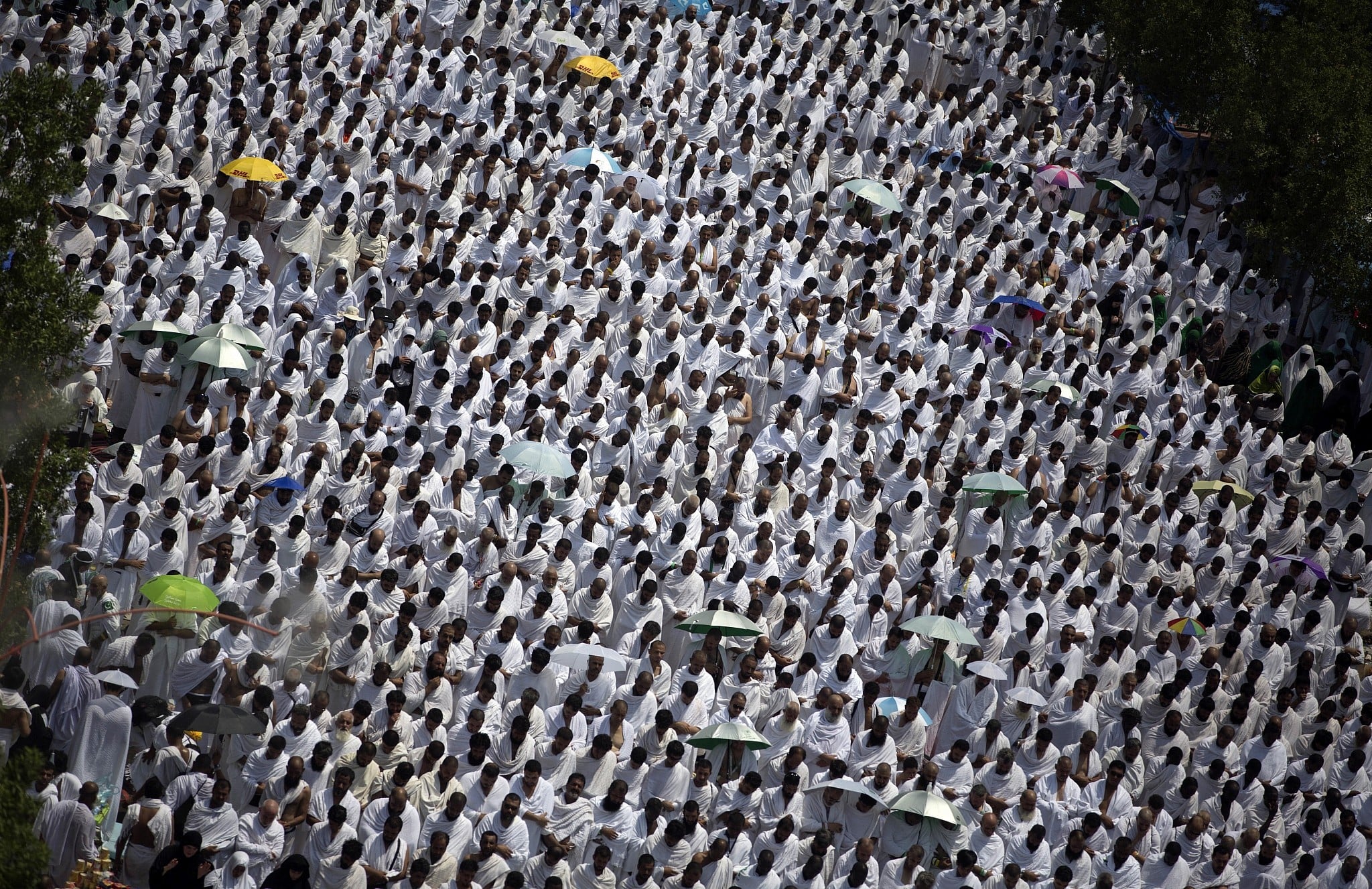
An aerial view shows Muslim pilgrims gathering on Mount Arafat, southeast of the Saudi holy city of Mecca, as part of the Hajj pilgrimage, on August 31, 2017. (AFP Photo/Karim Sahib)
An aerial view shows Muslim pilgrims circling the Kaaba, Islam's holiest shrine, at the Grand Mosque in Saudi Arabia's holy city of Mecca on September 2, 2017. (AFP Photo/Karim Sahib)
Muslim pilgrims attend noon prayers outside the Namirah mosque on Arafat Mountain, during the annual hajj pilgrimage, outside the holy city of Mecca, Saudi Arabia, Thursday, Aug. 31, 2017. (AP Photo/Khalil Hamra)
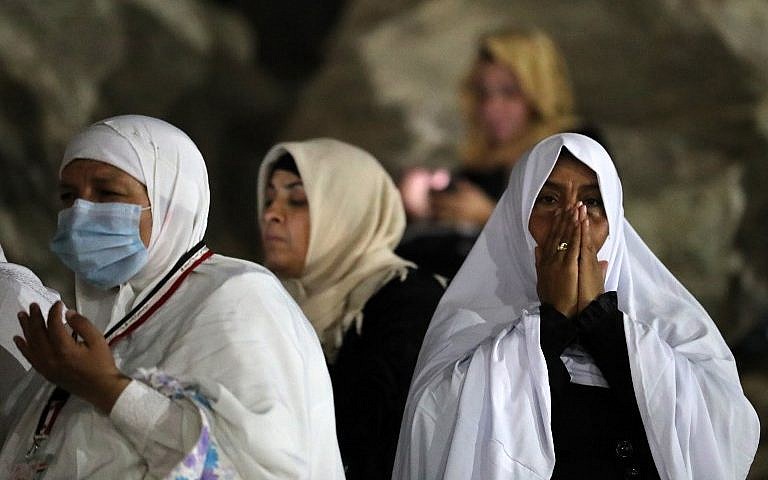
Muslim pilgrims pray on Mount Arafat as part of the Hajj pilgrimage early on August 31, 2017. (AFP Photo/Karim Sahib)
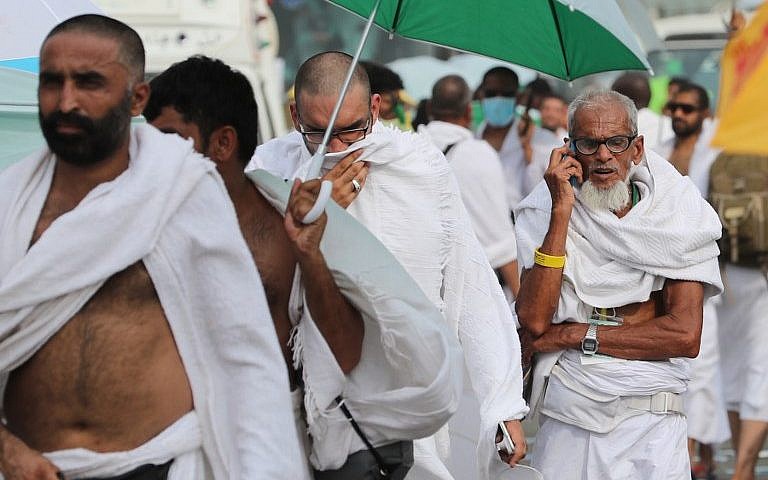
A Muslim pilgrim talks on a cell phone as he departs with other pilgrims from Mount Arafat, on the way to Muzdalifah, on August 31, 2017, ahead of the climax of hajj. (AFP Photo/Karim Sahib)
Saudi security personnel assist pilgrims as they head to take part in the symbolic stoning of the devil at the Jamarat Bridge in Mina, near Mecca, which marks the final major rite of the hajj on, September 1, 2017. (AFP Photo/Bandar Aldandani)
The Islamic hajj pilgrimage draws people from around the world to Saudi Arabia each year. The crowds, squeezed shoulder to shoulder in prayer five times a day, fill the city of Mecca and surrounding areas to perform a number of physically demanding and intricate rites.
The five-day-long hajj is required of all Muslims with the means to perform it once in a lifetime. Through intense worship and repentance, its goal is remission of past sins and drawing Muslims closer to God.
As Muslims around the world celebrate, here’s a look at one of the world’s largest pilgrimages in numbers:
— 2.35 million is the number of pilgrims from around the world performing hajj this year;
— 1.16 million square meters (12.5 million square feet) is the size of the Grand Mosque that houses Islam’s holiest site;
Get The Times of Israel's Daily Editionby email and never miss our top stories
— Seven is the number of times Muslims circle the cube-shaped Kaaba counterclockwise, their hearts titled toward it, during one of the rites of hajj;
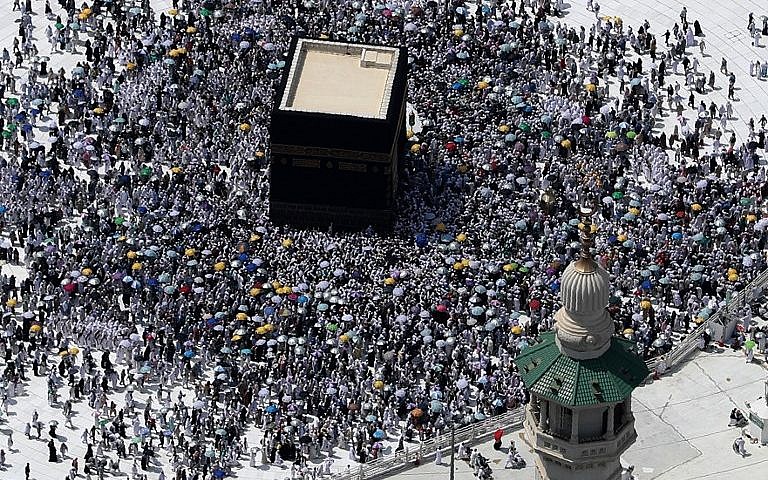
An aerial view shows Muslim pilgrims circling the Kaaba, Islam’s holiest shrine, at the Grand Mosque in Saudi Arabia’s holy city of Mecca on September 2, 2017. (AFP Photo/Karim Sahib)
— 104 is the age of the oldest pilgrim performing the hajj this year. Ibu Mariah Marghani Muhammad is from Indonesia;
— 3,500 is the number of charter buses used to transport pilgrims to the various sites for hajj;
Advertisement
— 1.75 million pilgrims are from outside Saudi Arabia;
— 600,000 is the number of pilgrims from Saudi Arabia, either residents or citizens;
— 1.33 million is the number of male pilgrims;
— 1.02 million is the number of female pilgrims;
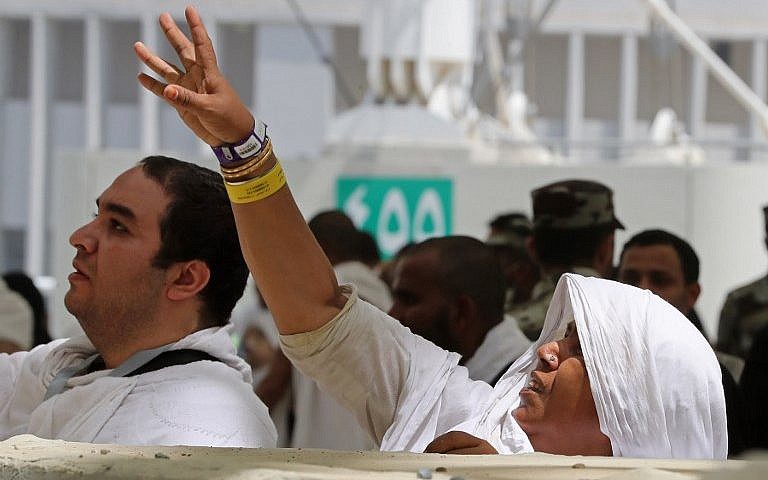
Muslim pilgrims take part in the symbolic stoning of the devil at the Jamarat Bridge in Mina, near Mecca, which marks the final major rite of the hajj, on September 1, 2017. (AFP Photo/Karim Sahib)
— 59 percent are from non-Arab Asian countries;
— 24 percent are from Arab countries;
Advertisement
— 11 percent are from non-Arab African countries;
— 5 percent are from Europe;
— 1 percent are from North America;
— 100,000 is the number of Saudi security forces tasked with protecting and assisting pilgrims on the hajj;
— 5,000 is the number of cameras along hajj routes;
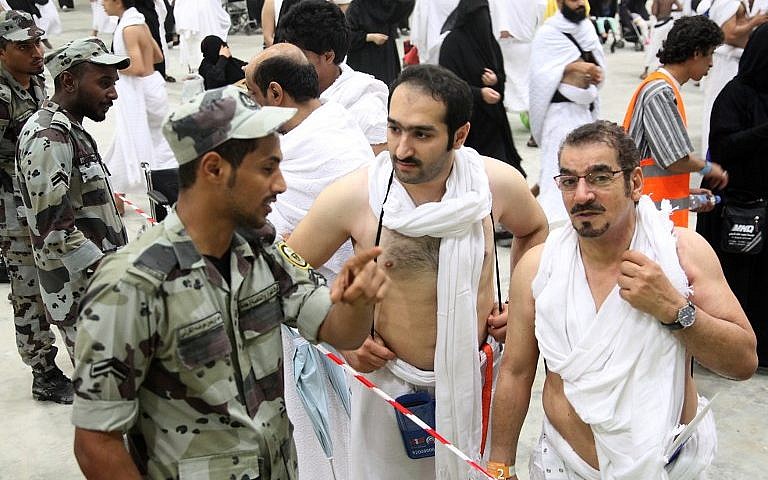
Saudi security personnel assist pilgrims as they head to take part in the symbolic stoning of the devil at the Jamarat Bridge in Mina, near Mecca, which marks the final major rite of the hajj on, September 1, 2017. (AFP Photo/Bandar Aldandani)
— 2015 is the year of one of the deadliest incidents in hajj, when a stampede and collision of two crowds crushed people under the force;
— 2,426 is the number of people killed in the incident, according to an Associated Press count based on media reports and officials’ comments from 36 of the more than 180 countries that sent citizens to the hajj;
— 464 is the number of Iranian pilgrims killed in the 2015 incident, the highest death toll of any country;
— 111 is the number of people killed that same year from a crane collapse inside Mecca’s Grand Mosque.
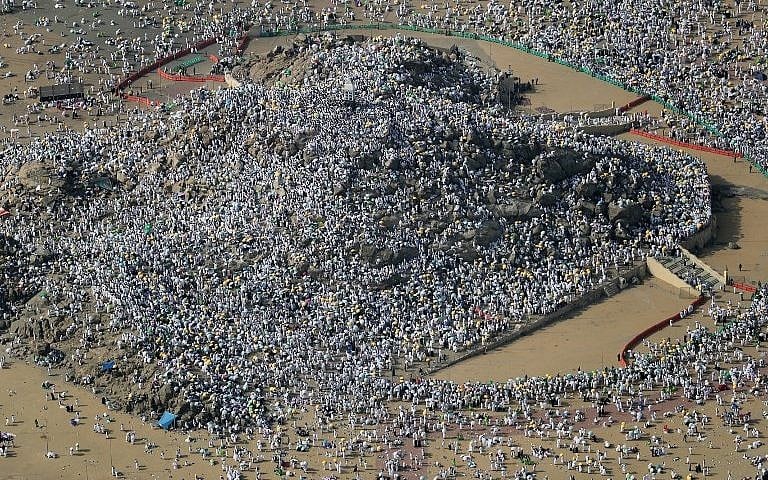
An aerial view shows Muslim pilgrims gathering on Mount Arafat, southeast of the Saudi holy city of Mecca, as part of the Hajj pilgrimage, on August 31, 2017. (AFP Photo/Karim Sahib)
We can't do this work alone.
The war with Iran has been draining for all of us in Israel. But when I heard about a high casualty incident – ballistic missile impacts in Arad and Dimona that left nearly 200 people wounded – I drank a cup of coffee, packed a bag, and headed south.
There, I spoke with Shilgit, the head of an after-school program for underprivileged youth. Standing outside her destroyed center, Shilgit said it was a miracle that no children were hurt and spoke about the community coming together in the hours since.
As a Times of Israel reporter, I’m committed to telling stories of resilience like Shilgit’s. But my colleagues and I can't do this alone. If you value work like this,please consider joining our reader support group, The Times of Israel Community. Your financial support is essential to keep real human reporting like this going.
We’re really pleased that you’ve read X Times of Israel articles in the past month.
That’s why we started the Times of Israel - to provide discerning readers like you with must-read coverage of Israel and the Jewish world.
So now we have a request. Unlike other news outlets, we haven’t put up a paywall. But as the journalism we do is costly, we invite readers for whom The Times of Israel has become important to help support our work by joining The Times of Israel Community.
For as little as $6 a month you can help support our quality journalism while enjoying The Times of Israel AD-FREE, as well as accessing exclusive content available only to Times of Israel Community members.
Thank you, David Horovitz, Founding Editor of The Times of Israel