 Add ToI as a Preferred Source on Google
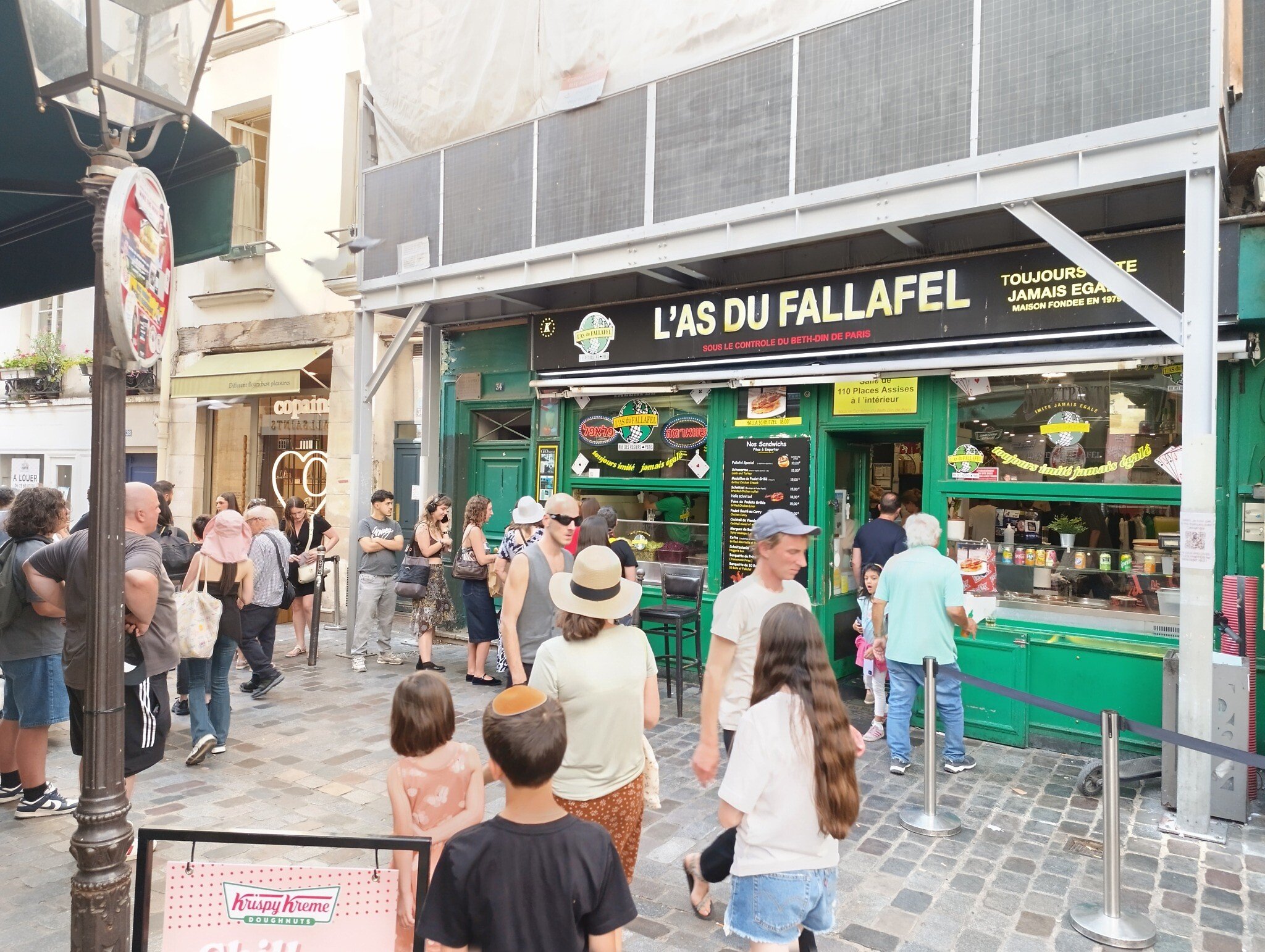
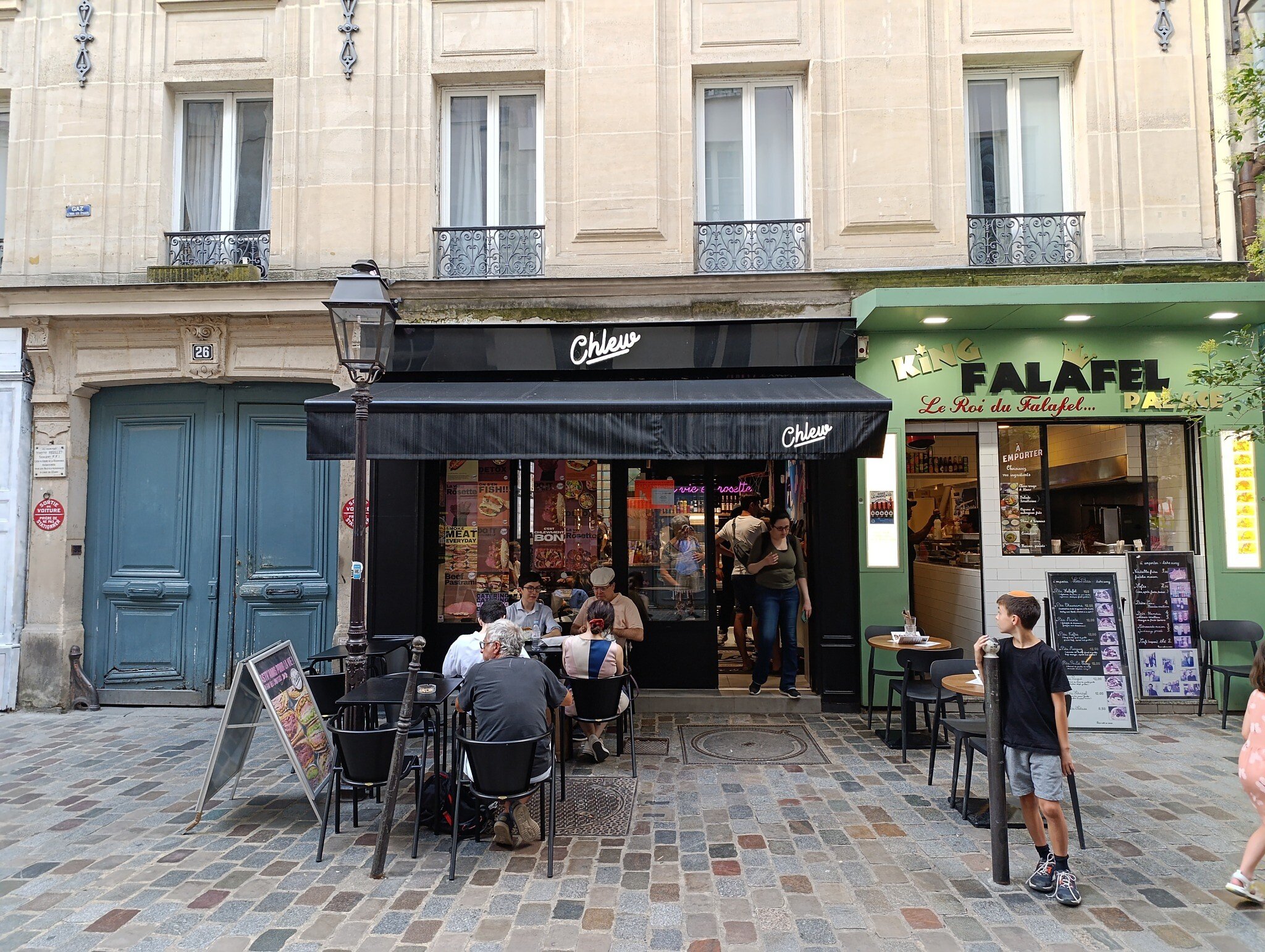
PARIS — Walking through the bustling cobblestone streets of Le Marais, the historic heart of Jewish Paris, it’s easy not to think about antisemitism.
Once the center of Jewish life in the capital of France, Rue des Rosiers still pulses with trendy kosher and kosher-style restaurants, Judaica shops, and Hebrew signs. On a Friday afternoon in July, hordes of visitors buy challah for Shabbat and eat falafel on the street, chatting in French, Hebrew, English, and countless other tongues.
“People walk around freely in their kippot here,” a local Jew, Levi, mentioned in passing. “Parisian Jews don’t live in fear.”
Others would differ on that point.
Antisemitism in the city of more than 300,000 Jews — the sixth-largest Jewish community in the world and the largest in Europe — has reached historic highs in recent years, particularly since Hamas invaded Israel on October 7, 2023, sparking the ongoing war in Gaza.
That year, the number of antisemitic incidents around the country quadrupled to 1,676, according to the Conseil Représentatif des Institutions Juives de France (CRIF), the representative organization of French Jewish groups. In 2024, that number dropped by six percent to 1,570, but remains alarmingly high.
Those figures don’t include countless cases that went unreported, particularly within the educational system, CRIF has noted.
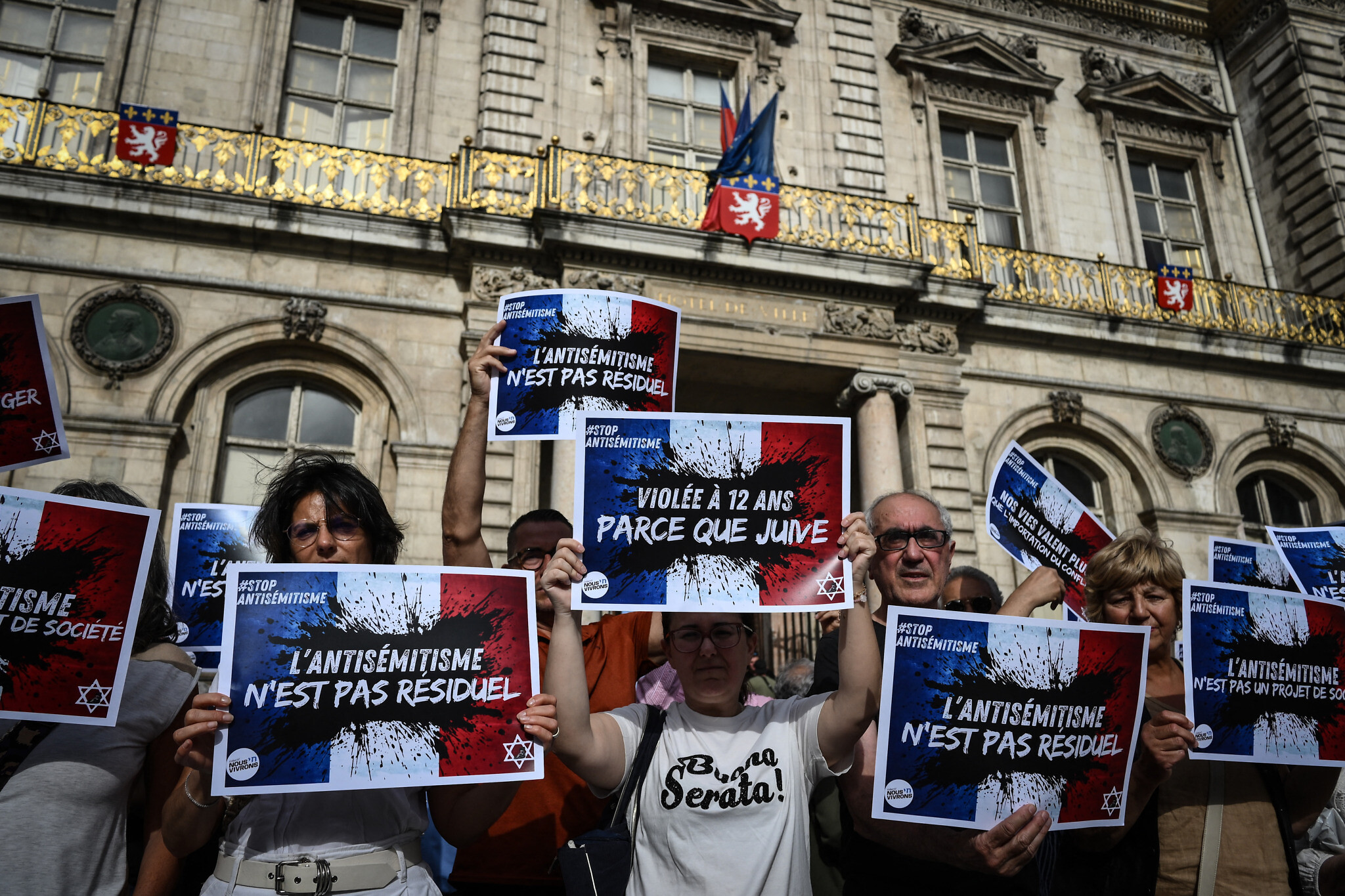
Last year, a 12-year-old Jewish girl was gang-raped by three teenagers motivated by anti-Jewish hatred in a Paris suburb. Numerous individuals have been attacked or harassed on the streets, and many are careful not to display any Jewish or Israeli symbols publicly, for fear of harm.
Synagogues in Rouen and Montpellier were attacked by arsonists last summer, and, just two months ago, vandals targeted two synagogues and the national Holocaust memorial in Paris.
Jews make up under 1% of France’s population but are the target of over 60% of religiously motivated hate crimes, French Interior Minister Bruno Retailleau noted in May.
It’s a complex and disturbing picture that is difficult to balance with those carefree images of bustling Jewish life in the City of Love.
“Perhaps the best way to say it is that there is antisemitism in France, but France is not an antisemitic country,” Yonatan Arfi, president of CRIF, told The Times of Israel.

“It’s a bit of a paradox. There are many antisemitic incidents, but the vast majority of the French population is strongly opposed to antisemitism, including the political leadership and public authorities,” Arfi said. “It’s important to understand that this is not state-sponsored antisemitism, it’s coming from a combination of sources, including violent Islamists and people on the radical left who use the conflict as a pretext to target Jews.”
Many in the Jewish community feel threatened by a growing Muslim demographic that currently comprises 10% of the population.
“We live in a period when French Jewry is thriving, and we have more friends than we ever had,” Arfi said. “However, at the same time, we also have more enemies than ever.”
Macron’s push-pull relationship with French Jews
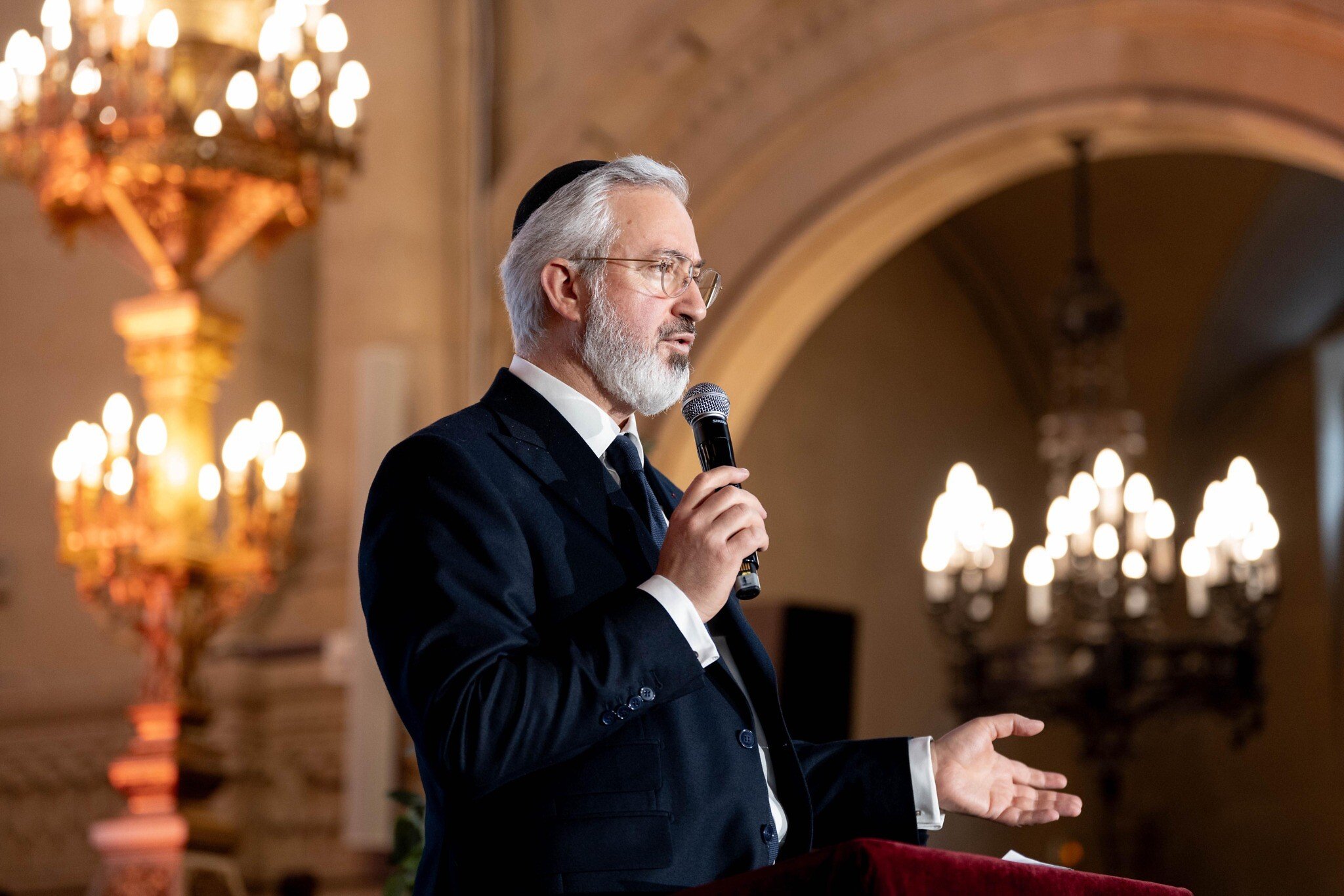
Government figures, including French President Emmanuel Macron, are supportive of the Jewish community, said Rabbi Moshe Sebbag, an influential figure in the Jewish community as the rabbi of Paris’s Grande Synagogue de la Victoire.
‘We live in a period when French Jewry is thriving, and we have more friends than we ever had. However, at the same time, we also have more enemies than ever’
“The government is doing everything it can to fight antisemitism,” he said. “Last week, we had three days of meetings with the Interior Ministry about the topic, and they were very supportive and concerned. Macron has been very clear in his opposition to antisemitism, and has been very attentive to our needs.”

Earlier this month, Macron declared an annual day of commemoration for Alfred Dreyfus, the French army captain wrongly convicted of treason in 1894 in a notorious act of antisemitism. Set to be marked every year on July 12, the day France’s highest appeals court recognized Dreyfus’s innocence more than a decade later, the day will celebrate “the victory of justice and the truth against hatred and antisemitism,” Macron declared in a statement.
However, he has been criticized for declining to take part in a massive rally against antisemitism attended by more than 100,000 in November 2023.
Macron’s close relationship with the local Jewish community makes it more difficult to understand his often antagonistic policies regarding Israel, Arfi noted. In recent months, he has mulled recognizing a Palestinian state, a move which would strain his already-tense relationship with the Jewish state and Prime Minister Benjamin Netanyahu.
“It’s difficult to understand his vision, because he has done some very positive and courageous actions, like using the French air force to defend Israel against Iranian missiles, and saying that Jerusalem is the eternal capital of the Jewish people,” Arfi said. “But he has also made some really disappointing declarations, which we have protested as part of our long-standing disagreements regarding the French policy in the Middle East.”

Changing attitudes
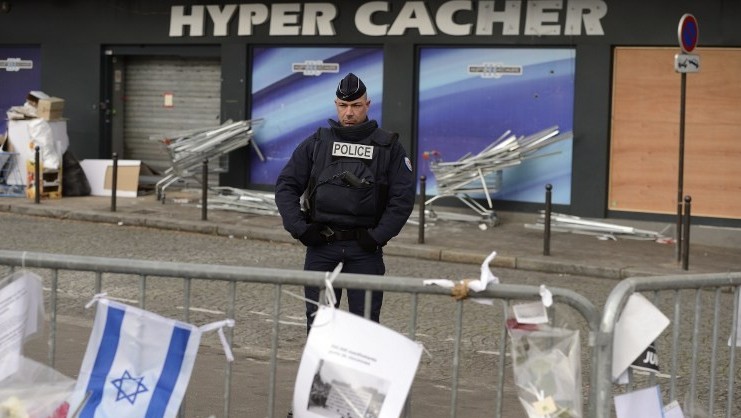
While antisemitism in France has intensified since the October 7 onslaught, the atmosphere is different than a decade ago, when an Islamist gunman killed four Jewish men and took 15 hostages at the Hyper Cacher kosher supermarket on January 9, 2015, Arfi said.
That attack was part of a coordinated wave of Islamist terrorism against France that began at the office of Charlie Hebdo two days earlier. It also came on the heels of an Islamist attack in Toulouse in March 2012 that targeted a Jewish school in addition to French soldiers.
Antisemitism had already been on the rise in France for more than a decade, and many French Jews saw those incidents as a point of no return.
“In the year after the Hyper Cacher attack, about 8,000 Jews left the country out of fear,” with most immigrating to Israel, Arfi said. In comparison, he said, about 3,000 people are expected to leave this year.
‘Since October 7, there is antisemitism everywhere, and our situation is similar to that of Jews in the UK, the United States, and elsewhere’
That’s because while tensions are greater now, the shock is gone and the plight of France’s Jews is relatively unexceptional compared to other Jewish communities around the world, Arfi said.
“When antisemitism exploded during the Second Intifada in 2000, it was something unique to France that wasn’t being experienced in most other countries,” Arfi said. “But since October 7, there is antisemitism everywhere, and our situation is similar to that of Jews in the UK, the United States, and elsewhere.”
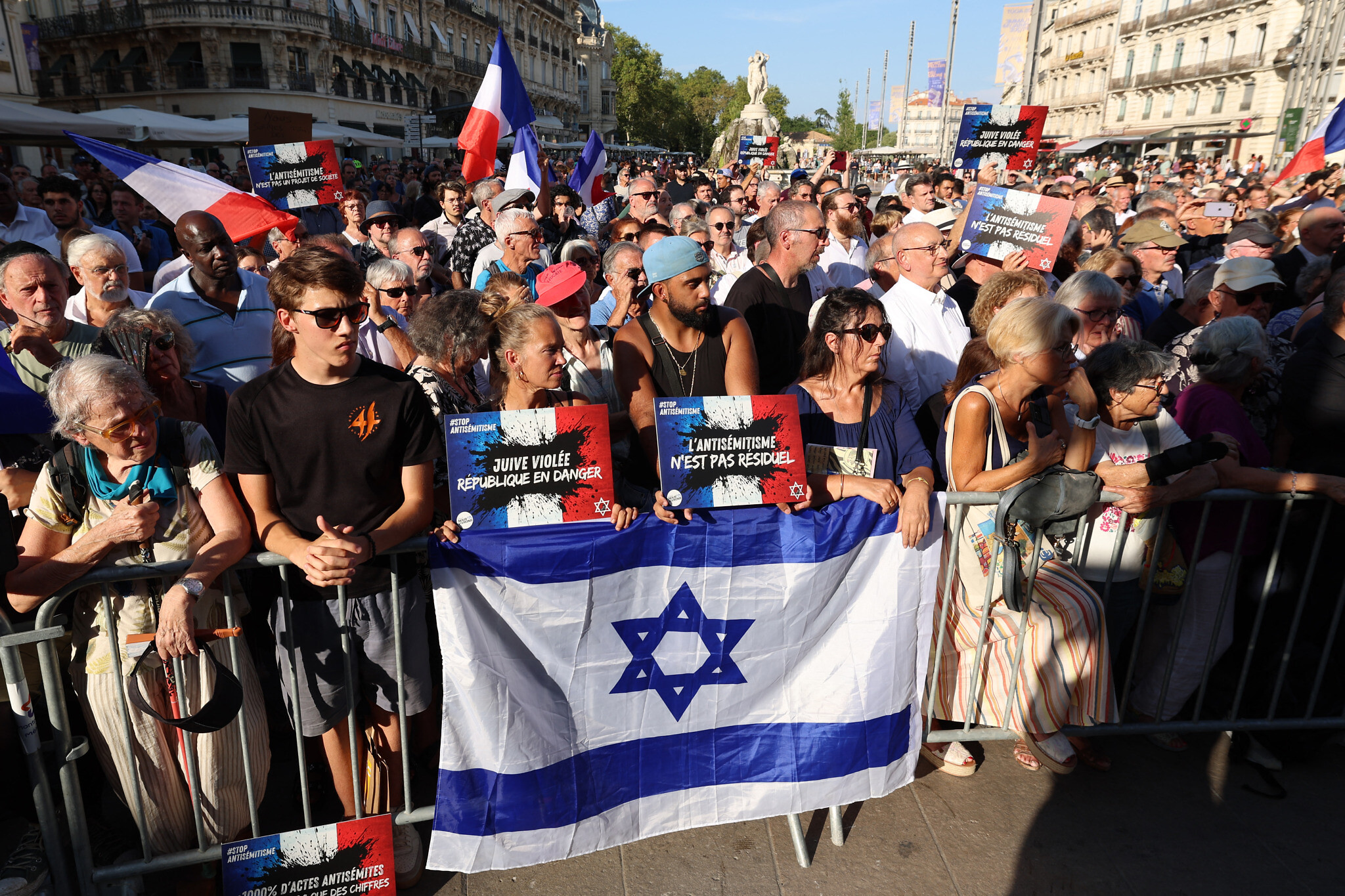
Now, Sebbag said, Jewish life in Paris is a mixed bag of vitality and caution.
“It’s a very dynamic community with many schools, synagogues and restaurants, where many people have long-term plans to immigrate to Israel,” he said. “There are many activities for families, and new institutions are always opening up. Antisemitism is a significant factor, but everyone has their own approach. Some wear a kippah in the street, some hide it. You don’t always feel antisemitism in the streets, but you have to take precautions.”
Many Israelis imagine that French Jews live in fear with a poor quality of life, Sebbag, an Israeli native, noted.
“That’s a big mistake,” he said. “Jewish life here is very full.”
Rising and falling fortunes
French sentiment toward the local Jewish population has fluctuated since the first Jews arrived more than 1,500 years ago.
In the Middle Ages, Jews were frequently subjected to persecution, and French kings expelled all Jews from their lands three times, in 1182, 1306, and 1394, said Flora Goldenberg, a tour guide specializing in Jewish tours of Paris.
Nonetheless, there were an estimated 40,000 to 50,000 Jews in France in the years before the French Revolution in 1789, although none were in Paris, she said.

During the French Revolution, the National Constituent Assembly debated whether its Declaration of the Rights of Man and of the Citizen should include the Jews. When it ultimately gave full civil rights to its Jewish population in 1791, it was the first country in Europe to ever do so.
Napoleon Bonaparte abolished many of the laws restricting Jewish life, such as special taxes and ghettos, and convened the Assembly of Jewish Notables to integrate Jews into French society while affirming their loyalty to the state. To this day, the sexton at the Grand Synagogue de la Victoire, the country’s largest synagogue, wears a Napoleon-style hat in gratitude.

Jewish life flourished in Paris in the 19th century, as Ashkenazi Jews from Eastern Europe and Sephardic Jews from North Africa poured in following the collapse of the colonial empire. However, antisemitic beliefs simmered and swelled throughout the century, and came to a head with the Dreyfus Affair starting in 1894.
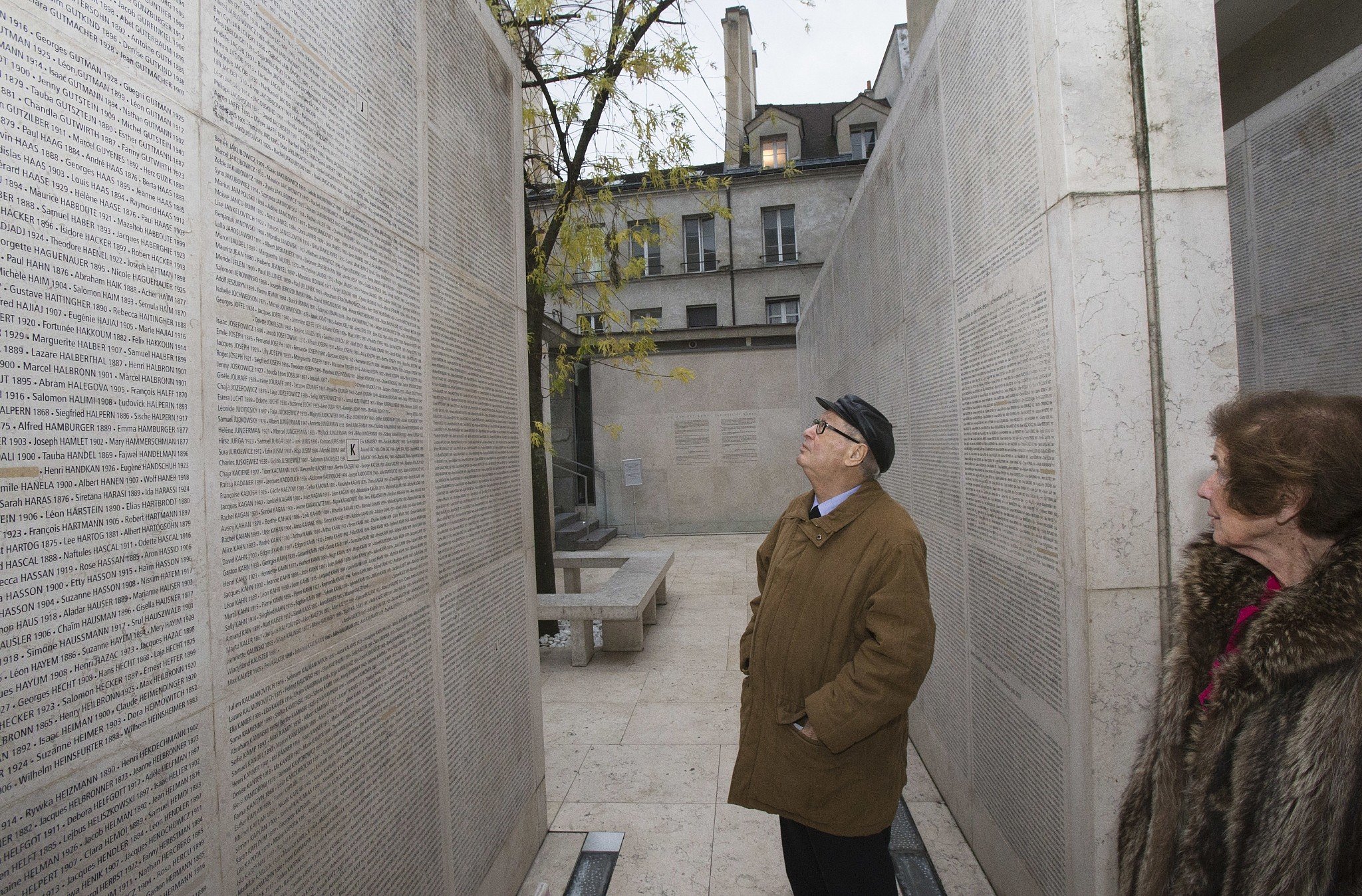
By the early 20th century, Paris had become a global center of Jewish culture, philosophy, and art, until World War II and the Nazi occupation of France brought that all to an end. Vichy collaboration with the Nazis made the lives of France’s estimated 300,000 Jews miserable, although, thanks in large part to resistance efforts by French citizens, 75% of the Jewish population survived, one of the highest survival rates in Western Europe.
Today, France is home to an estimated 450,000 to 500,000 Jews, making it the largest Jewish community in Europe and the third-largest globally after Israel and the US. (Canada and the United Kingdom round out the top five.) More than 300,000 live in Paris and its suburbs, with about 60-70% of the population of Sephardic origin.
Some 180,000 French citizens currently live in Israel, living primarily in Tel Aviv, Netanya, Ashdod, and Ra’anana, according to the French Consulate in Israel.
The vast majority of French Jews identify as Orthodox or traditional, even if many aren’t strictly observant, with just 5% identifying as Conservative or Reform. Metropolitan Paris has more than 100 synagogues and, Arfi says, more than 200 kosher restaurants scattered in multiple neighborhoods.
“The spread of kosher restaurants, particularly over the past 10 years, is a strong indicator of how Jewish life here is flourishing,” Arfi said.
The Jewish swamp
While Jewish life has expanded to many neighborhoods around Paris, the one most famously associated with French Jewry is Le Marais, the old Jewish center that Arfi likened to New York’s Lower East Side.
Most Jews have by now moved out of the gentrified neighborhood, whose name translates to “the swamp,” and Le Marais is more recently associated with Paris’s LGBTQ+ community, with gay bars dotting the streets. But the Jewish quarter, known endearingly as the Pletzl (Yiddish for “little place”), has a rich and bittersweet history, said Goldenberg.
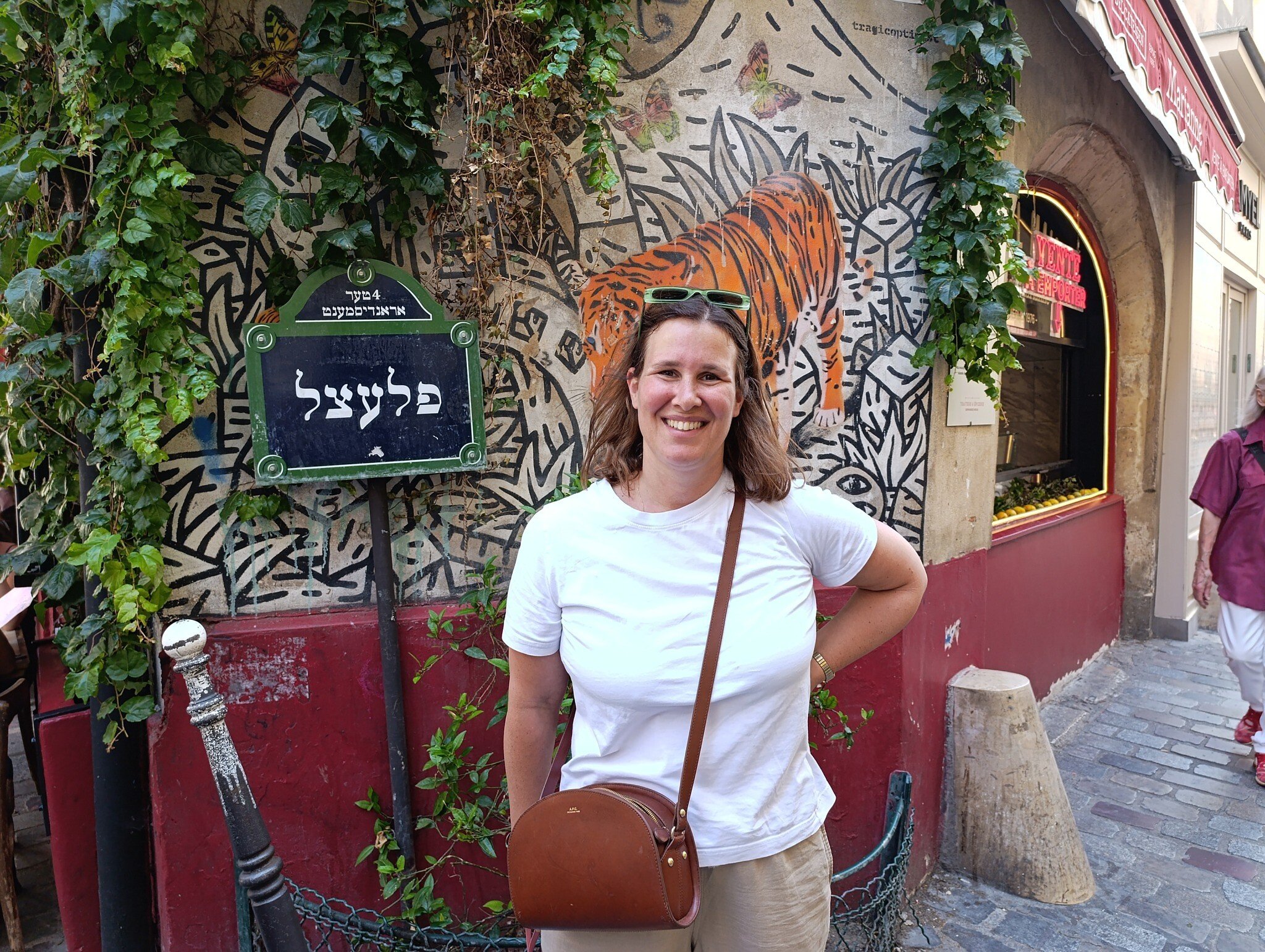
“When the Jews started moving back to Paris during the French Revolution, Le Marais had become a beautiful neighborhood filled with mansions owned by aristocrats,” Goldenberg said. “But during the revolution, all those aristocrats were beheaded or escaped,” she noted, adding that the incoming Jews were allowed to inhabit the now-empty homes.
Today, Le Marais is one of the most expensive neighborhoods in Paris, and rising prices have pushed many Jews to move to other neighborhoods, particularly the 16th, 17th, and 19th arrondissements and the suburbs of Sarcelles, Créteil, Boulogne-Billancourt, Saint-Mandé, Levallois-Perret, and Vincennes.
The city’s official Holocaust museum and the adjacent square where 260 Jewish children were rounded up and deported to Auschwitz in July of 1942 stand as a testament to France’s dark history during World War II. Nearby, on medieval cobblestone streets lined with flowers, old synagogues sit adjacent to trendy clothing shops, Judaica stores, pizzerias, and delis.
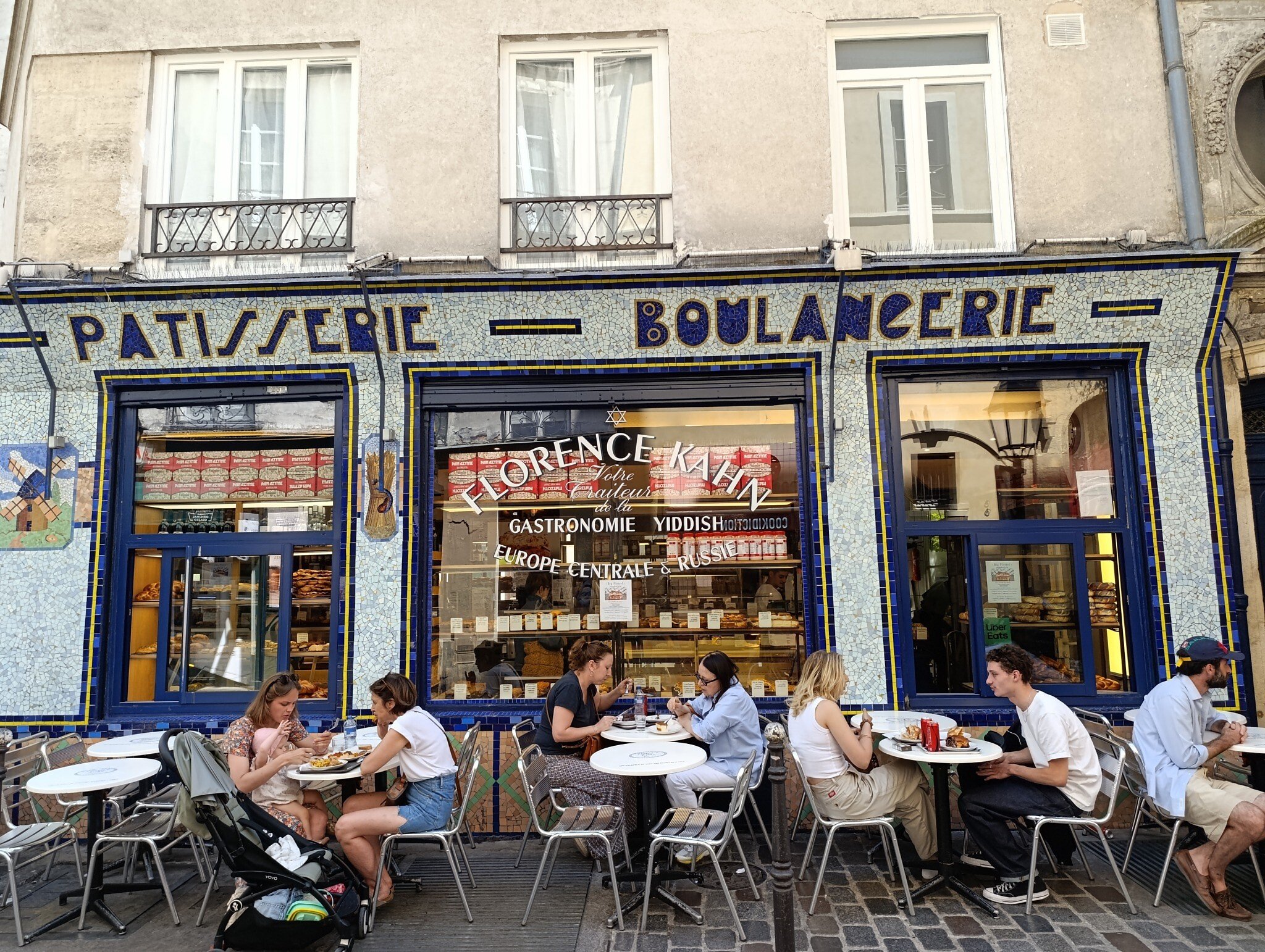
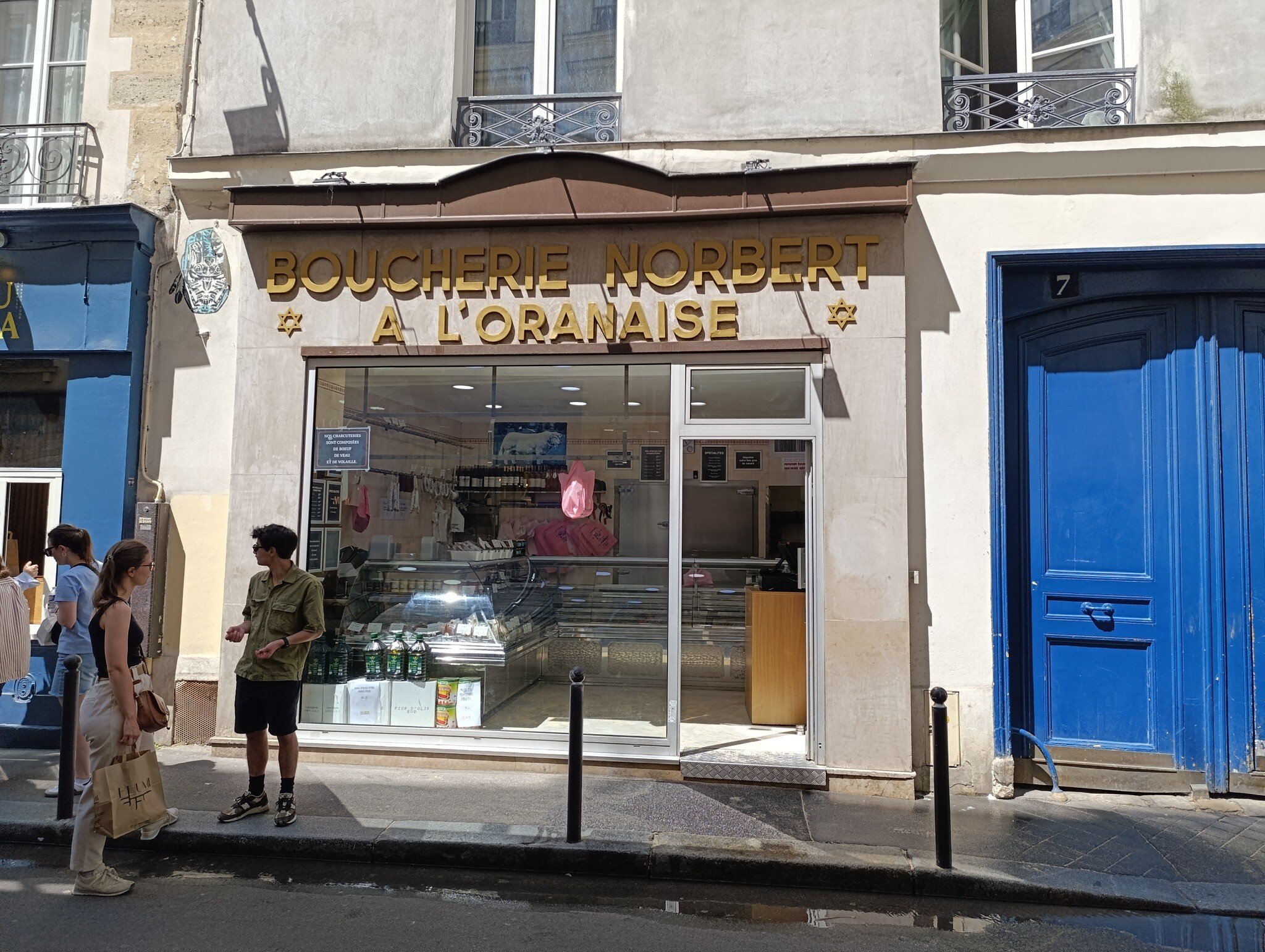
In recent years, the Pletzl has seen a Jewish foodie revival, Goldenberg said. There are more than a dozen kosher and kosher-style restaurants around Rue des Rosiers alone, she counted from memory.
Among the most popular is L’As du Fallafel, a kosher falafel joint that always has a long line of customers waiting outside. Miznon, founded by Israeli chef Eyal Shani, also attracts visitors from around the globe.
Goldenberg has her own connection to the local restaurant scene. Her grandfather owned the Jo Goldenberg delicatessen on the corner of Rue des Rosiers that was attacked by Palestinian terrorists on August 9, 1982. The attack by members of the Palestinian militant Abu Nidal Organization killed six and injured 22 in the country’s deadliest attack on Jews since the Holocaust.
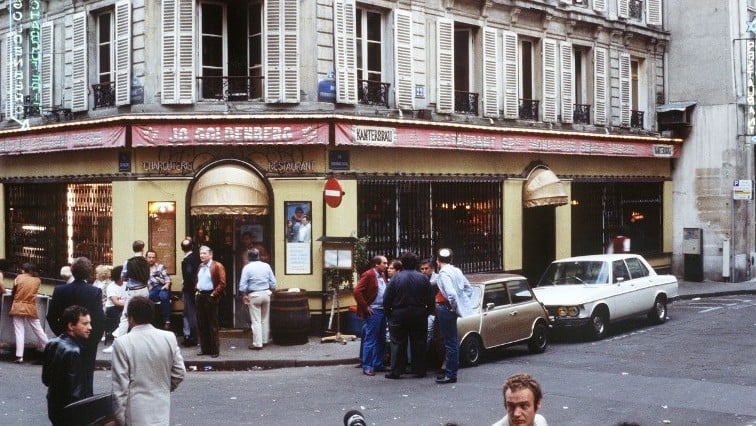
“I meet people all the time who have pictures with my grandfather at his restaurant, because he would spend his days going from table to table talking with the customers,” Goldenberg said. “After it reopened a few days after the attack, the place was full of government ministers and celebrities who came to show support. I wasn’t born at the time, but teachers and parents would always talk about it.”
‘It’s important to give the message that you can’t get away with terror’
This month, that attack resurfaced in the news as France requested to open a trial against one of the alleged terrorists, Walid Abdulrahman Abu Zayed, after he was recently extradited from Norway. Five other suspects are also being sought to stand trial, although their whereabouts are uncertain.
“I think it’s important that they stand trial,” Goldenberg said. “It’s important to give the message that you can’t get away with terror. For years, nothing has happened.”
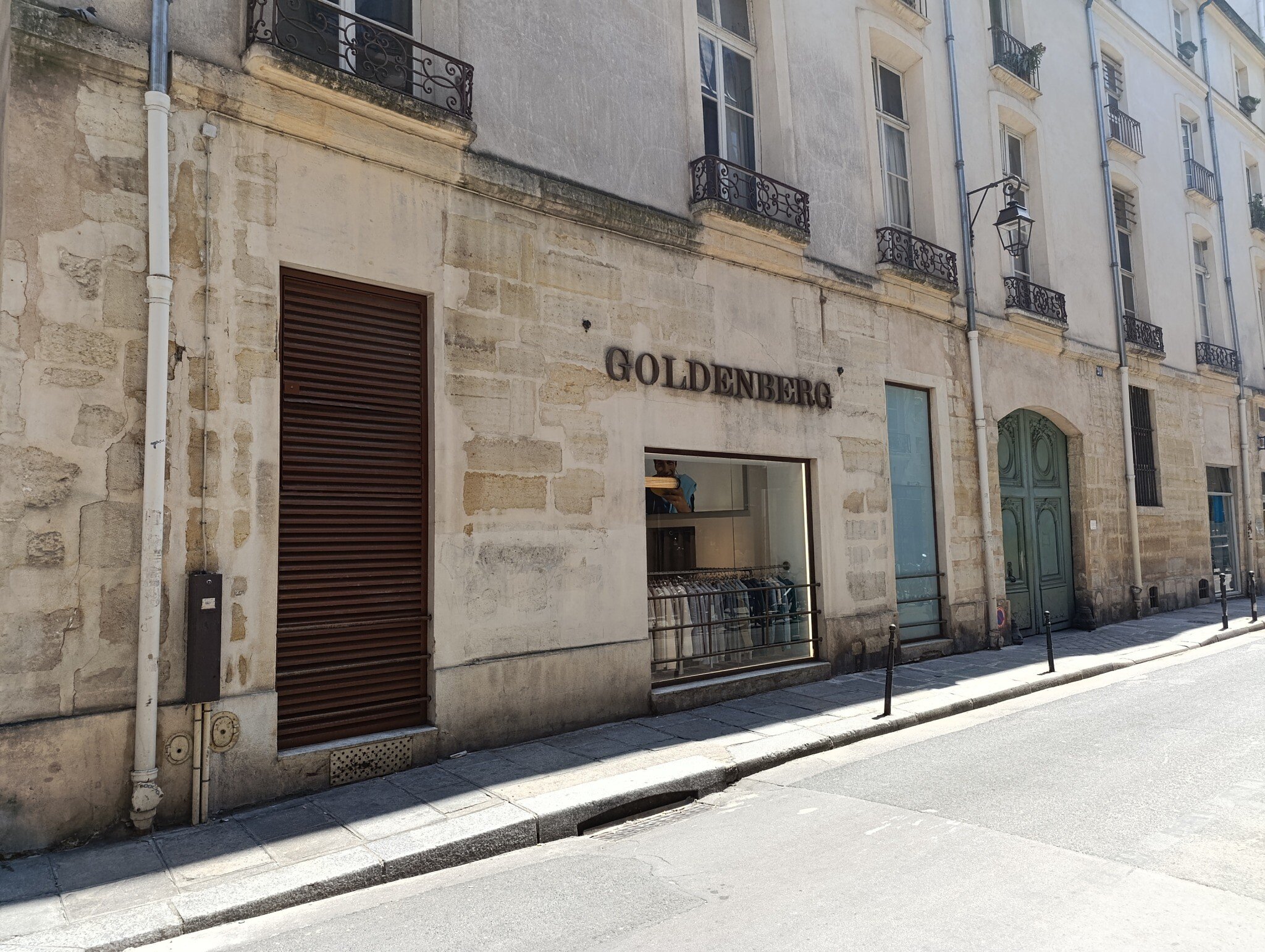
Jo Goldenberg sold the restaurant in 2006 and died in 2014 at the age of 91. The clothing store that now stands in its place still retains a sign with the original name.
“The food business wasn’t as trendy then as it is now, and none of the grandchildren were old enough to run it, ” Goldenberg said with a laugh. “Maybe it would have worked better today.”

The Times of Israel Community.