

They won’t specify it in their war aims, but both Israel and US want Iran regime change
Netanyahu has been more consistent in defining goals of campaign than the White House, but Israel might once again dazzle on the battlefield while disappointing strategically

 Add ToI as a Preferred Source on Google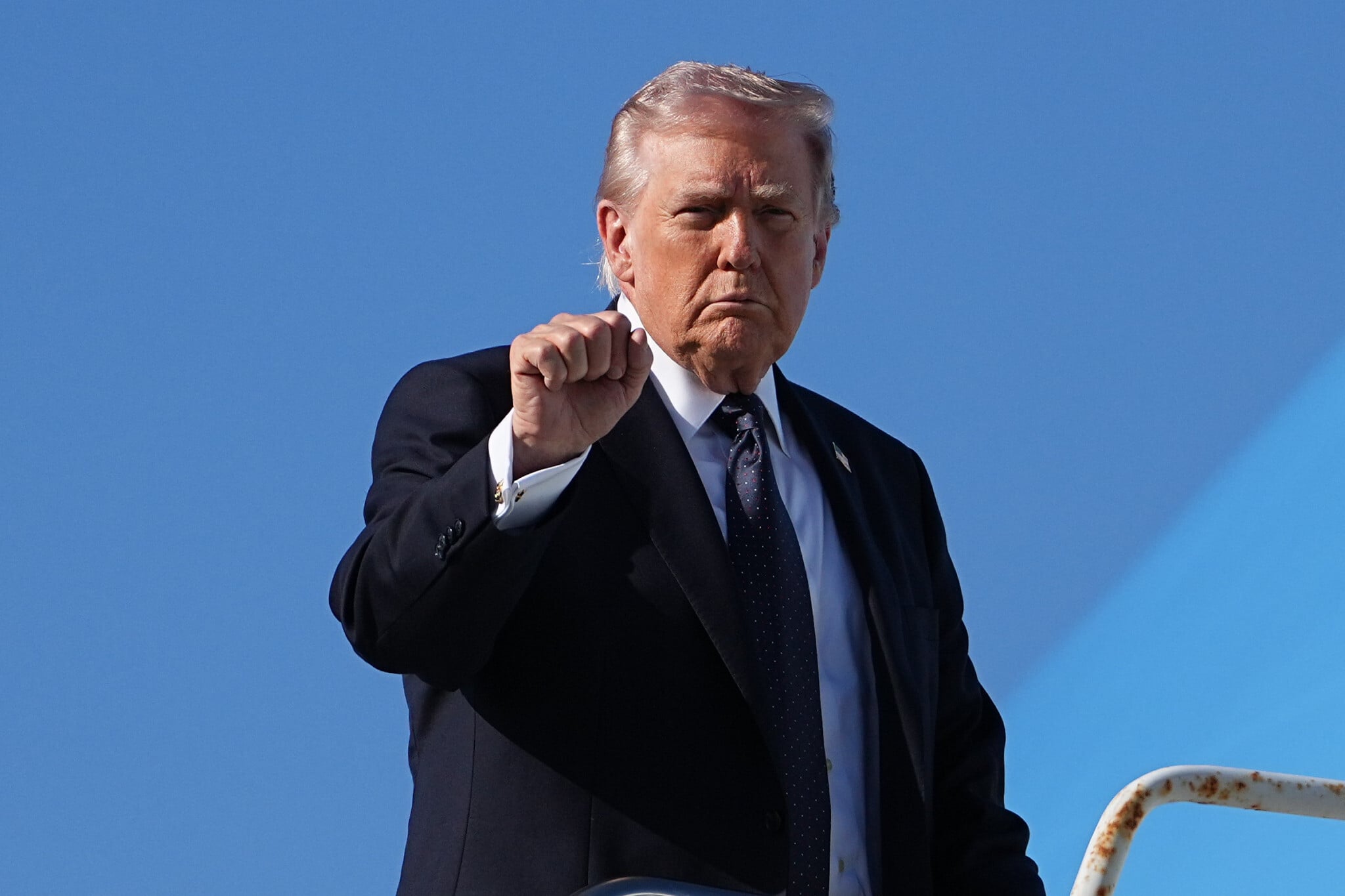
Much of the unease about the US-Israeli campaign against Iran — especially among its backers — centers on the aims of the operation.
Some are concerned about the scope of the goals, especially as pertaining to regime change. “Trump talks regime change in Iran after strikes, but history shows that could be very hard,” read an Associated Press headline on Sunday.
Others argue that US President Donald Trump has “shifting Iran strategies.”
The unease, and the ambiguity, shouldn’t come as a surprise. Americans on both sides of the political spectrum are now averse to anything even faintly resembling the costly nation-building wars in Iraq and Afghanistan after the 9/11 attacks, and they are less than enthused to see US forces back once again in the Middle East fighting in a major conflict.
There is reason for concern about war aims on the Israeli side as well. Israel fought a series of undecisive campaigns whose goals were not at all clear in the decades before the October 7, 2023, Hamas attacks that set off the ongoing conflicts between Israel and the Iranian axis.
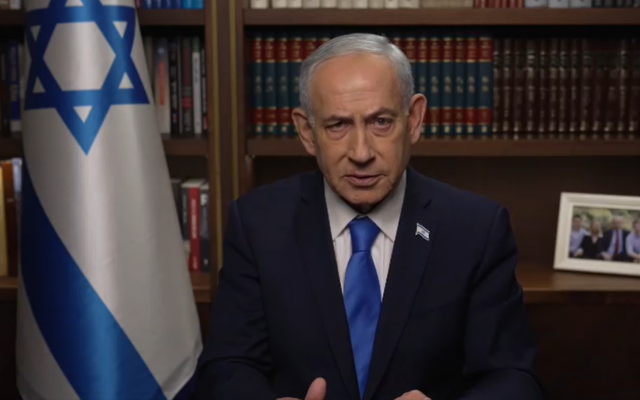
In the Gaza war against Hamas, the feasibility of and motivations behind Prime Minister Benjamin Netanyahu’s stated war aims are the topic of intense debate.
Both the US and Israel have been somewhat vague at times when laying out war aims during the current campaign, but Israel has been more consistent than its ally. Still, they both seem to want regime change, but won’t state it as an explicit aim, likely because both countries know that, ultimately, the decision to topple the regime doesn’t lie in their hands.
‘Creating conditions’ for regime change
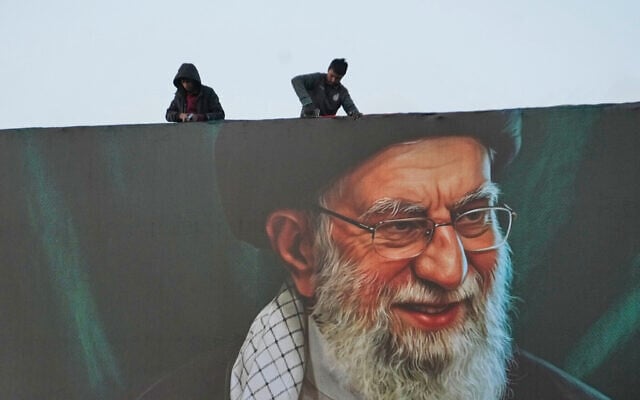
Speaking to The Times of Israel on Thursday, a senior Israeli official made clear that Jerusalem wants to see the regime in Iran replaced, but that it won’t be the one to do so.
“The goal is to remove the existential threat posed by the ayatollah regime,” said the official. “That can best be done by removing the regime. It could also help open the door for the Iranian people to grasp this generational opportunity to set their own destiny. I doubt the Iranian people want to replace one ayatollah with another ayatollah.”
That approach has been extremely consistent throughout the first week of the war in comments from a range of Israeli officials.
On Wednesday, in the only press briefing offered by the government thus far, PMO spokeswoman Shosh Bedrosian gave a similar account of Netanyahu’s war aims, which she presented as “removing the existential threat against the United States, Israel, Europe and countries in the Middle East.”
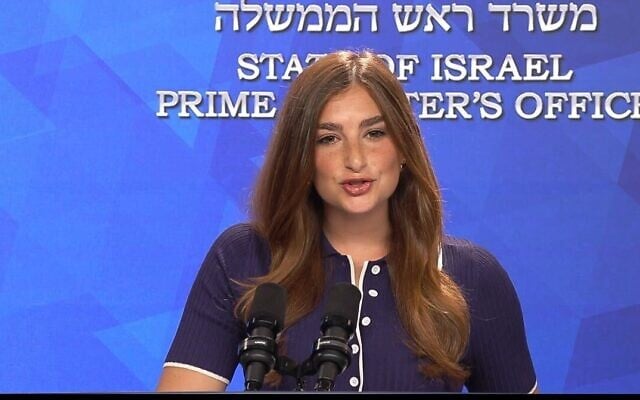
As Israel has throughout, she stressed the threat from Iran’s nuclear and ballistic missile capabilities.
And she also gave the formula that Israel has been using to underscore its desire to see regime change without assuming the responsibility for making it happen: “We are creating the conditions for the Iranian people to take charge of their own destiny.”
Netanyahu has set the tone by expressing Israel’s desire to see new rulers in Tehran, while not stating goals that the country cannot see realized.
“It is up to the people of Iran to change their government,” he stressed in a Tuesday interview with Fox News. And in the opening hours of the campaign, Netanyahu said that “the time has come for all parts of the Iranian people — the Persians, Kurds, Azeris, Baloch and Ahwazis — to cast off the yoke of tyranny and bring freedom and peace-loving values to Iran.”
Mixed messages
US Vice President JD Vance insisted that Operation Epic Fury wouldn’t drag out for years because the US has a clear goal. “There’s just no way that Donald Trump is going to allow this country to get into a multiyear conflict with no clear end in sight and no clear objective,” Vance asserted.
“He’s defined the objective as: Iran cannot have a nuclear weapon and has to commit long-term to never trying to rebuild their nuclear capability,” the vice president said, offering the narrowest definition of the US war aim.
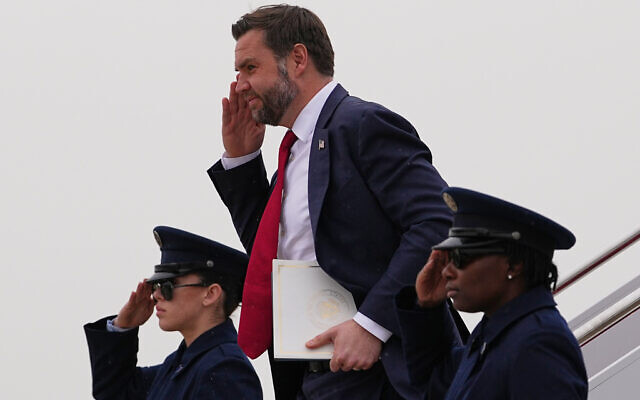
But US officials have offered mixed messages on whether regime change is the goal.
On Saturday, in a video message announcing the operation, Trump said the operation was designed to “prevent this very wicked, radical dictatorship from threatening America and our core national security interests.”
He promised to stop Iran’s nuclear weapons ambitions, but also pledged to obliterate Iran’s missile industry and deal with its armed proxy network — three core Israeli concerns.
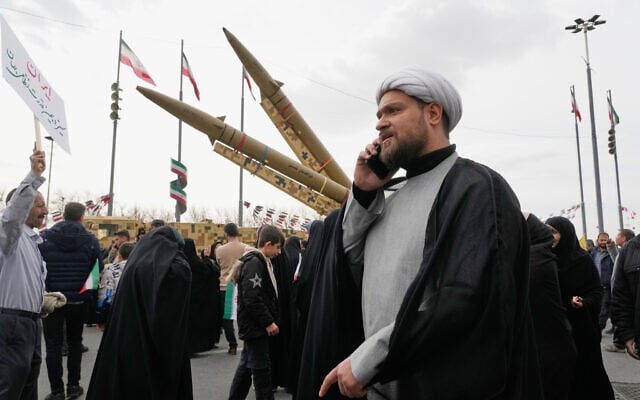
Then he called on Iranians to “take over your government” once all those goals have been achieved. On the second day of the war, Trump followed up with that plea, urging Iranians to “seize this moment, to be brave, be bold, be heroic and take back your country.”
The very next day, White House Press Secretary Karoline Leavitt — undoubtedly with Trump’s blessing — laid out the clearest explication of the US war aims, but, unlike her boss, did not allude to regime change in any way.
On Saturday, President Trump released a statement laying out clear objectives to the American people for Operation Epic Fury.
Let me reiterate them:
Destroy the Iranian regime’s missiles and raze their missile industry to the ground.
Annihilate the Iranian regime’s Navy.… https://t.co/HPi9af6Q3i
— Karoline Leavitt (@PressSec) March 2, 2026
Also Monday, US Defense Secretary Pete Hegseth pushed back on the notion that the Trump administration is getting engaged in another entrenched Mideast conflict: “This is not a so-called regime change war, but the regime sure did change, and the world is better off for it.”
US Secretary of State Marco Rubio gave a similar version of the war aims, while adding, “We hope that the Iranian people can overthrow this government.”
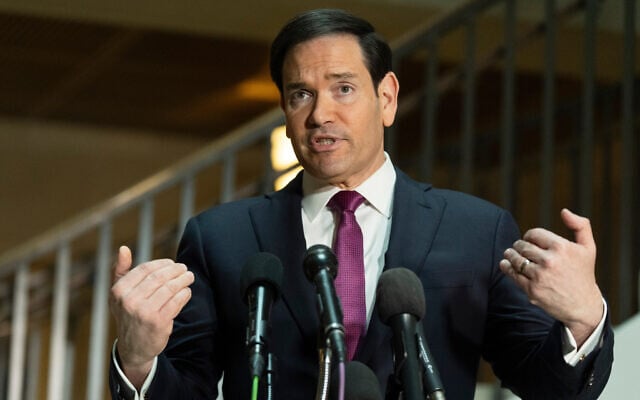
Still, it seems that Trump and his team have given thought to who it wants to run Iran next, even if the same regime would remain in place.
“We’d like to see somebody in there that’s going to bring it back for the people,” Trump said Tuesday in response to a question from a reporter. “Most of the people we had in mind are dead. Now we have another group. They may be dead also, based on reports.”
And of the frontrunner to succeed the killed supreme leader Ali Khamenei, his son Mortaja, Trump said Thursday, Khamenei’s son is a lightweight… unacceptable to me. We want someone that will bring harmony and peace to Iran.”
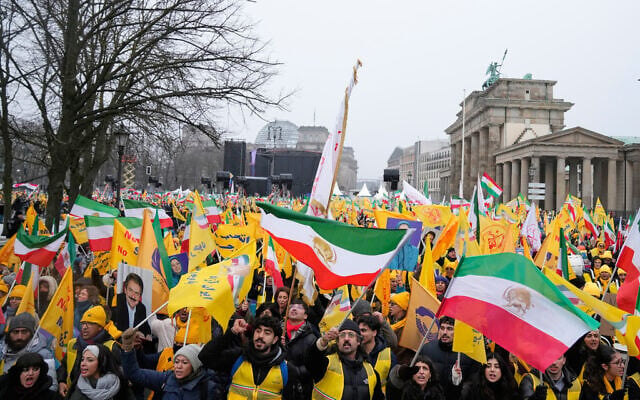
Given that it is a powerful but undoubtedly junior partner in the Iran war, Israel has to keep a close eye on how US leaders are defining what they want to achieve in the campaign.
“I can imagine it’s a challenge for Israeli policymakers,” said military historian and former Israeli ambassador in Washington Michael Oren, “because there has been so much fluidity on the American side.”
Do clear war goals matter?
At their essence, war aims define what the government wants to achieve within the bounds of what it believes its military can accomplish.
But, especially in a democracy like Israel, there is always an eye on public opinion when declaring the goals of a military campaign — how voters will react to what is achieved in a conflict when compared with what was promised. In particular, when Israel is facing an election year.
Goals of a war can also shift as new opportunities present themselves during the fight, and other possibilities dissipate.
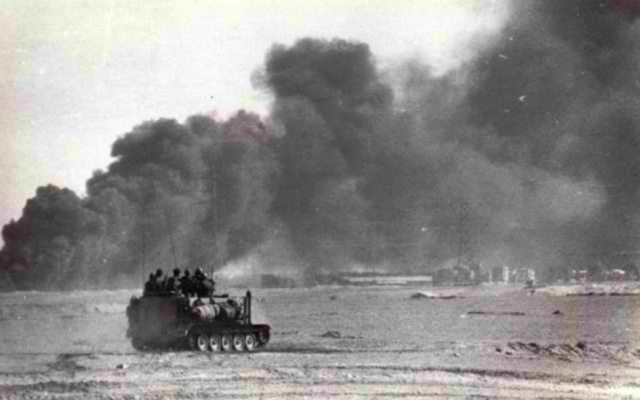
There are also undeclared aims, either to keep them secret from the public, the enemy, or the world, or to avoid firmly committing to those goals. For instance, Israel’s conventional wars against Arab armies have had very specific aims of removing urgent military threats and improving deterrence, alongside the ever-present unstated goal of convincing Arab neighbors to give up their dreams of destroying Israel and to normalize relations.
Still, some argue that Israel has long avoided laying out clear war aims.
“The state has had no clearly defined war aims in any of its wars since 1956,” insisted Israeli strategist Tzvi Lanir in a 1987 interview, arguing that prime minister David Ben-Gurion understood after the Sinai campaign that Israel could never force its neighbors to make peace by winning wars. Instead, Israel just tried to win on the battlefield and buy a few years of quiet.
In its wars, many argue, Israel displays tactical and technological brilliance, but struggles to lay out and achieve clear strategic goals.
Israel has especially struggled in that regard in its wars against non-state actors over the last 40 years.
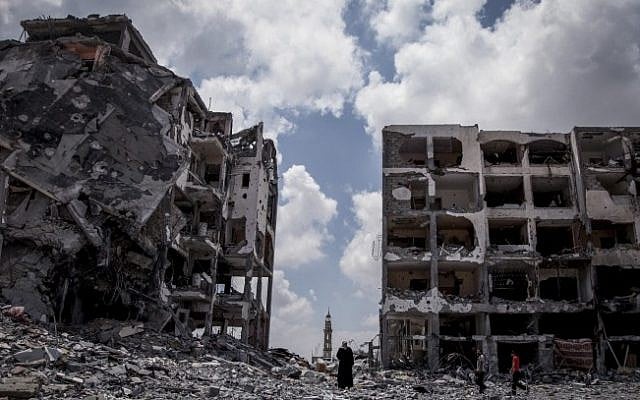
Writing in 2019, 12 years after Hamas took over the Gaza Strip by force, retired senior IDF officer Gur Laish argued that “Israel has no solution it is attempting to achieve in Gaza. Israel declares that it is interested in a change of regime in Gaza, replacing Hamas, but Israel has no strategy for achieving this long-term goal.”
“Instead Israel follows only short-term goals,” he wrote, “maintaining its security, while attempting to prevent a humanitarian crisis in Gaza by providing it with a measured level of funding and basic supplies.”
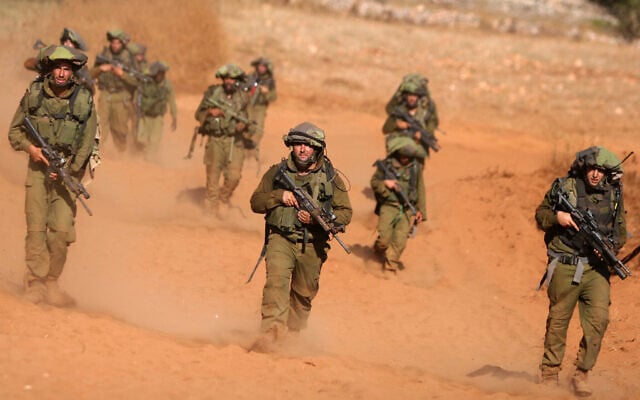
“It’s not so clear at what point you can truly force the other side to wave a white flag, to ask for a ceasefire,” said Eitan Shamir, director of the Begin-Sadat Center for Strategic Studies.
“Until the 1980s, it was clearer. Since then, it’s become more complicated to define. We know the debates within Israeli leadership [about] the [2006] Second Lebanon War, [2008-9] Operation Cast Lead, [2014] Protective Edge — in all those cases, there really was some confusion or hesitation about the right objectives to set. And we also see the difficulty now, even in the Gaza war.”
Israel’s security approach changed dramatically after the Hamas invasion on October 7, 2023, and Netanyahu laid out clearly defined goals for that war.
That hasn’t guaranteed success. Israel has brought all its hostages home, but has not achieved the other two stated aims — disarming Hamas and ending its rule of Gaza.
Netanyahu’s approach in both Gaza and Iran, said Oren, is to focus on defeating the enemy first, then moving to examining what post-war order is possible.
In Iran, Israel faces the risk of falling back into its familiar pattern — using technological wizardry, tactical excellence, and a fair dose of bravado to rack up almost unimaginable achievements on the battlefield, but to find itself facing the same threats, or even growing dangers, again and again.
Not everyone is worried about that happening against Iran.
“Is it necessary to have a day-after scenario here?” Oren asked. “The bomb doesn’t care. The target of the bomb doesn’t care. Maybe it helps you politically a little bit. The important thing is to kill as many of these people as they can, degrade as much of the regime’s capabilities as you can, and then we see what happens.”
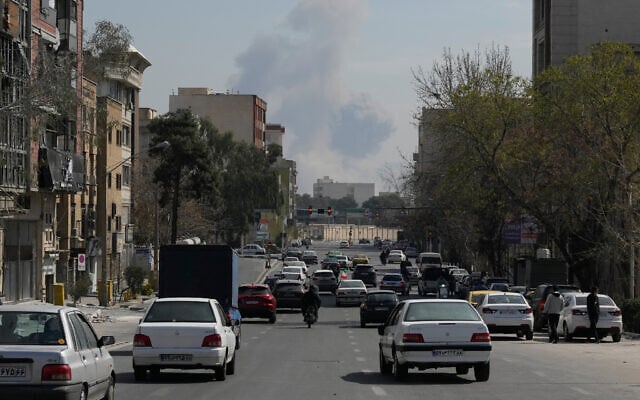
Even if you don’t bring down the regime, concurred Shamir, “you basically put it on its knees.”
“Everything it built and invested money in over the past almost 25 years, you’re destroying. And then it’s a new game in town,” he continued, “because we’re talking about a Middle East with a very, very weak Iran, economically in shambles, exhausted, broken, crushed.”
“True, there’s a scenario of a rebound,” he allowed, “but it’s not very likely, and in any case, you’ve changed the entire regional balance in the Middle East. Iran won’t be a threat for a very long time, at least — and that’s the worst case.”
“In the best case, we’ll have regime change.”






The Times of Israel Community.