

Threats to Supreme Court test Israel’s democracy
The powerful institution is facing growing animosity from hard-liners for its perceived overreach and liberal tendencies
 Add ToI as a Preferred Source on Google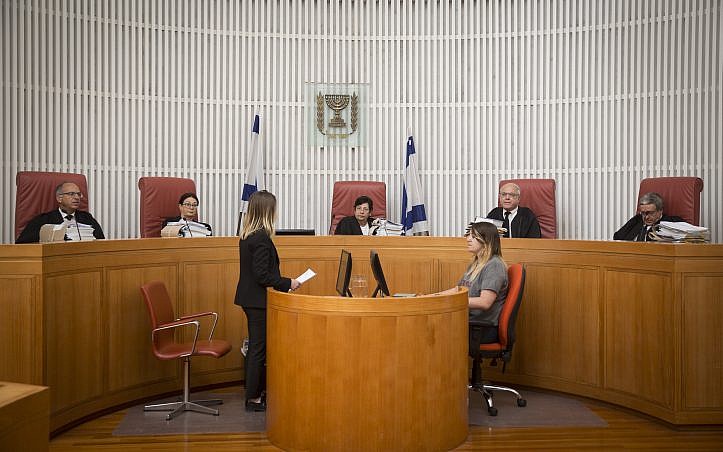
JERUSALEM (AP) — The Supreme Court, widely seen as a guardian of Israel’s founding democratic principles, is facing fierce pressure from political hard-liners who are challenging what they see as the court’s overreach and liberal slant.
The stepped-up rhetoric and attempts to shackle the court are testing Israel’s democracy at a time when members of Prime Minister Benjamin Netanyahu’s nationalist government have led an onslaught of attacks against the country’s liberal institutions, stirring up populist sentiment and deepening a rift with the country’s moderates.
The court’s critics want it to tone down what they see as its overt activism and demand a rethink of the institution’s role in society. But some observers see the campaign against the court as crossing a line.
“The attacks, the incitement is very worrying,” said Dalia Dorner, a former Supreme Court judge. “Without an independent court there is no democracy.”
In Israel, a country with a robust press and rowdy politics, criticism of the court isn’t unusual, but its opponents rarely seek to curb its authority. It also comes as Netanyahu’s hawkish coalition government, dominated by religious and nationalist parties, has escalated criticism of many of Israel’s liberal bastions in the arts, media and civil society and pledged or carried out legislative action against them.
Israel’s Supreme Court has stood as an arbiter on landmark issues, such as the balance between religion and state or controversial military tactics like targeted assassinations of wanted militants. It is known for its independence and has been cursed by right-wing and left-wing governments alike.
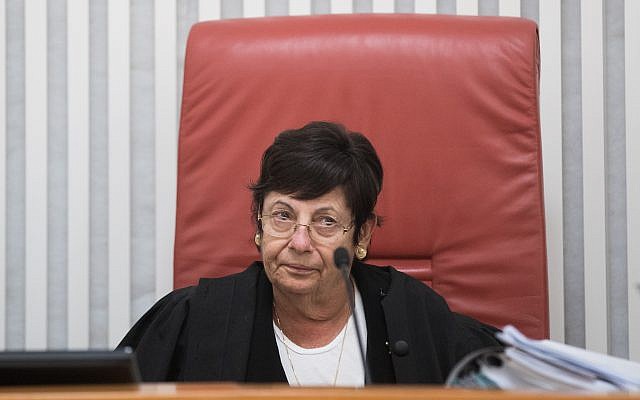
Palestinians and dovish civil society groups turn to the Supreme Court to rule on the legality of settlement construction or the terms of arrest of prisoners, among others. It is among the country’s most trusted institutions, especially among Israel’s minority Arab population.
The court has also been used by lawmakers to score political points, a place where they can send popular but legally questionable laws to die.
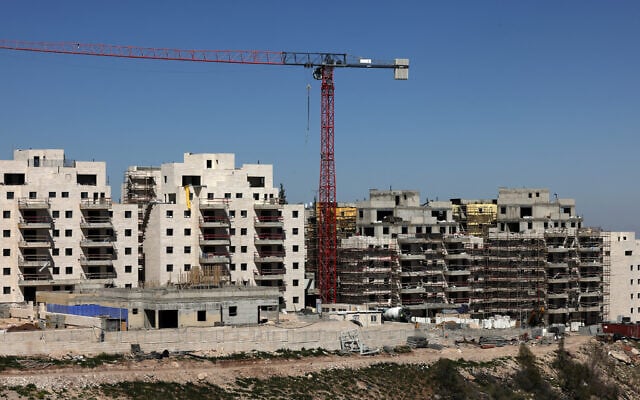
Making its way through the court now, for example, is a challenge to a law meant to legalize hundreds of West Bank settlement homes built on private Palestinian land. Netanyahu supported the law, which was hugely popular with his settler base, but Netanyahu’s own attorney general said he couldn’t defend the law in court and it is expected to be struck down.
Recently, the court has ruled on a number of issues that have touched at the heart of the government’s legislative agenda. Angry lawmakers have vowed to rein in the court, promising to enact legislation that would weaken its authority.
In August, the court partially ruled against a law that allowed the state to indefinitely detain African migrants to pressure them to leave the country, sparking outrage from lawmakers from the ruling Likud party, which spent years crafting the law.
Last month, the court struck down a contentious law that granted exemptions from military service to ultra-Orthodox men, in response to a challenge by secular Israeli Jews who want ultra-Orthodox Jews to participate in the mandatory service. Netanyahu’s ultra-Orthodox coalition partners were livid.
The repeated setbacks prompted Education Minister Naftali Bennett and Justice Minister Ayelet Shaked to propose legislation that would limit the court’s ability to strike down laws.
“This new situation, where the cancellation of laws has become routine, forces us, the legislators who were chosen by the public, to work to restore the appropriate balance between the authorities,” Bennett said.
Another government minister has suggested lowering the retirement ages of judges as a way to assert greater control over the court’s makeup.
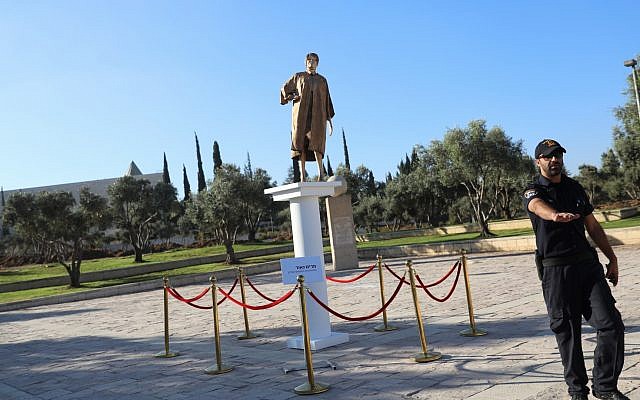
In response to the court’s ruling on the migrant law, Derech Chaim, a Jewish religious nationalist group, erected a golden statue of outgoing Supreme Court President Miriam Naor outside the court in Jerusalem in protest against the court’s “dictatorship” over elected officials. Shaked, the justice minister, has chided the judicial system for prioritizing individual rights over Israel’s Jewish character.
Last week, the court came under fire for declining to send a representative to a state ceremony marking half a century since Israel began building settlements in the West Bank.
It said the decision was necessary “to protect the independent stature of the judicial authority and to protect the public trust in the judicial system.”
Regavim, a pro-settlement group that challenged that decision, argued the court was required to attend under state protocol.
Regavim says it wants legislation to clarify the role of the court so it can stop “sucking out the authority of the executive and legislative branches.”
“When there’s a lack of clarity there’s this terrible grey area and the elected representatives of the people are no longer the ones in charge of the government,” said Naomi Kahn, the group’s press liaison.
Israel does not have a constitution to uphold the court’s independence but it has what’s called “basic laws,” a precursor to an eventual constitution, meant to safeguard it.
Itzhak Galnoor, a professor emeritus of political science at Jerusalem’s Hebrew University, said he didn’t expect the legislators to follow through on their threats to hobble the court. And one coalition partner has vowed to defend the court from damaging legislation.
“This whole deluge of non-democratic legislation may be intended to strike fear and restrain (the court),” Galnoor said. “And they might actually achieve that.”







The Times of Israel Community.