 Add ToI as a Preferred Source on Google
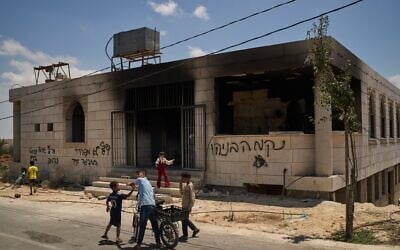
UMM AL-KHAIR, West Bank – The ramshackle Palestinian hamlet of Umm al-Khair, located in the South Hebron Hills region of the West Bank, is no stranger to hardship and adversity.
Since October, the village has had demolition orders hanging over more than a dozen of its structures. In July, peace activist Awdah Hathaleen, one of the village’s most prominent residents, was shot dead, allegedly by an extremist Jewish settler from the area.
On Monday, the hamlet was once again the scene of strife as the army and police thwarted a planned tree-planting event there organized by Israeli human rights activists, illustrating what villagers say are ever-growing challenges imposed by their settler neighbors and Israel’s security services that threaten their daily existence beyond the tragedies and large-scale tribulations that usually grab headlines.
These day-to-day difficulties include perpetual harassment and intimidation inside the hardscrabble village, struggles to maintain their agricultural livelihood, and even efforts aimed at stopping them from giving their children a place to play soccer.
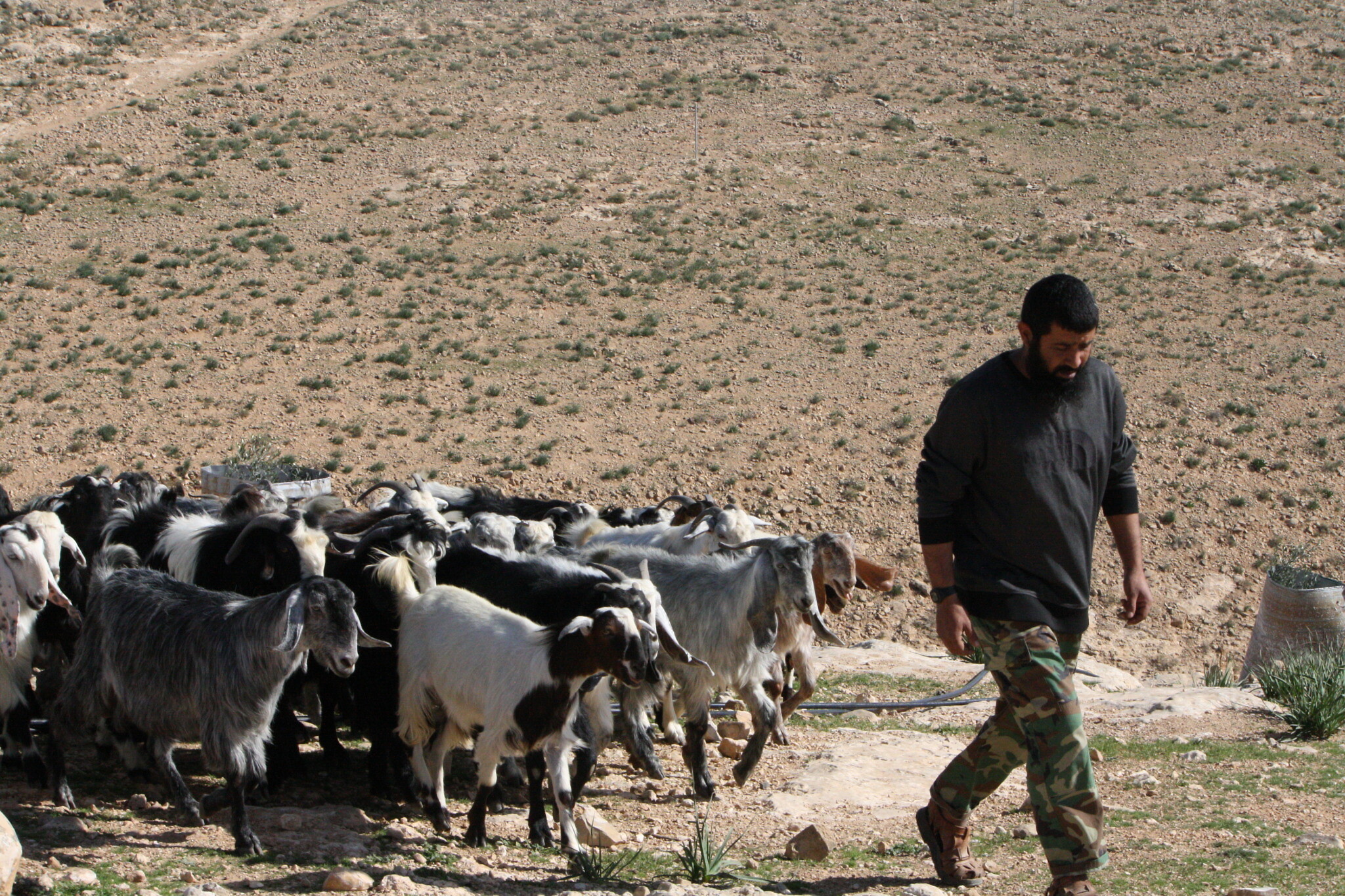
“We are upset all the time here,” Khalil Hathaleen, the brother of the slain activist, told The Times of Israel on Monday, complaining of persistent harassment by settlers and security services whenever he takes his sheep and goats out to graze. “They don’t give the kids one minute to be happy. They make life very difficult for everyone.”
The tree-planting activity was organized by Rabbis for Human Rights to mark the Jewish holiday of Tu Bishvat, which celebrates the new year for trees and is a day on which tree-planting ceremonies are traditionally conducted in Israel.
Some 150 olive trees on Umm al-Khair’s land were uprooted by local settlers and security forces in October 2025, and Monday’s tree planting was designed in part to rectify that damage, with plans to plant 300 new trees.
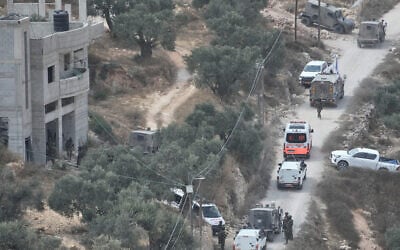
But shortly after 30 or so volunteers with the Rabbis for Human Rights organization arrived at the hamlet, a small IDF force entered the village and ordered the activists to halt the tree-planting event.
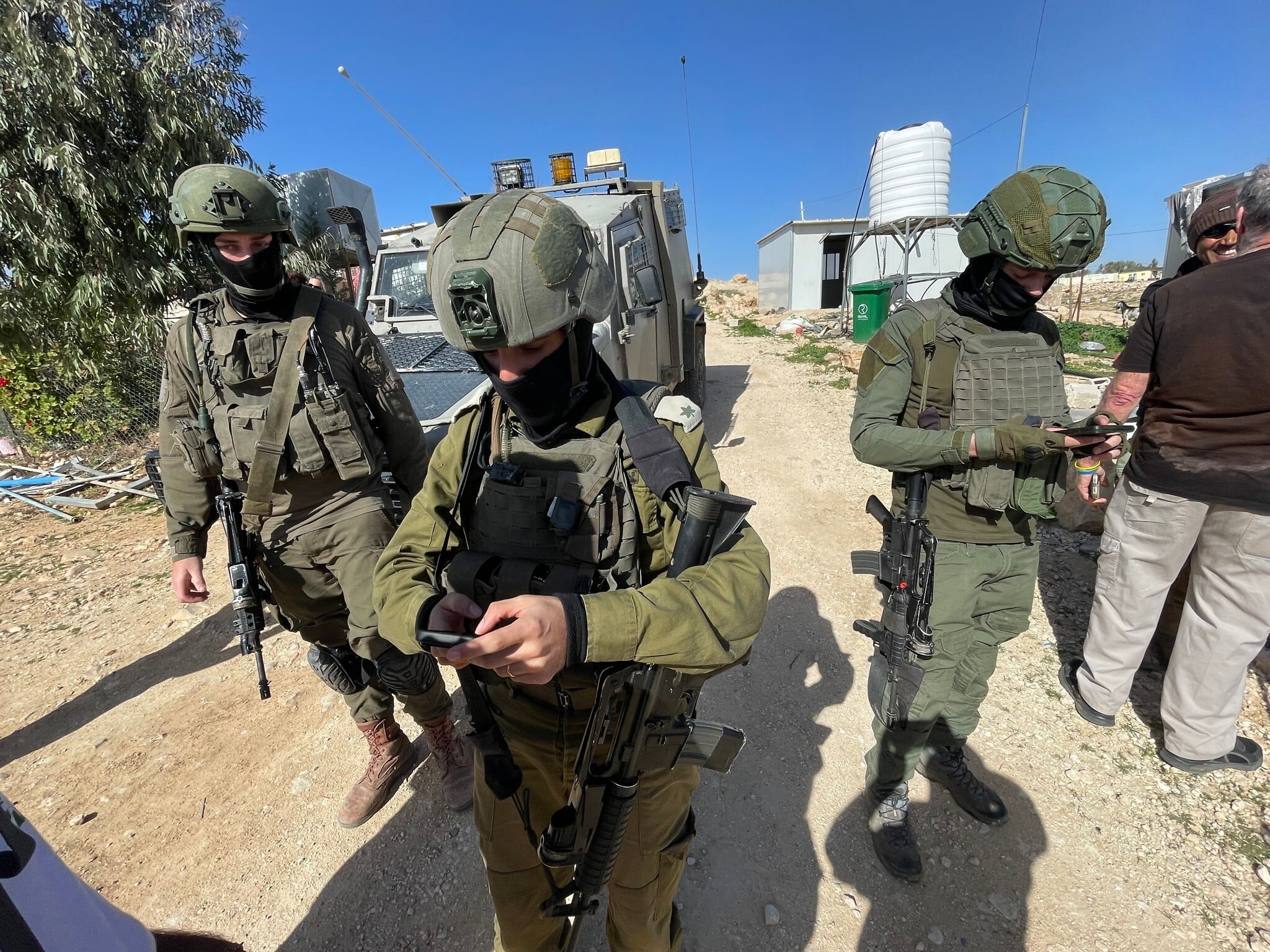
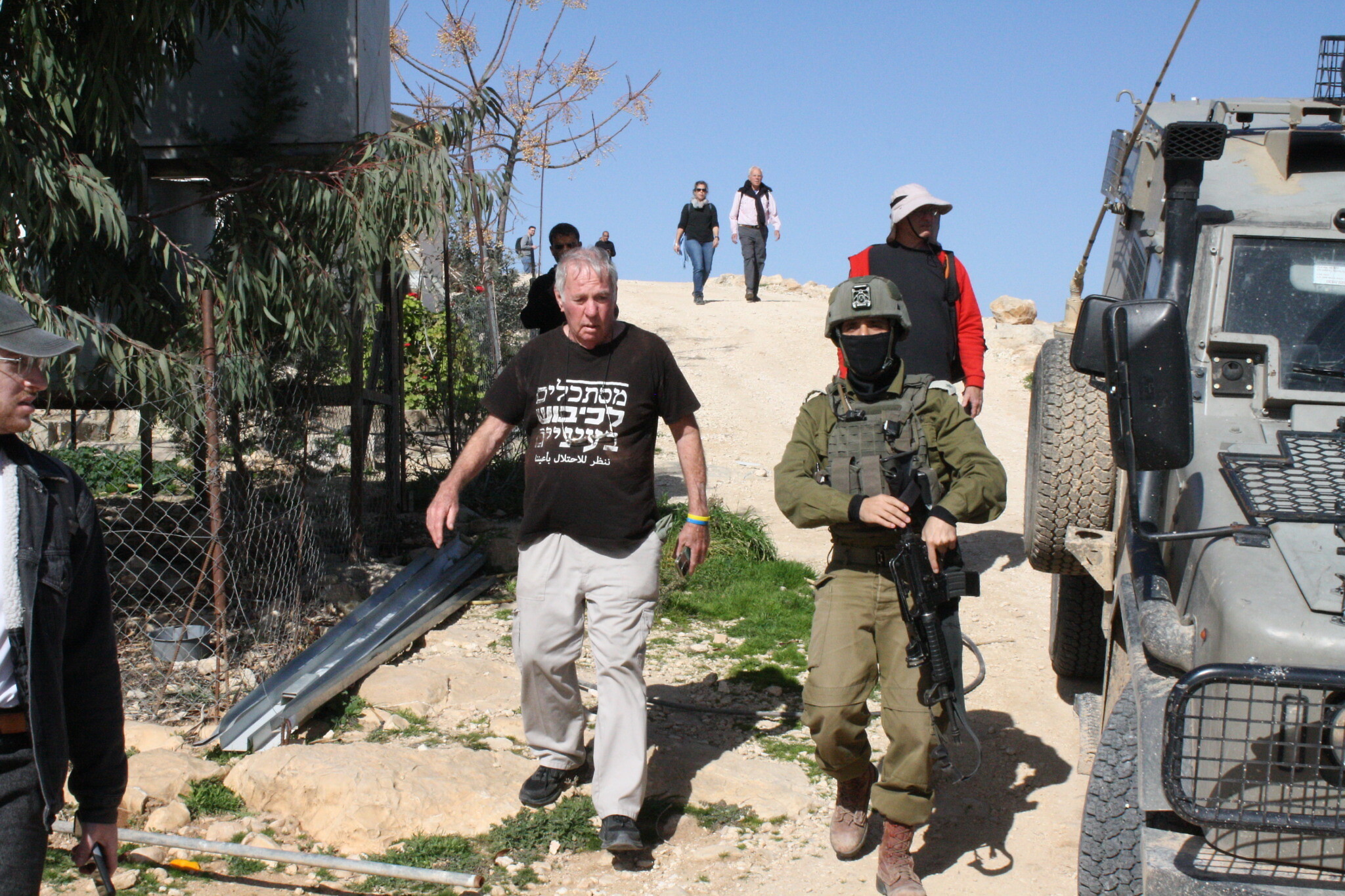
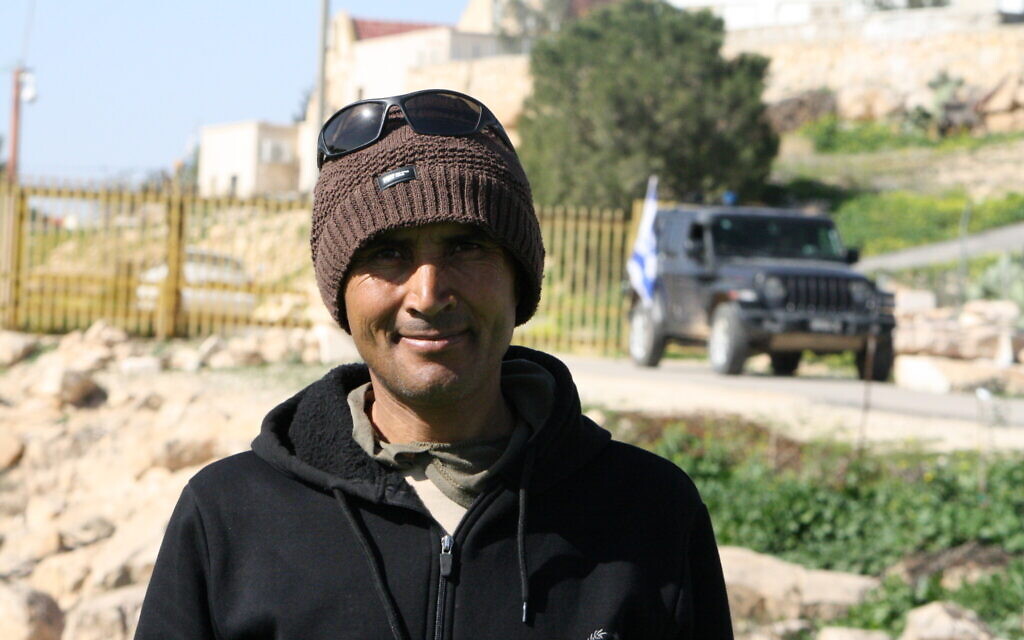
An IDF officer and two other soldiers, all masked, informed the activists that a closed military zone order had been imposed on the entire village for 24 hours by the commander of the IDF’s Judea Regional Brigade, meaning that all nonresidents were required to leave.
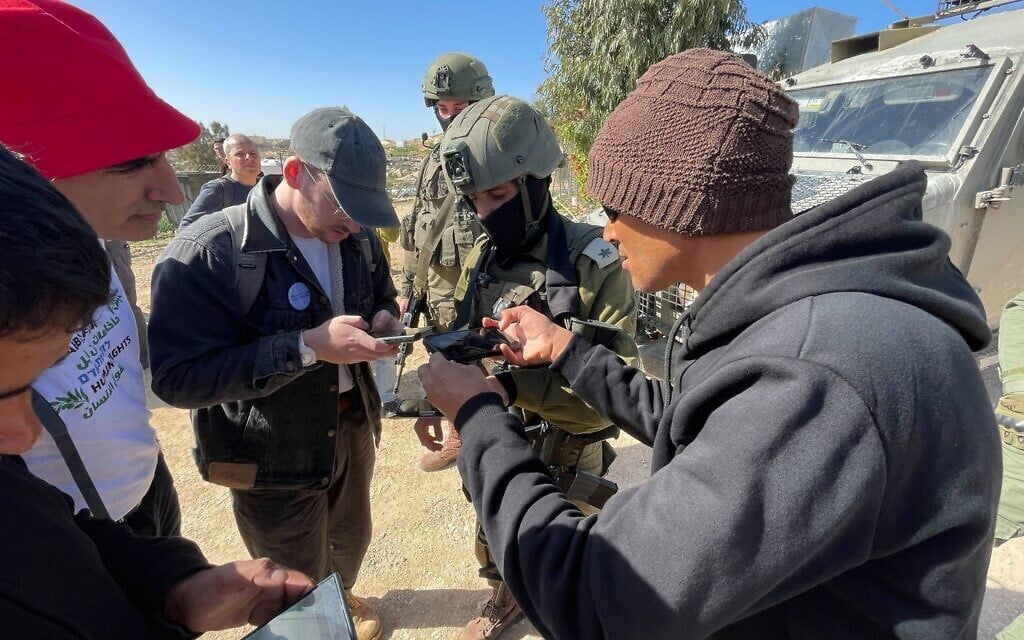
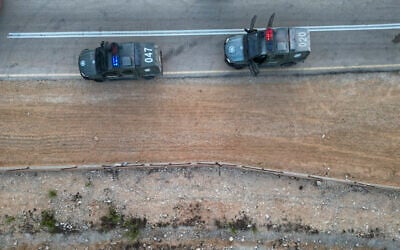
A police unit also arrived at the scene to enforce the order.
Residents of Umm al-Khair who were accompanying the volunteers alleged that settlers living in illegally constructed homes established just meters from the hamlet had called the army in order to stop the planting activity, a claim that could not be verified.
During the olive harvest season last year, closed military zones were regularly used to stymie Palestinian agricultural activity, barring Palestinian growers and Israeli or international peace activists from accessing the trees. In at least one incident, a settlement municipal authority confirmed that outpost residents had initiated the requests to stop the activity, which it termed an “illegal demonstration.”
The IDF declined to respond on the record to questions from The Times of Israel as to why the Tu Bishvat closed military zone order was issued, or why the soldiers were masked.
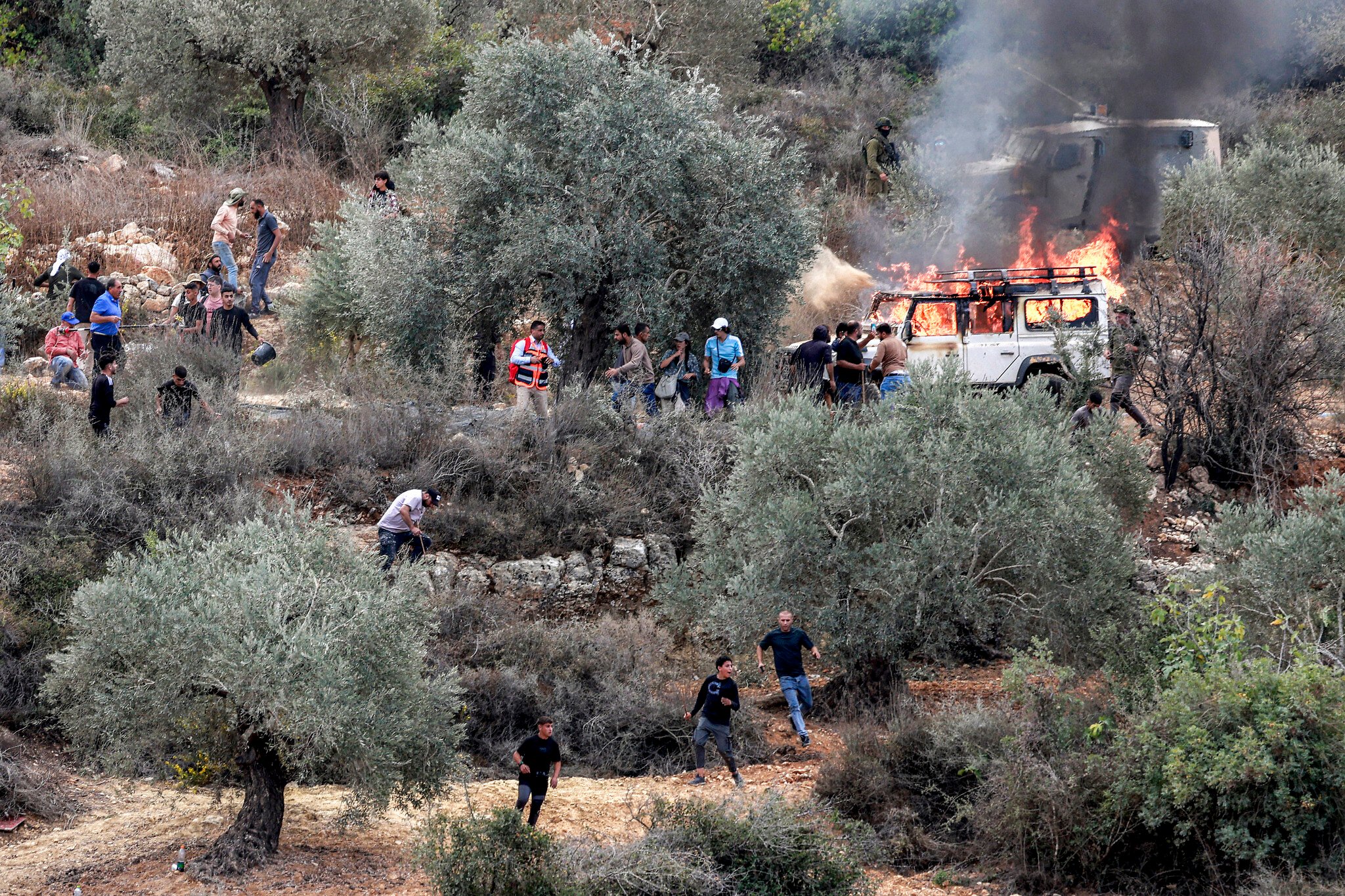
The army generally contends that such orders are issued for the safety of local residents, claiming that the volunteer activities often cause “friction,” a reference to the violence that ensues when settlers confront Palestinians and activists. Tensions are often heightened when the Palestinians and activists enter olive groves that can extend beyond the physical footprint of West Bank towns and villages, placing them in closer proximity to rapidly expanding settlements and illegal outposts.
The military and police, who have been accused of failing to take Israeli extremist violence seriously in the West Bank, have not addressed why they do not act to prevent settler confrontations instead of halting the coexistence efforts. However, many observers have alleged that the policy is a direct outgrowth of the right-wing government in Jerusalem which has greatly expanded the growth of settlements throughout the West Bank.
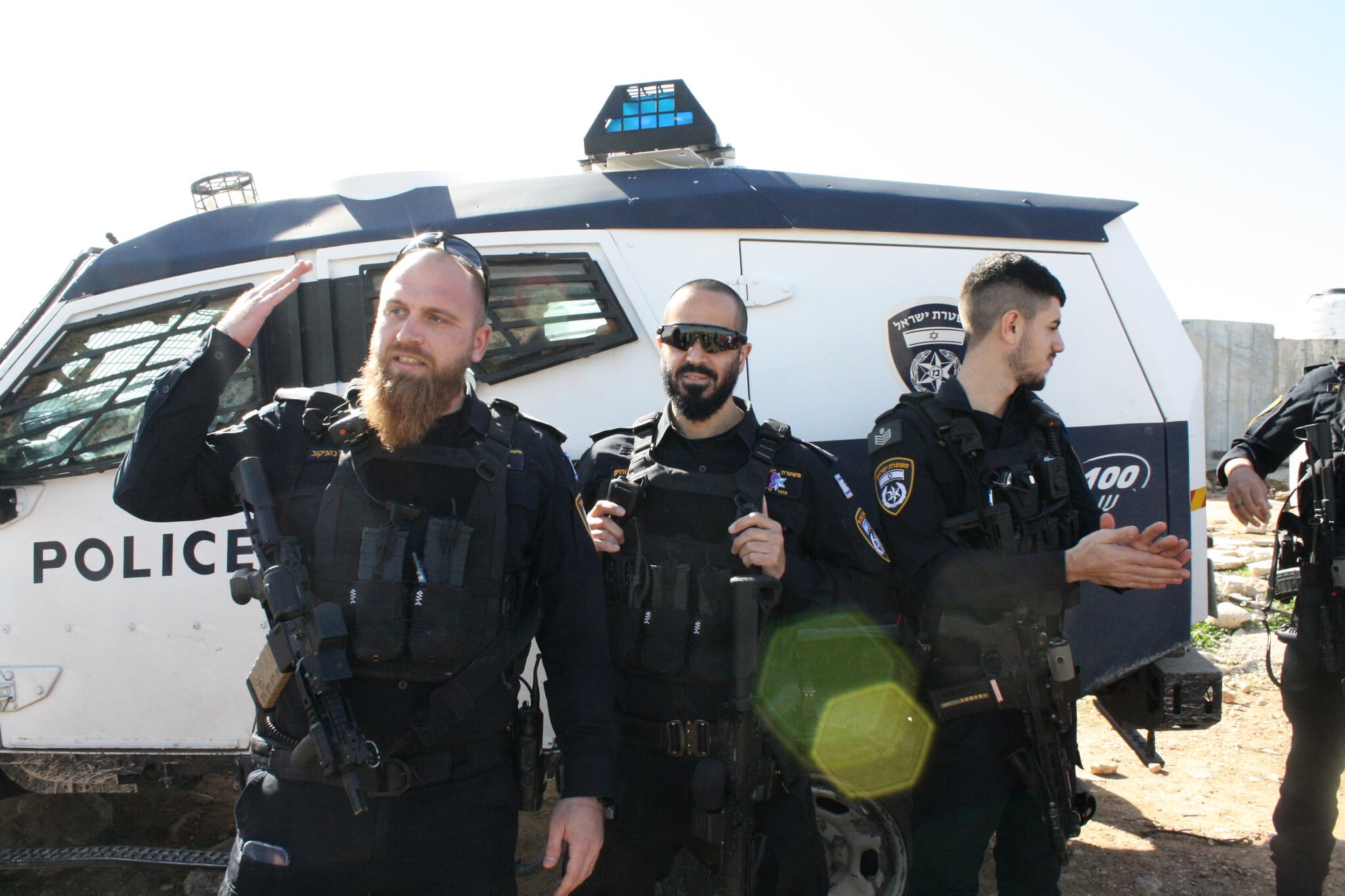
“The thing that most frightens this government is what we do here together on the land, Jews and Arabs,” said Eid Hathaleen, an artist from Umm al-Khair who has in the past exhibited with renowned Chinese artist Ai Weiwei. (The name Hathaleen is shared by many in the village, who largely hail from the same extended clan but may not all be closely related.)
“Do you see how many forces came to separate us, to separate people who thirst for peace?” he added. “They don’t want our cooperation and relations to continue normally. That’s what the government is doing. It’s more dangerous for them than anything.”
The issuance of the closure order may have violated a January 18 ruling by the High Court of Justice that determined that short-term closed military zone orders can only be issued when there is an “evidentiary foundation that demonstrates the near certainty of a violation of public order by the activists.
The ruling, issued in response to a petition by the Human Rights Defenders Fund, also stipulated that such orders require “concrete and tangible information, based on up-to-date intelligence information, that shows that the activists intend to disrupt public order.”
The IDF said in response simply that the order was issued “in accordance with the evaluation of the operational situation in order to protect security and to ensure that public order would not be violated,” but did not respond to questions as to whether the commander of the Judea Regional Brigade had “concrete and tangible information” that the activists intended to disrupt public order.
Crying foul over a soccer field
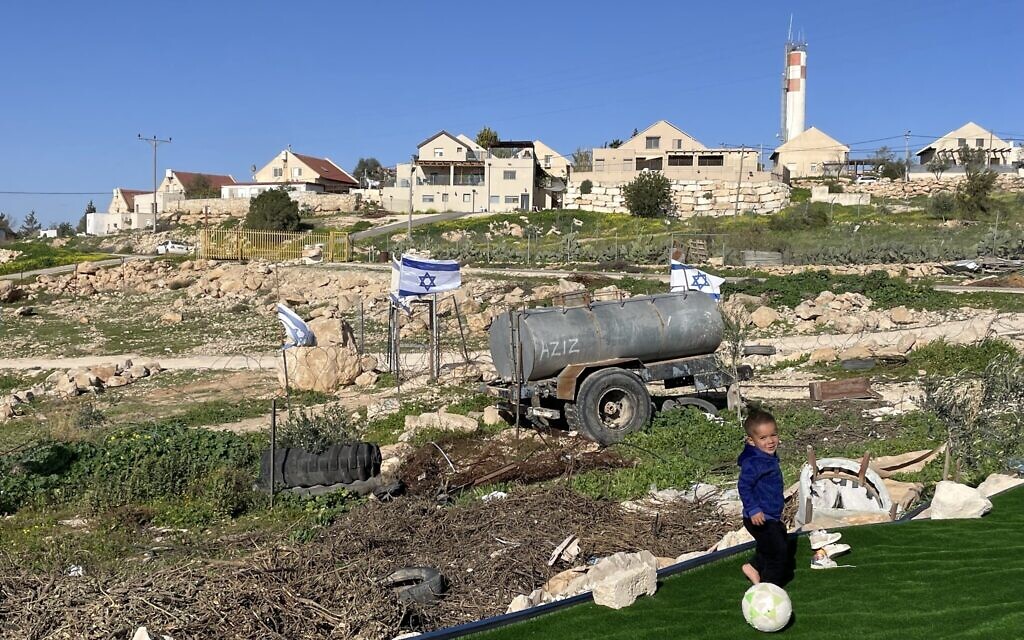
In recent days, Umm al-Khair’s tribulations have extended even into the seemingly innocent world of children’s sports — specifically a rudimentary, AstroTurf soccer field that the residents made for their children on private village land.
Last week, the Regavim organization, which opposes Palestinian construction in the part of the West Bank under Israeli civil and military control dubbed Area C, wrote to Defense Minister Israel Katz and the commander of IDF Central Command Maj. Gen. Avi Bluth to complain that the installation of the synthetic grass was illegal and “threatened” the settlement of Carmel, which lies just several dozen meters away.
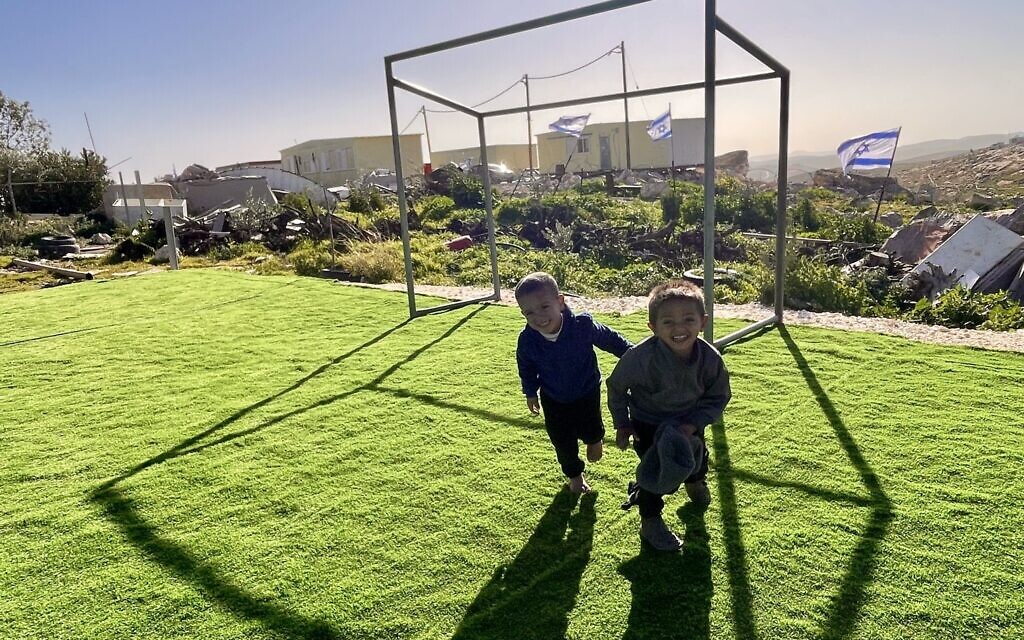
“Why are they pressing the state to destroy the soccer pitch?” asked Eid, who says he invited locals from Carmel to play with them on the pitch instead of pressuring the authorities to remove it.
“There is no place for kids to play here; nowhere else is safe, so we made a safe space for them to play, with no rocks or rubble. Why does it bother the settlers that we have a soccer pitch,” he asked. “This doesn’t threaten anyone’s security. It’s a soccer pitch. It’s a simple place. The kids play there from morning till night.”
Hours before the thwarted tree-planting event, settlers sneaked into the hamlet under cover of night and surrounded the soccer pitch with Israeli flags, staking them on land belonging to Umm al-Khair residents.
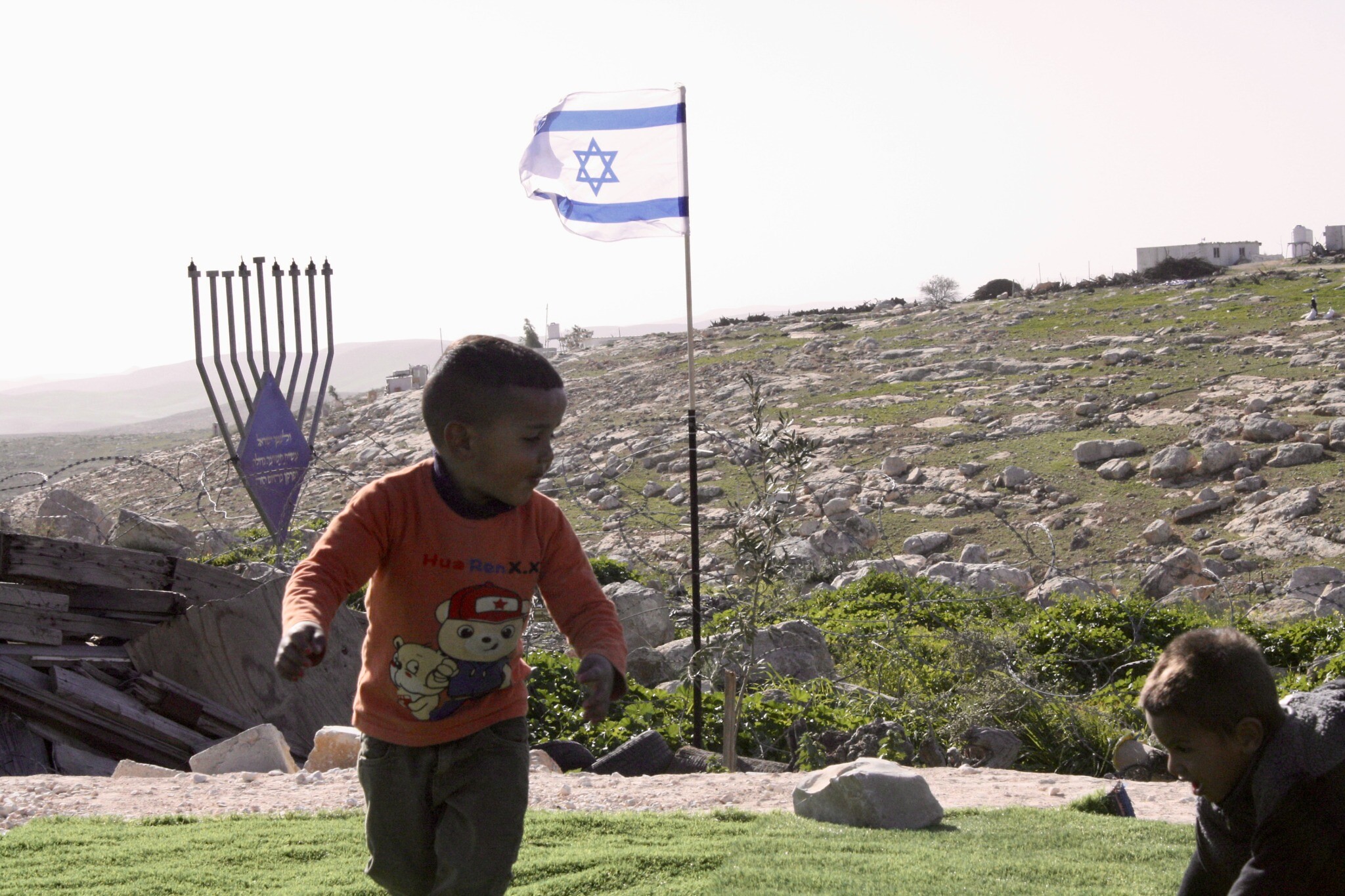
According to Khaled Zigari, a coordinator with Rabbis for Human Rights, Umm al-Khair was established by Bedouin who fled to the Jordanian-controlled West Bank from the Beersheba region after Israel’s War of Independence in 1948. They purchased the land on which the hamlet sits, and have lived there ever since, Zigari said.
However, because the village is situated in Area C, it is reliant on Israel for planning and construction permits that are almost never granted to Palestinians, forcing villagers to build illegally.
The Civil Administration, a department of the Defense Ministry that runs civil affairs in the West Bank, has repeatedly issued and carried out demolition orders against buildings in Umm al-Khair on the basis that they lack the proper permits.
Deadly encounter
Eid noted that while pro-settlement groups and Carmel settlers complained about the new soccer pitch, four prefabricated homes built by settlers in October 2025 without permits just meters from Umm al-Khair remain standing, and that Regavim has not complained about that illegal construction.
In October, the Jerusalem District Court issued an order to stop the construction work and to prevent settlers from taking up residence in the new homes, but the order was ignored by the settlers. The court then annulled the order after the settlers took up residence.
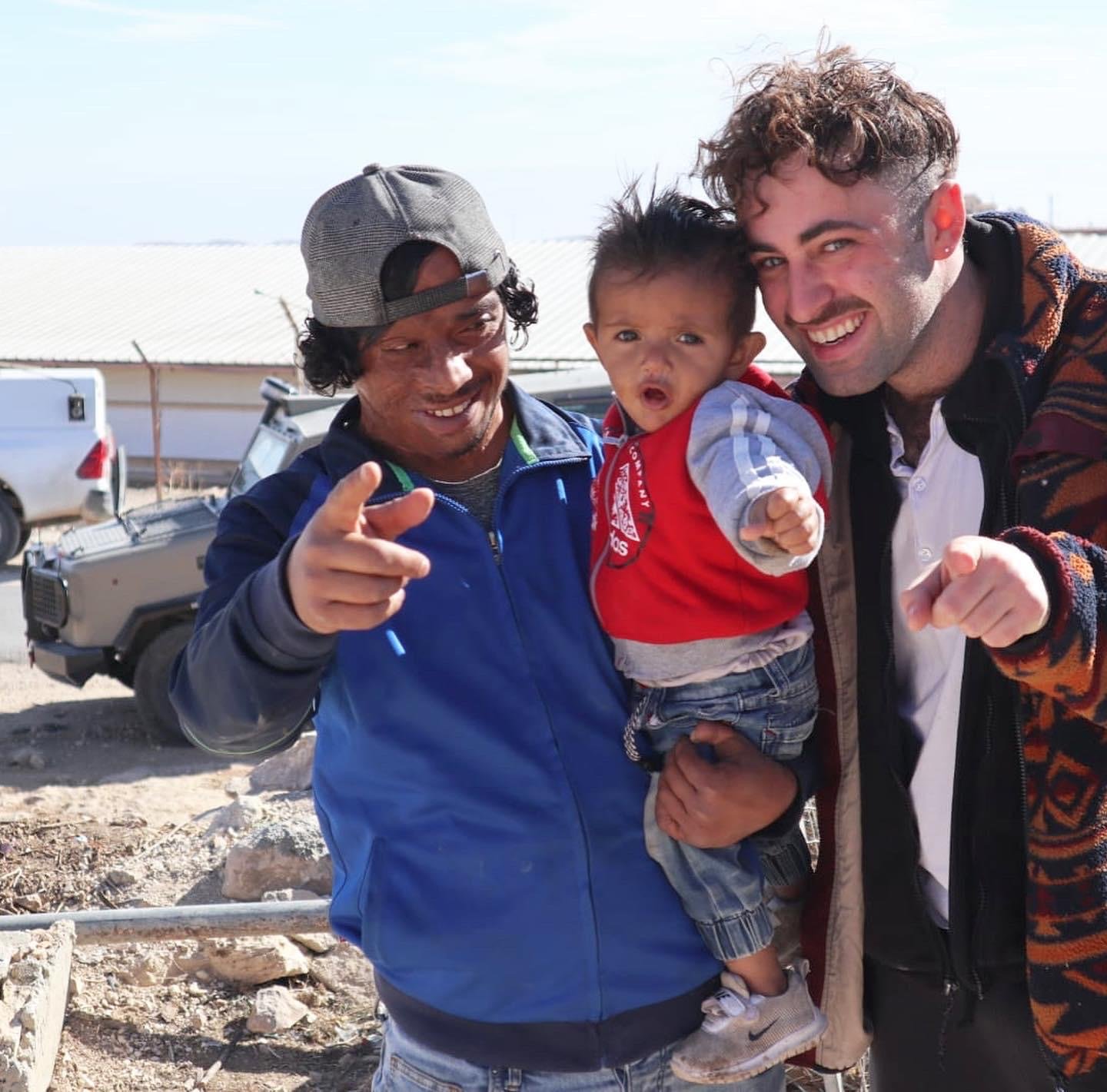
Settlers first brought heavy machinery to the hill in late July to prepare the land for the homes, sparking a confrontation with villagers who sought to halt the work on land they claimed as theirs. In the ensuing fray, Awdah Hathaleen, a resident and activist who had been featured in the Oscar-winning documentary “No Other Land,” was shot and killed, allegedly by extremist settler and contractor Yinon Levi.
Civil rights organizations have repeatedly accused Levi, who was previously sanctioned by the US, of being responsible for severe violence and harassment against local Palestinians, using an illegal farming outpost in the area he operates as a base for him and young settler extremists to intimidate and attack local communities. He was arrested after the shooting but later released and has yet to be charged.
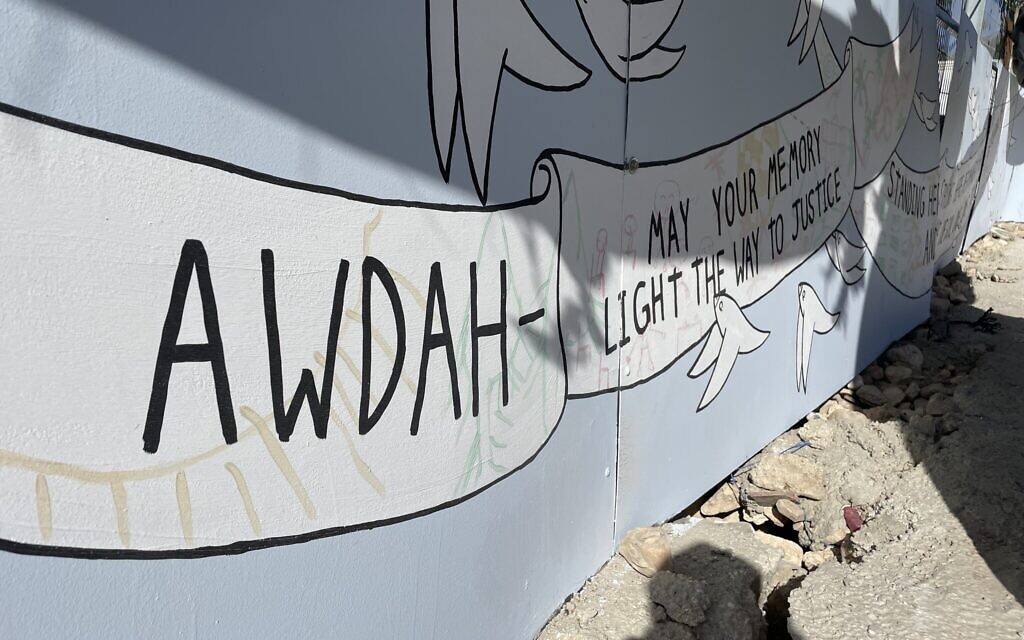
Awdah’s brother Khalil Hathaleen now helps take care of his brother’s three young children. He said he misses his brother every day.
“He was a peaceful man. He would write about settler violence. I think they came to kill him on purpose,” Khalil claimed.
Two laws for two peoples
Eid Hathaleen claimed that just a day before the army and police blocked tree-planting volunteers from Umm al-Khair, settlers from Carmel had entered the village and chopped down trees built on land belonging to the village’s residents, in order to enable better access to a pathway leading from the new, prefabricated settler homes to Carmel itself.
Eid said he called the police at least three times to have them stop the settlers, but a police unit only came an hour later when the trees were already chopped down.
“When a settler complains about a soccer pitch or about tree-planting then the police come very quickly,” said Eid. “This is how it is in the occupied territory. They even want to stop humanitarian activity of Jews and Arabs together, and issue orders against it.”
Neither police nor settlement representatives responded to requests for comment.
Rabbi Avi Daboush, the director of Rabbis for Human Rights, had a similar lament.
“On Tu Bishvat, the holiday in which the people of Israel celebrate the connection between man and the land, the IDF chooses to prevent Israelis and Palestinians from planting trees together,” said Daboush.
“In the same West Bank where settlers uproot trees without hindrance, it is precisely the planting that is declared a security threat,” he continued, adding that his organization would “continue to come and insist on partnership and the values of justice, peace and human rights.”
Rabbi Sharon Brous, the founder and head of the IKAR Jewish community in Los Angeles and a prominent voice in Diaspora Jewry, was one of the volunteers who went to Umm al-Khair on Monday. She said the treatment of the village and its residents contradicted Jewish values.
“This is the reality of the wild West Bank, that the rule of law doesn’t apply in a consistent and recognizable way, doesn’t apply equally to Jews and Palestinians,” said Brous.
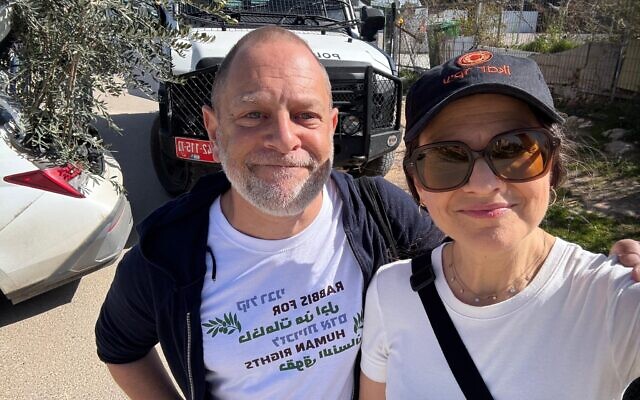
“It’s an obvious attempt to exert power, and demonstrate to the people who live there, and to those who stand in solidarity with them, that they have no ability to control outcomes here,” she continued, in reference to the military order preventing the tree-planting.
“This is part of the reality of entrenched occupation, and it not only contravenes international law but also contravenes democratic and Jewish norms.”

The Times of Israel Community.