Trump: US has seen ‘no proof yet’ of Navalny poisoning
NATO says there’s ‘proof beyond doubt’ that Russian opposition leader was given Novichok; US president says nuclear arms negotiations with Moscow more important than anything
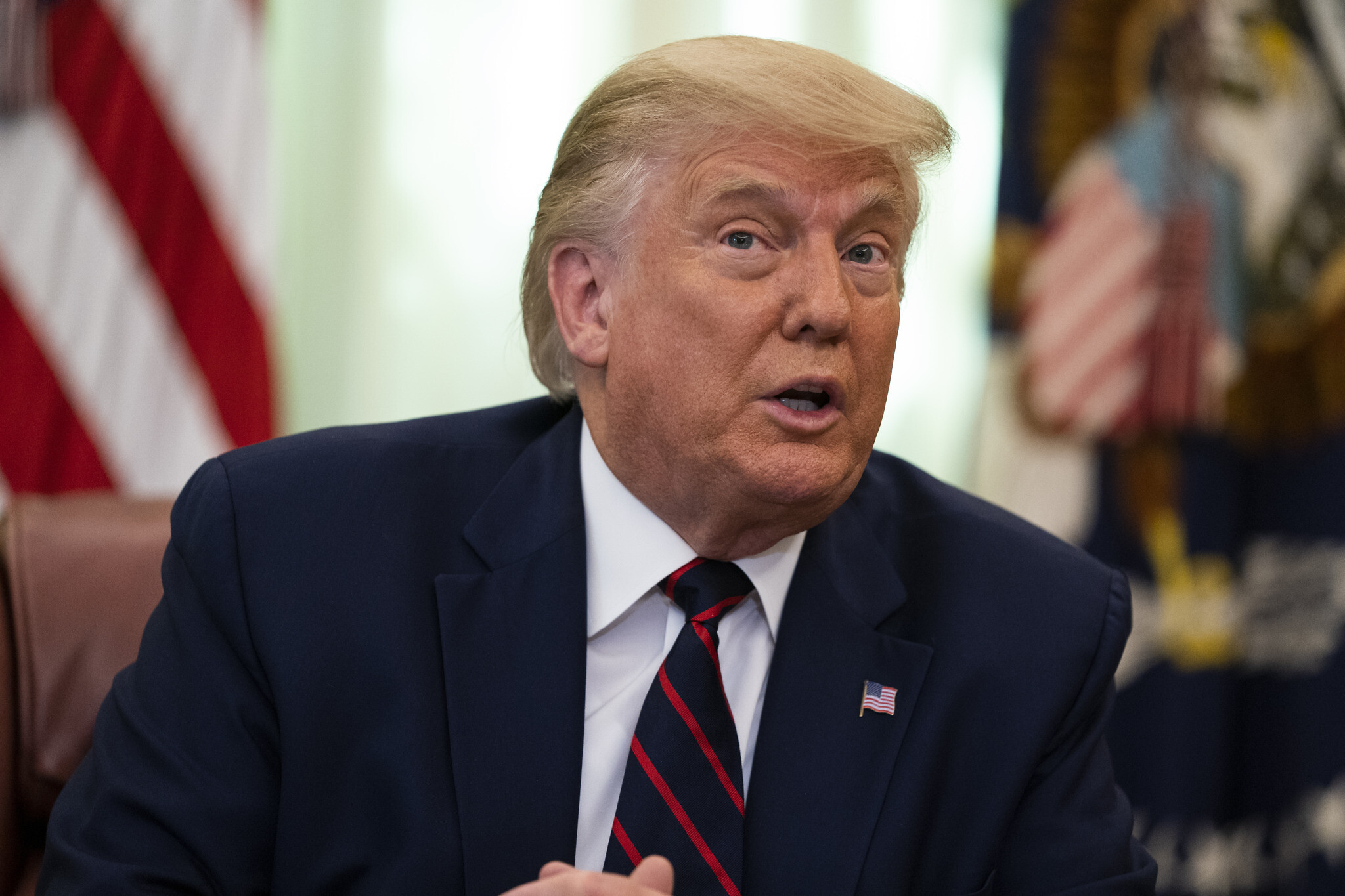
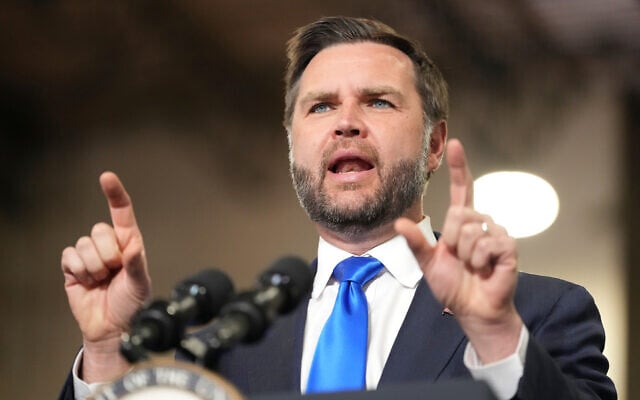
Illustrative -- US President Donald Trump speaks in the Oval Office of the White House, Sept. 4, 2020, in Washington (AP Photo/Evan Vucci)
WASHINGTON — US President Donald Trump said Friday that he had not yet seen proof that Russian opposition leader Alexei Navalny had been poisoned as stated by Germany.
“I don’t know exactly what happened. I think it’s tragic, it’s terrible, it shouldn’t happen,” Trump said.
“We haven’t had any proof yet, but I will take a look at it,” Trump said in a press conference.
Trump said he had heard that Germany had made a finding that Navalny, who fell ill on a Siberian flight last month, had been poisoned with the deadly Novichok nerve agent.
US President Donald Trump. (AP Photo/Evan Vucci)
Since then Europe has threatened new sanctions and NATO called for an international investigation into the alleged attempted assassination.
Get The Times of Israel's Daily Editionby email and never miss our top stories
Germany has briefed its NATO partners and NATO Secretary General Jens Stoltenberg said there was “proof beyond doubt” that Navalny was poisoned with Novichok.
“We have not seen it ourselves,” Trump said of the evidence from German investigators.
Based on what Germany is saying that seems to be the case, he added.
Advertisement
“I would be very angry if that’s the case,” he said.
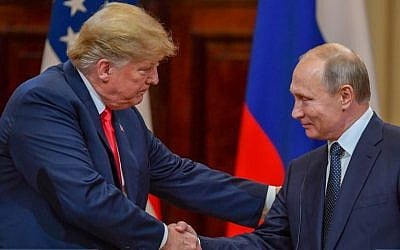
US President Donald Trump (L) and Russia’s President Vladimir Putin shake hands before attending a joint press conference after a meeting at the Presidential Palace in Helsinki, on July 16, 2018. (AFP Photo/Yuri Kadobnov)
Trump did not say what action he would take if convinced that President Vladimir Putin’s most potent political opponent had been the victim of a murder plot.
But he said he has been “tougher on Russia than anybody else by far.”
At the same time, Trump said, he considered ongoing nuclear arms negotiations with Moscow more important than any other issue.
“It’s the most important thing,” he said.
Help us report truthfully on social media
As a multimedia journalist, my job is to take the quality, fact-based journalism produced by The Times of Israel newsroom and make it accessible across every platform — from Instagram posts to podcasts to short-form videos.
This is how many, especially young people, consume news these days. But misinformation is rampant on social media. Our team at ToI produces accurate, responsible short-form reporting on Israel and the Jewish world.
If you believe in the importance of factual social media journalism, please consider joining our reader support group, The Times of Israel Community. Your financial support is essential to sustain responsible multimedia reporting.
We’re really pleased that you’ve read X Times of Israel articles in the past month.
That’s why we started the Times of Israel - to provide discerning readers like you with must-read coverage of Israel and the Jewish world.
So now we have a request. Unlike other news outlets, we haven’t put up a paywall. But as the journalism we do is costly, we invite readers for whom The Times of Israel has become important to help support our work by joining The Times of Israel Community.
For as little as $6 a month you can help support our quality journalism while enjoying The Times of Israel AD-FREE, as well as accessing exclusive content available only to Times of Israel Community members.
Thank you, David Horovitz, Founding Editor of The Times of Israel


 Add ToI as a Preferred Source on Google