
 Add ToI as a Preferred Source on Google
This is part of a series, “Uprooted.” Each column is a curated monologue from an individual among the tens of thousands of internally displaced Israelis during the war with Hamas who were evacuated from the country’s northern border and the Gaza envelope.
Saturday, October 7
At the end of that week, we celebrated the Kibbutz Nirim’s anniversary. Many guests came from outside the kibbutz, and many stayed overnight. My family was divided among four houses. My partner Tal (an Israeli living in Warsaw) and I were at my place, along with my sister who slept in the safe room.
I woke up 10 minutes before the Red Alert rocket siren. Usually, I don’t get worked up about it, but when Tal stays over, we head into the safe room. We ended up spending the entire day there. We had three phones, each with different roles: I stayed on the kibbutz’s WhatsApp group, my sister handled the news sites, and Tal followed Twitter.
We have a WhatsApp group called “Parents in Nirim,” and there were messages like: “Help, there are terrorists in the house,” followed by: “A plant starting with T?” because some people in the safe room were disconnected from what was happening outside and playing “City, Country, River.”
We heard gunfire, explosions and shouts in Arabic. Some people saw the terrorists walking around in the kibbutz, and despite reports of a terrorist infiltration, some people texted, “No way, that’s the army, not terrorists.” Given the situation, the denial seems reasonable to me. After a few hours, the Kibbutz Emergency Team issued a message: “Lock yourselves in the safe rooms and do not go out.”
My father, a former company commander in Sayeret Matkal, has a gun at home – originally owned by my grandfather – which he keeps mainly for nostalgic reasons. I don’t think he’s touched in 30 years. That morning, he took out the gun, made pizzas for the kids, and got them into the safe room. They watched movies there while he sat in the living room, armed and waiting.
At some point, he saw 80-year-old Channah Peri and her son Nadav being taken out of their home by the terrorists and called to tell us. Slowly, texts started to come in from friends in nearby kibbutzim: Nir Oz, Magen and Nir Yitzhak. I realized that the situation was dire.
זה נמרוד חפץ, מהקיבוץ שלי נירים. הוא היה לוחם וקצין בסיירת מטכ"ל בשנות ה-70 ותחילת שנות ה 80, כולל מלחמת יום כיפור. הוא היה מאלה ששמו את ה"אמצעים המיוחדים" במצרים. בגיל 72, כאשר המחבלים נכנסו לקיבוץ חפץ הגן על הבית עם האקדח שלו. אף מחבל לא עבר אותו. עוד גיבור מקומי שלנו. pic.twitter.com/e3qDmO8bMr
— Shai Levy (שי לוי) (@shailevy6) October 13, 2023
How did you all feel about all the information that was coming in?
We were frightened. That being said, I don’t recall physical symptoms of fear like sweating, trembling or dysfunction. Time passed quickly because the adrenaline was high. We constantly communicated with the rest of the family, trying to understand what was happening.
Around 1:30 p.m., they announced on WhatsApp that soldiers would arrive soon and start going house-to-house. Members of the first responders’ team joined the soldiers, mapped out the area, and went house to house with them to check where exactly there were people and how many. At this point, there were mainly Gazan looters still wandering around. Later on, it became clear that there were four hostages from the kibbutz.
There is a rumor suggesting that Gazan workers provided information to Hamas about the kibbutzim
Gazan workers have not been employed in the Gaza Envelope (the populated areas that are within 7 kilometers of the Gaza Strip border) for the past 20 years. The Palestinian laborers who helped build the communities in the Gaza Envelope mainly came from the West Bank and Hebron. The new neighborhood in Nirim, for example, was built by workers from Hebron. If there were informants, they likely originated from there. Additionally, maps of the kibbutzim are available on the internet.
I’m the only one who employed Gazan workers in the orchards, primarily from the city of Beit Lahia in the northern Gaza Strip. However, they never went into the kibbutz itself, except for their boss, who would visit the orchard office. During Hamas’s takeover in Gaza in 2007, they threw one of his kids from the 20th floor of a building because he was associated with Fatah. For years, he’s been telling me that he does not understand why we don’t kill them.
At 6 p.m., the army showed up to escort us out of our homes, and we all gathered in the kibbutz assembly hall. There were about 500 people there, along with dogs, a cat on a leash, and even a parrot. Everyone was pretty shocked. We went to grab some food from the general store to set up a meal after spending 12 hours in the safe rooms. The soldiers surrounded Nirim’s fence, and in other places, there were still battles and Red Alerts going off.
After that, we started figuring out a plan for the night, since having too many people in one spot didn’t seem safe. Some friends moved to the children’s houses by the assembly hall, and others crashed in the storage room of the Cultural Committee, which is a fortified structure.
At some point, we started hearing about what was happening in Nir Oz and Be’eri, learning about people we knew who were killed. It hit us that we dodged a bullet. We waited to leave the kibbutz as fast as we could. They promised to evacuate us, but it took time because the army had to go from house to house, making sure there were no terrorists left.
In the evening, a few survivors from the Nova party near Re’im came in. They sat to the side, completely shocked. Our social workers took care of them, even though they were pretty shaken up too.
The evacuation
In Nirim, alongside the Absorption and Culture Committee, there’s also an Evacuation Committee with specific roles, like someone handling hotel room bookings for everyone. While we were in the safe room, it became clear that we were evacuating this time, and the team got to work.
Anat, my ex-wife, heads the evacuation team, so she always accompanies the kibbutz to Eilat. I head north with the children to give her a couple of days of peace. This marks Nirim’s eighth evacuation; during Operation Protective Edge in 2014, we were evacuated for 80 days.
We packed essentials – documents, phone and computer chargers, some clothes and toiletries – and boarded a bus to the train station. Along the 20-kilometer road from Nirim to Ofakim, we passed burnt and bullet-riddled cars, along with bodies along the road. It was then that I realized the extent of the madness. All we wanted was to get out of there as soon as possible.
How does daily life look?
I spend part of the week in the hotel and the other part in Nirim. Until two weeks ago, I occasionally traveled to Nirim for milking shifts. Now that we’ve returned to work, we rotate shifts in the orchards so that someone is always on duty there.
When at the hotel, I share a room with my son, Eitan. Anat, my ex-wife, has her own room with her partner. If Ori, my daughter, visits, she stays with us. The conditions at the hotel are decent; no complaints from my end. Currently, home is wherever my suitcase is.
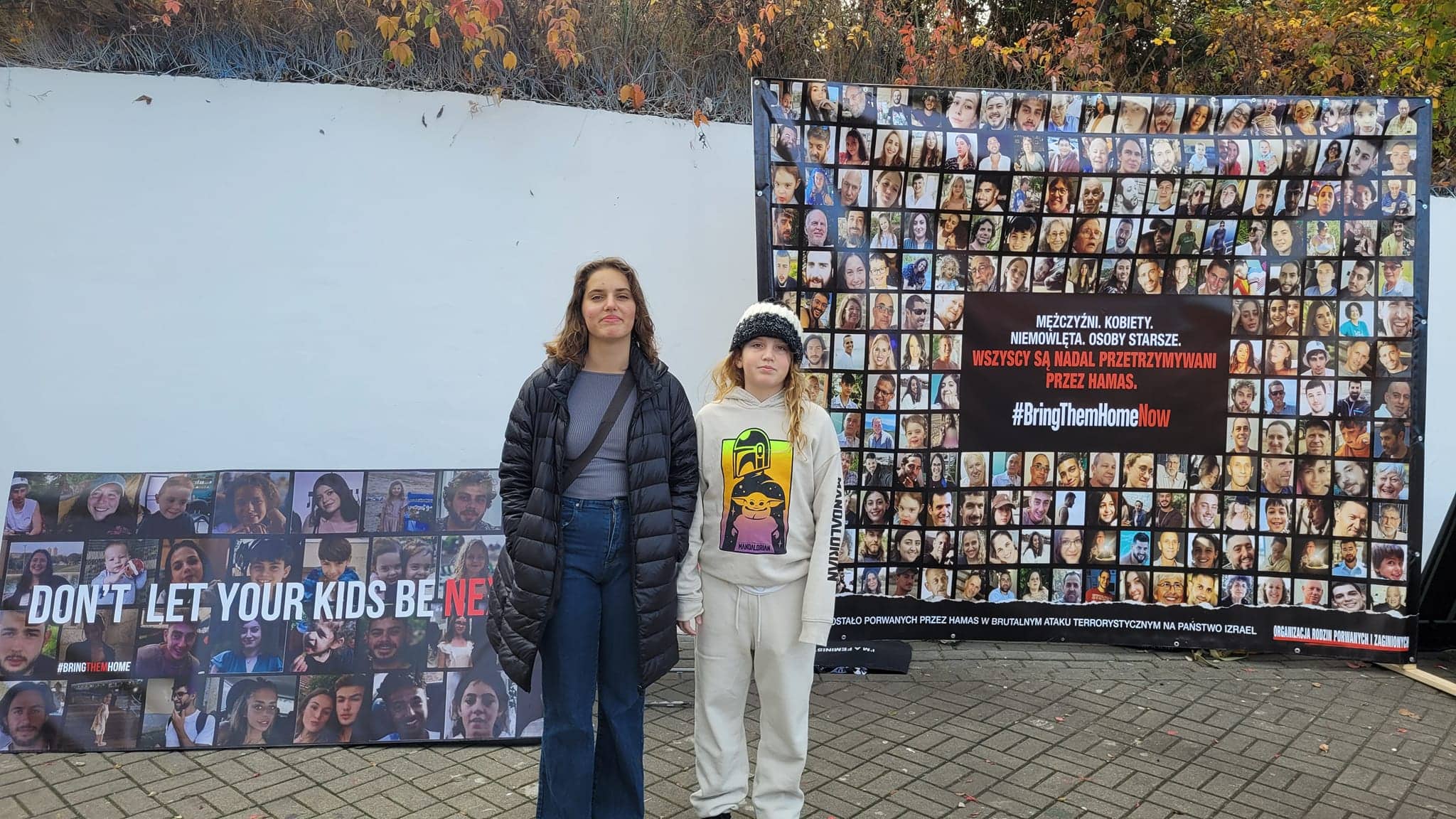
Once a week, I visit the area where Ori attends school (Givat Haviva International High School). I even took the children to Warsaw for a week to take a break. On weekends, Eitan goes with Anat to her parents or to my sister in Ramat Gan to spend time with his cousins.
Ori maintains her routine and resilience, knowing what she wants and where she wants to be. Eitan, sweet Eitan, requires order and a framework to leave the house, but he’s coping. One of his classmates was kidnapped, and two others were murdered. Some children lost their parents. It’s something we can’t gloss over; we can’t hide anything. Even if the kids didn’t watch the horrific videos, they know exactly what happened.
Some folks are diving into work or getting activities organized at the hotel. There are group discussions about “what happens next,” but plenty of others don’t have much to do, just trying to pass the time. It’s getting on my nerves. All the women in the kibbutz are joking that the true victory in this war would be returning to Nirim at the same weight they left… Yes, there’s already a bunch of humor floating around about the evacuation.
The future
Looking ahead, it’s quite simple: I’m a successful avocado grower. I could do it anywhere — Southern Spain, New Zealand or the Western Galilee. But none of these places feels like home.
Home isn’t four walls, a porch, and a yard for me. I’m a farmer. Nirim’s fields are where I belong. I know exactly how much rain falls each year. Tal always jokes that when we pass the Sa’ad junction, something in me is released suddenly. That’s home. That’s the only place for me.
While I spent a decade in Tel Aviv and managed the orchard of Kibbutz Ma’abarot, whenever I referred to “we,” it always meant Nirim. I genuinely love the people of Nirim, but my connection is more to the place. If they were to announce tomorrow that Nirim is being re-established in the Hefer Valley, I wouldn’t be interested.

Our internal documents currently carry the slogan “Nirim on the way home.” Most kibbutz members are planning to return. In about a month, we’re set to move to a housing complex in Beersheba. Some adults are considering assisted living (for those who prefer to avoid cooking). We decided to stay in Beersheba without further moves during the school year, and we plan on returning to the kibbutz next summer.
What do you miss the most?
What I miss the most are my animals, especially my dog, who’s currently with a foster family in Tel Aviv. I connected with them through a volunteer organization, and they’re just lovely people. But more than anything, I miss the feeling of having a home. A place of my own. A porch where I can sip my morning coffee, although that has been wiped out by a mortar bomb after we left. I miss the avocado orchards. I get intoxicated by the air and the trees. Those are the things that make me the happiest.
The things that move me to tears during this difficult time are actually the good things people do. The gestures, the generosity. The family that took in my dog for fostering. It’s not easy to take in a 40-kilo guard dog accustomed to field living into an apartment in Tel Aviv, and yet, they really love him. Such kindness can bring tears to my eyes.
And another thing
For the past nine years, since Operation Protective Edge, I have been saying the same thing: The longstanding status quo along the Gaza border has been convenient for all parties involved.
Firing from Gaza into the Gaza Envelope area was viewed as “convenient” by both the media and the Israeli public in terms of cost-effectiveness. It was considered a more affordable option compared to getting into prolonged warfare or seeking a long-term diplomatic solution. No one was willing to pay the military or diplomatic costs associated with a comprehensive resolution.
Therefore, how this war ends is crucial. It must end in an agreement. Let them sign it with the Americans or the Saudis, for all I care. I want to see an agreement that specifies what is allowed and what is not; which weapons are allowed and which are not, how close one is allowed to approach the fence, what Israel is willing to transfer to Gaza (for example, electricity and water), and what are Israel’s commitments.
I want there to be a written and public agreement because the current situation lacks clarity, making it difficult to determine who’s violating what. Nothing is clear.
Remember when Nir Dvori (the military correspondent for Channel 12 News) said Hamas’ firing was “reasonable” during one of those rounds? I want a clear definition of what’s considered reasonable and what’s not. With a transparent agreement, citizens can point out violations by the other side. Right now, there’s a lack of clarity, and that has been the case since 2012.
I don’t foresee the residents of the Gaza Envelope returning to their communities as long as Hamas remains the de facto ruler in Gaza. For them to consider returning, there needs to be a different regime, a signed arrangement, and relocating their leadership to a third country. Even if a ceasefire is announced tomorrow, a return to these communities is unlikely without a formal agreement and the removal of Hamas from power.
In two, three months, Israel will return to living – and that’s great. I think that’s when people will need real help.
Kibbutzim have organized and supportive communities with backing from the larger kibbutz movement, and I’m sure that if someone doesn’t want to return, they’ll find ways to support them in their new path. I am more concerned about the residents of the moshavim, Sderot and Ofakim, the towns near us. The state does not provide them with any real assistance.

The Times of Israel Community.