

US, 6 Gulf allies sanction network supporting Iran Guards, Hezbollah
Sanctioned entities include firms that support Iranian Basij militia, 4 Hezbollah operatives running terror group’s operations in Iraq
 Add ToI as a Preferred Source on Google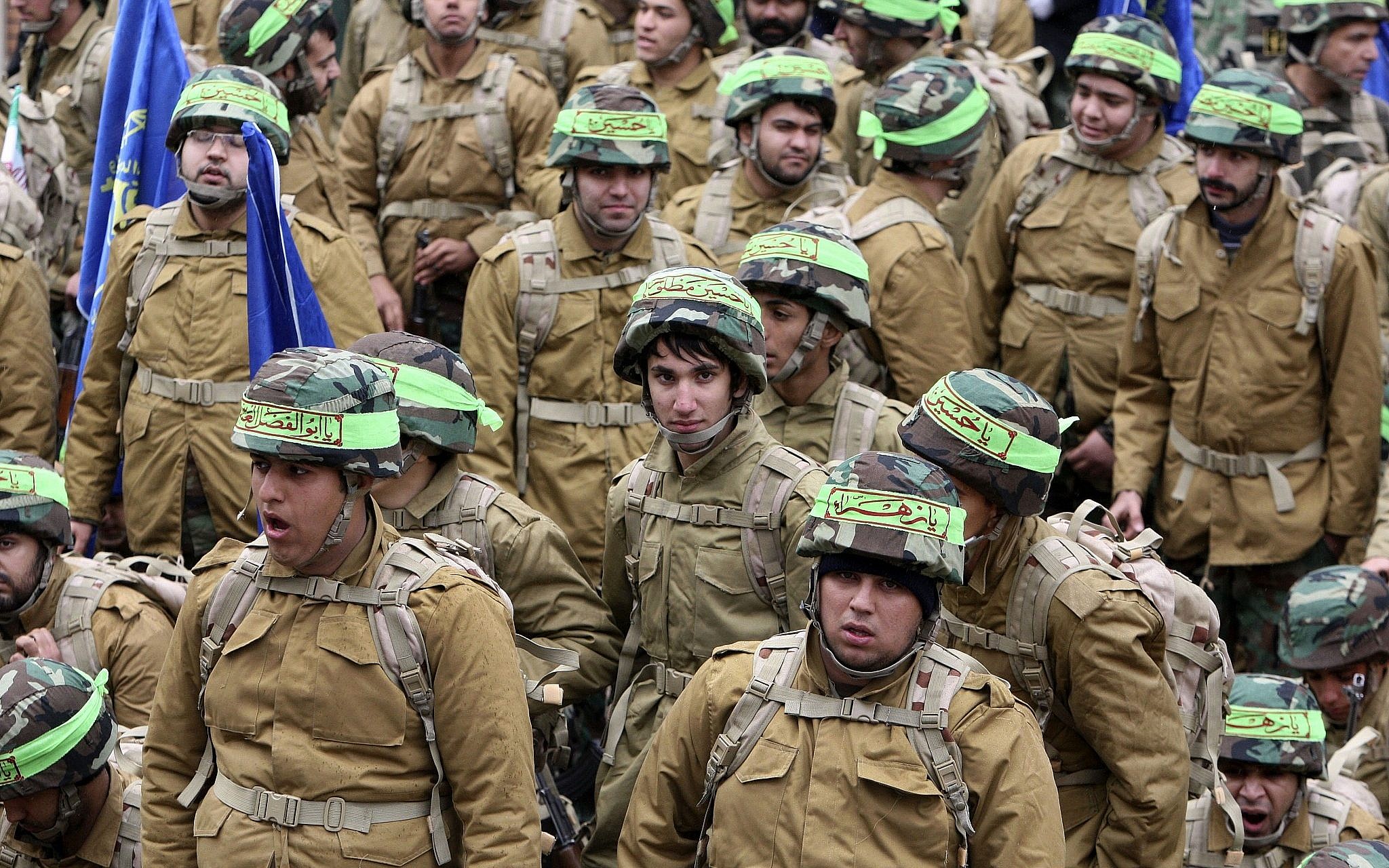
WASHINGTON — The United States and six Gulf allies announced sanctions Wednesday on 25 entities associated with Iran’s Islamic Revolutionary Guard Corps and Lebanon’s Hezbollah terror organization, in a move to tighten controls on both group’s finances.
The sanctions were set by Riyadh-based Terrorist Financing Targeting Center, a two-year-old group that includes Saudi Arabia, Bahrain, Kuwait, Oman, Qatar and the United Arab Emirates in addition to the United States.
They targeted companies supporting the Basij Resistance Force, a paramilitary group subordinate to the Revolutionary Guard, that the Treasury said are used “to oppress domestic opposition with brutal displays of violence” and supply fighters to regional conflicts.
Among the 25 was Iranian Bank Mellat and mining, manufacturing and investment firms that allegedly support the Basij.
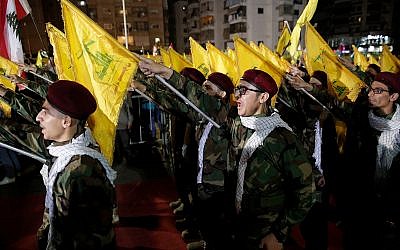
Four of those listed were individuals running Hezbollah’s operations in Iraq, the Treasury said.
All 25 have previously been named in US Treasury sanctions announced in 2018.
“The TFTC’s coordinated disruption of the financial networks used by the Iranian regime to fund terrorism is a powerful demonstration of Gulf unity,” said US Treasury Secretary Steven Mnuchin in a statement.
“This action demonstrates the unified position of the Gulf nations and the United States that Iran will not be allowed to escalate its malign activity in the region,” said Mnuchin, who addressed a business forum in Riyadh on Wednesday.
Times of Israel staff contributed to this report.







The Times of Israel Community.