

US Jews will abandon Israel over religious exclusion, warns delegation
Frustration and angst in a roundtable discussion with a lobbying mission of US Jews bent on marriage reform in Israel
 Add ToI as a Preferred Source on Google
Deputy Editor Amanda Borschel-Dan is the host of The Times of Israel's Daily Briefing, What Matters Now and The Reel Schmooze podcasts, and heads up The Times of Israel's features.
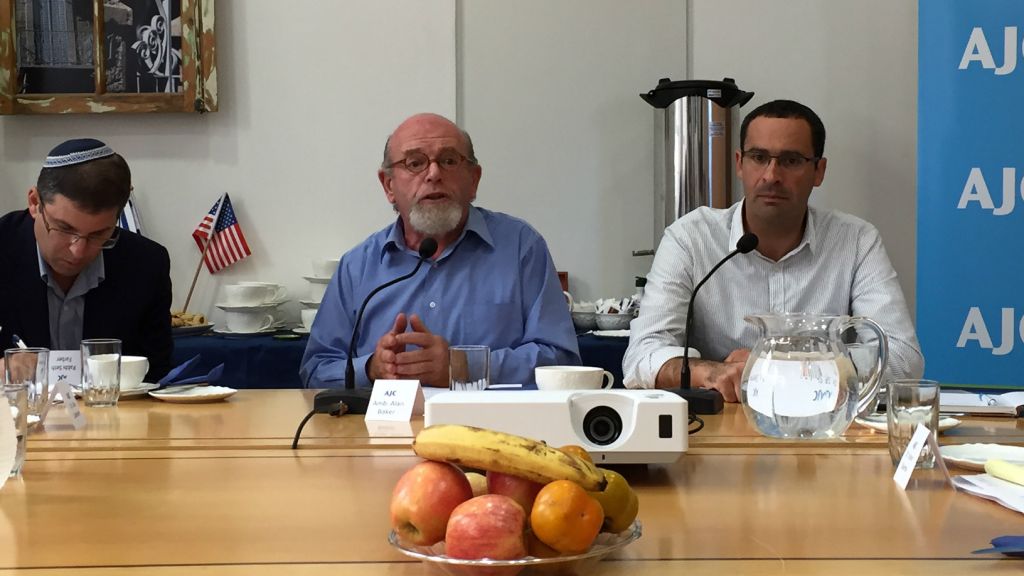
‘Look, we’re paying your bills, I know you hate hearing it, but we’re paying your bills!” said American Dov S. Zakheim, chairman of the Jewish Religious Equality Coalition (JREC), at a particularly fraught point during a discussion about Israeli-Diaspora relations at the Jerusalem offices of the American Jewish Committee Thursday.
Zakheim’s frustrated statement came at the end of almost two hours of sobering presentations by social activist Israelis and roundtable brainstorming in a “discussion” titled “Legal Dimensions of Religious Pluralism in Israel.”
The guest experts at the charged session were Rabbi Seth Farber, founder of ITIM; former Israeli ambassador to Canada Alan Baker, who is currently the director of the Institute for Contemporary Affairs at the Jerusalem Center for Public Affairs; and Dr. Shuki Friedman, the director of the Center for Religion, Nation & State.
But it was Zakheim’s existential angst at the widening gap between American Jewry and the Israeli religious establishment’s view of their Jewishness that set the tone.
“We understand how the Israeli system works and we don’t like it. We are deeply concerned because we see what’s going on,” said Zakheim.
Butting heads with the Israelis despite their common goal, the American delegation was attempting to express how dire the situation is for American Jewry’s connection to Israel. And at the same time, the more measured Israelis explained why a grassroots baby-step approach using the Israeli legal system may be their only viable option towards change.
Members of JREC, an inter-denominational group of American Jewish leaders, came to Israel this week in a first lobbying effort to influence Israeli policymakers — MKs, former chief rabbis — toward a reformation of Israeli marriage laws. But at this session exploring the “legal dimensions” in which the inclusion of Reform, Conservative and Modern Orthodox could — or could not — potentially occur, the frustration felt by the Americans was palpable.
“This is a much more urgent issue than people realize. What this does is further stimulate those Jews [who view Israel as the Goliath in the Palestinian-Israeli conflict] and alienate others,” said Zakheim in response to Baker’s hypothesis that eventually, once there are sympathetic members of Knesset, change will occur.
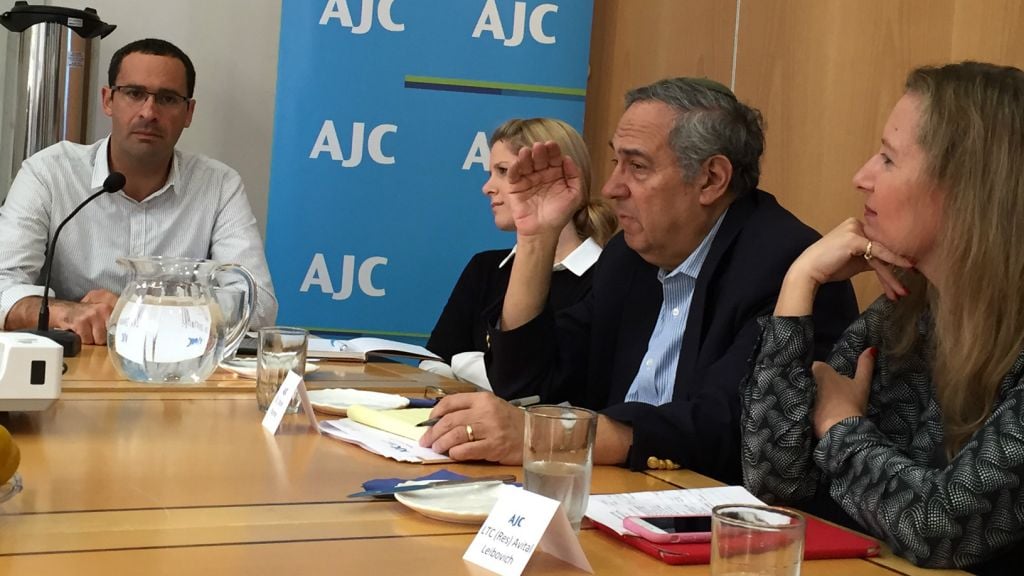
Until recently, said Zakheim, a former United States government official, the US has been “the one ally you have in bad days and good.” The divisive discussions surrounding the Iran nuclear deal, he said, however, have shown that this relationship cannot be taken for granted any longer.
Harriet Schleifer, an attorney who serves as the Development Co-Chair of JREC, emphasized that the issue is not only about losing US Jewry’s support today, but also in future generations. She said that 10 or 15 years from now, those US Jews who “don’t have Israel in their kishkes, the way that we had Israel in our kishkes” will not have the same sympathy factor for a country they view as exclusionary.
‘The American Jewish connection to Israel is a religious connection. If you put a disconnect in that religious connection, it’s going to fizzle out’
“Israel has put up a barrier. The American Jewish connection to Israel is a religious connection. If you put a disconnect in that religious connection, it’s going to fizzle out,” said Schleifer.
AJC board member Jerry Ostrov said that even among the children of the most ardent supporters of Israel, the intermarriage rate in non-Orthodox Jews is approaching 85-90%. When these leaders “find their child marrying outside the faith,” they often hope the future daughter or son-in-law will convert.
However, said Ostrov, when these leaders realize that the Israeli religious establishment does not consider these new members of the Jewish People as Jews, their support for Israel dissipates.
Also speaking to interfaith marriage, Zakheim explained its ripple effect.
“When a Jew marries out, it’s not just the Jew marrying out, it’s marrying into a non-Jewish family that usually becomes supporters of Israel.” Today, he said, if the Jew feels animosity toward Israel, the non-Jewish family will too.
‘Is the Chief Rabbinate speaking for the Jews of Israel? Officially yes, practically, no’
In defense, Israeli law professor Friedman, who is also an ordained rabbi, said the line of the official Israeli Chief Rabbinate is not the feeling of the Israeli people.
“Is the Chief Rabbinate speaking for the Jews of Israel? Officially yes, practically, no,” said Friedman. He described how he has been approached to perform wedding ceremonies of young religious couples who won’t go through the Chief Rabbinate. He clarified, they are couples “who can, but don’t want to” be involved with the religious establishment.
“Bring the Americans to Tel Aviv — show them Jewish pluralism today,” he said, explaining that the Israeli religious identity is becoming more moderate. People increasingly define themselves on a spectrum between secularism and Orthodoxy, he said.
For Friedman, change will not come from the establishment — political or religious — but from the bottom up. He pointed to grassroots efforts such as Farber’s ITIM organization and his role in the foundation of the independent conversion courts initiative.
‘Bring the Americans to Tel Aviv — show them Jewish pluralism today’
The recent establishment of the Giyur Kahalacha independent conversion courts is part of what Farber calls “the chip away approach” to change. This is the first grassroots initiative, he said, that “goes head to head with the rabbinate and creates facts on the ground.” There are over 80 converts, mostly from the former Soviet Union, who have undergone a halachic Orthodox conversion in Israel through these courts in the past few months.
On both sides of the ocean, however, the underlying problem is the lack of awareness of the potential fallout to this Jewish identity disconnect, said many delegates.
On the Israeli side, until religious and state issues are on the country’s agenda, the politicians won’t work for change. And they won’t be on the agenda until there is enough of a public outcry.
Hardly optimistic sentiments for this passionate group.
As Farber put it, “People care. People do care. They just don’t care enough.”








The Times of Israel Community.