

UTJ’s Eichler elected to rabbinical judicial appointments committee
Chosen unopposed, lawmaker vows to appoint ‘Torah scholars and upright individuals’ to committee that appoints judges to religious courts overseeing divorce, conversion cases
 Add ToI as a Preferred Source on Google
Ariela Karmel is a political correspondent at The Times of Israel. She previously reported for Calcalist and Haaretz. She holds an MA in Middle Eastern and African History from Tel Aviv University and a BA in Political Science from the University of British Columbia.
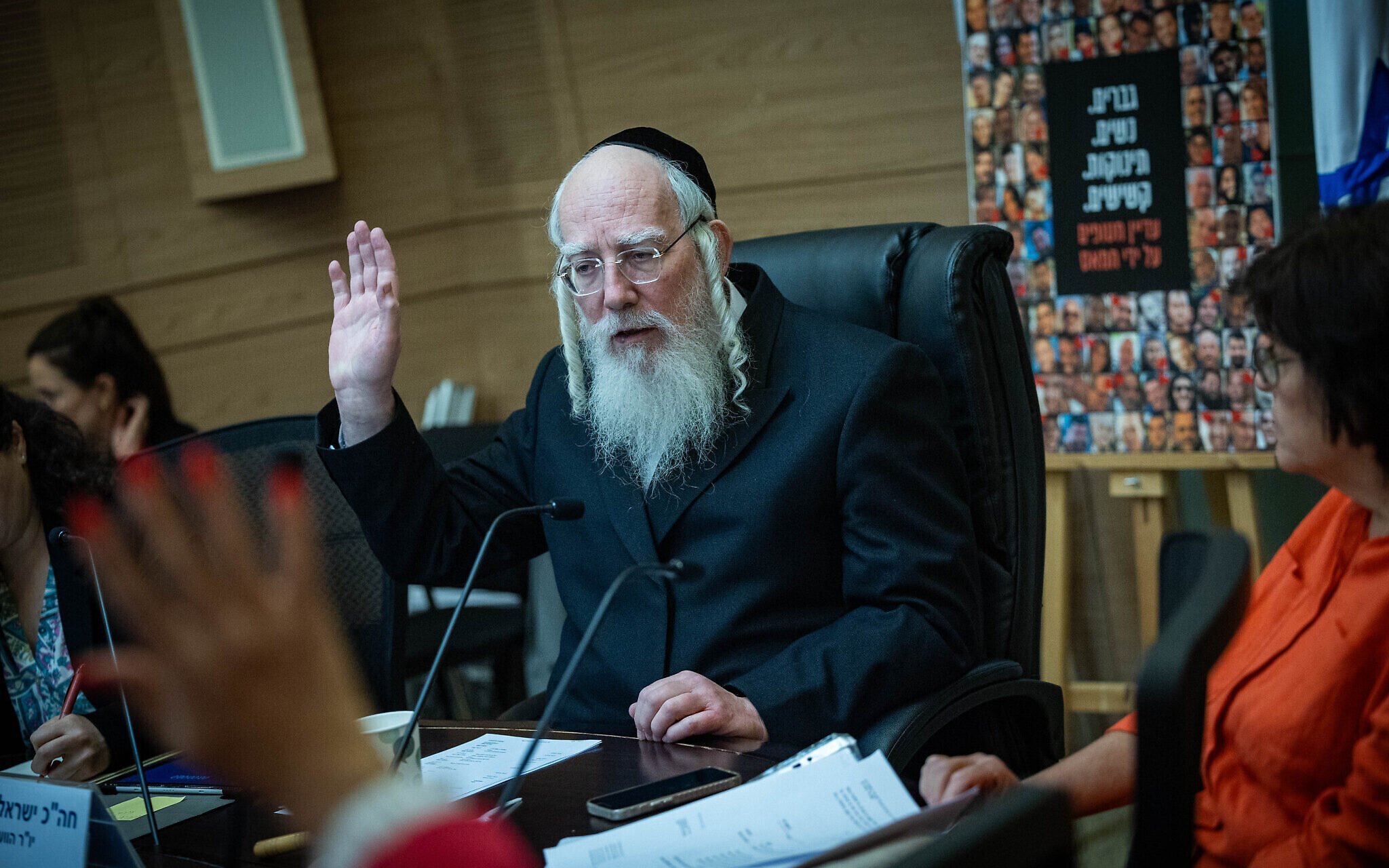
United Torah Judaism MK Yisrael Eichler was elected to fill one of two Knesset seats on the Rabbinical Judicial Appointments Committee on Wednesday, securing 66 votes in favor and 38 against.
“With divine help, I will ensure the selection of worthy judges — scholars of Torah and upright individuals — who will administer justice according to the Torah and the fear of God,” the ultra-Orthodox lawmaker said in a statement after the vote.
The election was held after UTJ lawmaker Eliyahu Baruchi, who served on the committee, was pushed out of the Knesset under the so-called Norwegian Law, when UTJ left the coalition. His exit left a vacant seat on the committee, triggering the election.
Eichler ran unopposed for Baruchi’s vacant seat after MKs Moshe Gafni and Yinon Azoulay withdrew their candidacies.
Gafni, who leads UTJ’s Degel HaTorah faction, called on Knesset members to support Eichler, who is from the ultra-Orthodox party’s other faction, Agudat Yisrael.
The Rabbinical Judicial Appointments Committee selects and appoints rabbinical court judges to serve in the religious court system.

Rabbinical courts in Israel are part of the judiciary and enjoy extensive powers, including over divorce, the Jewish status of Israelis, and conversions. According to halacha (Jewish law), only religiously observant men can serve as judges.
“The rabbinical courts affect the policies of Judaism in the State of Israel for every single citizen, even though people often don’t feel it,” Rabbi Seth Farber, head of the ITIM religious rights organization, told The Times of Israel. “But anyone going through a marriage or a divorce in this country has to go through the rabbinical courts.”
Farber said that the committee wields “disproportionate power, and, unfortunately, it’s become a political circus — as highlighted by today’s vote.”
The selection committee is made up of rabbis, serving rabbinical judges, lawyers, members of the Bar Association, and two Knesset members.
While the two seats for MKs are traditionally split between the coalition and the opposition, this is a convention rather than a legal requirement. The other Knesset representative on the committee is opposition MK Pnina Tamano-Shata from the National Unity party.
Since UTJ formally left the coalition last week, following the government’s failure to pass a draft exemption bill, Eichler’s election means both Knesset seats on the committee are now filled by opposition MKs. But Farber says that’s only technically true.
“Even though [UTJ] is part of the opposition, they don’t call themselves ‘the opposition.’ That they aren’t technically in the coalition anymore doesn’t prevent them from making backroom deals — clearly,” he said.
Farber described the process of election to the committee as driven more by political horse trading and factional interests than public needs.
Those empowered to shape the religious court system, he said, are often more concerned with maintaining their power than with serving citizens.
Beyond setting the tone for how Judaism is administered in Israel, Farber said, the committee also serves as a tool for political patronage, allowing powerful factions to reward loyalists with prestigious and well-compensated rabbinic appointments.
“That’s the significance of this committee,” Farber adds. “It’s about power to determine the character of the state, but also to give out jobs to cronies and allies.”









The Times of Israel Community.