

Victory lap: 6 things to know for May 6
Israel seems far more enthralled by hosting a prestigious Italian bike race than the ongoing Gaza border clashes and ramped-up rhetoric from Tehran
 Add ToI as a Preferred Source on Google
Tamar Pileggi is a breaking news editor at The Times of Israel.

1. Even after yet another weekend of clashes along the Gaza border and ramped-up rhetoric from Iran, Israelis seem far more interested in hosting the Giro d’Italia bike race than the mounting regional tensions.
- As the prestigious Italian bike race entered its final stage in Israel Sunday, Hebrew-language expressed pride that organizers picked the Jewish state to host the first-ever Giro race outside of the Continent.
- “We are on the map!” Yedioth Ahronoth declares Sunday, devoting its entire front page to the “most dazzling sporting event Israel has ever seen.” The Jerusalem portion of the race on Friday snarled traffic throughout the capital city ahead of Shabbat, and by all accounts, frustrated local residents, but Yedioth makes a point of insisting that Jerusalemites were not that inconvenienced by the event. “Despite the many roadblocks, residents accepted the situation with understanding, even if it meant making a several-kilometer detour just to cross the road.”
- Israel Hayom is just as proud. “The competition provides more proof that Israel can host the largest sporting competitions in the word, and do so excellently like the larger empires,” the daily’s cover story said. Israel Hayom gushes that international media coverage of the event has mostly portrayed Israel in a positive light, giving Israel a much-needed diplomatic win. “The victory will go to the cyclists, but the new highs belong to us, the residents of the country.”
2. On Friday, several thousand Palestinians staged a sixth weekly protest on the Gaza-Israel border. At least 70 Palestinians were wounded by Israeli fire, according to Hamas figures, the lowest casualty toll since the protests began.
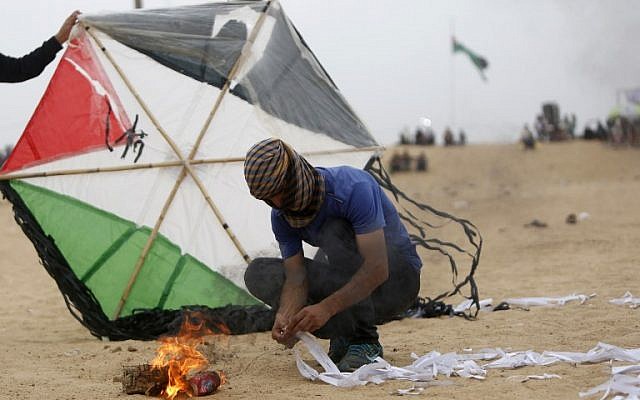
- During the protests, dozens of Palestinians broke into the Gaza side of the Kerem Shalom border crossing between Israel and the Hamas-run Strip, setting fire to the gas pipeline that supplies fuel to the Strip, the army said. Photos on social media showed large flames near the Kerem Shalom crossing, near where the borders of Gaza, Israel and Egypt converge.
- The Gazans, who did not break through to the Israeli side of the border, vandalized their own supply infrastructure, earning criticism by Israel for sabotaging a place critical to their fledging economy. Yedioth columnist Ben Dror Yemini calls it a “sad reality” that Hamas encourages Palestinians to destroy their own infrastructure. “Why hurt themselves? A foreigner doesn’t understand this… but they prefer self-harm to rehabilitation and welfare,” Yemini said.
- Elsewhere along the border on Friday, witnesses said small Israeli drones faced off against flaming kites flown by Palestinians over the border fence to set ablaze dry wheat fields on the Israeli side. Late Saturday, Israeli jets struck a Hamas site in the northern Gaza Strip used as a launching pad for the incendiary kites.
- On Sunday, the IDF said there is “no connection whatsoever” between the strike and a large blast that rocked the central Gaza Strip earlier that day, killing at least six members of Hamas’s military wing. Gaza media reported the Saturday night blast in the central Strip was a “work accident,” meaning the terrorists were killed when explosives they were dealing with went off.
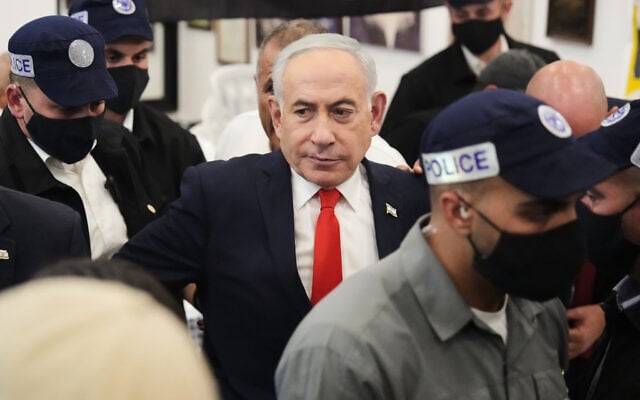
3. Prime Minister Benjamin Netanyahu on Sunday said Iran is supplying advanced weapons to Syria that pose a danger to the Jewish state, and that it’s better to confront Tehran sooner rather than later.
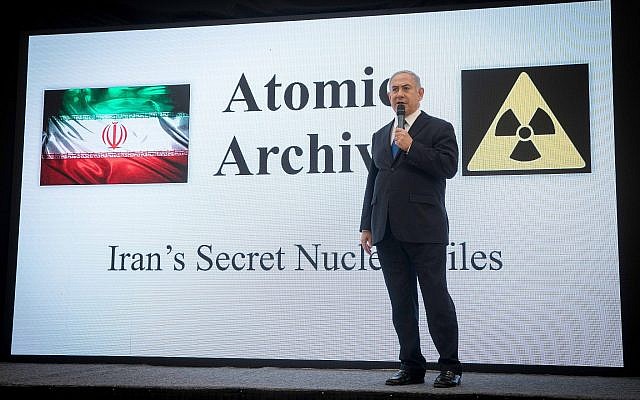
- Netanyahu told a cabinet meeting that “we are determined to block Iran’s aggression against us even if this means a struggle. Better now than later.” He added: “We do not want escalation but we are ready for any scenario.”
- Meanwhile, Iranian President Hassan Rouhani president warned Trump on Sunday that pulling America out of the 2015 nuclear deal with world powers would be a “historic regret.”
- “If [the US] opts to pull out of the nuclear deal, it will soon realize that this decision will become a historic regret for them,” he said. “Trump must know that our people are united, the Zionist regime [Israel] must know that our people are united.”
- The Prime Minister’s Office announced Saturday that Netanyahu will meet with Russian President Vladimir Putin on Wednesday amid the escalating rhetoric by Iran and ahead of Trump’s self-imposed May 12 deadline to exit the deal.
- Haaretz columnist Yizhak Laor on Sunday accused Netanyahu of trying to help the Trump administration start a “mega war” with Iran. He said ridiculing Netanyahu for touting the power of Israeli intelligence during his presentation last week obscures the fact that his staunch opposition to the nuclear deal is being used as the “warm-up act” for a potential conflict between Washington and Tehran.
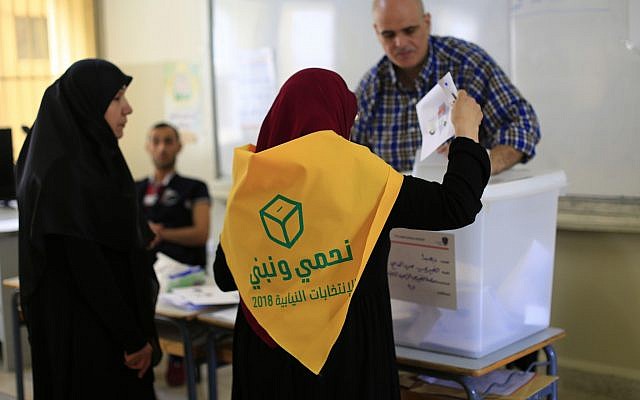
4. Lebanese voters are going to the polls Sunday to elect their parliament for the first time in nine years, with top parties expected to preserve a fragile power-sharing arrangement despite regional tensions.
- The Iran-backed Hezbollah terrorist organization and its allies could stand to reinforce their clout in the political game in Lebanon, a small country clamped between war-torn Syria and Israel.
-
- The election comes after a drawn-out political stalemate finally produced a new electoral law in 2017 that introduced a proportional list-based system.
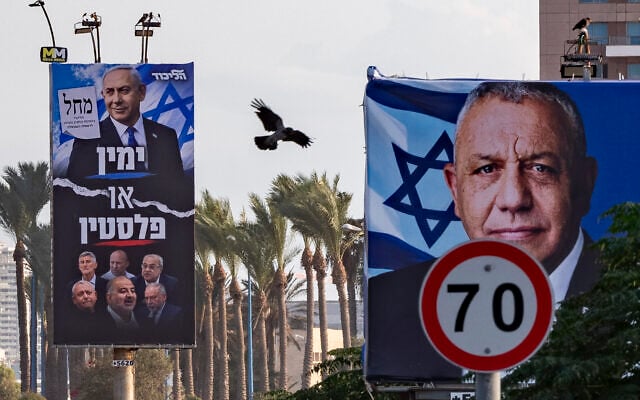
5. Cabinet ministers on Sunday authorized a controversial bill to curtail the powers of the High Court of Justice, despite coalition disagreements that appear to threaten the legislation’s path through the Knesset.
- The Ministerial Committee for Legislation voted in favor of the Jewish Home bill that would give 61 MKs the ability to overturn a High Court ruling on legislation deemed unconstitutional.
- Coalition party Kulanu had vowed to oppose the bill but its representative on the committee, Construction Minsiter Yoav Gallant, voted in favor of the bill.
6. On Saturday, Rabbi Aaron Panken, the president of Hebrew Union College, was killed piloting a small aircraft in the Hudson Valley area of New York state.
- MidHudson News reported that Panken, 53, crashed the plane in a wooded area in the Town of Wawayanda, near the New Jersey border. A passenger, Frank Reiss, a flight instructor, was injured.







The Times of Israel Community.