

Western strikes won’t change the bloody course of Syrian history
As with last year’s US strike on Assad for chemical weapons use, Trump’s new attack, again cheered by Israel, will be no game-changer. If anything, it could embolden Iran

 Add ToI as a Preferred Source on Google
Raphael Ahren is a former diplomatic correspondent at The Times of Israel.
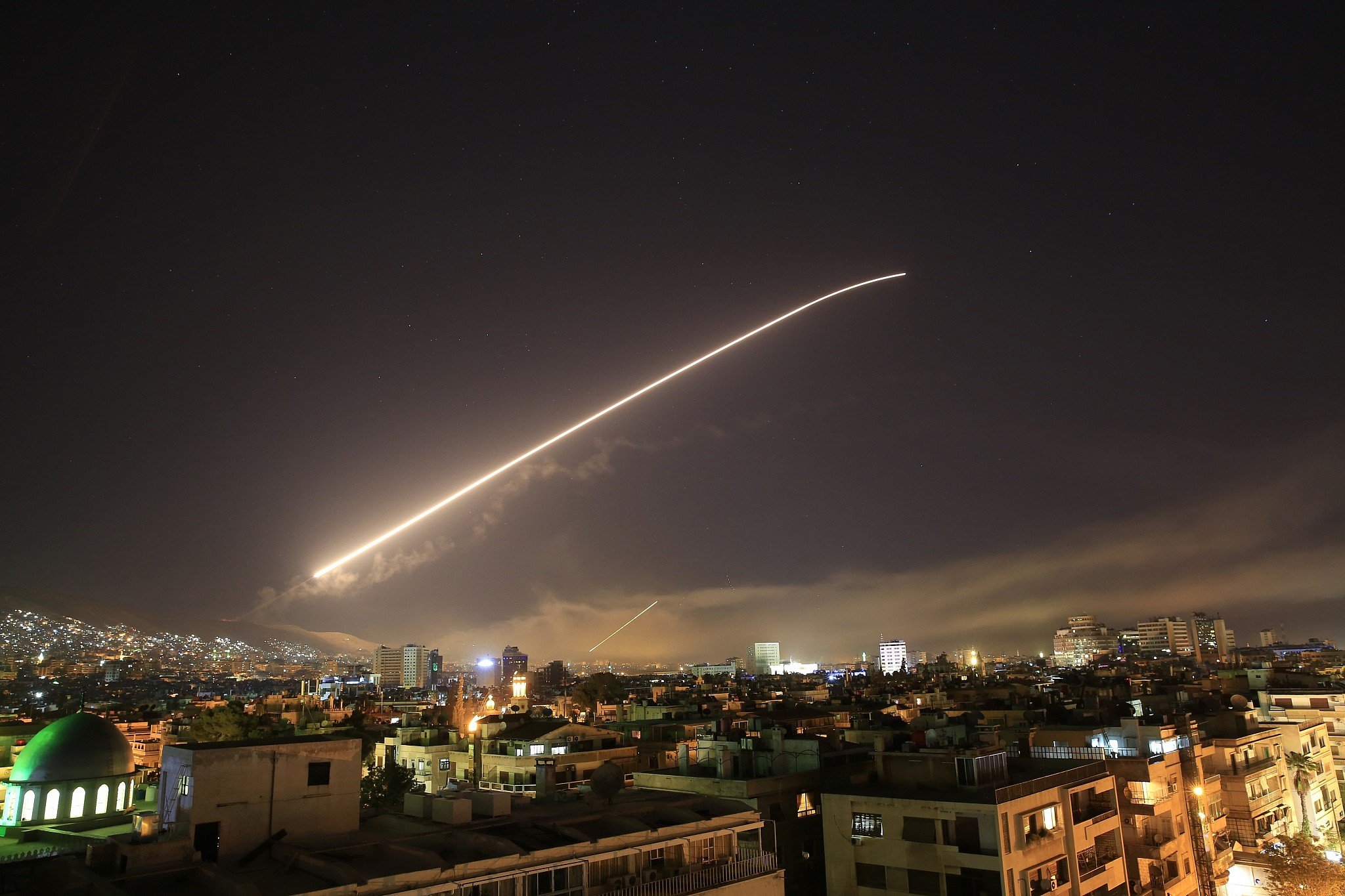
A little over a year ago, US President Donald Trump ordered a military strike against Syria. In retaliation for a chemical weapons attack on civilians, the US Air Force fired 59 Tomahawk missiles at the regime-held Shayrat Airbase in Homs.
Israeli leaders and analysts hailed the strike, arguing that even this limited use of force would change the course of history.
Former US President Barack Obama had declared the use of chemical weapons to be a “red line” but then did nothing when President Bashar Assad crossed it in 2013, with chemical weapons strikes near Damascus that killed 1,429 people.
Obama’s inaction — perceived as weakness — emboldened Syria, Iran, and other negative elements in the Middle East, many Israelis had long argued. Had Obama even sent a single jet to Damascus to drop a bag of water on Assad’s palace, history would have taken a different course, a top Israeli security official posited last year.
But Donald Trump is no Barack Obama. In April 2017, the new US president demonstrated that he was willing to use military force. The way many Israelis saw it, he showed the region’s evil empires that there was a new sheriff in town who put his weapons where his mouth is.
“In both word and action, President Trump sent a strong and clear message today that the use and spread of chemical weapons will not be tolerated,” Prime Minister Benjamin Netanyahu said on April 7, 2017, after Trump’s resort to force. Israel hopes that “this message of resolve in the face of the Assad regime’s horrific actions will resonate not only in Damascus, but in Tehran, Pyongyang, and elsewhere,” the prime minister added.
This hope, it turned out, was unfounded.
On North Korea, the jury is still out. (Trump said he wants to meet the country’s leader, Kim Jong-un, amid tensions over the country’s rogue nuclear program). But by now it is pretty clear that Trump’s Tomahawks have done little to change the history of the Middle East for the better.
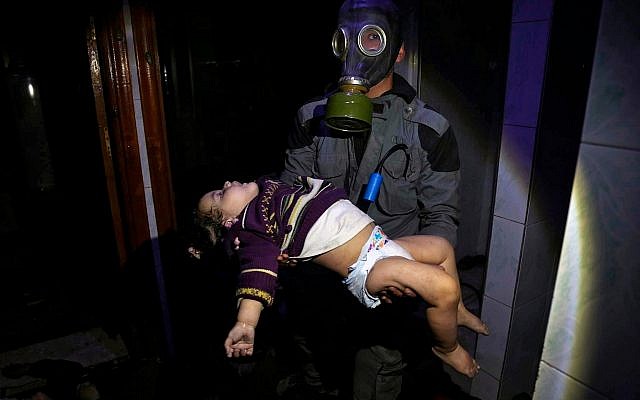
Rather, the events of recent weeks — including Iran sending an armed drone to Israel and Assad ordering a chemical gas attack that killed more than 40 civilians in the Damascus suburb of Douma — indicate that America’s punitive air strikes last year failed to dramatically improve the fate of the region. Assad continued to use non-conventional weapons and Iran stepped up its aggressive behavior.
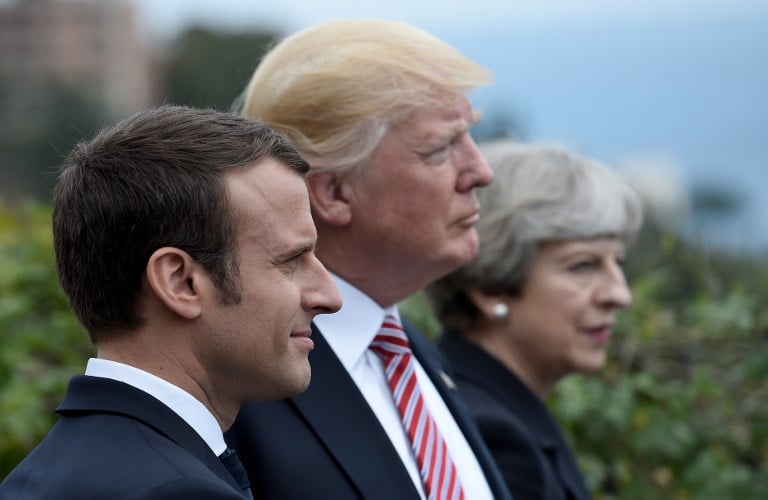
There is very little to suggest that the the joint US-French-British air strikes on Syrian regime targets early Saturday morning will be any more successful in deterring Assad and his allies in Tehran.
With critical Russian and Iranian support, Assad is poised to complete his victory in the civil war that has devastated his country, and much of his air force and other military installations remain untouched.
Indeed, the 105 missiles fired at Syrian targets might actually bolster the resolve of the Syrian regime and its Russian, Iranian, and Lebanese allies. Since the Western strikes appear to have been a one-time operation and not the beginning of a sustained effort to change the balance of power in the region, they are unlikely to impact the resolve of Assad’s allies to ensure his victory.
“Mission Accomplished,” Trump, who has recently made plain his intention to withdraw US troops from Syria, tweeted after the strikes. Far from it, many in Israel would counter. On Saturday night, Israeli officials were expressing concern that he may believe that by ordering precision strikes against targets connected to the regime’s chemical weapons program, he has finished the Syria job and can go home now, leaving the playing field to Assad and his backers in Moscow, Tehran, and Beirut.
Most worrying, from an Israeli perspective, is the fact that the strikes did nothing to address the ongoing effort by Iran to entrench itself militarily in Syria.
The US, together with France and the UK, were unwilling to let Assad’s use of chemical weapons go unpunished. But so long as Iranian forces refrain from using non-conventional weapons, they have no reason to fear a Western military response to their scheme.
Jerusalem welcomed the Western strike, with Netanyahu hailing “Trump’s resolve” and the Western commitment to act on stated principles.
“It should be clear to President Assad that his reckless efforts to acquire and use weapons of mass destruction, his wanton disregard for international law, and his provision of a forward base for Iran and its proxies endanger Syria,” the prime minister said in a statement released Saturday evening.
But Washington, London, and Paris are patently disinclined to act militarily to prevent Iran’s entrenchment in Syria. If anything, the limited nature of Saturday’s airstrikes — in which no deaths were reported, and which prompted an unsurprisingly defiant response from Assad — may actually embolden the Islamic Republic to intensify its belligerent actions in the region.





The Times of Israel Community.