

When things get real, countries seeking defense tech put politics aside and go for Israel
Technological superiority will decide the outcome of future wars, fueling interest for Israeli defense solutions born in the wake of the Oct. 7 onslaught, overriding boycott tensions, experts say
 Add ToI as a Preferred Source on Google
Sharon Wrobel is a tech reporter for The Times of Israel
Like many Israelis, Lee Moser was surprised and dismayed by how October 7, 2023, the bloodiest day in Israeli history, exposed a profound systemic failure within the country’s defense establishment — one that included severe intelligence and operational deficiencies as well as technological shortcomings.
In the days that followed the bloody Hamas-led invasion, Moser felt she had to take action so that October 7 never happens again — in Israel or elsewhere.
Moser connected with Lital Leshem, who gained practical knowledge on the battlefield when she was called up for army reserve duty, when Israel went to war against the Hamas terror group, experiencing firsthand the urgency of military innovation in modern warfare.
Together, the two women founded Protego Ventures — Israel’s first venture capital fund dedicated to backing the next generation of defense tech founders who seek to develop smart, advanced military technologies. To date, the fund has raised more than $70 million and invested in two Israeli defense tech startups.
“Everyone found themselves after October 7 doing something for the country — so for me, this is what I choose to do,” Moser told The Times of Israel. “We set out to invest in defense capabilities that will enable us to protect who we are, what we represent, and eventually sell it to friendly foreign countries that share the same ethical foundations.”
Two years later, with Israel mired in the longest war in the country’s history, numerous European governments canceled arms deals with major Israeli defense contractors — including Elbit Systems and Rafael Advanced Defense Systems — while trying to impose sanctions on Jerusalem over the country’s conduct in Gaza.
Moser, a veteran fund manager, is confident that despite international criticism and increased pressure from European countries to boycott Israeli weapons and defense technology, Israeli startups will continue to galvanize support from foreign investors and defense-focused venture capitalists.
“Necessity, eventually, overrules politics — especially when it comes to defense,” said Moser. “Some deals will be canceled due to politics, but I also see a significant pipeline for future deals again because of the necessity.”

Moser, who previously served as the chief of staff for then-Israeli ambassador Michael Oren in Washington, remarked that geopolitical changes and security threats around the world, starting with the Russian invasion of Ukraine and amplified by Israel’s war with Hamas in Gaza, have sparked greater interest in defense technologies and lured investor appetite for solutions that answer emerging needs, for both military and civilian applications.
The Times of Israel spoke to Moser and defense experts just days before a US-brokered Gaza ceasefire deal was ratified to end the two-year fighting in Gaza, release all the remaining hostages that were taken captive on October 7, and bring them home.
“The wars in Ukraine and the Middle East have triggered threats and existential fears in many countries, which won’t simply go away when the fighting stops,” said Moser. “There is also a paradigm shift in warfare and in the way militaries fight, which requires governments to spend more money and buy significantly more equipment to protect themselves.”
“We are moving towards electronic warfare dominated by drones, cheap munitions, and unmanned vehicles and robotics, but we are still in the middle: the shift is from men to unmanned, men to machine, and eventually machine,” she said.
An ever-growing niche market
The new reality of modern warfare is a wake-up call for many countries, including Germany, which are finding themselves underprepared for emerging geopolitical threats. As a result, many governments are increasing their budgets by billions of dollars to upgrade outdated military defense systems, with the understanding that technological superiority in the modern battlefield can decide the outcome of entire wars.
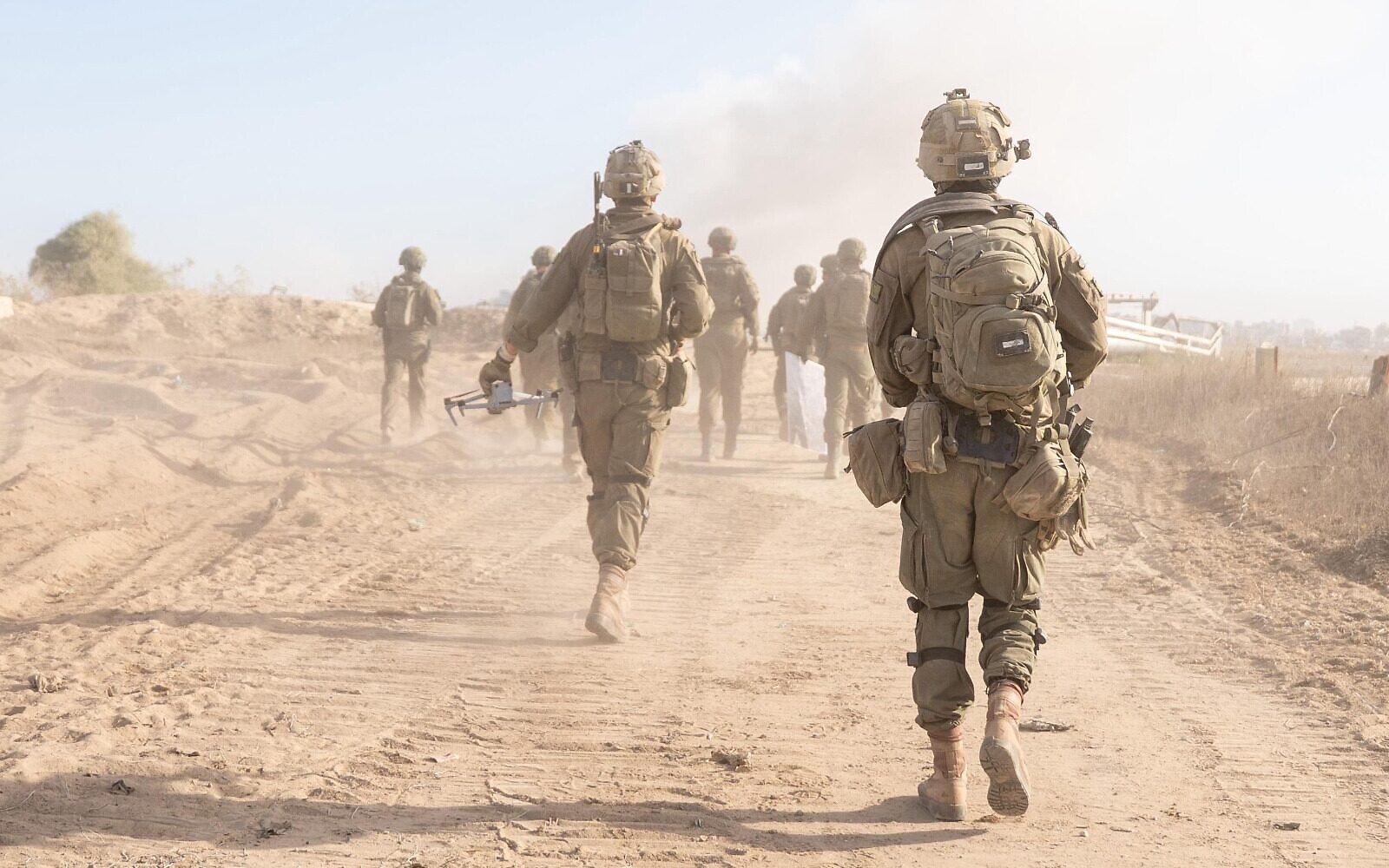
For Israel’s tech economy, this presents an opportunity. The prolonged war with Hamas has led to numerous tours and hundreds of days of deployment for an unprecedented number of reservists — many of whom are high-tech founders and technology professionals.
Many of these reservists fighting on the battlefield were exposed to operational challenges over time, identifying technological gaps and needs firsthand, which has created fertile ground for the development of innovative solutions.
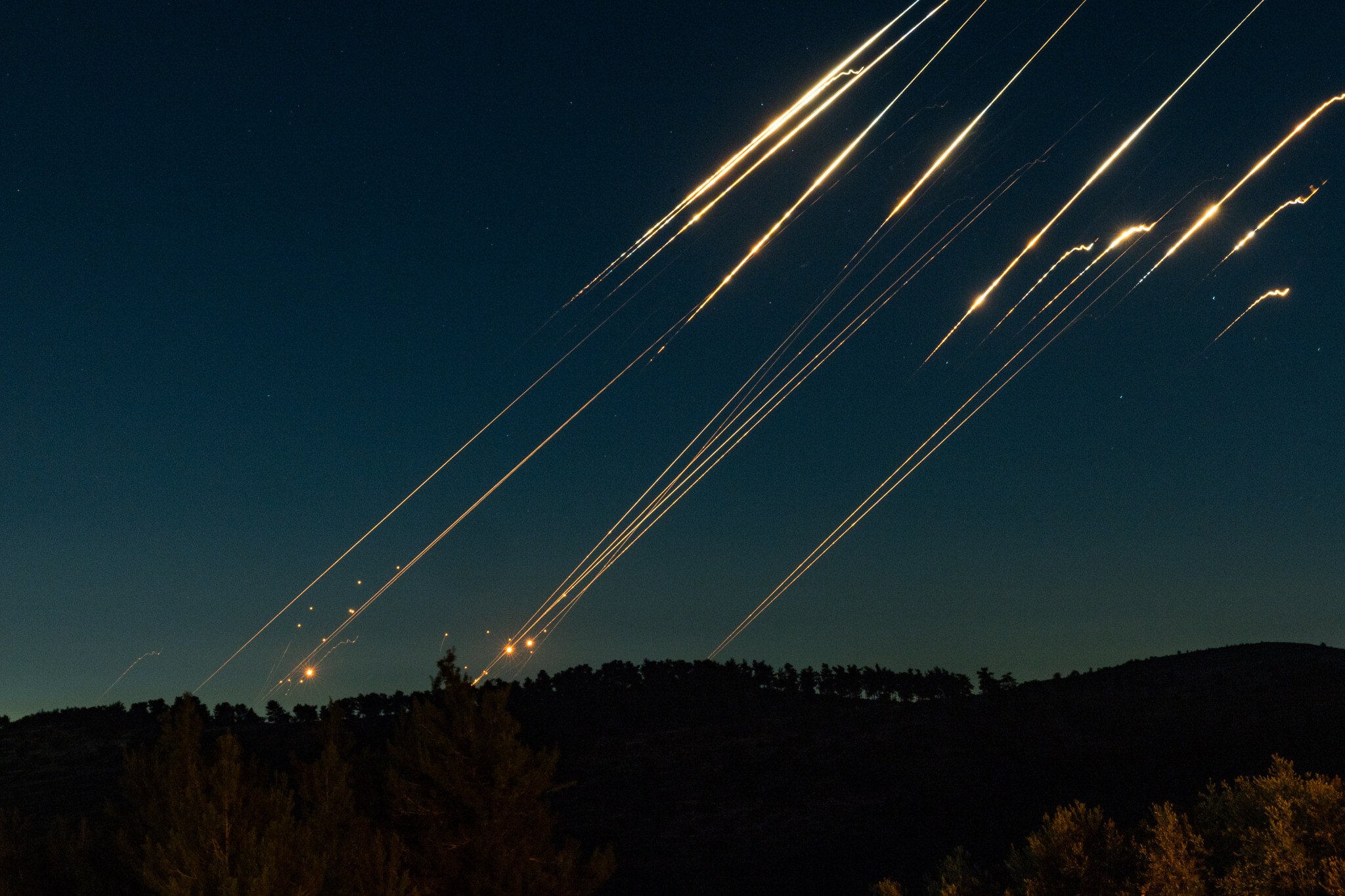
“What we developed in Israel is a combination of the necessity of the battlefield with the fast implementation of new technological solutions by the IDF over the past two years, creating a hotbed for a new ecosystem in the startup world, which is defense tech,” said Moser.
Israel is home to more than 312 companies in the defense tech space that address critical challenges in air defense, homeland security, aviation, dual-use applications, space technologies, as well as autonomous systems, cyberdefense, AI, and robotics, according to Start-Up Nation Central (SNC), a nonprofit organization that tracks Israel’s tech industry. More than a third of these defense tech startups were established since the deadly Hamas terror attack on Israel on October 7.
“For the first time, battlefield-tested, proven technology is being sold from Israel to the world,” said Moser.
However, in recent months, the growing negative sentiment towards Israel over its conduct in Gaza has pushed some governments, including Spain, to announce arms embargoes, and other countries, such as Britain and Canada, to limit their defense trade with the Jewish nation.
The Spanish government in September canceled a contract for rocket launcher systems produced by Israeli defense firm Elbit Systems. In recent months, Spain’s cancellations have mounted rapidly: a separate deal with Rafael Advanced Defense Systems was scrapped in June, followed by another one last month.
“Wherever we see a deal that has been canceled, somebody [else] would like to buy it, so I think we need to be aware of the threats, but also of the [demand] to buy everything in the defense production line in Israel,” Moser said. “There are other countries in Europe that are closer to the war, closer to Russia and Ukraine, that immediately step in and line up to buy Israeli technology.”
Meanwhile, Israeli defense companies have been barred from next month’s Dubai Airshow after a “technical review,” in the latest snub of Israel’s defense industry amid the Gaza war.
The Emirati ban follows recent European restrictions on Israeli defense firms, including a reported Dutch veto on Israeli participation in a large, upcoming military exhibition in Rotterdam. In June, several Israeli companies were barred from displaying at the Paris Air Show, despite France’s President Emmanuel Macron saying in January that Israeli firms would be allowed to attend.
While the political backlash is worrisome, Moser noted that there is a limited supply chain in the world for defense products and technologies, which creates a certain dependence on Israeli battle-tested solutions.
“There are products that maybe someone will say, ‘I won’t buy them because they are Israeli, and instead I will buy something else.’ In defense, it’s not the way it works,” said Moser. “What’s more, Israel has experience on the battlefield, which almost no country has, and because of the war, we have technologies that have been tested and approved in real-time war situations.”
When push comes to shove…
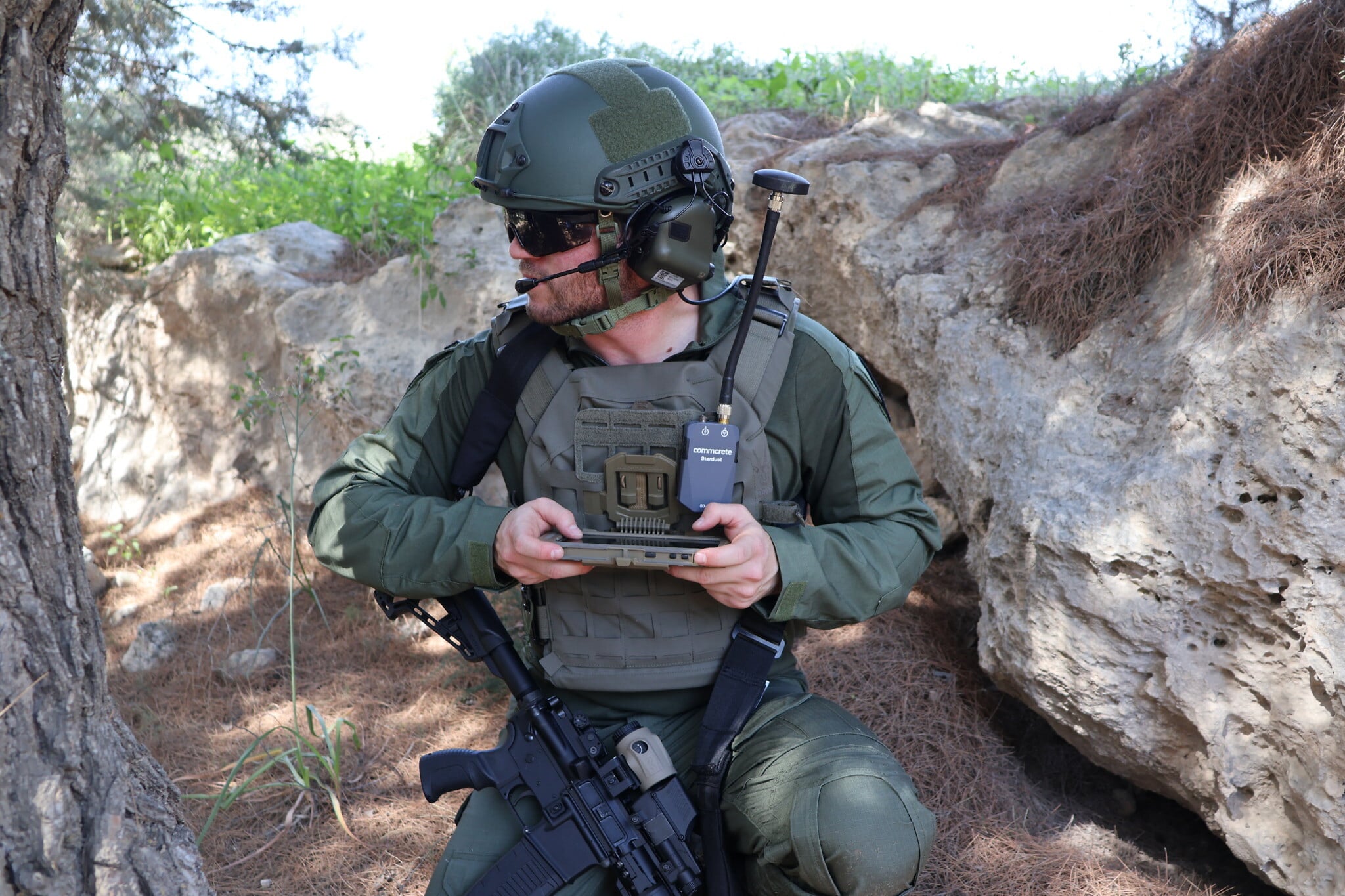
Itzik Daniel Michaeli, co-founder of Commcrete, said that the Israeli defense tech startup continues to rapidly secure contracts for its handheld satellite communication systems, with defense organizations in Europe and the US.

“Even from countries that announced that they are against Israel over the dealing with the war, we are still getting calls to come over and demonstrate our technology,” said Michaeli. “There’s one thing to say politically, what they are thinking about with their leaders, but the end customers are disregarding the political situation and looking at the technology that they need that’s going to solve the next problem.”
Michaeli shared that his schedule is fully booked until late December, and 50 percent of the meetings are within countries that said out loud that they are against Israel.
“Many of those countries are going to deal with a major gap in satellite technology when war comes, and they need to be prepared, so for them the value of our proposal is much higher than the political situation around the world against Israel,” said Michaeli.
Michaeli, a 25-year IDF veteran and former communications leader for elite special operations units, founded Commcrete in 2022 together with CTO Josh Yedidia, recipient of the IDF Chief of Staff’s prize for lifetime achievement in tactical communications, and COO Michael Mor, a project manager in Israel’s elite technological special forces.
Commcrete develops lightweight, handheld satellite communication systems, promising seamless connectivity in any weather condition and for every type of mission, whether parachuting in a hostile environment, UAV missions, diving, walking in a jungle, or climbing in the mountains. The systems are already deployed by defense, special operations, and emergency response teams in Israel, North America, Europe, and Asia. One of its products converts any radio — from military-grade hardware to off-the-shelf walkie-talkies — into a satellite-enabled system offering continuous connectivity when conventional communications break down.
“All other solutions that I had on my back for 25 years in special operation missions weighed at least 10 kilograms [22 lbs]. Our product weighs 150 grams, top to bottom, without the need for massive antennas, heavy infrastructure, or clear sky access,” he said.
In early October, led by Greenfield Partners with participation from Redseed Ventures and backed by Mobileye founder Amnon Shashua, the Tel Aviv-based startup raised $29 million from investors.
“Most of my experience is that customers are still looking at Israeli technology as the smartest thing that money can buy,” said Michaeli. “When meeting investors around the world as an Israeli company, we did not encounter cautious reactions or investors who said, ‘We won’t invest because of the situation in Gaza.’”
However, “on the customer side, some have problems dealing with an Israeli company because of their government, so they are coming with solutions and are asking to place orders through our US subsidiary,” he acknowledged.
Another notable Israeli defense tech startup founded in the wake of the October 7 onslaught is Kela, which has lured investments from two of the largest US-based VC firms focused on defense, Sequoia Capital and Lux Capital, as well as the Central Intelligence Agency’s investment arm. The startup, which came out of stealth in March, is building a military operating system tailored for the modern battlefield, and plans to compete for defense contracts in the US and with Western militaries in Europe.
In recent weeks, Russian drones are said to have entered and violated the airspace of Denmark, Norway, Poland, and other countries, which has been viewed as an act of aggression, causing dozens of flights to be diverted or canceled, and disrupting travel for tens of thousands of passengers. Germany and other European nations have opened investigations into repeated drone flights over critical infrastructure that raised suspicions of espionage.
“The threats are not going anywhere,” said Moser. “The UAVs that are attacking Israel, and are manufactured in Iran, are the same drones that are attacking Europe, and are getting into Poland, Denmark or other countries.”
“When a government needs to protect itself, it will protect itself,” said Moser. “No one is going to say that they are not going to buy an Israeli detection system and instead let Russian drones get into their country.”
Michaeli disclosed that the startup’s revenues have more than doubled in 2025 compared to last year, and are set to further double next year based on current demand in the pipeline.
“There [has been] a pipeline for decades — we need to produce more because we will be able to sell more defense tech,” Moser said.
Agencies and Times of Israel staff contributed to this report.







The Times of Israel Community.