

Preparedness disaster
Blame is passed for the Carmel Fire; Israel’s math and science education falls; and Obama surprises Mofaz
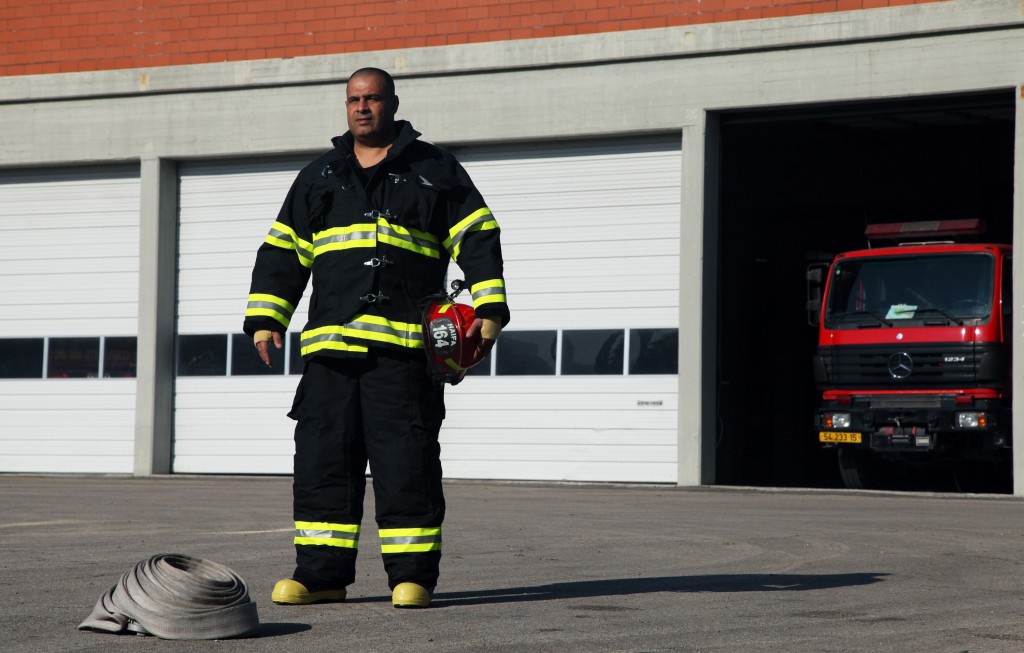
Two days have passed since State Comptroller Micha Lindenstrauss issued his report on the Carmel fire disaster and Israeli politicians are both bashing it and distancing themselves from it at the same time.
The papers aren’t ready to let the fervor die down just yet and three of the four dailies have something about the disaster on their front pages. Maariv’s headline is a quote from Ze’ev Even-Hen who lost his daughter in the disaster, “44 people were killed and no one said ‘I was mistaken.’” Maariv’s inside coverage focuses on the families of those killed in the fire, who are urging action against the two ministers named in Lindestrauss’ report: Yuval Steinitz and Eli Yishai. Even-Hen told the paper that if the ministers are not fired, the families will take their case to court.
Yedioth Ahronoth also devotes a lot of space to the disaster, though much of it is in features as part of the weekend supplement. The front page headline, however, sums up the theme of the paper’s coverage: “Failure after failure.” In its main section, Yedioth provides a collage of five small articles on the Carmel fire, including an article about Eli Yishai and his attempts to convince the government to up the fire brigade budget in the months before the disaster. According to the article, from 2009 to 2011 Yishai met with the Prime Minister about raising the budget but the requests were not granted.
Also included in Yedioth’s coverage is a current snapshot of the preparedness of Israeli firefighters as compared to Western nations. The most surprising statistic is that it takes Israeli firefights almost ten minutes longer than their Western counterparts to respond to a blaze. Israel also faces a deficit of almost 500 firefighting vehicles and 5000 firefighters when compared to the West.
Israel Hayom takes a less critical approach to the Carmel fire disaster with its lead article, “We’re more prepared now.” The article cites Israeli purchase of a “Super-Tanker” airplane that can extinguish fires from the air, a tool that Israel did not have before the fire. “During the Carmel disaster we were dependent on 19 countries for help… today we do not have to wait as helplessly as then,” Israel Hayom writes.
2 + 2 = ?
Haaretz was the only paper that did not include the Carmel disaster on its front page but instead reports on a dramatic decline in Israeli high schoolers who matriculate in math and science, as well as a decline in overall math and science teachers. There are double digit decreases in all the hard sciences in the number of teachers, the number of teachers under the age of 40, and the amount of hours the subject is studied in the schools. Haaretz quotes the chairman of the Ministry of Education’s mathematics committee, Azriel Levy: “It’s like the firefighters, you can look the other way and pretend there isn’t a problem. This is what every other minster of education has done.” The solution he says is not a quick fix, but if Israel does not begin to solve the problem, the country will be in a lot of trouble.
All the papers carried the story of the Syrian fighter pilot who, with his Mig fighter jet, defected to Jordan. Israel Hayom said that, “it was more evidence that the regime is losing control.” Its article also includes the cryptic Syrian response to the incident, “He is a traitor and he will be punished severely.” However, the Syrian regime might not be missing that one plane too much: directly under the article about the defecting pilot, Israel Hayom reports that a ship full of Russian combat helicopters is on its way to Syria.
Mr. Mofaz goes to Washington
Shaul Mofaz was at the White House yesterday when a special guest, the President himself, interrupted his with US National Security Adviser Tom Donilon. Not originally supposed to be in the meeting, Obama surprised Mofaz and sat with the deputy prime minister as they discussed Iran. According to Yedioth, the reason for the president’s surprise was to tell Mofaz how happy the White House was that Kadima joined the coalition. Mofaz, for his part, told Obama how appreciative he was of the president’s “solid support for Israel and her security.”
Israel Hayom reports that while Mofaz was speaking to the president, Ehud Barak was giving an interview to the Washington Post. Israel Hayom uses a quote from Barak for the article headline, “Diplomacy can’t stop the nuclear program.” “We cannot sign the world up for another three rounds of talks of this sort while only the Iranians have room to maneuver,” the defense minister said. Barak refused to answer any questions about specific plans, but he did say that both the United States and Israel have the same goals.
Maariv reports that there is another case of a hunger strike in prison, only this time it’s an Israeli soldier. The solider is serving a three-month prison sentence for desertion and has not eaten in 36 days. The hunger strike has placed the soldier’s life in danger and he has been moved to Wolfson hospital. So far he has refused all medical treatment. Another solider who went on a hunger strike two weeks ago was released from his detention and inquiries are being made to see if the same could be done for this soldier.
“Sometimes, restraint is power,” Haaretz titles its op-ed about the most recent flare up in Gaza. While Israel has the legitimate right to respond to attacks against it, “military responses only work one way and they lead to escalation.” Instead the paper argues for a new method of response, and not the current automatic response to rocket fire from Gaza. Haaretz points to the restraint that Israel showed on the Sinai border earlier this week, not falling into the escalation trap that the terrorists wanted. “Sometimes,” the piece concludes, “restraint is a wise option.”









The Times of Israel Community.