

Slovenia sends migrants back to Croatia as crisis worsens
Zagreb puts army on alert after more than 9,000 refugees pour in over 2 days; Croatian PM vows not to stop people from passing through
 Add ToI as a Preferred Source on Google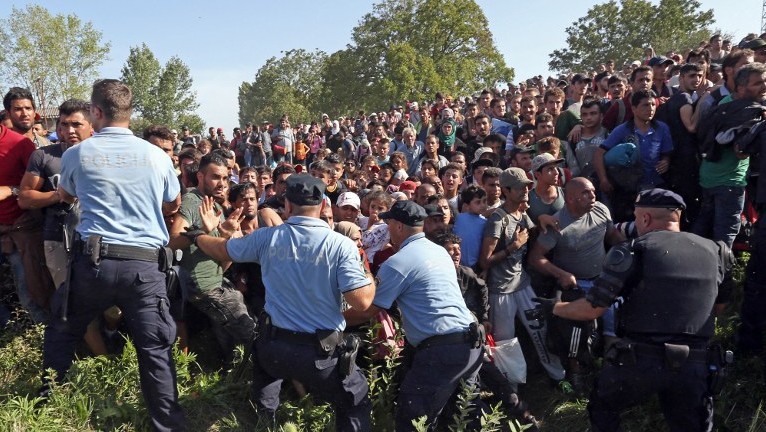
Slovenia announced Thursday that a group of about 150 refugees who had arrived from Croatia on an international train bound for Zurich will be returned to Croatia.
The refugees arrived at the Dobova train station, which serves as the main rail border crossing between Slovenia and Croatia, Thursday evening. They were transferred to three cars which will take them back to Croatia, according to Slovenia’s state news agency.
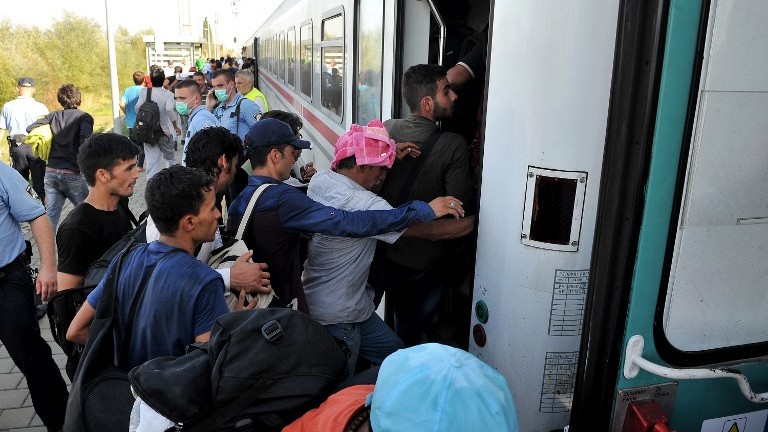
Meanwhile, Croatian leaders asked the army on Thursday to be on alert after chaos erupted at the border with Serbia, where thousands of migrants and refugees — more than 9,000 according to some estimates — have poured into the country. Some trampled over each other in a rush to get on limited buses and trains, causing dozens of injuries amid the mayhem.
The huge masses descended on Croatia after Hungary took tough measures to stop migrants entering its southern border. As Hungarian officials hailed their success in stopping the massive influx and moved ahead with plans to build yet more border fences, leaders in Croatia pleaded that their country was at full capacity and unable to cope with the sudden flow.
Interior Minister Ranko Ostojic told reporters he had a message for migrants: Don’t try to go to Western Europe through his country.
“Don’t come here anymore. Stay in refugee centers in Serbia and Macedonia and Greece,” Ostojic said. “This is not the road to Europe. Buses can’t take you there. It’s a lie.”
Ostojic also urged Serbia’s authorities to halt the migrants, adding that his country could close down its borders if faced with thousands more migrants and refugees coming in from Serbia as has been the case in the past two days.
Hungary sealed off its border with Serbia this week with a razor-wire fence and began arresting people who tried to cross. Police used tear gas, batons and water cannons on those who tried to push open a border gate on Wednesday.
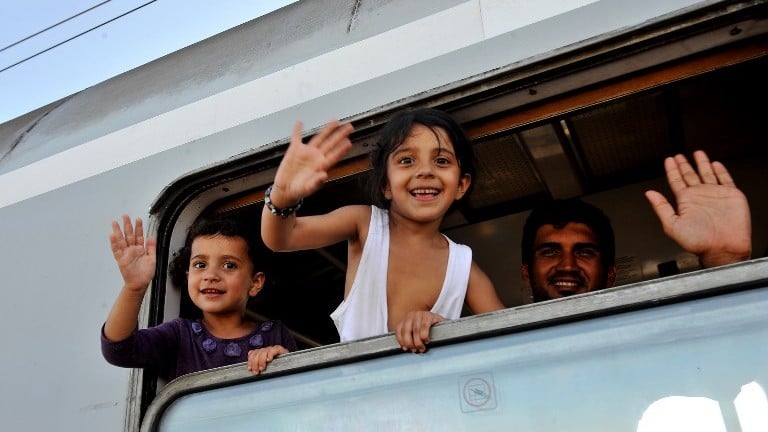
Croatia represents a longer and more difficult route into Europe, but those fleeing violence in their homelands had little choice. By late Thursday a total of 9,200 people had entered the country in the past two days, police said, and already groups were trying to cross into neighboring Slovenia and Hungary.
Yet Slovenia, like Hungary, appeared unwilling to take in the inflow. Slovenian police said those freshly arrived from Croatia would simply be sent back there, according to the country’s state news agency.
Croatian President Kolinda Grabar Kitarovic asked the country’s military to be on higher alert and be ready to act if needed to protect the border from the migrants.
After bus trips through Serbia, many migrants crossed fields on foot to enter Croatia, where dozens of police at first directed them to trains and buses heading to refugee centers. Authorities warned them to avoid walking in areas along the Serbian border that were still being demined from the country’s 1991-95 war.
Soon matters got out of control.
Hundreds of angry asylum seekers pushed through police lines in the eastern Croatian town of Tovarnik after waiting for hours in the hot sun, demanding to be allowed to move on toward Western Europe. An Associated Press photographer saw one man collapse on the ground and dozens injured.
More than 2,000 men, women and children had been stuck at the local train station for hours. When buses finally arrived, groups charged toward them, overwhelming Croatian police. The situation calmed down but some migrants moved off on foot, with police unable to stop them.
In Croatia’s north, police in the town of Batina struggled to cope as hundreds of other asylum seekers came over a Danube River bridge after being bused there by Serbs. Some families were separated as dozens of policemen tried to establish order.
As an EU member state, Croatia is required to register the asylum seekers. But almost all are trying to reach Germany or elsewhere in Western Europe, and want to move through quickly without a paper trail.
Croatian Prime Minister Zoran Milanovic said his country cannot hold down migrants who wish to move on. “Our resources are limited,” he said. “I will not and cannot stop those people and they will pass through Croatia.”
Some opted for a detour, trying to cross from Croatia into Hungary on a stretch of border with no fence. That move did not prove very successful. Hungarian state media said police had detained dozens of migrants near the village of Illocska, opposite the Croatian town of Beli Manastir.
By nightfall hundreds were approaching the border with Slovenia, one of several countries on the migration route calling for the European Union to take urgent action to manage the crisis.
While many refugees quickly decided to switch tack and try their luck through Croatia, some were unprepared as they were stranded in Serbia on the border with Hungary
“We’ve run out of money and we only know the way through Hungary,” said Mohamed Jabar from Diyala, Iraq, who was traveling with a son in a wheelchair and other family members. “All the other ways are unknown to us. They say … there is a way through Croatia but who will welcome me there?”
“Are there humanitarian organizations? I have no clue!”
Mohamed Bader, who fled Aleppo, Syria, sold his father’s shop to raise $10,000 for the journey with family, among them women and children. He said he is now quickly running out of money and was afraid of spending the little he has left for an uncertain end.
“If anyone cares about us, let them let us in, or from the beginning they could have stopped us by cutting the road in Turkey or Greece,” Bader said. “They should have cut the road instead of having us come all this way with great difficulty only to be told at the end of the road ‘that’s it, we can’t enter, stay here.’ I don’t know what to do.”
Hungary has faced strong international condemnation for its handling of the migrant crisis. UN Secretary General Ban Ki-moon called Hungary’s use of water cannons and tear gas unacceptable.
Hungarian Foreign Minister Peter Szijjarto lashed out Thursday against the criticism.
“I find it bizarre and shocking that certain esteemed international figures have stood on the side of people who for hours were throwing stones and pieces of cement at the Hungarian police,” Szijjarto said. “And I’d also like to make it very clear, no matter what criticism I receive, that we will never allow such aggressive people to enter Hungary. Not even for transit purposes.”
Hungarian police said they detained 22 people, including one Syrian man suspected of terrorism.
The European Union’s migration commissioner, Dimitris Avramopoulos, declared Thursday that walls and violence are no solution and urged Hungary to work with the 28-nation bloc to alleviate the continent’s migration crisis.
“The majority of people arriving in Europe are Syrians,” Avramopoulos said at a news conference alongside Szijjarto in Budapest. “They are people in genuine need of our protection. There is no wall you would not climb, no sea you wouldn’t cross if you are fleeing violence and terror. I believe we have a moral duty (to) offer them protection.”
Hungary, in contrast, has been insisting that most are simply economic migrants seeking better jobs. Prime Minister Viktor Orban has also said that by keeping out Muslims, Hungary is defending “Europe’s Christian culture.”
His government celebrated its sealed border on Thursday as a success.
“The assertive, uncompromising defense of the border has visibly held back human trafficking and forces them to change direction,” said Janos Lazar, Orban’s chief of staff. “That was the aim of the entire action.”







The Times of Israel Community.