

A chance for Bennett to put probity before profit
PM would send an important signal were he to announce he won’t profit personally from his stake in Payoneer, which in the past helped firms operating in internet’s seedy underbelly

 Add ToI as a Preferred Source on Google
David Horovitz is the founding editor of The Times of Israel. He is the author of "Still Life with Bombers" (2004) and "A Little Too Close to God" (2000), and co-author of "Shalom Friend: The Life and Legacy of Yitzhak Rabin" (1996). He previously edited The Jerusalem Post (2004-2011) and The Jerusalem Report (1998-2004).

Opening Israel’s embassy in Abu Dhabi on Tuesday, Yair Lapid, who put together the coalition that ousted Benjamin Netanyahu after more than 12 years, did something Netanyahu has proved unwilling to do in the run-up to our leadership transition and its aftermath: Lapid praised his political rival.
Netanyahu, declared Foreign Minister Lapid, was “the architect of the Abraham Accords,” the series of normalization agreements reached last year under the aegis of the Trump administration, and “worked tirelessly to bring them about.”
The United Arab Emirates was the first of four countries in the area to newly partner with Israel, the inauguration of the embassy was evidence of the commitment to the new relationship, and Netanyahu, said Lapid, deserved thanks for his central role in the process.
Lapid’s gracious and appropriate reference to the opposition leader contrasts sharply with Netanyahu’s public response to the transfer of power.

The Likud leader insists on referring to the coalition of parties — three right-wing, two centrist, two left-wing and one Arab — as a “dangerous left-wing government.” He claims that the new government poses an existential threat to Israel. He encourages his opposition loyalists to castigate its members, falsely accusing them of obtaining office via fraud. And he has ordered the opposition to vote against government legislation even when Israeli national interests are at stake — as is the case with the stalled extension of a Likud law that denies automatic citizenship to Palestinians who marry Israelis, because a significant minority over the years has abused Israeli citizenship to engage in terrorism.
The fraud claims, the personal abuse and the standoff over the “family reunification” legislation all underline that the new coalition has been granted no honeymoon period by its bitter predecessors. But nobody leading Israel can or should expect any period of grace.
Quite apart from domestic political battling, nothing pauses in this complex region simply because Israel has a new government. Iran is closing in on the bomb. Hamas is probing for weakness. Allies like the UAE, and further potential partners, need nurturing. The task Prime Minister Naftali Bennett and Lapid have set for themselves is to meet the substantive challenges of steering Israel in this region, while departing from Netanyahu’s viciously divisive domestic politics.
Lapid’s brief crediting of a former prime minister who relentlessly derides him underlines the effort to raise the tone of political discourse. Bennett has an opportunity to personally signal a change of tone, and substance, when it comes to another blight he has inherited — the seamy side of Israel’s hugely lucrative fintech industry, thriving amid derelict law enforcement.
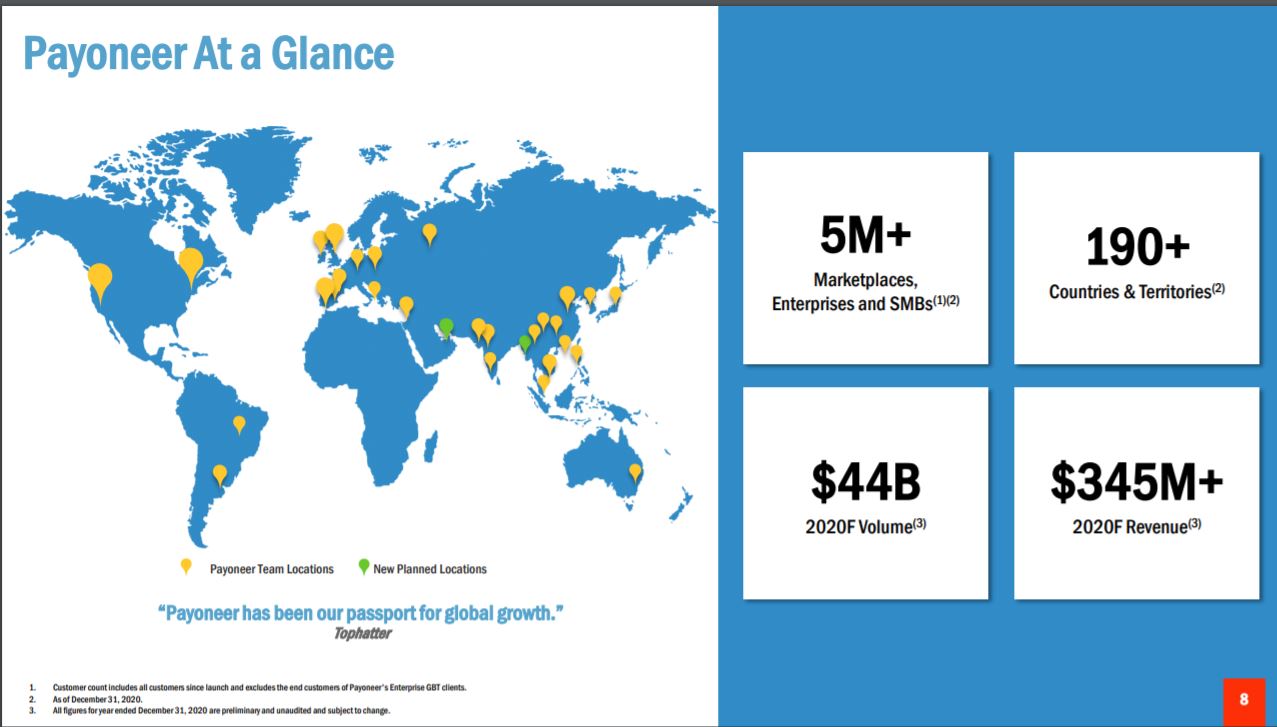
When it was first reported earlier this year that Bennett, a multimillionaire from his previous tech career, was about to make a few more millions from a new exit, the Yamina leader declined to specify which company in which he had invested was about to strike it rich. After Forbes established that the firm in question was a payments processor named Payoneer, ToI last week revealed that the firm in years past helped companies operating in the seedy underbelly of the internet to make money.
US Treasury Department documents, we reported, show that alongside its regular customers, Payoneer used to provide cross-border financial services to various murky offshore companies allegedly involved in pornography, scam dating websites, a forex company investigated by French law enforcement and companies involved in the fraudulent binary options industry.
A spokesman for Payoneer acknowledged to ToI that it had processed payments for such companies and insisted it no longer does so. “In 2016, Payoneer made a business decision to stop processing payments for high-risk businesses,” the spokesman said. “We no longer process payments for any of these companies and haven’t for years. Payoneer’s compliance program meets the highest industry standards… Today, Payoneer is trusted by many of the world’s leading digital brands including Amazon, Airbnb, Google and Upwork…”
According to Forbes, Bennett is expected to make some $5 million from Payoneer’s merger with a SPAC, which saw it make its Nasdaq market debut on Monday. There is no suggestion that Bennett was personally involved in, or even aware of, Payoneer’s previous dealings. But he is evidently going to gain financially from the firm’s activities.
Bennett and his ministerial colleagues must recognize the imperative to more effectively supervise Israel’s fintech sector, crack down on abuses, and allocate adequate resources to the task
Bennett would send an important signal were he to announce that he will not personally profit from his investment in Payoneer, and instead find a beneficial public use for his latest financial windfall. It would be better still if he and his ministerial colleagues also recognized the imperative to more effectively supervise Israel’s fintech sector, crack down on abuses, and allocate adequate resources to the task.
Tackling the dark side of Israel’s extraordinary startup economy is one more area of domestic governance where Israel needs to show that things are changing for the better. Fine words are important. But determined action is what really matters.
—
** This Editor’s Note was sent out Wednesday in ToI’s weekly update email to members of the Times of Israel Community. To receive these Editor’s Notes as they’re released, join the ToI Community here.










The Times of Israel Community.