

For the past 150 years, Alaskan Jews have blazed trails in the last frontier
With a spotlight on the dramatic rescue of 40,000 Yemenite Jews by Alaska Airlines, the Alaska Jewish museum marks the anniversary of ‘Seward’s Folly’
 Add ToI as a Preferred Source on Google
Reporter at The Times of Israel
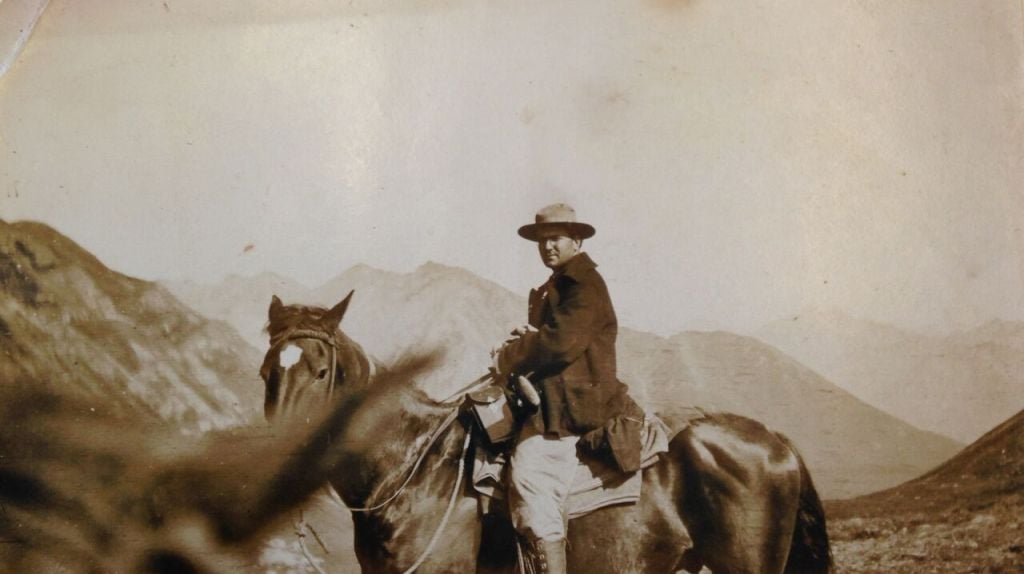
This year, Alaska celebrates 150 years since secretary of state William Seward acquired it from Russia for over $7 million in 1867. “Seward’s Folly” later became a mother lode for the gold rush, illuminated by the northern lights.
Currently, the Alaska Jewish Museum is looking to illuminate the state’s Jewish history as well.
“We get lots of visitors from all over the world,” said curator Leslie Fried. “They’re surprised there’s a history of Jewish settlement and culture in Alaska.”
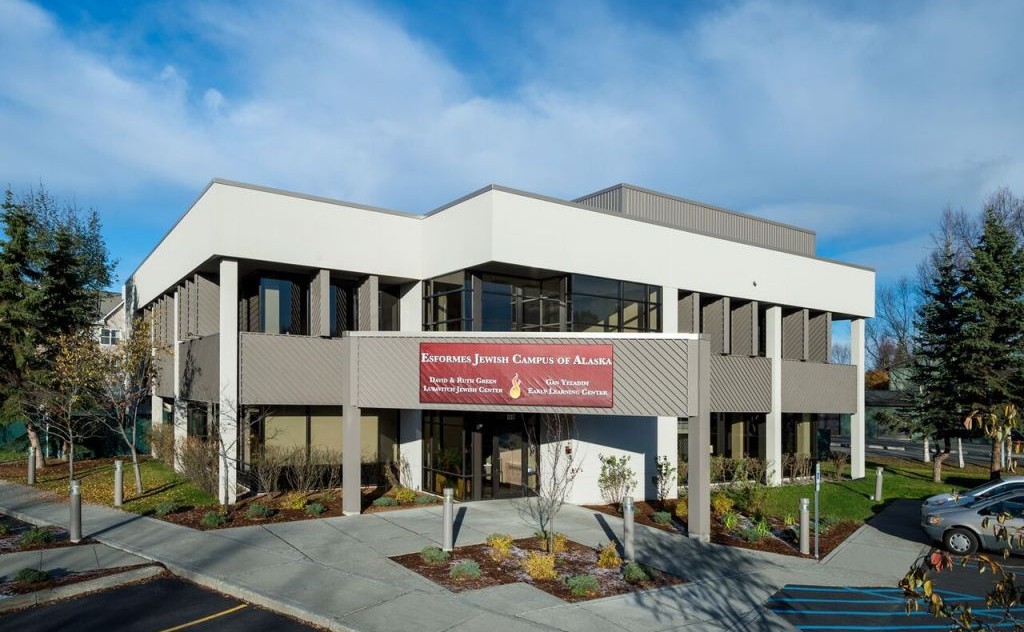
The museum is located in Anchorage, the largest state’s largest city, which is home to many of Alaska’s 6,000 Jews. Chabad Lubavitch Rabbi Yosef Greenberg, who founded the museum in 2013 after nearly a decade of effort, said it is the first Jewish museum in the Pacific Northwest.
One exhibit, “Jewish Movers and Shakers of Early Anchorage,” tells the story of six families whom Greenberg called “instrumental” in establishing the city. A second exhibit, “On the Wings of Eagles: Alaska’s Contribution to Operation Magic Carpet,” represents Alaska Airlines’ role transporting Yemenite Jews to the new state of Israel during Operation Magic Carpet.
In late May, the museum will unveil an exhibit about unsuccessful efforts to help Jews from Nazi Germany escape to Alaska. The museum is also planning an exhibit about Jewish involvement in the Alaska Purchase.

Answering the call
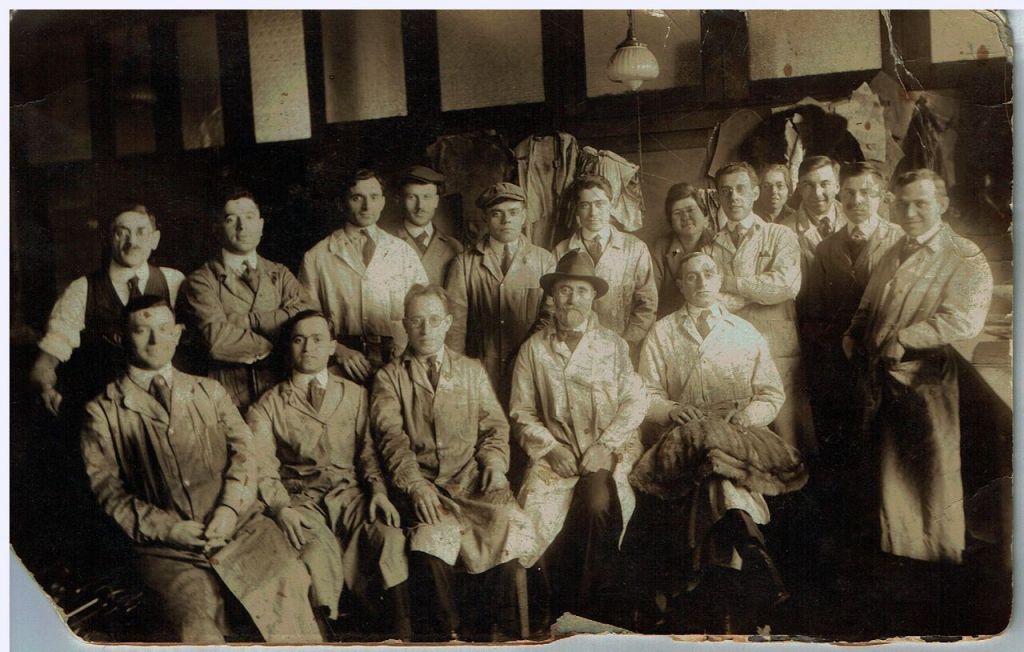
In 2015, Anchorage marked its centennial. Some 100 years earlier, Jews had joined the pioneers traveling to what was then a railroad tent town.
Curator Fried cited the gold rush and fur trade as the “main draws.” And, she said, “looking at the stories of the different families, adventure played a big role in that.”
Perry Green agrees. His late father, David Abraham Green, was one of the pioneers and became a prominent Alaskan furrier.
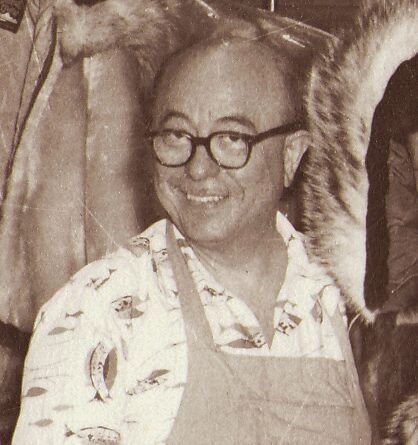
“My father was an adventurous type,” said Perry Green, now 80 and a resident of Palm Springs, California. “He was not content to just be a furrier.”
David Green certainly had a furrier’s pedigree. He came from a line of master furriers dating to 18th-century Europe. His family immigrated to New York from Galicia, and he joined the next generation of master furriers in an era when fur was fashionable.
He also read Jack London’s novel “The Call of the Wild,” about the Klondike Gold Rush.
“It appealed to him in such a vivid way,” Perry Green remembered. “He sought out adventure. It would eventually take him to Alaska.”
Other Jews also heeded the call.
“I am aware of at least 25 to 30 influential people who became crucial to the development of Alaska,” Fried said.
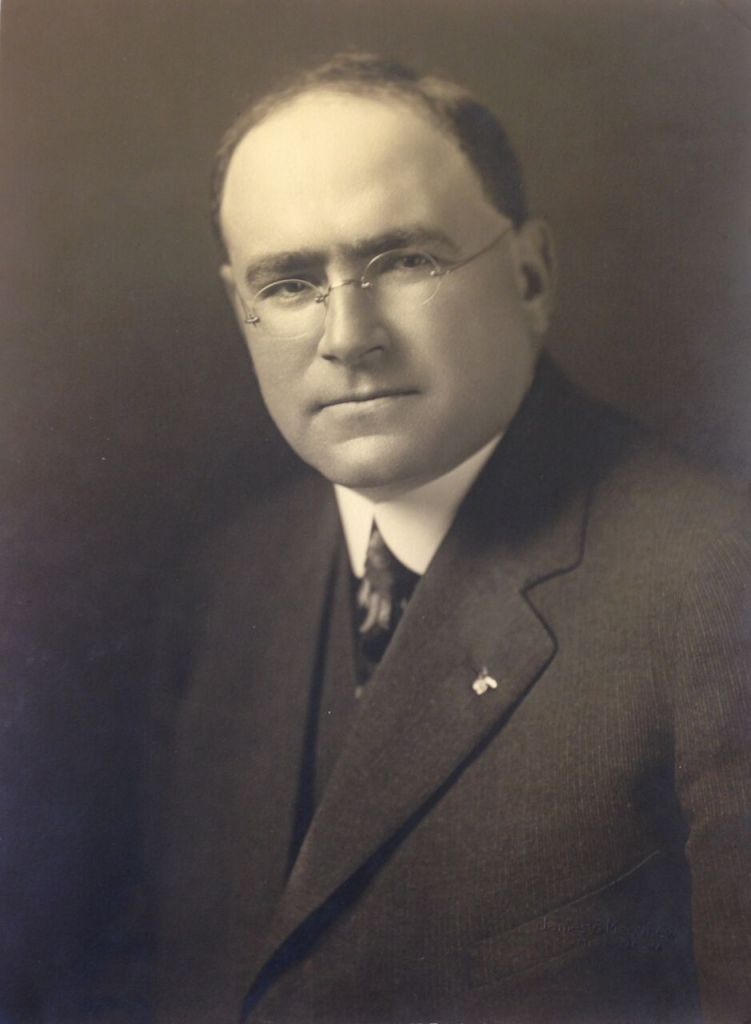
The “Jewish Movers and Shakers of Early Anchorage” exhibit focuses on the Bayles, David, Gottstein, Green, Koslosky and Loussac families.
Leopold David, a German immigrant, became Anchorage’s first mayor after it was incorporated as a town in 1920.
15 years earlier, as a pharmacy assistant combating diphtheria among Alaska Natives, he had to amputate several of his own frostbite-blackened toes.
Latvian immigrant Isidore “Ike” Bayles was on the city council that named David mayor. Bayles’ brother, Sam, brought the first Torah scroll to Alaska. Today the Bayles Torah resides in the Anchorage Reform congregation of Beth Sholom.
As mayor, David battled bootlegging, prostitution and gambling. Two of his first three police chiefs were killed. In 1924, after he had left office, he died of heart failure, still a young man in his 40s.
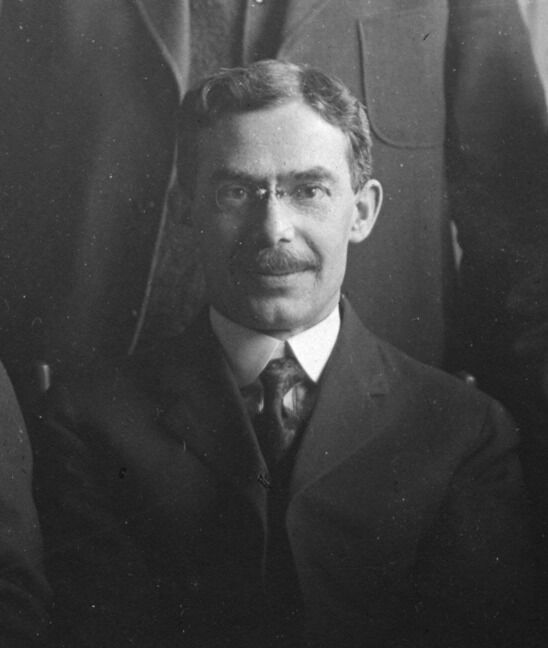
David’s peers helped Anchorage endure the Great Depression and World War II. Leading up to the war, David Green made muskrat liners and parkas for US service members monitoring the Aleutian Islands for Japanese activity. And when hundreds of Jews came to wartime Anchorage as members of the military or civilians, the Jewish community welcomed them.
Anchorage experienced a postwar economic boom. During that time, it also elected its second Jewish mayor, Zachariah “Zack” Loussac. (The city’s current mayor, Ethan Berkowitz, is also Jewish.) Earlier in life, Loussac had fled Russia and potential banishment to Siberia.
“When he retired [from business], he gave 50 percent of his entire wealth to start a foundation,” Fried said, adding that this helped start the first library in Anchorage.
Of the Jewish pioneers in general, Fried said, “They were not just coming and [saying] ‘Oh, I think I’ll open a store and deal furs.’ They were really involved in social organizations, the community, politics, philanthropy.”
On a wing and a prayer
In 1948, the American Jewish Joint Distribution Committee sought Alaska Airlines’ help transporting Yemenite Jewish refugees to Israel.
The airline had flown over 80 missions in the Berlin airlift and rescued Jewish refugees in Shanghai.
For Operation Magic Carpet, Fried said, “the US was definitely not going to send [planes] to Israel.”
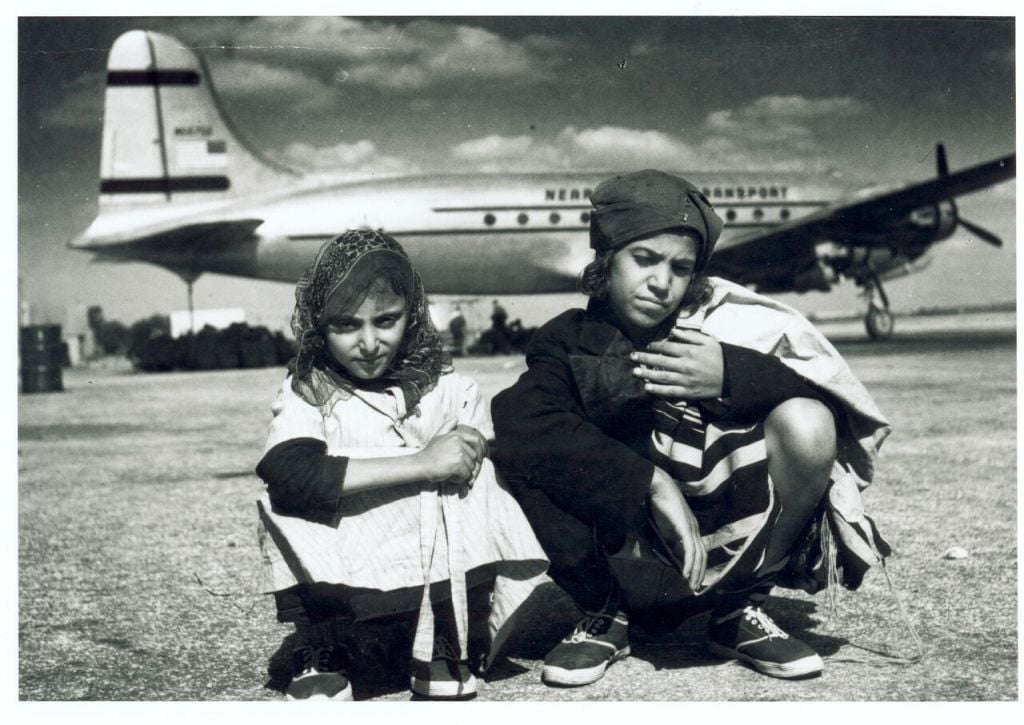
The planes’ first stop would be Asmara, in today’s Eritrea. From there, the pilots flew their twin-engine DC-4s and C-46s to Aden, where the 2,000-year-old Yemenite Jewish community was waiting.
“They had never been in a car, let alone a plane,” Fried said. “There was a prediction in the Torah that they would return on the wings of eagles. They felt it was a prophecy.”
‘There was a prediction in the Torah that they would return on the wings of eagles. They felt it was a prophecy’
Refugees crowded into planes, 150 people in a C-46 built to carry 60.
“One of the major guys in the Joint explained that from Yemen to Israel, there was not one friendly country,” Rabbi Greenberg said. “If you would land in any Arab country, you were spared as an American, but the children would be killed.”
The flight lasted 10 hours, but the planes only had fuel for nine. The aircraft carried oil tanks for the extra hour.
Over the course of the year-long operation, chief pilot Robert Maguire Jr. once ran out of fuel and was forced to make an emergency landing in Port Said, Egypt. Surrounded by the hostile army and forced to think on his feet, he requested immediate medical assistance from the Egyptians. When asked why, he said that his passengers had smallpox. The soldiers let him refuel and leave.
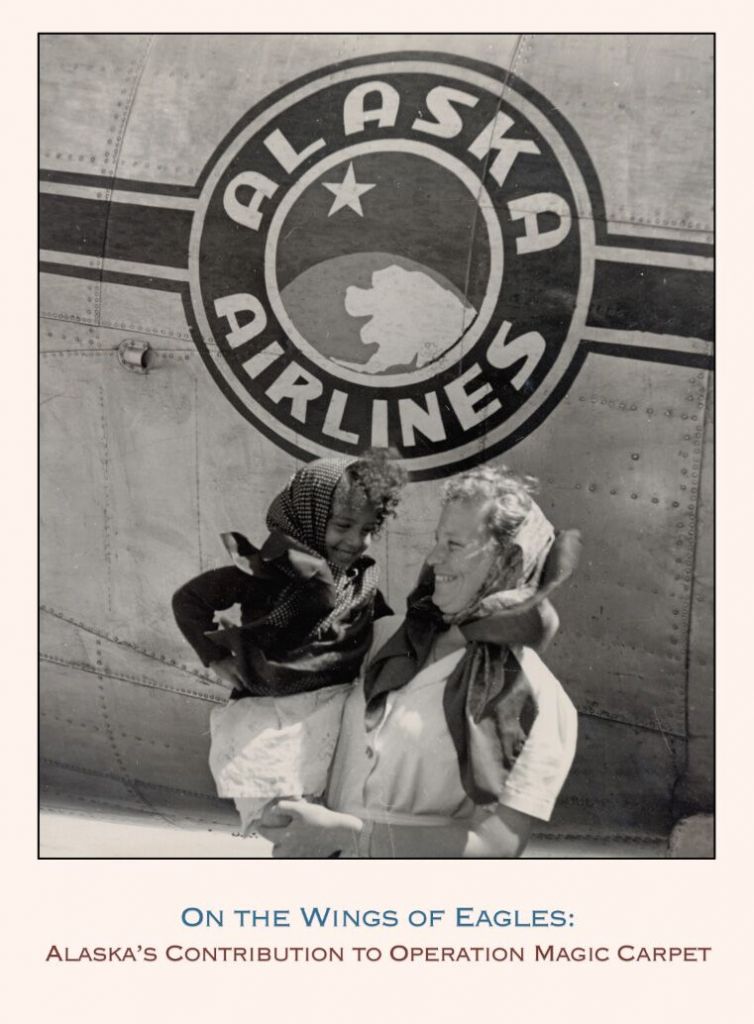
Maguire was honored by the Simon Wiesenthal Center a year before his death at age 94 in 2005.
Eventually, the US Civil Aeronautics Board took away Alaska Airlines’ international flight program, jeopardizing the mission.
“The president of the airline [James Wooten] was so involved emotionally at that point to get people out of Yemen that he changed the name of the airline,” Fried said.
A fictitious company, “Near East Air Transport,” was created, and the mission continued.
However, “[the] registration of the new airline took a long time and thus flights to Aden were delayed,” wrote Esther Meir-Glitzenstein, a professor at Ben-Gurion University of the Negev, in her 2014 book “The ‘Magic Carpet’ Exodus of Yemenite Jewry: An Israeli Formative Myth.”
In her critical assessment of Operation Magic Carpet, Meir-Glitzenstein noted other challenges Alaska Airlines faced.
‘We have Israeli Yemenite Jews that come to the museum, they’re in shock — they had no idea’
“[It] rapidly became clear that Alaska Airlines was having difficulty keeping up its part of the bargain and that a sufficient number of planes was not reaching Aden,” she wrote. “In the first week of August [1949], not a single flight went out, because a C-46 airplane had gone out of service.”
Such difficulties led to tensions with the JDC. But Alaska Airlines ultimately fulfilled its mission, bringing over 40,000 refugees from Yemen to Israel from 1948 to 1950, with no loss of life on board.
“We have Israeli Yemenite Jews that come [to the museum],” Fried said. “They’re in shock — ‘What the heck?’ They had no idea.”
She said one visitor from Israel was particularly shocked to recognize his sister in a photo.
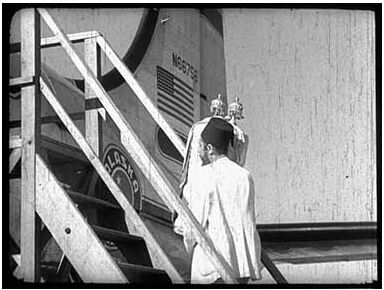
While working on the exhibit, Fried discovered that her late father, Tel Aviv-born Norman Moonitz, had flown some of the flights.
“He was one of the Mahal pilots in 1948,” she said. “He volunteered to help form the Israeli Air Force. He never mentioned that he had done some of these flights.”
“We interviewed a few of the original pilots, [Warren] Metzger, a non-Jew, who met his wife of 65 years on a flight from Yemen to Israel,” Greenberg said. “She was a flight attendant.”
“This story is perfect for our mission,” Greenberg said. “How in the 1940s, a time when the world was full with persecution and anti-Semitism all over, non-Jewish Americans in Alaska, the other end of the world from Israel, [made] 500 flights from Aden to Israel.”
New frontiers
The official 150th anniversary dates for the Alaska Purchase are approaching: Secretary Seward purchased the territory on March 30, 1867. The transfer ceremony occurred on October 18 of that year — “Alaska Day.”
Between these dates, the museum plans to unveil “The Miracle That Didn’t Happen: The Alaska Resettlement Plan,” about efforts to bring Jews from Nazi Germany to Alaska in the 1930s and early 1940s.
The resettlement plan inspired Michael Chabon’s novel “The Yiddish Policemen’s Union” about what might have happened had it succeeded. Instead, it failed in a Senate committee.
“There was an anti-Semitic Senate,” Greenberg said. “Alaska itself reacted [in a] mixed [way]. We are trying to make it balanced.”
Another exhibit will present the Jewish role in the Alaska Purchase — including from Jewish fur traders in San Francisco.
“They were very close to senator [Cornelius] Cole [of California],” Greenberg said. “He was a classmate of William Seward. They lobbied senator Cole, and he lobbied William Seward to go for it.”
Greenberg called the purchase of Alaska “one of the smartest things America did” and “one of the greatest gifts Jews could have given to America. Good people do good things for good reasons.”










The Times of Israel Community.