

‘Forgotten children’ remembered at historic MA cemetery
A large-scale renovation restores graves — and a chapter of American Jewish history
Reporter at The Times of Israel
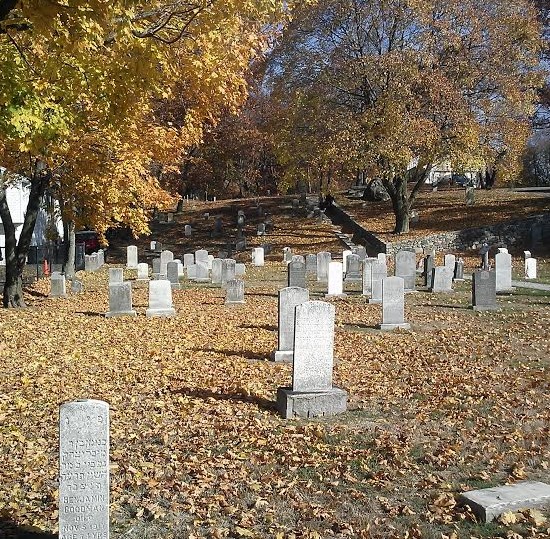
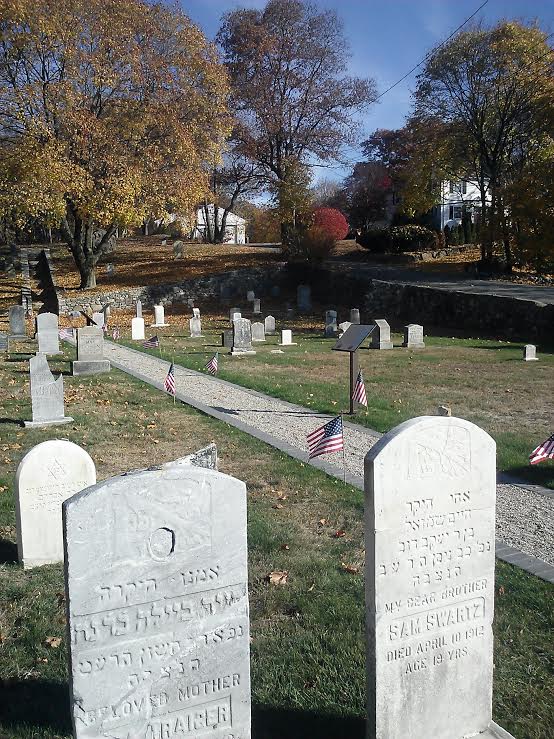
MALDEN, Massachusetts — For almost a century, Massachusetts’ second oldest Jewish cemetery was left ignored, an “uninviting eyesore” for surrounding neighbors in working class Malden, outside Boston.
A dramatic transformation of the so-called “Lebanon Street Cemetery” occurred in recent months, as local activists and the Jewish Cemetery Association of Massachusetts (JCAM) completed extensive renewal projects. Because most of the cemetery’s 1,400 burials were of young children with unmarked graves, a memorial garden and sculpture for the “Forgotten Children” was erected at the site’s entrance.
When the Hebrew Charitable Burial Ground purchased land for the cemetery in 1851, it did so with poor Jewish immigrants from Central Europe in mind. Just one Jewish cemetery existed in Massachusetts at the time – in East Boston – so after it had filled up, local Jews were forced to travel to Newport, Rhode Island, or New York City to bury loved ones in accordance with Jewish law.
For Jewish immigrant families in poverty, Malden’s new cemetery provided burials close to Boston, at a time when the infant mortality rate was one in ten.
“This is a story of charity and redemption,” said Stanley J. Kaplan, JCAM’s executive director. “These visionaries got together and created the original name of the cemetery — the Hebrew Charitable Burial Ground — that would give graves for free to people in the Jewish community who needed it. The people who needed it the most were children,” Kaplan told The Times of Israel.
Up to 1,200 children age five and under were buried at the cemetery, starting in 1852 with two-month old Sarah Seaman of Boston, according to Kaplan, whose organization owns and operates about half of Massachusetts’ 209 Jewish cemeteries.
“This was an era before immunization, and any kind of sickness put children at risk, even a cold,” said Kaplan. “They are truly the forgotten children of Boston’s indigent immigrant Jewish community, who suffered from malnutrition and poverty and who could not afford the cost of a burial site,” he said.
For seven decades, Boston-area Jews conducted burials at the cemetery, ending with the 1919 interment of 14-year old Wolf Shenker. As early as 1892, Malden’s Board of Health investigated conditions at the cemetery, following allegations it was overcrowded. The cemetery was seized by the city in 1915 for back taxes and – in 1948 – sold for $25 to the Jewish War Veterans’ Building Corps. During the mid-1980s, JCAM assumed stewardship of the cemetery and started researching its unique history.
“For the better part of 100 years, this sanctuary had become forgotten space with no burials,” said Kaplan at a September rededication ceremony. “With no burials, with virtually no visitors, with no one knowing the cemetery’s original name, with no one knowing who was resting here, it became an uninviting eyesore, and soon a vast and disturbing disconnect had blinded the community,” he said.
According to lifelong Malden resident Barbara Tolstrup, the cemetery was “shabby, with no particular beauty. Very seldom would you have people come to it,” Tolstrup told the Times of Israel.
In 2012, Tolstrup featured the burial ground on a cable show she hosts for Malden Access TV. As chair of Malden’s Historical Commission, Tolstrup was already aware of the cemetery’s stark deterioration.
“After viewing [Tolstrup’s show], my eyes suddenly opened,” said Kaplan at the rededication ceremony. “What I saw was a rundown, undignified resting place that JCAM had pledged to preserve. It was that documentary that thrust us into action. We had been complacent for far too long. The restoration, the dignified renewal you see here today is a result of that awakening,” he said.
Renovation efforts – which cost $100,000 – included the repair of monuments, erection of new fences, and reconstruction of a stairway to the cemetery’s upper level. A new entrance gate and markers revived the cemetery’s original name – Hebrew Charitable Burial Ground. Large information displays placed along a central walkway explain the site’s history and Jewish burial practices.
In addition to being a New England Jewish landmark, the cemetery’s emotional pull comes from its unusually high portion of child burials.
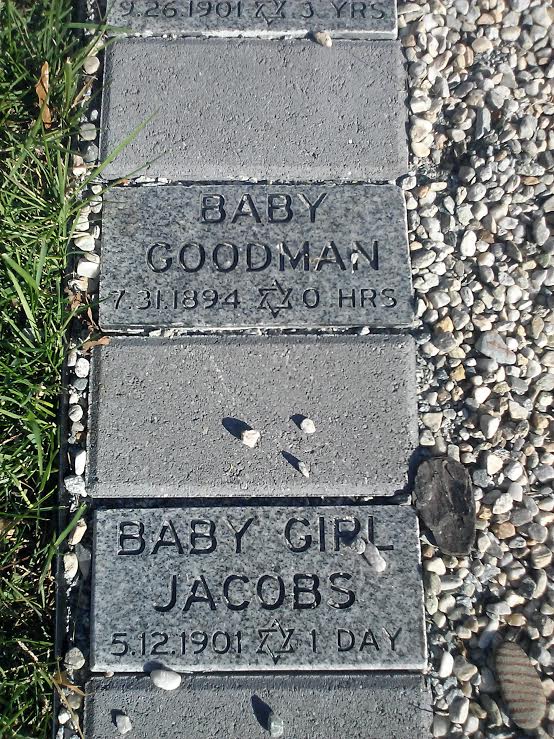
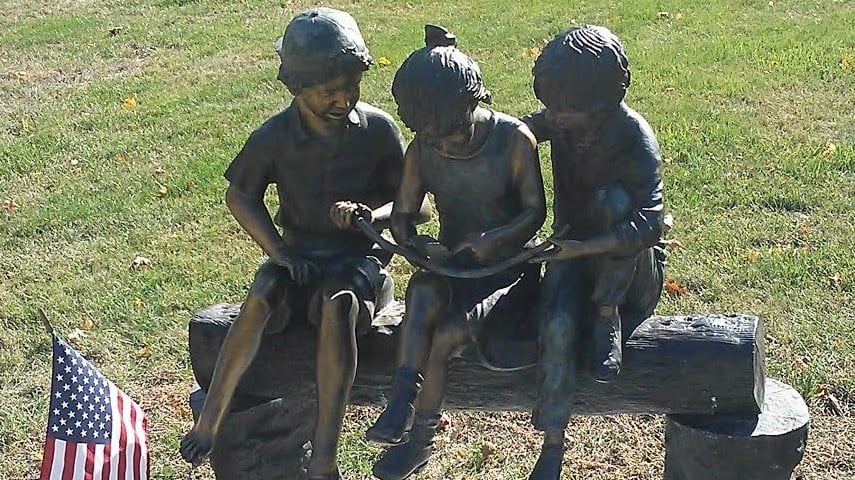
Close to the main entrance, a new Children’s Memorial Garden includes a touching sculpture of three children sitting on a log, observing a butterfly together. Memorial bricks inscribed with children’s names – often just family names, depending on how long the interred child lived – connect the garden to the cemetery’s upper level, where hundreds of children were laid to rest.
“The rabbis those days advised the families against investing in stones, and to invest the money in the living,” said Tolstrup. “To learn about the site’s past was a very moving experience,” she said.
The cemetery sits in a quiet corner of Malden, an ethnically diverse city which by World War II was home to 15,000 Jewish residents, or one-quarter of the city. Malden’s densely Jewish neighborhood Ward 7 boasted six synagogues, several kosher butchers and a slew of Jewish service organizations. Most Jews have since left the city for neighboring suburbs, but a small and growing community remains.
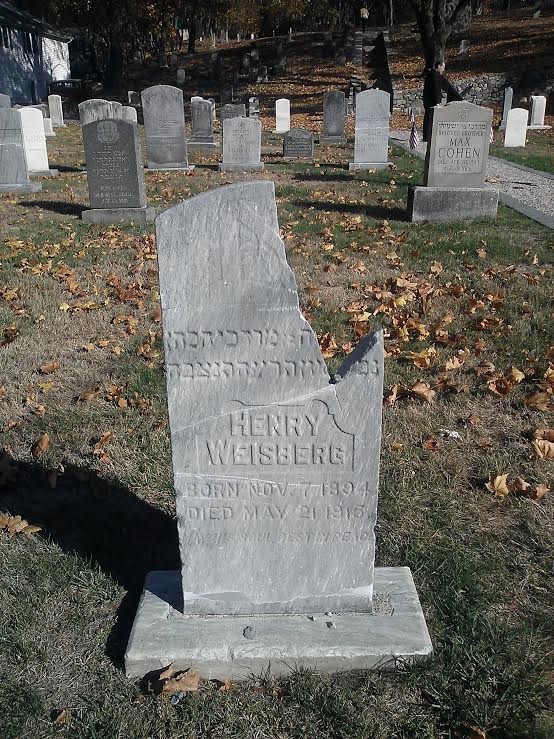
Surrounded by six houses, the one-acre, sloped Jewish cemetery is across the street from a pizzeria and gas station. According to Tolstrup, the site received few visitors for decades – and more than the occasional vandal. During restoration, hundreds of small, unmatched tombstone fragments were gathered together and placed in the cemetery’s center, a reminder of almost a century of neglect. .
“Deep down I hoped something might happen to change things,” said Tolstrup of her decision to feature the cemetery on her cable show. “Never did I dream it would be repaired to the extent they did it. When people walk by now, it’s a place of some importance,” she added.
‘Never did I dream it would be repaired to the extent they did it’
Along with physical restoration, JCAM staff and local historians have worked to retrieve information about Jews buried at the cemetery. Several prominent adults were laid to rest there, including the first female dentist in Boston, Babete Dreyfus Schnell, in 1873. Fewer than 200 of the 1,400 burials were of adults over age 20, for whom the cemetery charged $5 per burial – unless the family could not afford it.
Since recent publicity about the cemetery’s renewal, relatives of people buried there have contacted Kaplan at JCAM. In one instance, the great-niece of 16-year-old Bella Steinberg – buried after drowning in 1914 – called to thank Kaplan for repairing her great-aunt’s tombstone, which had been in pieces.
“If ever there was a Jewish story, then this is it,” said Kaplan. “It’s a wonderful feeling to know this place is no longer a place of forgotten children. We brought back its dignity. The community abandoned them for many years, and that was horrible. They deserve better, which is what drives me to do this kind of work.”




The Times of Israel Community.