

Urged to go, Labor’s Gabbay may agree to leadership race; No.2 Russo could quit
After party’s worst-ever election results, Labor head says he plans to serve the public ‘from the opposition’ as an MK, does not explicitly say he’ll resign
 Add ToI as a Preferred Source on Google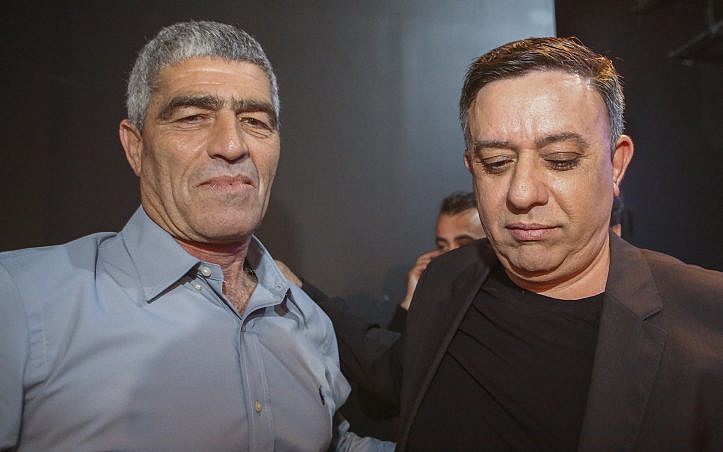
Embattled Labor Party leader Avi Gabbay said Thursday he will “confer” with party members about “moving up the date of leadership primaries,” amid intense pressure for him to resign after leading the party to its worst ever election result.
“I recognize and know the weight of responsibility placed on the shoulders of the Labor Party leader,” Gabbay said in a statement.
“In the coming days I will discuss with Labor MKs moving up the date of primaries for party chairmanship and other options on the table.”
Gabbay, who served as a minister for Kulanu in 2015-2016 and then quit the party to join Labor, has never been a member of the Knesset, and was elected to the legislature for the first time in Tuesday’s vote, where Labor won only six seats.
On Thursday he made clear that he did not intend to quit the party altogether but to serve as an MK.
“I will continue to work for the Labor movement and the Israeli public and on April 30th will be sworn in as a member of the Israeli Knesset and serve the public from the opposition,” he said.
Hebrew media speculated that Gabbay could step down and appoint an interim leader as early as the beginning of next week. The Ynet news site claimed former party chairman Amir Peretz was being considered to lead the party until primaries can be held.
Meanwhile, multiple media outlets reported that Tal Russo, a former general of the Israel Defense Forces who was second on Labor’s electoral slate, is also considering stepping down, Channel 12 news reported.
Russo’s potential departure would allow veteran MK Merav Michaeli, seventh on the party’s slate, to enter the Knesset.
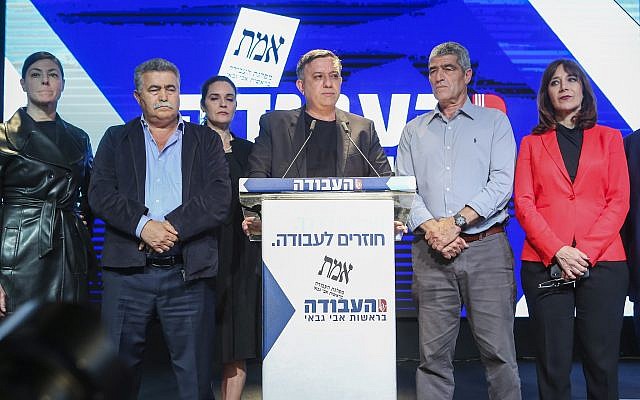
Earlier in the day, the secretary-general of the Labor Party publicly called for Gabbay to resign, saying a new leader was needed in order to “begin the work of rebuilding” the once venerable left-wing party.
The party, which led Israel in its first 30 years, fell to just six seats Tuesday with 4.46 percent of the votes, Labor’s worst showing in its 71-year history. In the 2015 elections, Labor, as part of the Zionist Union party, won 24 seats.
Labor has a dizzying history of replacing its chairman after election losses. Since it last won the election in 1992, it has seen a whopping total of 13 different leaders.
On Wednesday, MK Eitan Cabel, who placed low in the Labor primary after criticizing Gabbay and won’t be in the next Knesset, said: “Gabbay must hand over the keys immediately and [we must] choose a temporary party chairman, because the situation as it is cannot continue.”
On Tuesday night, after three exit polls predicted the party had gotten six to eight seats, Gabbay called the results “a huge disappointment” and “a real blow to our electoral power,” but did not address calls for him to step down.
In the 2015 elections, Labor, running together with Tzipi Livni’s Hatnua in an alliance called the Zionist Union, was the second-largest party.
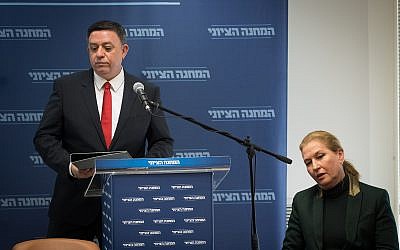
But months ahead of Tuesday’s elections, Gabbay announced on live TV the termination of Labor’s ties with Hatnua, as Livni sat by his side without having been given advance notice.
The move was widely slammed and was seen as a major cause for an erosion in support for Gabbay.
But the party also saw much of its base flee to Blue and White as its voters looked for a way to oust Benjamin Netanyahu.
The results point to a sad decline for the party that was instrumental in establishing the State of Israel.
The Labor Party was formed in 1968 by a merger of three parties, one of which was David Ben-Gurion’s Mapai party, which was founded in 1930. In the years leading to the establishment of the State of Israel in 1948, Mapai was the de facto leadership of the Jewish community and played a key role in the creation of the state.
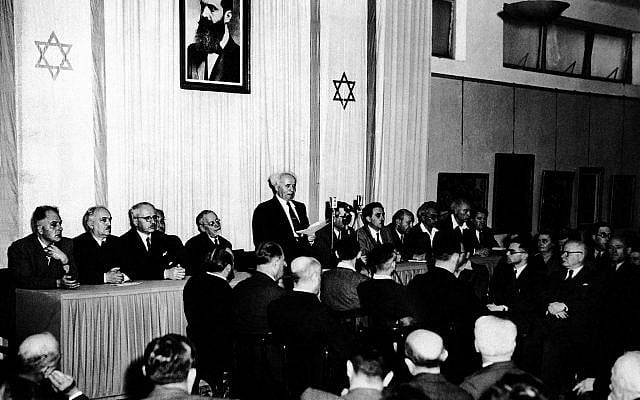
Labor remained Israel’s unchallenged ruling party until 1977, when Likud wrested the premiership away. Since then, it held power for a total of eight years, two of them as part of a unity government with Likud. That period included the 1990s Oslo Accords, negotiated by then-prime minister Yitzhak Rabin and his foreign minister, Shimon Peres.
Rabin was assassinated by a Jewish extremist in 1995, and the Oslo Accords remain highly controversial among Israelis.
Ehud Barak’s victory in the 1999 elections and his two-year premiership were the last time an Israeli coalition was led by Labor, which has been in decline since.
Agencies contributed to this report.



The Times of Israel Community.