 Add ToI as a Preferred Source on Google
When Adir Mesika’s loved ones were invited to a memorial marking two years since he was murdered at the Nova music festival, the invitation arrived in his own handwriting.
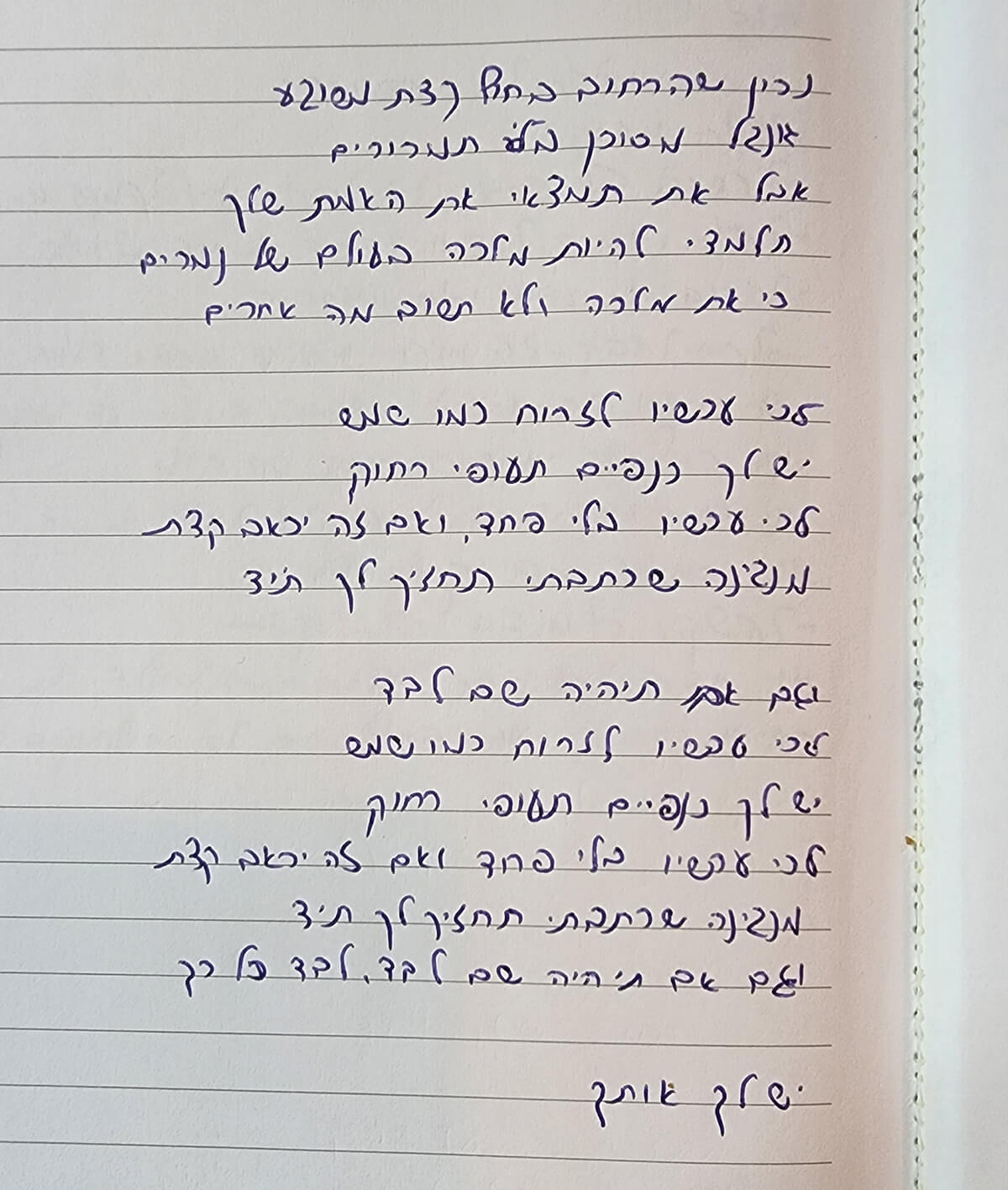
That poignant touch was enabled by the Ot Hayim project, by a group of graphic designers who have been working for the past two years to turn the handwriting of victims of Hamas’s October 7 attack into publicly available fonts.
“I think there’s really something about handwriting that is so personal, like a personal stamp,” Mesika’s mother, Sheerie, told The Times of Israel. “They say that through someone’s handwriting, you can know a person’s personality.”
A sea of memorial projects has engulfed Israel since the worst terror attack in the country’s history, with loved ones paying tribute to those slain via stickers, tattoos, Torah scrolls, musical creations and much more. Ot Hayim – which is Hebrew for “sign of life,” and a play on the Hebrew word ot, which also means a letter of the alphabet – is providing families with a uniquely personal way to see a piece of their loved one live on in perpetuity.
For the Mesika family, being able to use Adir’s handwriting on invitations, on his memorial website and as part of other memorial efforts in his name – including donating engagement rings to young couples – “really connects to him,” said Sheerie. “It’s like he’s the one doing the inviting. It’s very compelling.”
When the font was completed and uploaded to the website earlier this year, “I was so moved, we were really emotional.”
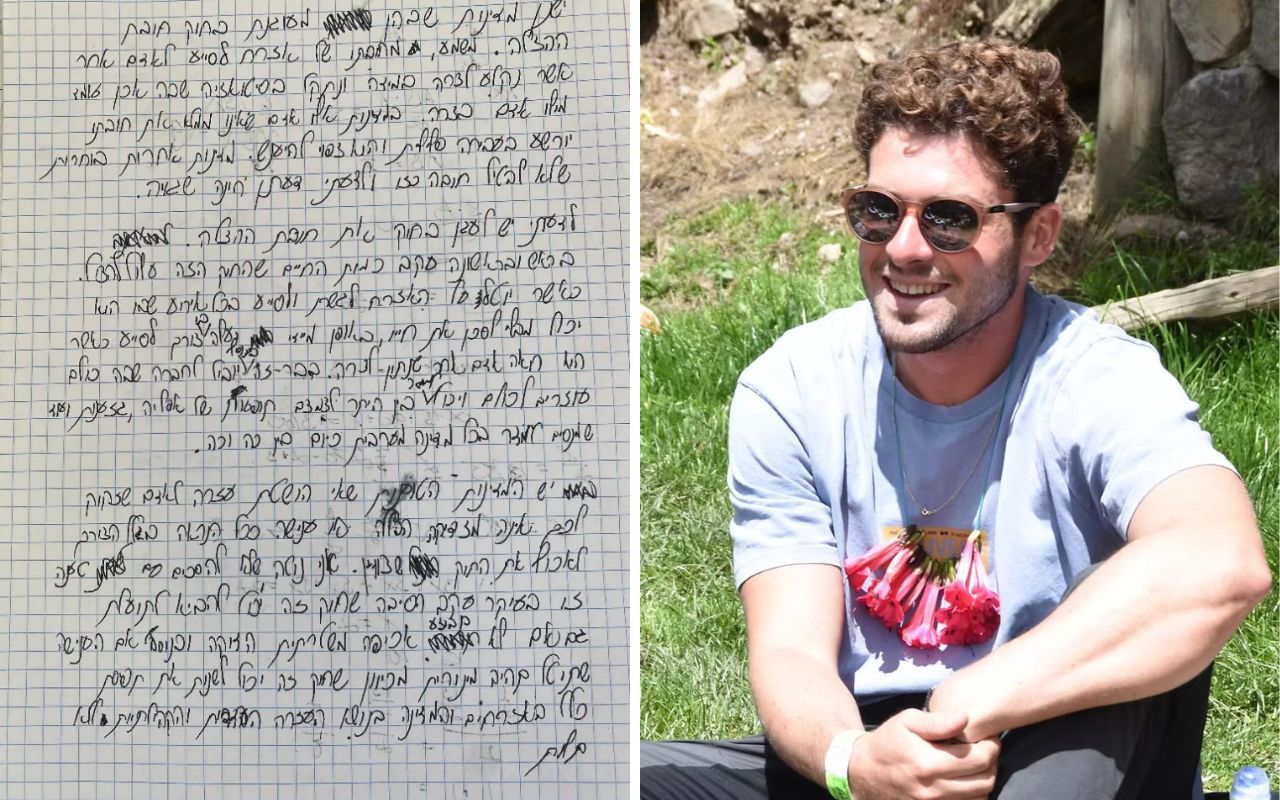
To date, there are more than 70 fonts available on the Ot Hayim website, for anyone around the world to download and use in their projects and designs. While the vast majority are Hebrew fonts, three of those memorialized also have fonts in English – Mesika, Staff Sgt. Noa Price and Sgt. Yael Leibushor, while one, Daniel Levi, has Spanish (which can also be used for English).
The fonts are free to use; the site accepts donations and asks those who use the fonts to share their projects with the families. Each page on the site showcases the font, tells the story of the fallen person and allows users to try out the font by typing into a box that immediately renders the text.
The project is the brainchild of Leah Marmorstein Yarchi, a graphic designer and font creator from Kfar Haroeh, who – like many others in the early weeks of the war – was looking for a way to use her skills and talents to help out.
About a month after the attack, she received a request to create something with the handwriting of Niv Raviv – who was murdered along with her boyfriend in Kibbutz Kfar Aza on October 7.
“As soon as I got the request, I said that this wouldn’t just be for Niv Raviv, but it would be a big initiative,” recalled Marmorstein Yarchi. Within 12 hours, she said, she had a name for the project and had gathered a group of like-minded people “who wanted to do something to alleviate this pain.”
They began a pilot program, working initially with the families of 10 slain individuals. They made sure, she said, to incorporate the diverse spectrum of Israeli society in both the designers and the fallen – Druze, Ethiopian, religious, secular, civilian and soldier.
“Because that was really another goal for me, another mission in this initiative – that it will have unity, that it will join together people from all types in society in unity working together out of pure love, not anything remotely political,” she said.
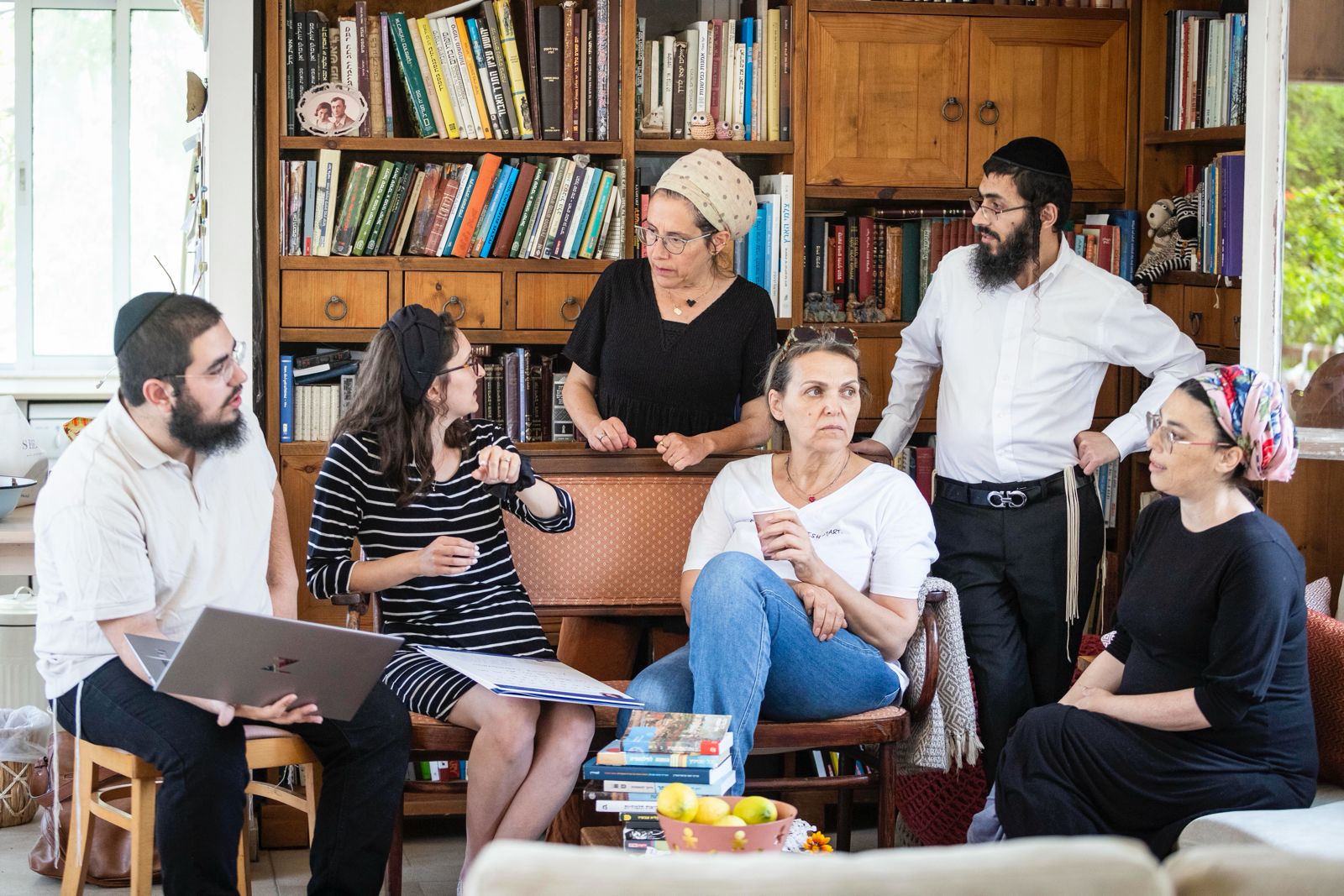
Marmorstein Yarchi and those she was working with – Yossi Biton, Moshe Hai, Shana Koppel, Yael Mesika and Atara Uzan (who tragically died in September 2025) – threw themselves into the work, with everyone volunteering their time.
The ultimate goal, she said, was for “the unique voices that are expressed through handwriting – which is something so individual and authentic and very intimate, which really evokes memory and longing and scent – will leave the presence of the fallen and the heroes in the expanse and the world of our lives.”
Marmorstein Yarchi said that for many of the families, the process of turning their loved ones’ handwriting into a font is “kind of like an organ transplant – where something of their beloved remains in the world and continues to function as if independent.”
Sigal Price, the mother of slain observation soldier Noa Price, who was killed at the Nahal Oz IDF base on October 7 – said that when her daughter’s font was ready, “I was very, very moved.”
“It’s like they took Noa and they brought her back to life a little bit through letters,” Sigal said.
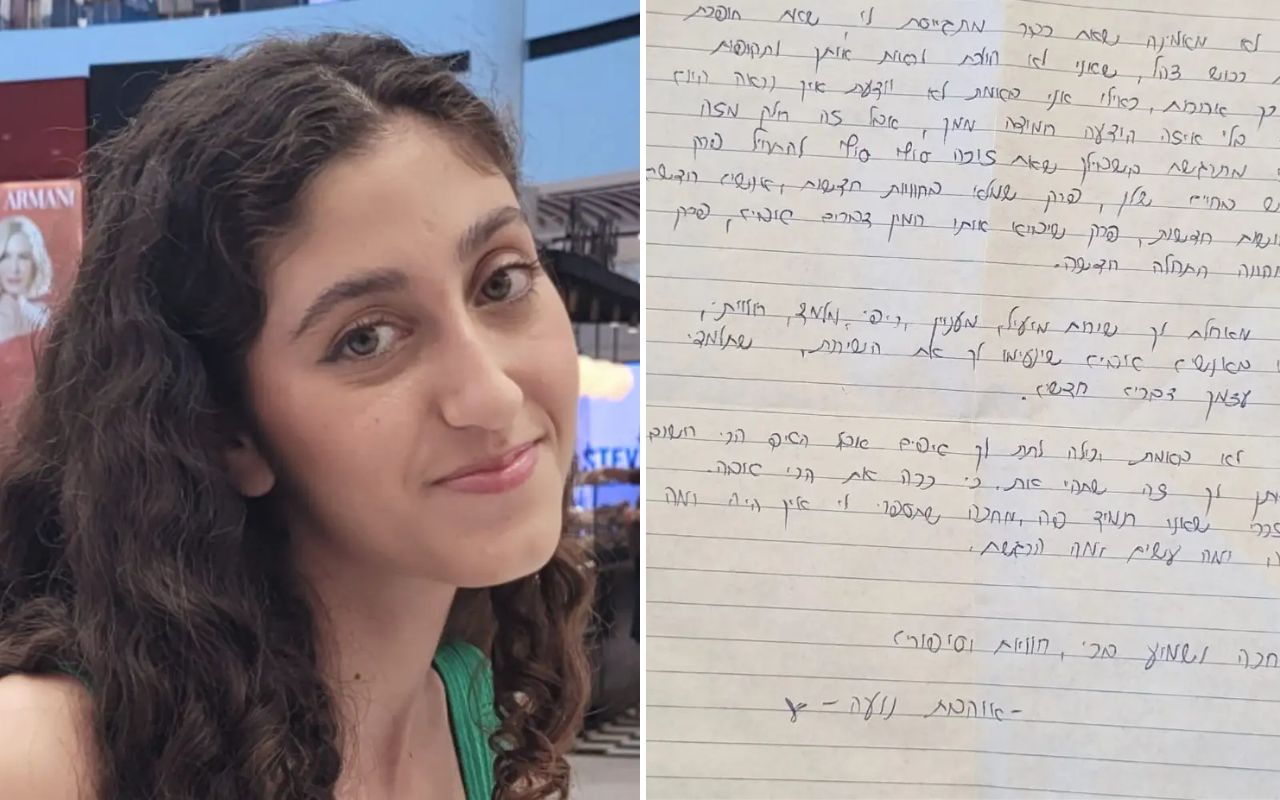
Noa left behind many notebooks from school with her neat and organized handwriting, “and suddenly to see it as a font that can be used – every time I get photos or someone chooses her handwriting – for me it’s very emotional. It’s like they’re choosing Noa.”
Sigal said teachers she knows have used Noa’s font to set up their classrooms for the new school year, and she heard from a former IDF observation soldier who used it for her university thesis project.
Each time she hears of someone using the font, “on the one hand, my heart skips a beat, and on the other hand, I’m happy that people learn and read about her and who she was, and she can touch many people’s hearts this way.”
Her daughter’s handwriting, Sigal said, “was so unique and aesthetic – and it’s a big part of who she was – a sensitive and gentle person on the one hand, but very present and very significant in many ways. She had so much internal and external beauty.”
The process of turning handwriting into a usable font, said Marmorstein Yarchi, is a complex one, which “requires a lot of skill and a lot of heart and a lot of experience.” Two years into the project, she said, there are still several dozen more fonts either in production or on a waiting list.
The writing samples they receive from the families are often quite varied – school notes, grocery lists, birthday cards, personal letters – some written quickly, others more slowly, sometimes with a range of different emotions.
Each designer, she said, needs to “locate and trace the DNA of the letters and understand which letters will give them the vibe of the person, their soul, to bring their soul into these letters, so their family will see it and say ‘that’s him.’”
Even gathering the writing samples is not always easy, said Marmorstein Yarchi. The family of Lili and Ram Itamari, a couple who were murdered in their Kibbutz Kfar Aza home on October 7, really wanted to take part in the initiative.
But their house was burned to the ground by terrorists, and almost anything handwritten was destroyed. “The children needed to go to [Ram’s] workplace and found invoices – we really lifted letters from invoices and reports that he submitted.”
For Lili, she said, “She would write greeting cards and gift cards and they collected them from all sorts of people who had saved them.”
Marmorstein Yarchi said that today, while the wounds are still fresh and the war is ongoing, the fonts “give people possibilities” for memorial projects. “It increases commemoration, it encourages ideas for memorialization,” she noted.
But in the future, she said, “slowly they will become like ‘David’ and ‘Arial,’ they will become fonts that people use, that they choose because of its suitability, because of its beauty… Imagine that you will have in your computer next to David and Arial – you’ll have Niv Raviv and you’ll have Eitan Fisch. It’s moving, it’s touching.”

The Times of Israel Community.