

In the year since October 7, a wave of musical projects commemorate Israel’s fallen
Both established and amateur artists set to music lyrics penned by the slain, capturing the spirit of those whose personal soundtracks stopped too soon
 Add ToI as a Preferred Source on Google
Gavriel Fiske is a reporter at The Times of Israel
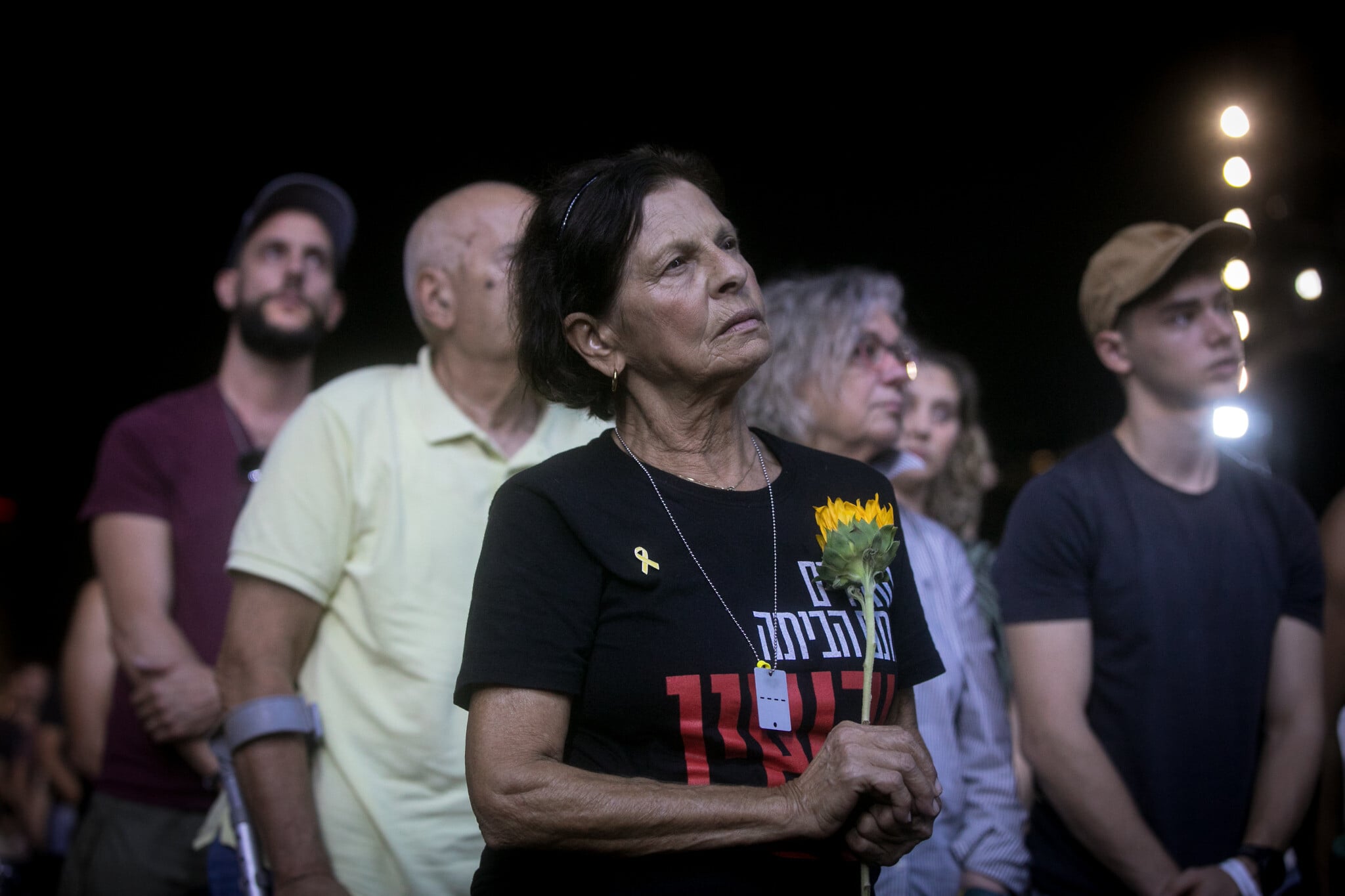
The Hamas killing fields at music festivals near Kibbutz Re’im saw the slaughter of hundreds of young adults on October 7, 2023.
Dozens of terrorists ambushed the Nova dance music festival in one of the major massacres of the onslaught. Combined with the smaller Mushroom, Psyduck and Midburn gatherings happening nearby, 410 were killed there in total, according to the Tribe of Nova Foundation. A significant number of them were musicians, DJs, songwriters or composers.
Music, the soundtrack of life, accompanies us through difficulties, triumphs and all that lies in between. But what happens when a life is cut short and, without warning, the music stops?
This is a question in the air for the last year, since the shocking and brutal Hamas-led assault into southern Israel in which some 1,200 people were murdered and entire communities ravaged, setting off the ongoing Israel-Hamas-Hezbollah war, which has also claimed hundreds of casualties among IDF soldiers in Gaza and in the north.
For many, music has offered a means of processing this sudden and unprecedented loss of life. In a small country like Israel, the horror has directly or indirectly touched almost everyone.
Within the past year, many of the slain were honored in various musical ways, especially with songs dedicated to their memories. Some of the casualties were musicians themselves, and their work has lived on in posthumous releases.
Aspiring musician Bnayahu Bitton, 22, had just completed his IDF service. He fled the Nova festival with a few friends but was shot and killed at the gates of Kibbutz Be’eri, which that morning had also been overrun by terrorists like so many Israeli communities bordering Gaza.
Bitton, who played guitar and sang, had privately recorded several of his own songs, one of which, “To Stand Up,” was reworked professionally and released in May by The Netzach Project, a coalition of artists who came together after October 7 to memorialize the works of the fallen.
Tamar Samet, 20, from Pardes Hannah-Karkur, is another victim of the Nova massacre whose work lives on posthumously. In December, Samet’s friend Ben Ronen, while doing his IDF reserve duty in Gaza, posted online a recording of his song “How I Burned a Bridge,” which had been sung by Samet.
The short song, a melancholy and folksy guitar ballad which when released entered into rotation on various Israeli radio stations, has just a few lyrics: “It happened again, I made a mistake, there’s no way back/Again I said things which I didn’t intend, they weren’t right/And how is it? I burned a bridge.”
The song later received another, quite different arrangement, using Samet’s vocal recording, by students at Tzil B’Galil, a school for young cellists.
Other victims have been remembered through previously released material. The day before Naor Levi, 24, who worked as a Goa/psytrance DJ under the moniker “DJ AudioPhiller,” was killed at the Nova festival, he had performed an hourlong set at Rising Spirit, a 24-hour event that took place October 5-6, 2023, during the Sukkot holiday.
Before arriving in Re’im, Levi had uploaded this last set of edgy, aggressive dance music to his SoundCloud page, which after the tragedy became an impromptu memorial site, with hundreds of people leaving comments and tributes.
Some of the Nova festival victims were established artists, such as Matan “Kido” Elmalem, 42, a well-known trance music DJ who performed internationally, and Osher and Michael Vaknin, 35, identical twins and electronic music producers who were an integral part of the Nova organizational team.
These late artists, and others such as Jake Marlowe, the bassist for established UK metal band Desolated who was working security at the Nova festival, have also had their social media pages, music sites and YouTube videos transformed organically into tribute pages.
There are many other victims of the festival massacre who have been individually memorialized through musical projects, mostly similar efforts by family or friends intended for those who personally knew the deceased.
However, popular singer Osher Cohen’s moving ballad, “Tirkedi” (Dance!), dedicated to all the festival victims collectively and released just a few weeks after October 7, instantly became a popular anthem of resilience that has been played or covered at innumerable memorial ceremonies.
The lyrics describe the atmosphere of an early-morning dance party invaded by terrorists and rocket attacks, and imagine the fallen still dancing in heaven. Cohen, close to the first anniversary of the massacre, released a live performance version of the moving song.
Heroes and soldiers
Other victims of the Hamas attack who were not at the festival sites, as well as soldiers who perished in the fighting, have been honored as well.
One of the most well-known is Yotam Haim, 28, a heavy metal drummer who, after being kidnapped from Kibbutz Kfar Aza, survived weeks in Gazan captivity only to be tragically accidentally killed by IDF soldiers in mid-December, along with two other Israeli prisoners, after they had escaped their captors.
Haim’s older brother, Tubal Haim, also a drummer, rallied many in Israel’s music scene around the cause of freeing Yotam and the other hostages, and Haim’s mother, Iris Haim, became a public figure, speaking at rallies and giving interviews, especially after she publicly forgave the soldiers who mistakenly killed her son immediately following the incident.
Tributes to Yotam Haim have been many, including by his band, Persephore, who in March released a song and video, “WARZONE,” dedicated to their former drummer. And Tubal Haim, with his dance-klezmer band Pulkes, along with singer Berry Sakharof, last month released a version of “Canfei Ruach” (“Wings of Spirit”) dedicated to Yotam Haim.
The lyrics, written by Rabbi Avraham Kook, exhort humanity to “rise up and up/ Because you have a mighty strength/ You have wings of spirit/ Eagle wings of chivalry/ Don’t deny them, or they will deny you.”
Soldiers who fell in battle have also received music tributes. Cpt. Omer Wolf, 22, died in combat near Kibbutz Nir Oz on October 7. Later, his family discovered he had been writing poetry in secret, and popular singer Rami Kleinstein set one of these poems, “Turquoise,” to music, which was eventually released as a tribute video.
The lyrics, presented by Kleinstein in a delicate bossa nova composition, warn a friend against diving too deep into beautiful, turquoise waters: “You have waited for years for this calming silence/ And there is no one to disturb you in the depths somewhere/ But as you continue, the light vanishes/ The turquoise turns black/ The heat turns cold/And the fish cannot be seen.”
Cpt. Roi Nahary, 23, was also injured in the battle for Kibbutz Nir Oz on October 7 and succumbed to his wounds two days later. In November, his high-school friend Shachar Yaakov wrote and released a tribute song, “You’re Here With Me,” an emotional piano ballad.
Nahary was a twin, as is Yaakov, something alluded to in her chorus: “And you, my soulmate/ Leaving a soul orphaned/ Each song and melody reminds me of you/ My broken heart is waiting for a sign/ For another memory that doesn’t vanish with time/ My angel, you are here with me.”
Army Radio picks up the mic
Several ambitious projects have appeared that directly memorialize Israel’s fallen, especially in recent weeks around the anniversary of October 7. One of these, “Seven Songs for October,” is a series of musical pieces dedicated to the fallen produced by Galgalatz, the IDF’s music station and one of the country’s most popular.
These songs, produced in cooperation with top artists, are based on poems and songs written by fallen soldiers and were collectively released on October 7, 2024. The project also includes, separately from the songs, video interviews with family and friends of those memorialized.
Standouts include “Between the Clouds,” a ballad sung by superstar Sarit Haddad and based on a poem by Sgt. Adi Baruch, who was killed on October 12, 2023, by a rocket attack on the day she reported for reserve duty.
The lyrics, eerily anticipating the situation, are a request for those left behind to continue with life after the author has died, and opens with: “And if I ever die before my time comes/ I want you to celebrate life/ May you wake up every morning with a smile on your face/ And a little longing in the heart/ And don’t let a second go to waste.”
Another track from the series is “Maybe the Door Will Open,” sung and arranged in a hip, urban groove by Eden Ben Zaken. A song about self-reflection and wondering about the future, it was written by three women, Sgt. Aviv Hajaj, Sgt. Daniela Gilboa and Staff Sgt. Yam Glass, who had served and made music together as forward observers at the IDF base next to Kibbutz Nahal Oz.
The base was overrun on October 7 and Hajaj and Glass, along with many others, were killed. Gilboa, along with four other female observers, was kidnapped to Gaza, where it is thought that she is still alive.
Hamas abducted 251 hostages on October 7, and it is believed that 97 remain in Gaza, including the bodies of at least 34 confirmed dead by the IDF.







The Times of Israel Community.