

Israel doesn’t know if Trump will pull out of Iran deal, top official says
Jerusalem has yet to be informed of US president’s decision, but source believes Washington shares Israel’s ‘skeptical view’ of accord
 Add ToI as a Preferred Source on Google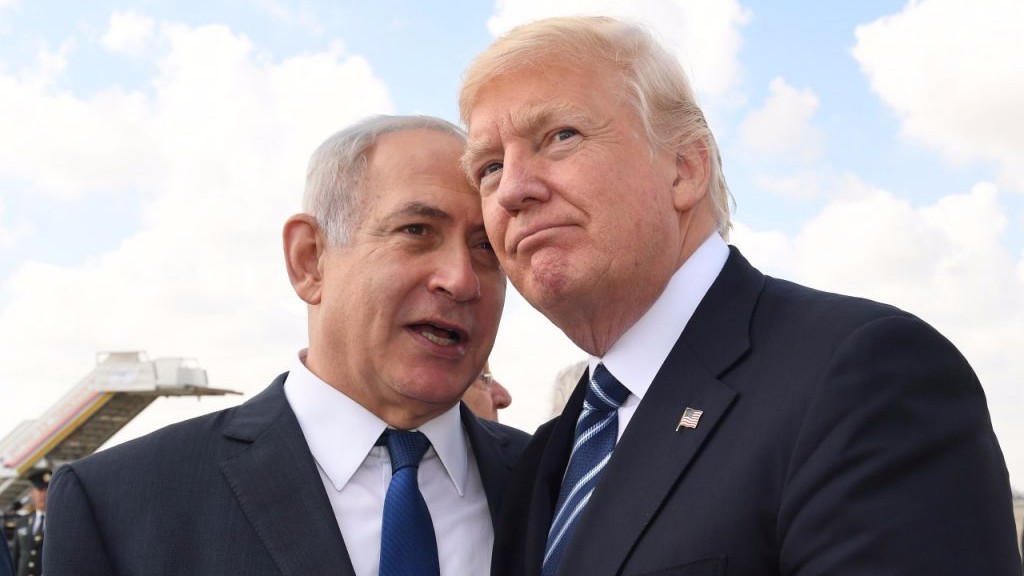
US President Donald Trump has not informed Israel of whether he will withdraw from the Iran nuclear deal it opposes by his May 12 deadline, a senior Israeli official said Sunday.
The comments came as Israel pushed its case to have the deal changed or eliminated, arguing intelligence documents it recently unveiled on Iran’s alleged nuclear ambitions helped demonstrate why.
Some experts and analysts believe Trump will pull out of the agreement, which was concluded in 2015 under his predecessor Barack Obama and which he has harshly criticized.
“In effect, I don’t know what Trump will decide because he hasn’t told me,” the senior Israeli official said on condition of anonymity, making clear Israel had not yet been informed of Trump’s decision.
The official added, however, “I think that he has the same skeptical view.”
Prime Minister Benjamin Netanyahu’s televised unveiling of the trove of tens of thousands of intelligence documents on April 30 is believed to have been coordinated with Washington.
Netanyahu argues that the documents show the deal with his country’s main enemy was built on a lie — Iran denied having pursued nuclear weapons — and demonstrates it has a secret atomic weapons program ready to activate at any time.
World powers that were party to the agreement, including Britain and France, said those arguments only strengthened the reasoning for the deal, which has safeguards in place designed to keep Iran from pursuing nuclear weapons. They also said the intelligence documents did not show Iran was violating the deal.
Trump could decide by May 12 to reimpose US sanctions on Iran lifted as part of the agreement.
The Israeli official said while he did not know what Trump’s course of action would be, there could be a range of options.
He said he believed one option could be Trump declining to renew a waiver on sanctions against Iran due to expire on May 12, but using the lag time until sanctions take effect to negotiate from a stronger position.
Trump could alternatively decide to single out firms key to Iran’s economy for what are known as secondary sanctions to apply pressure on Tehran.
“I think you want to ratchet up the pressure,” the Israeli official said.
Netanyahu on Sunday disputed arguments from deal proponents that the intelligence trove he unveiled had no new details. He also said it did not matter if Iran had violated the agreement or not since the deal was fatally flawed.
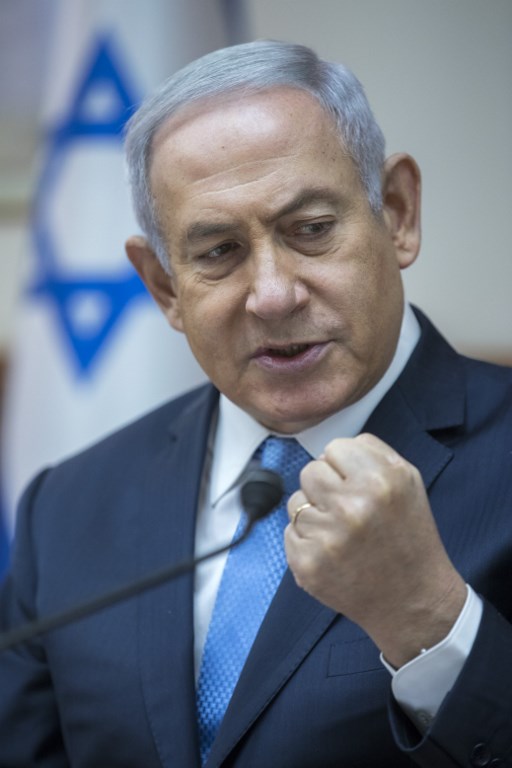
“If you don’t violate a dangerous deal, it doesn’t make it less dangerous,” he said.
In a briefing to foreign reporters, Netanyahu said “a deal that enables Iran to keep and hide all its nuclear weapons know-how, is a horrible deal.”
The deal “has to be either fully fixed or fully nixed,” he said. “But if you do nothing to this deal, if you keep it as is, you will end up with Iran with a nuclear arsenal in a very short time.”
Earlier, Netanyahu accused Iran of supplying advanced weapons to Syria that pose a danger to Israel, saying it’s better to confront Tehran sooner rather than later.
Israel has repeatedly warned it will not tolerate a lasting Iranian military presence in neighboring Syria, and is believed to have been behind recent airstrikes on Syrian military bases that killed Iranian soldiers, prompting Tehran to vow retaliation. Israel has neither confirmed nor denied involvement.
Netanyahu told ministers at the weekly cabinet meeting that Iran has delivered advanced weapons to Syria “in order to attack us both on the battlefield and on the home front.”
“We are determined to block Iran’s aggression against us even if this means a struggle. Better now than later,” he said. “We do not want escalation, but we are prepared for any scenario.”
Israel has long viewed Iran as its biggest threat because of Tehran’s nuclear activities, its support for armed groups across the region and its leaders’ frequent calls for the destruction of the Jewish state. In recent years, Iran has provided crucial military support to Syrian President Bashar Assad.









The Times of Israel Community.