

Israeli, US air forces complete first-of-a-kind joint drill in southern Israel
‘Desert Eagle’ exercise between IAF and US Air Force Central Command comes as ties set to move under US military’s Mideast-focused CENTCOM
 Add ToI as a Preferred Source on Google
Emanuel (Mannie) Fabian is The Times of Israel's military correspondent
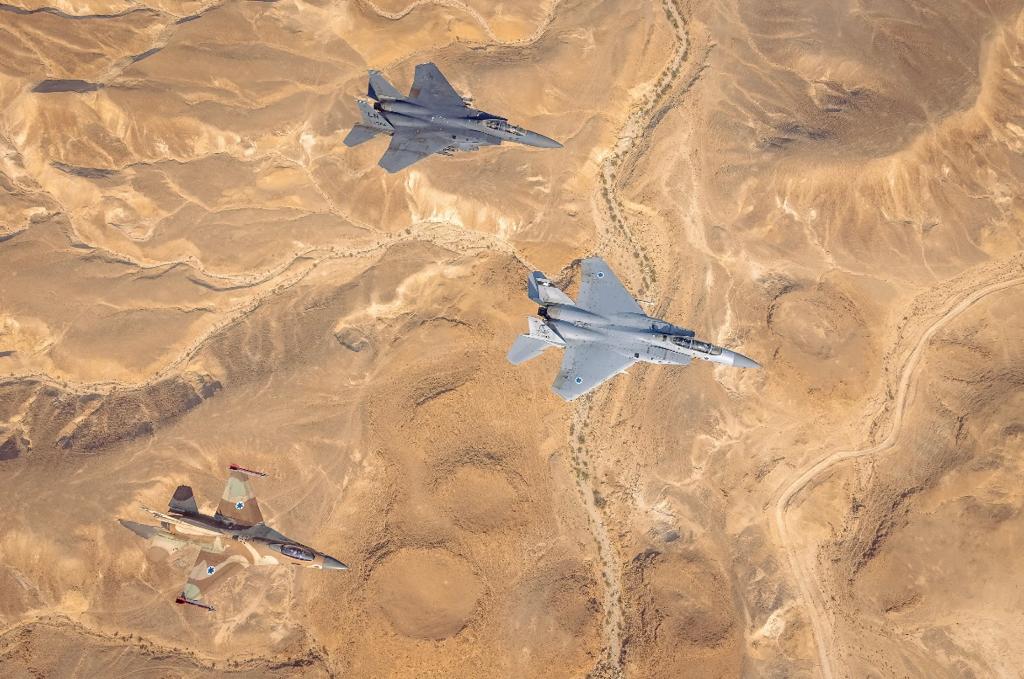
The Israeli military announced on Tuesday that it had completed a first-of-a-kind aerial exercise with the United States Air Force Central Command, simulating various operational scenarios in Israel’s skies.
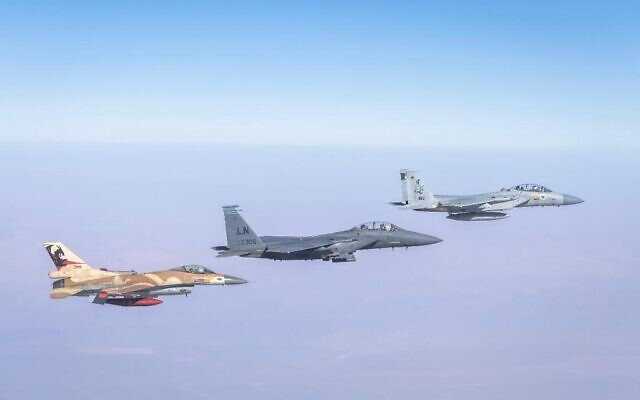
During the drill, dubbed “Desert Eagle,” the Israeli Air Force’s 133rd Squadron trained alongside the US Air Force’s 494th Squadron at the Ovda airbase in southern Israel, according to the Israel Defense Forces.
IAF 115th Squadron fighter jets simulated enemy forces in the drill, it added.
“The aircrews practiced various operational scenarios in the air, including joint exercises against ground, aerial and combined threats while striking designated targets,” the military said in a statement.
The air force hailed the drill: “This historic cooperation between the IAF and AFCENT is another example of the long-standing alliance and strategic cooperation between Israel and the United States.”
In January, the US Department of Defense announced that Israel, which had been under the area of responsibility of the US military’s European Command (EUCOM), was being moved to the Central Command, which operates in the Middle East.
The move is meant to improve the cooperation between Israel and other countries in the region in confronting the threat posed by Iran.
In recent weeks the region saw a series of escalations, including an explosive-laden drone attack on an Israeli-linked ship off the coast of Oman that killed two crew members. The attack has been blamed on Tehran by Israel and Western nations.
The Jewish state had historically been kept out of CENTCOM out of concern that it could cause friction between the US and the other countries in the region, most of whom held a negative view of Israel. This is no longer true of some countries in the Middle East, particularly those in the Persian Gulf.
Despite January’s announcement and the recent drill, Israel has not yet formally been transferred to CENTCOM’s area of responsibility.
Judah Ari Gross contributed to this report.









The Times of Israel Community.