

Jerusalem-Tel Aviv fast train to finally start operating next week
After 11 years of delay and countless setbacks and malfunctions, schedule shows regular service will begin on December 21
 Add ToI as a Preferred Source on Google
The long-anticipated direct Jerusalem-Tel Aviv fast train will start operating on Saturday evening next week, December 21, according to the schedule on Israel Railways’ official website — 18 years after the project began and 11 years after its originally scheduled completion date.
The electric line, whose launch date has been delayed numerous times over the years, will have its first commercial ride from the capital’s Navon station at 9:56 p.m. and will reach the Tel Aviv Hahagana station at 10:28 p.m. after a stop at Ben Gurion Airport. At the same time — 9:56 — the first train will leave Tel Aviv Hahagana and will reach Navon at 10:30.
Trains will also leave an hour later in both directions, and from Sunday, December 22, service will be every 30 minutes in both directions, except at night.
The new line will significantly shorten the current commute between Israel’s two largest cities. However, while the ride duration cited for years for the new line has been 28 minutes, the schedule has the Jerusalem-Tel Aviv ride taking a longer 32 minutes and the Tel Aviv-Jerusalem commute taking 34 minutes (likely because it is uphill in that direction).
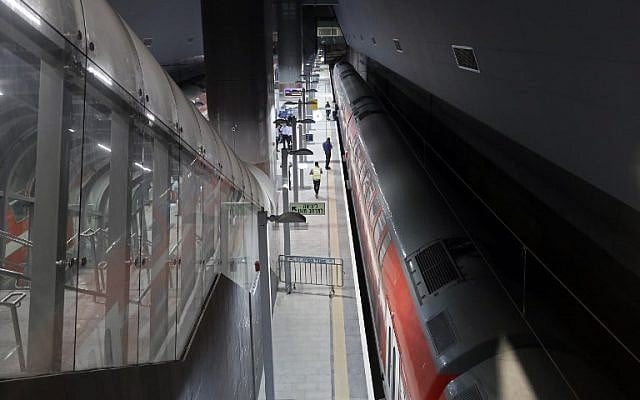
Authorities believe the train will reach other Tel Aviv stations and Herzliya sometime next year.
Israel Railways last month launched twice-hourly trial runs on a daily basis — without carrying passengers — between Ben Gurion Airport and Tel Aviv Hahagana. The first trial run was completed in September.
Currently, the train only runs between Jerusalem and Ben Gurion Airport because of delays in electrifying the section of track between the airport and Tel Aviv.
The original launch date for the fast train was 2008, 11 years ago. It was then repeatedly delayed, to 2014, and again to 2018 and 2019. The launching of the Jerusalem-Ben Gurion line, in October 2018, was marred by countless malfunctions, delays and shutdowns.
The project’s total cost is estimated at NIS 7-9 billion ($2-2.6 billion), about four times higher than originally planned.










The Times of Israel Community.