

New ward provides hope for Gazans coping with gunshot wounds
Center in Khan Younis, built by WHO and Hamas-run Health Ministry, seeks to save limbs and prevent long-term disability for wounded border protesters
 Add ToI as a Preferred Source on Google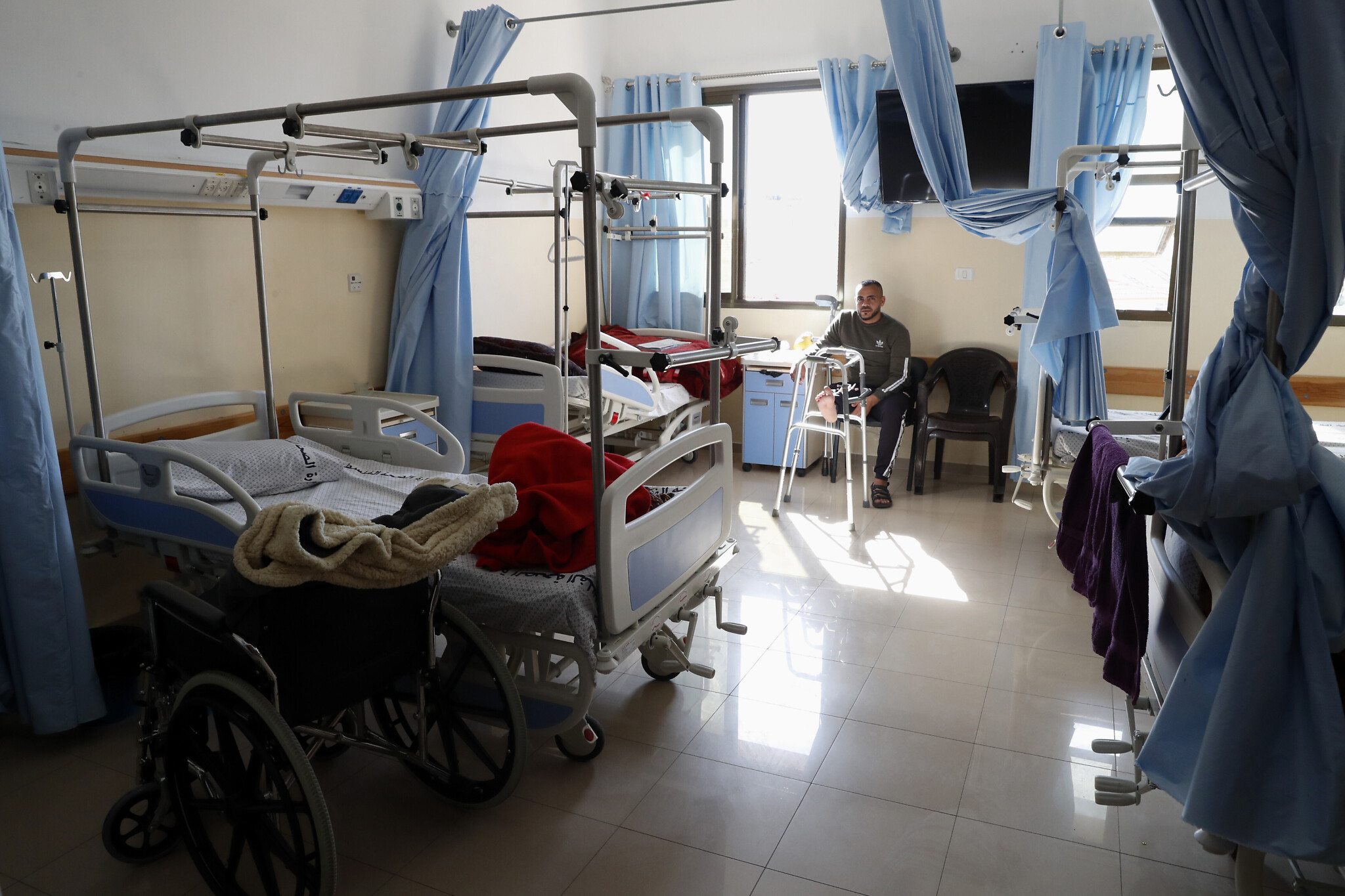
Mansour al-Masri has been largely confined to bed for almost two years, iron rods protruding through bandages wrapping his lower leg.
Since an Israeli gunshot fractured the bones of his left leg in May 2018, the 24-year-old blacksmith has undergone 18 operations, briefly regaining the ability to walk with a limp before returning to the hospital. He is terrified he will join the 158 Palestinians who have had legs amputated after being wounded in protests along the Israeli frontier.
On Thursday, the World Health Organization and the local Health Ministry offered some hope, officially inaugurating Gaza’s first limb reconstruction center, which aims to provide the wounded with permanent specialized and centralized care.
“It’s the first time I [have entered] such a department and feel things are working out with me,” said al-Masri, who has been receiving treatment at the center since it began operations three weeks ago.
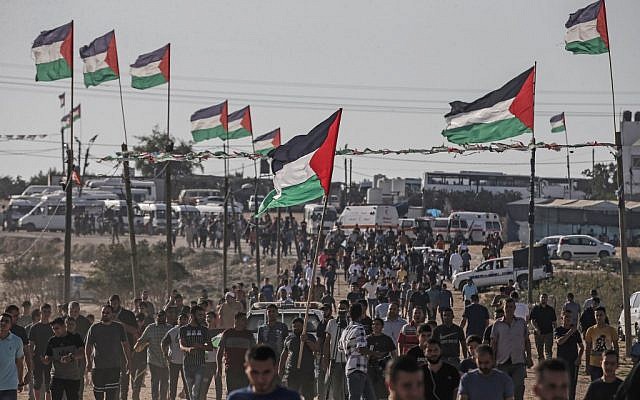
Al-Masri is among thousands of protesters shot by Israeli troops in weekly “March of Return” demonstrations along the fence separating the Gaza Strip from Israel, protests launched by the Hamas terror group that saw repeated attempts to breach the border and attack Israeli soldiers.
The protests began in March 2018 and were described by more moderate organizers as an attempt to pressure Israel to lift a crippling Israeli-Egyptian blockade on the territory, which Israel says is intended to keep Hamas from arming for new rounds of conflict. Hamas officials described the 20 months of protests as a bid to galvanize the Palestinian population to march on and ultimately destroy Israel.
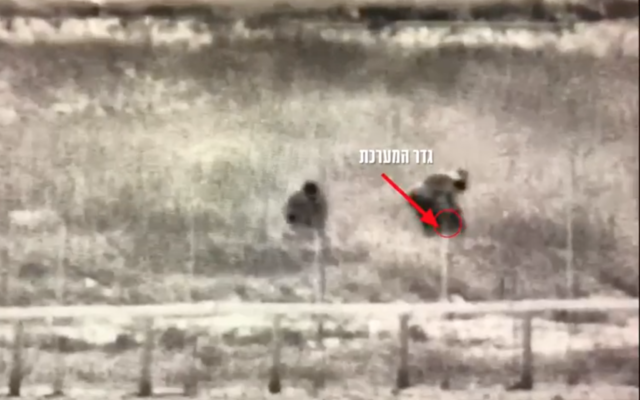
Some 215 Palestinians were killed in the clashes, according to Palestinian figures. Gaza officials said most were unarmed. A Palestinian sniper also killed an Israeli soldier, while troops of the Israel Defense Forces intercepted and rebuffed dozens of infiltration attempts and attacks on Israeli forces with explosives and knives.
During the fighting, Israel was accused by international organizations and UN bodies of using excessive force against the protesters.
In all, Palestinian officials say some 8,000 people have suffered gunshot wounds, straining Gaza’s over-burdened health care system. Health authorities have appealed for help to deal with the influx of injuries, especially for those shot in the limbs, in an effort to reduce the number of disabilities and amputations. These difficult-to-treat injuries can take up to two years of follow-up, with bone, muscle, soft tissue and nerve surgeries. Serious bone infections are common along with signs of antibiotic resistance.
The new limb center, built by WHO in coordination with the Hamas-run Health Ministry, is located at the Nasser medical complex in the southern city of Khan Younis.
The area had a protest camp before Hamas halted the demonstrations at the start of the year amid reports of efforts toward an unofficial ceasefire with Israel. The ward features 32 beds, two dedicated operating theaters and 25 staff. Although Hamas is listed as a terror group by Israel, the US and the West, WHO said it had to work with “local authorities” to launch the center.
Dr. Gerald Rockenschaub, the head of WHO’s activities in Palestinian areas, acknowledged the center is “too late” for those who already lost their legs, but there are 600 patients in need of limb reconstruction surgeries and hundreds more waiting to be assessed. “What we really want to achieve with this unit is to not see further amputations, to not see further long-term disability,” he said.
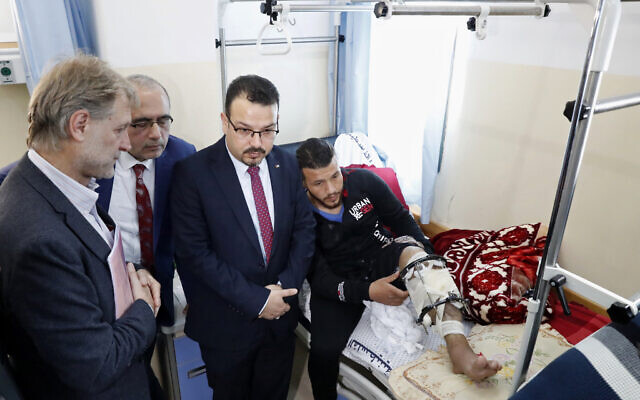
Patients complain that under-resourced hospitals did not provide proper, in-depth and sufficient treatment.
Dr. Mahmoud Matar, head of the surgery department at Gaza’s Health Ministry, said this type of gunshot wound typically requires four operations and the ministry has carried out 4,000 such surgeries in the past two years, despite the severe shortages of equipment and tools. He said 25% to 30% of these cases end with amputations.
For wounded Palestinians like al-Masri, the new limb center is raising hopes that their odds of recovery will increase.
“I just hope I will be able to walk normally again,” he said.









The Times of Israel Community.