

Palestinian who killed IDF soldier in 2014 gets life sentence
Court says ‘extreme severity’ of fatal stabbing of Sgt. Almog Shiloni in Tel Aviv warrants maximum punishment
 Add ToI as a Preferred Source on Google
Raoul Wootliff is a former Times of Israel political correspondent and Daily Briefing podcast producer.
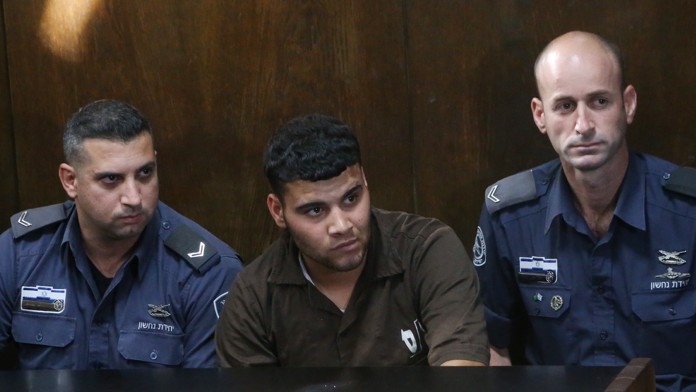
A Palestinian man was sentenced to life imprisonment Wednesday for stabbing to death an IDF soldier at a Tel Aviv train station in 2014.
The Tel Aviv District Court ruled that 20-year-old Nur al-Din Abu Hashiyeh must serve the maximum possible sentence for the murder of Sgt. Almog Shiloni, citing the “extreme severity” of his actions and rejecting pleas for a lesser punishment.
The court also ruled that Hashiyeh must pay Shiloni’s family NIS 258,000 (approx. $70,000) in compensation.
The ruling also stated that Hashiyeh may not be included in any future prisoner exchange, Army Radio reported.
Shiloni, 20, was critically wounded after being stabbed multiple times by Hashiyeh at Tel Aviv’s Hahagana train station in November 2014. He later died of his wounds. As Shiloni fell, Hashiyeh tried to steal his rifle, but was warded off by a passerby, Gilad Goldman, 59, who came to the injured soldier’s assistance and attacked the stabber with his bare hands. Hashiyeh fled the scene but was arrested by police after he tried to hide in a nearby building.

According to the 2014 indictment, Hashiyeh, from the West Bank city of Nablus, entered Israel without a permit with the intention of stabbing a soldier so that he could be “become a martyr.”
During his trial, which was attended by members of Almog’s family, Hashiyeh gave a chilling admission of his crime.
“Yes, I murdered him. I wanted to take his weapon and shoot everyone because of what your rabbis are doing at Al-Aqsa. I wanted to finish off everyone that was in the street,” he said, referring to the holy compound on Jerusalem’s Temple Mount, which many Palestinians believe is threatened by Israeli policies.
The Israeli government has consistently denied allegations it intends to make changes to the status quo at the volatile site, where only Muslims currently may worship.
In December 2015 the High Court of Justice canceled the demolition of Hashiyeh’s family home in the Askar refugee camp near Nablus.
The judges ruled that the 11-month delay between the attack and the release of the demolition decree was unreasonable, and that carrying out the demolition after such a long period would not provide a deterrent to further attacks.
Times of Israel staff contributed to this report.




The Times of Israel Community.