

Saturday buses in Israel: A blessing for some, a curse for others
Free bus takes passengers from Ramat Gan to Tel Aviv, so that even those who don’t own cars can go to the beach or otherwise enjoy the coastal city on Shabbat
 Add ToI as a Preferred Source on Google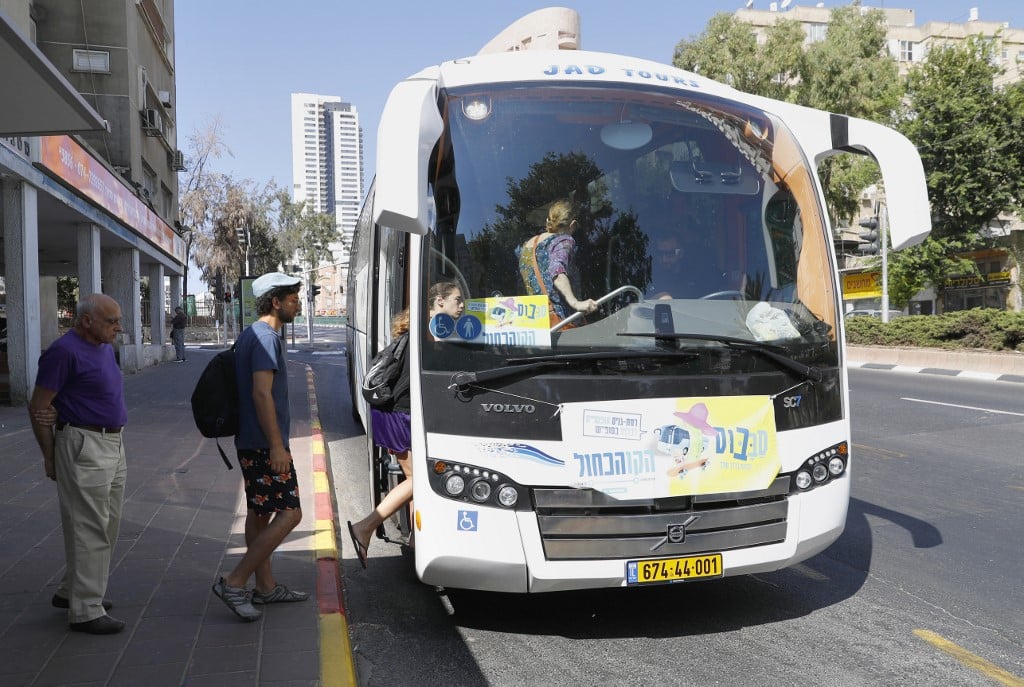
AFP — A public bus glides down the road toward the beach on the horizon, but the ride is far from being as commonplace as it sounds in this Israeli city.
It is running on a Saturday, which is the Sabbath, the weekly Jewish day of rest, when public transportation is usually banned, making it a small revolution that does not please the religious.
Murad the driver wears sunglasses as he leaves Ramat Gan, an affluent suburb of Tel Aviv adorned with public parks where the middle-aged exercise on training equipment.
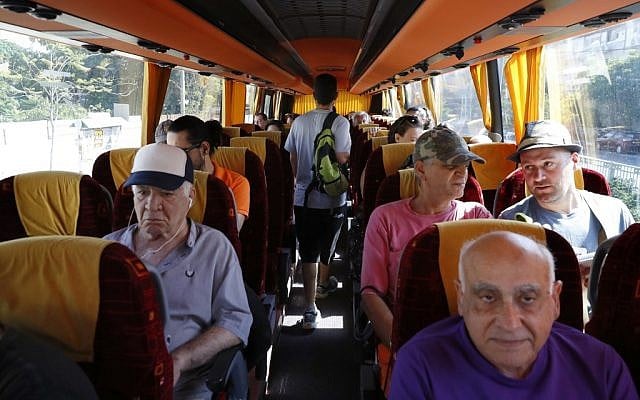
Ran Golden, 48, and his father, who walks with a cane, board at the second stop.
“This bus is a blessing,” Golden says. “Now I can go to the beach on Saturday or do like today — a tour with my father. There are things to do on Saturday, but without the bus you can’t do much.”
Cars, taxis and private minibuses can operate on the Sabbath, which starts at sundown on Friday and continues until Saturday night.
But in majority Jewish cities, there is no public transportation — or almost none.
This summer, Ramat Gan and its mayor Carmel Shama-Hacohen started the “sababus,” touching a nerve ahead of September 17 elections in Israel, where religion and state issues are a major topic of debate.
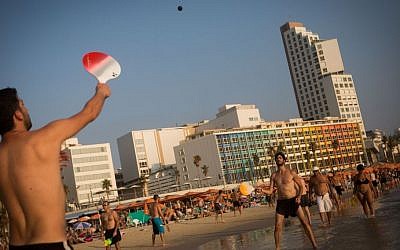
The bus is free and travels to the beaches of Tel Aviv, with its clubs, restaurants and party vibe.
The name of the bus is a play both on “sababa,” or cool, and Shabbat, or Sabbath.
Ultra-Orthodox Jewish parties, a key part of Prime Minister Benjamin Netanyahu’s right-wing caretaker coalition, have accused Ramat Gan and its mayor of crossing a red line with the bus service.
“We are against public transportation during the Sabbath,” said Yossi Tayeb, a candidate for the ultra-Orthodox Shas party, which won six percent of the vote in April’s elections.
“Someone who has a car can go out and do what they want… but we want the country to have a Jewish identity. It is the only Jewish country in the world.”
Henry Kahn, an ultra-Orthodox rabbi, said “there is an extremist, excessively secular minority that are a pain.”
He said he was hopeful that the ultra-Orthodox would band together in the next elections to stop further moves like the one in Ramat Gan.
‘It’s crazy’
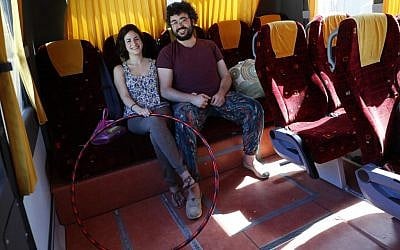
Anaya, seated at the back of the bus with her boyfriend Edan, knows the story well, having come from a religious family where she sought to avoid such discussions.
She said she didn’t believe Israel’s Jewish nature should go so far as to prevent public transportation on Shabbat.
“I don’t think this is the way, because the only way you can move around on Saturday is if you have a private car.
“It’s crazy,” she added.
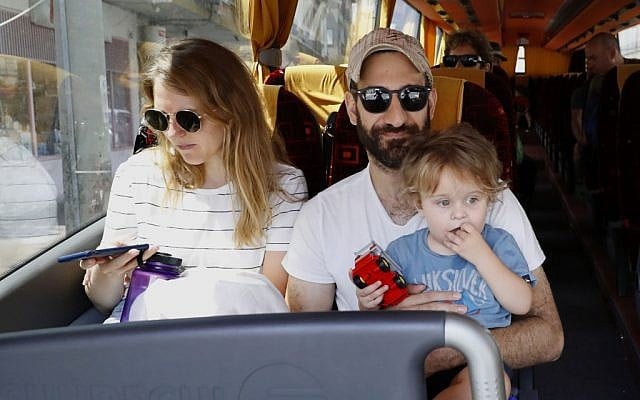
The Ramat Gan buses to Tel Aviv are operated by the Noa Tanua group, which campaigns for public transportation on Saturdays.
It also manages a route between the cities of Beersheba and Ashkelon, along the coast.
The aim of the operation is to allow all who want to go out on Saturdays to do so while also reducing car pollution.
“We have worked in the past two months with over eight municipalities,” said Noam Tel-Vered, co-founder of the NGO.
“We have bus rides and bus routes that we operate independently regardless of cooperation with municipalities. The amazing thing is not only that we are now working with several municipalities, but people keep contacting us.”
At 10:47 a.m., the “sababus” pulls up along the Tel Aviv coast.
Beny, wearing a bright-orange bathing suit, T-shirt and army-style cap, prepares to go to the beach.
“I don’t care what the religious say,” he says, adding that he hopes the next government is “without the religious.”
“It’s either you stay at home and do nothing on the Sabbath or you go to synagogue. They don’t have to tell people how to live their lives.”










The Times of Israel Community.