

Strikes and gutters
Sometimes you strike Assad, and send a message to the Russian bear, and sometimes the bear-sized meals you ordered eat you. The Hebrew press has both on Friday
 Add ToI as a Preferred Source on Google
Joshua Davidovich is The Times of Israel's Deputy Editor

In the film “Wag the Dog,” a US president beset by domestic problems starts a war (or rather fakes one) in order to distract attention and keep support high. Someone with a conspiratorial bent might think the same thing is happening while glancing at Friday morning’s newspapers in Israel, which are all dominated by the same two stories: an impending indictment against the prime minister’s wife, and a significant alleged Israeli strike on a Syria weapons complex.
It’s not the justice of the apparent strike on Syria that has the attention of most pundits, though, which seems to be beyond consensus, but rather the message that Israel was trying to send with its missiles and who that message was meant for.
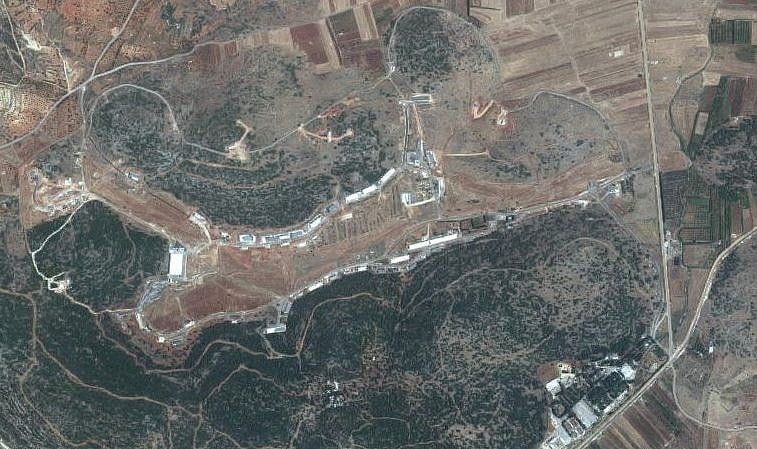
While Israel has sporadically carried out airstrikes against Hezbollah targets in its sundered northern neighbor, Thursday’s reported bombing was different for two reasons: first, it was against a Syrian base where chemical weapons are made and constituted a direct strike against Syrian leader Bashar Assad; and second, it came despite a Russian-US backed ceasefire in most of the country.
Everyone agrees the missiles sent a message, but there is not much consensus on who that message was for, between Russian President Vladimir Putin, Assad, Iran, Hezbollah, Trump or anyone else.
“A message to Putin” reads a front page headline of an analysis by Amos Harel in Haaretz (readers have to flip all the way to page 6 of the broadsheet if they want any actual news).
“Washington and Moscow failed to heed Israeli protests that the agreement to reduce friction in southern Syria failed to require Iran and allied militias to steer clear of the Golan Heights,” he writes. “Consequently, the attack attributed to Israel – the first to be reported since the agreement was reached – may be interpreted as an Israeli signal of sorts to the world powers: You still need to take our security interests into account; we’re capable of disrupting the process of a future settlement in Syria if you insist on leaving us out of the picture.”
In Yedioth Ahronoth, analyst Alex Fishman notes that the choice of the CERS scientific research base as the site of the attack was not random, as it hit at a site that represents Assad’s return to power, where he felt secure enough to start producing missiles again with Iran’s help, and which he has been accused of using as a chemical weapons manufacturer.
In another column, Yossi Yehoshua asks whether the strike was an opening salvo against the Shiite corridor being developed by Iran with Hezbollah and Syria, or simply a one-off.
“Will Israel stand behind its threats and take the risk of opening a front against Hezbollah, or will it hold back out of fear of escalating tensions,” he asks. “And no less important, does the other side understand that maybe it’s not so worth it to push ahead with plans for missile plants given the seriousness of Israel’s intentions.”
While Israel has refused to take responsibility for the strike, part of a longstanding (and maybe silly) policy of acting dumb, officials gave enough hints Thursday to leave little doubt about whose planes those were that darted into Syria for the attack.
Israel Hayom’s headline on the story quotes one of those hints, with Military Intelligence chief Herzi Halevy saying Israel is tackling threats near and far.
The paper’s analyst Yaakov Amidror writes in his headline that everyone is correct, the missiles were meant to send a message to Putin, Trump, Assad and Iran. But his actual column seems to single out Assad as the one most in need of hearing what Israel has to say.
“Until now, Assad has allowed Iran and Hezbollah do what they want in Syria, as if it belonged to them. If foreign media reports are correct, by directly targeting a Syrian military facility, Israel sought to send a clear message to Assad that he must be careful and take into account that if he continues his hermetic coordination with Iran and Hezbollah, Syria and his regime will pay the price,” he writes.
With the indictment for Sara Netanyahu only in the offing, it’s little surprise that it gets less real estate than the Syria strike, though Yedioth Ahronoth gives the story almost equal space, reflecting its lack of love for the family.
The paper runs a large headline “NIS 400,000 in meals on the public’s dime,” under a picture of Sara Netanyahu and the Netanyahu family’s fancy private home in Caesarea (though the accusation is about meals ordered to the Prime Minister’s Residence), clearly telegraphing the idea that Sara didn’t need to break the public piggy bank to pay for her salmon tartare or whatever.
The paper reports that the indictment will only include the meals and not three other potential charges about misuse of public funds, but columnist Sima Kadmon imagines that the news would be enough to send Mrs. Netanyahu into an apoplectic fit of rage once she heard the news.
Kadmon writes, though, that it should be the public that’s up in arms, and not believing the Netanyahus attempts to downplay or dismiss the accusations.
“There is nothing because there was nothing?” she writes, riffing off Netanyahu’s lawyer’s favorite line of defense. “NIS 400,000 of our money, of the public’s money, stolen to supply the caprices, the treats, the enjoyments of the royal family. No it’s not the media. It’s not the ‘lefties’ who want to take down the prime minister. It’s not even [caretaker] Menny Naftali, whom Netanyahu has done everything to smear. It’s the police, the prosecutor, the attorney general who Netanyahu himself appointed and has the done the maximum to quash.”

Not surprisingly, Israel Hayom, which backs Netanyahu, gives outsized coverage to the Netanyahu’s continued attempts to pin the blame on former Prime Minister’s Residence caretaker Menny Naftali, who sued Netanyahu for abuse and who has been leading protests against the prime minister.
“The sharp rise in meal costs at the Prime Minister’s Residence was the result of a crime committed by problematic custodian Meni Naftali, a criminal state’s witness and a serial liar,” the paper quotes the source close the Netanyahu family saying. “It’s not just that the prime minister’s wife hasn’t committed any crime — it’s that the focus on the food of Prime Minister Netanyahu, who works around the clock on behalf of the country and its security, and the food of his family is pathetic and obsessive.”
Haaretz coverage of the coming indictment is pretty barebones, but Netanyahu and family’s woes figure prominently into a weekly political roundup column by Yossi Verter, who writes that what will actually come out as the case moves forward will likely be far more damning.
“All the fairy tales with which Netanyahu fired up members of his Likud party – about how they’re hassling his wife over ‘TV dinners’ and ‘the cup of tea Sara served her honorable father’ and ‘procedures for changing a light bulb’ – will be shown in their true proportions when the wording of the indictment becomes public. The prime minister’s wife will come off as someone who didn’t draw the line at any contemptible trick for padding expense accounts and shifting the millionaire couple’s personal expenses to the public purse. She treated the public treasury as if it were her own,” he writes. “Correction: From her own purse, she’s incapable of spending even one lousy penny. But when it comes to the public purse, no one is more generous, extravagant and spendthrift than she.”








The Times of Israel Community.