

Families move into rebuilt West Bank settlement of Ganim, 21 years after evacuation
Some two dozen prefabricated homes installed, with construction ongoing; IDF carries out demolitions of nearby Palestinian stores and blocks roads to adjacent villages
 Add ToI as a Preferred Source on Google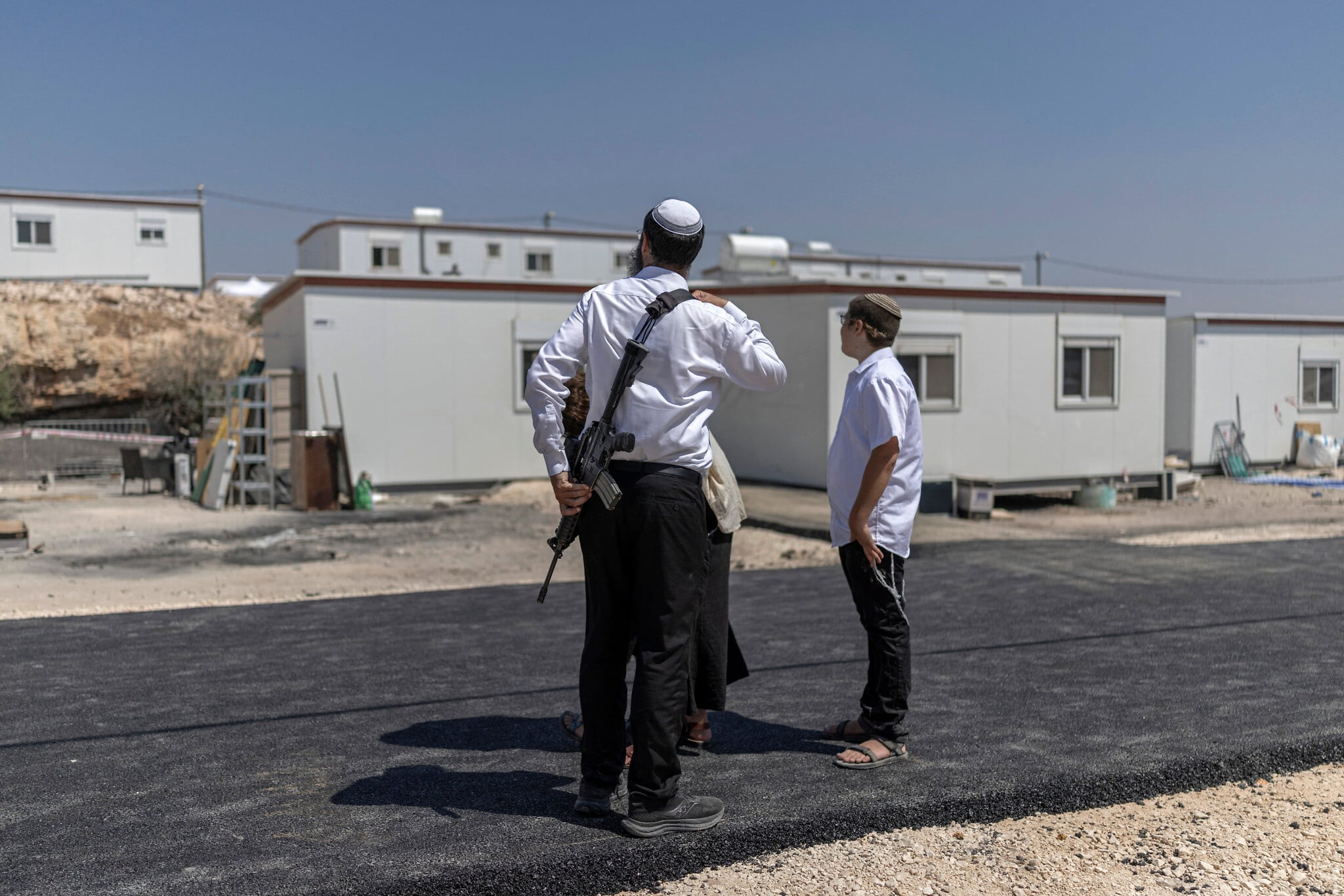
Families moved into the rebuilt West Bank settlement of Ganim on Thursday, three years after the Knesset annulled legislation that facilitated its dismantlement along with three other northern West Bank settlements alongside Israel’s 2005 withdrawal from the Gaza Strip.
The smell of freshly poured asphalt hung in the air above Ganim’s newly made and only street, where future residents and their families — who had come to help with the move — smiled at the sight of their prefabricated homes.
“Twenty-one years after the terrible sin of the expulsion from [Gaza’s] Gush Katif and northern Samaria, we are finally erasing the disgrace of the expulsion from northern Samaria,” Finance Minister Bezalel Smotrich said, using the biblical name for the northern West Bank.
About two dozen prefabricated homes have already been installed, while steamrollers and other construction machinery busily created new space for future houses on the hillside on Thursday.
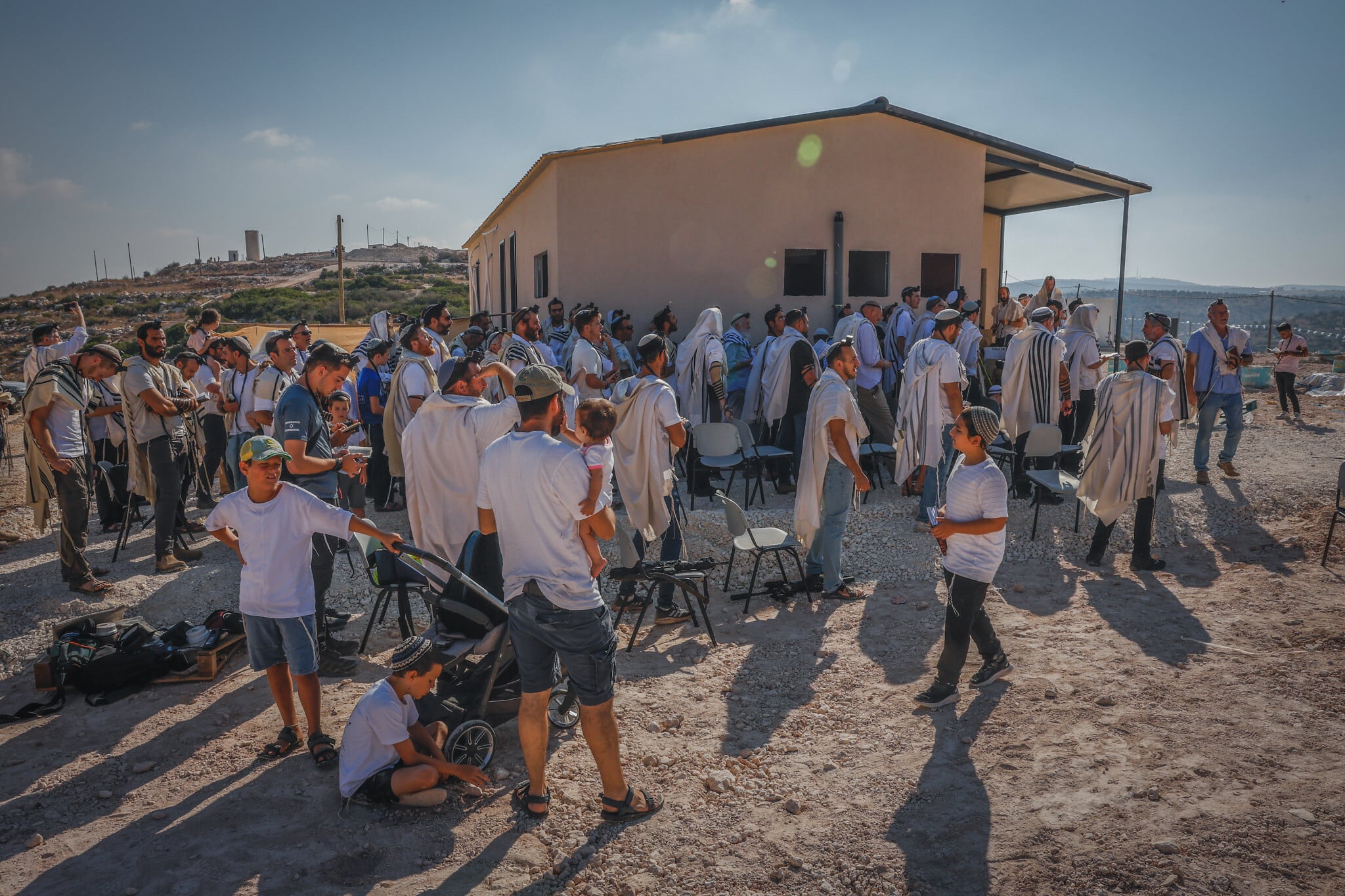
Roughly a hundred people attended Thursday’s ceremony, including Defense Minister Israel Katz and Yossi Dagan, head of the Samaria Regional Council.
“Here, this is the Land of Israel. Here, we are staying forever,” Katz said at the ceremony after arriving by helicopter.
“The era of evacuations is over. From here, we only build,” Dagan said.

In the valley below, Palestinians told AFP they fear Ganim’s construction will make their lives harder, or even mean displacement in the long run.
On both sides of the road leading to the settlement from Israel, the army has demolished stores in recent days and blocked several dirt roads to Palestinian communities with piles of rubble.
The government paved the way for reestablishing the settlements in the northern West Bank in March 2023, when it repealed legislation that had enacted the evacuation of the four settlements and had, until that time, prohibited Israelis from living there.
The 2005 evacuations of settlements in the northern West Bank and Gaza Strip were severely traumatic for the settler movement and the religious Zionist community more broadly.
In May 2025, the security cabinet approved the establishment of 22 new West Bank settlements, including Homesh and Sa-Nur, and in December, it approved the establishment of another 19 settlements, including Ganim and Kadim.
In April, Sa-Nur was repopulated, while Homesh was repopulated in March.
The international community — with the notable exception of the United States under President Donald Trump — considers Israeli settlements in the West Bank illegal under international law. Israel, which conquered the area in the 1967 Six Day War, disputes that position, citing historic ties to the region and a security imperative in holding on to it.
38% of Jewish Israelis back annexing West Bank, 35% want to divide it up
A new survey by the Jewish People Policy Institute (JPPI) released Thursday found that 38% of Jewish Israelis support annexing the entire West Bank, while 35% favor partitioning the territory.
The poll found that 22% of Jewish Israelis would like annexation to be followed by a relocation of the Arab population to other countries. Twenty-one percent backed Palestinian statehood in Arab-majority areas, while 14% supported the area being annexed to Jordan.
The poll also found 58% of all Israelis, Jewish and Arab, do not believe the recently announced agreement for the disarmament of Hamas in Gaza will be implemented. Fifteen percent said it could lead to partial disarmament, 13% expect the deal to actually lead to renewed fighting, and only 3% think the terror group will fully disarm.
The survey was conducted among 748 respondents, Jewish and Arab, on August 2-5, 2026.









The Times of Israel Community.