

Eisenkot vows ‘no compromise’ on IDF draft law, including for Haredim, if elected PM
Yashar leader says a minority government would be ‘bad’ but may be required as ‘last resort,’ as poll shows anti-Netanyahu bloc on verge of majority if Zionist Home joins it
 Add ToI as a Preferred Source on Google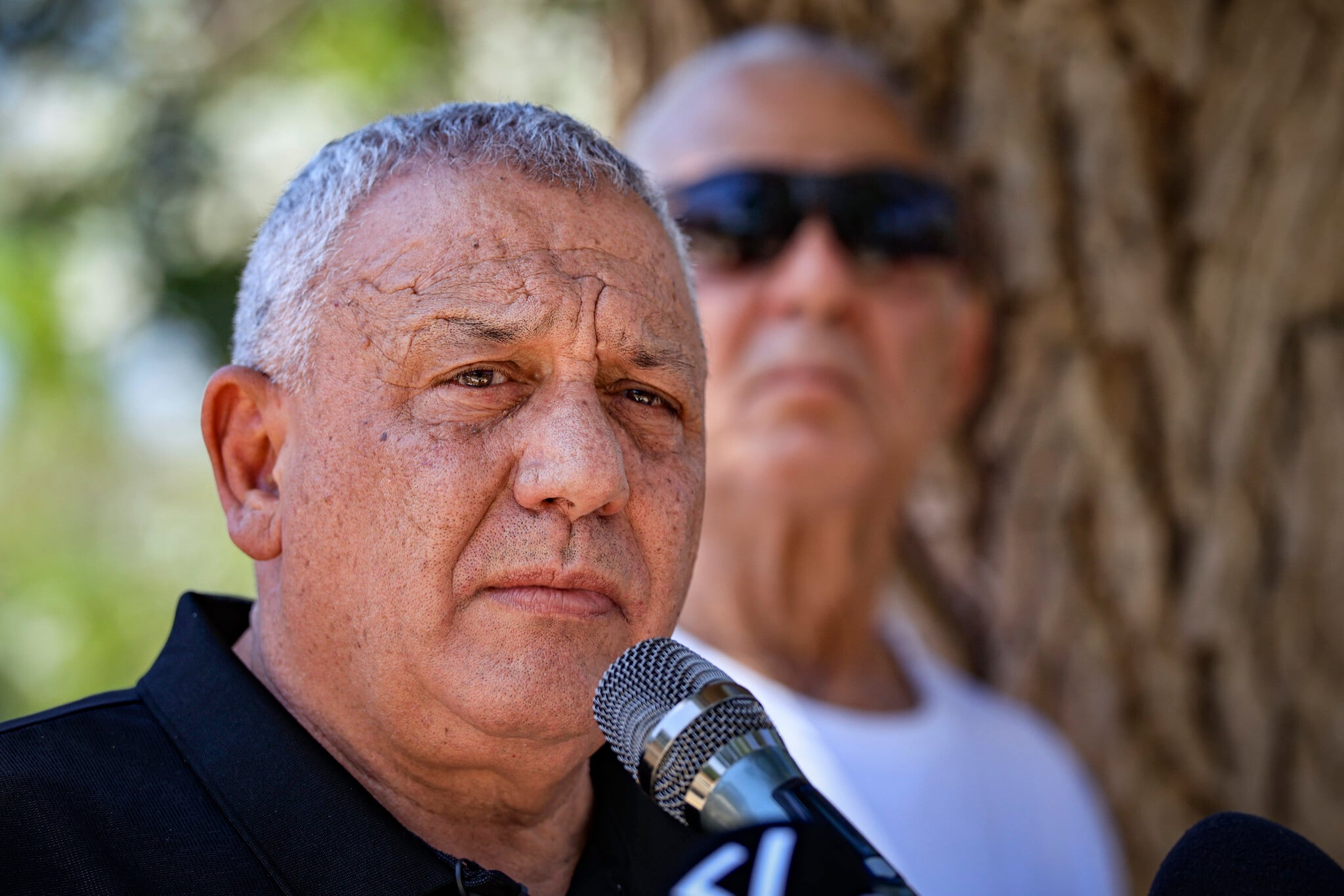
Yashar party chairman Gadi Eisenkot pushed back on Wednesday against criticism of his plan for ultra-Orthodox military conscription, denying that he intends to grant exemptions to 30 percent of eligible Haredi men each year.
Speaking with Channel 12 news, the former IDF chief of staff said “there is a draft law for all citizens of Israel for military, national and civil service” and that he only plans on exempting 3% of exceptional prodigies in Torah, science, music and sports out of every draft cohort.
“I meet with Haredi Knesset members and I tell them that there is one issue on which there will be no compromise… even at the cost of [the government falling and needing] another election,” he said.
Eisenkot was required to defend his stance after a candidate for his Yashar party, former Shin Bet chief Yoram Cohen, sparked criticism from leaders of other opposition parties by telling the Kan public broadcaster that under a fresh government, potentially up to 30% of Haredim will be exempt from military conscription.
Former prime minister Naftali Bennett, another opponent of Prime Minister Benjamin Netanyahu, declared after Cohen’s comments that military conscription for all was a “nonnegotiable condition for the next government.”
“There will be no compromises on recruitment,” Bennett wrote on X. “Everyone must enlist, and whoever doesn’t serve the state won’t get a single shekel from the state their whole life.”
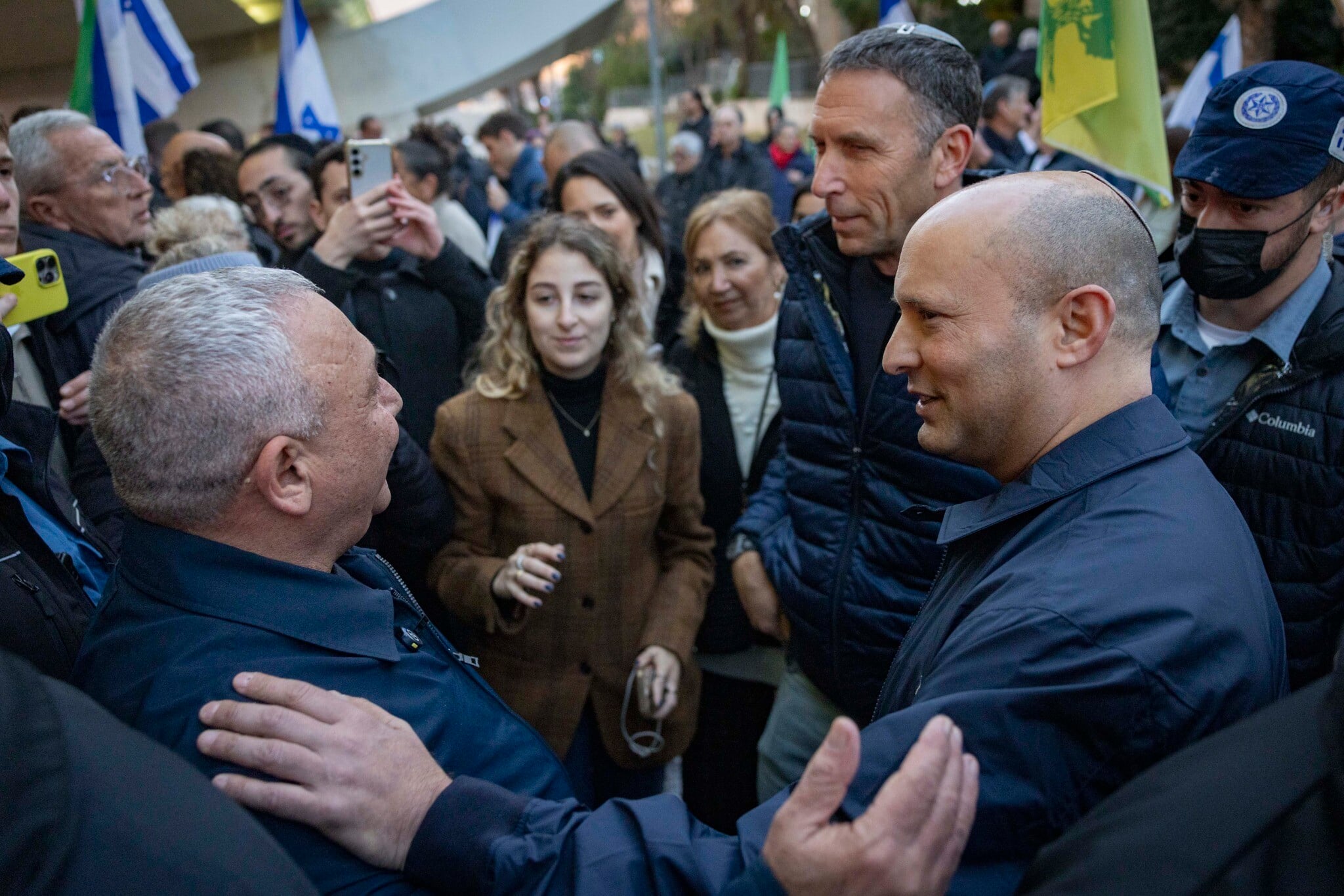
Eisenkot also took a thinly veiled shot at Bennett, telling Channel 12 that he met with the former premier last week, and took the opportunity to reiterate his stance that “the next prime minister must be the head of the largest party in the bloc.”
His remarks appeared to hint at Bennett’s brief stint as prime minister from 2021-2022, which was controversial because Bennett’s party had only seven seats in the Knesset at the time.
Eisenkot is currently leading in the polls, with surveys suggesting his party will win around 23 seats. Despite his remarks, he did not appear worried about anyone within the anti-Netanyahu bloc would seriously challenge him for the top job if his party takes the largest share of the vote.
“Liberman, Bennett, Lapid, Golan and Chili Tropper will work to achieve a common goal, and I am entirely convinced that if the public speaks its mind sharply and directly, and [we] become the largest party, everyone will fall in line behind me,” he said, referring to other opposition politicians.
The former IDF chief also did not disavow the possibility that he could lead a minority government, with fewer than 61 seats in the 120-seat Knesset. Polls have consistently shown neither the anti- nor pro-Netanyahu blocs winning a majority.
Forming a minority government “would be a bad thing,” Eisenkot said, but could not be ruled out as a “last resort to overthrow the worst government since the establishment of the state.”
If, he said, the anti-Netanyahu coalition wins less than a majority of the Knesset, it will try to form a government by deciding “to deal only with issues that have very broad national consensus, and we will turn to the Zionist, statesmanlike parties.”
Possible partners in that effort could include the prime minister’s Likud party, he said, but only “on the day after Netanyahu.”
The latest poll published by Channel 13 on Wednesday found that the anti-Netanyahu bloc could win 60 seats without relying on any of the Arab or Arab-majority parties, if it includes the right-wing Zionist Home party led by Yoaz Hendel and Chili Tropper.
The survey of 1,240 participants — with a margin of error of ±3.9% — found that Eisenkot’s Yashar party would be the largest with 23 seats, followed by Likud with 21. Overall, pro-Netanyahu parties would win 49 seats, while Arab parties would win 11 seats.
Hendel and Tropper have been sharply critical of Netanyahu, but have not explicitly ruled out sitting with him in a future coalition.
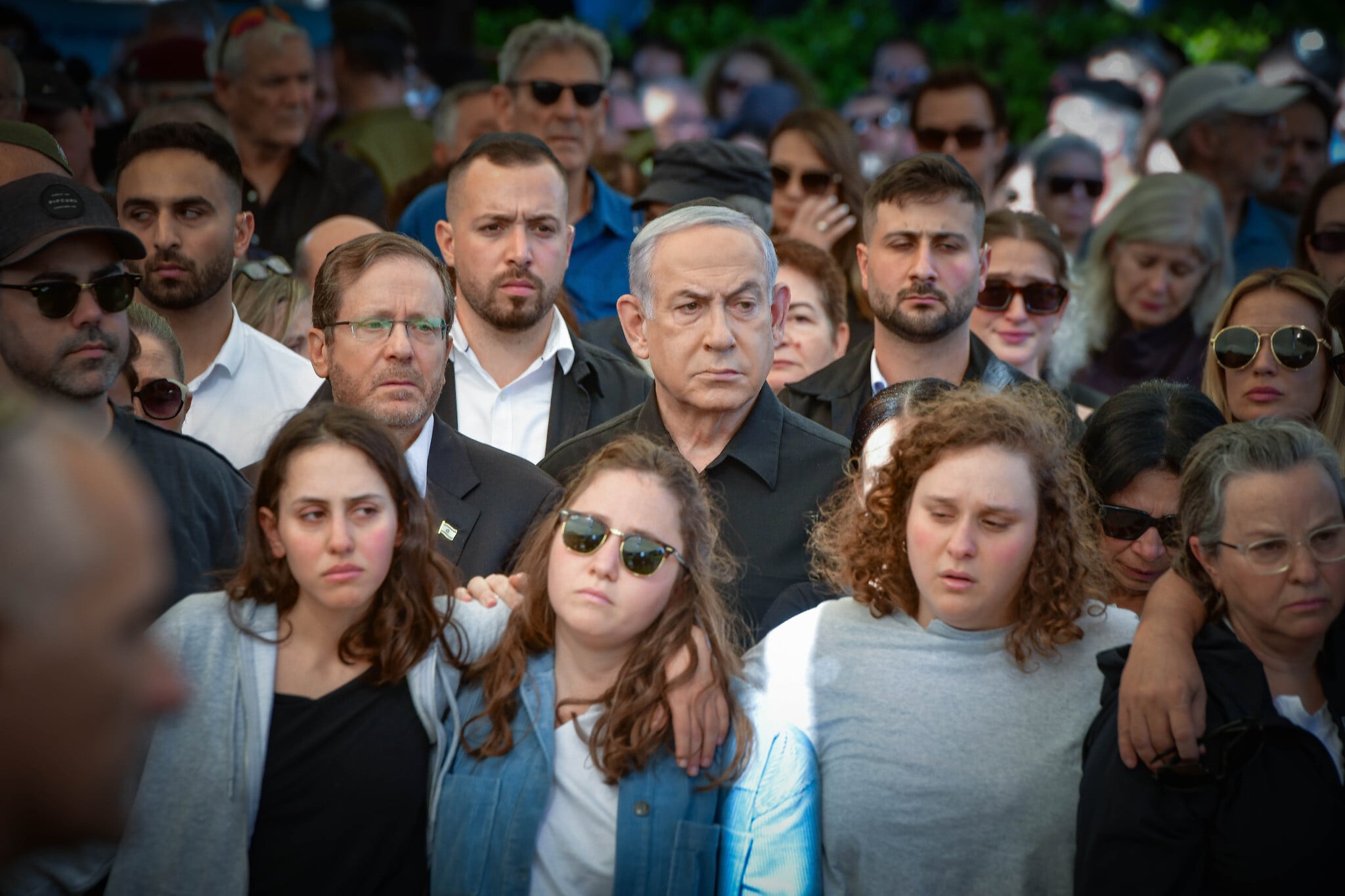
Turning to Netanyahu, Eisenkot downplayed his relative lack of experience compared to the longtime premier, saying the country “saw where Netanyahu led us with his extensive experience on October 7,” the date of the 2023 Hamas-led attack.
Eisenkot said that he will be surrounded by “very experienced people” who will ensure he forms a “good government for the state of Israel.”
To illustrate his point, he said he has been working with “the best economists in the State of Israel” over the past year to build a plan that can be put into motion as soon as he takes office.
Turning to the education system, Eisenkot appeared to suggest he could put an end to the independent Arab and ultra-Orthodox school systems as part of a broader education reform.
“We need to dedicate three to four years to transitioning the entire education system in the State of Israel to the state [public] education system,” he said. “Haredi education will have to enter this framework.”
Eisenkot also briefly addressed his decision to avoid centering his Mizrahi identity in his election campaign. He is of Moroccan descent, whereas all prime ministers of Israel thus far have been Ashkenazi. Mizrahi Israelis long accused the government of discriminating against them, particularly in the state’s early decades.
“I have always believed in my duty to excel regardless of my parents’ origins, to do my best, and also to serve as an example to others,” he said.
“A person’s origin in the State of Israel is not a reason to elect them for prime minister. A prime minister should be chosen based on their capabilities, their record, their vision, their plans, and their ability to execute.”



The Times of Israel Community.