

Eurovision unveils Burgas as 2027 host, with dates that clash with Israel’s Memorial Day
Israel expected to ask to perform in second semifinal at next year’s competition in Bulgaria, in order to avoid overlap with the day of remembrance
 Add ToI as a Preferred Source on Google
Eurovision organizers announced Thursday that next year’s competition will be held in Burgas, Bulgaria, on May 11, 13 and 15 — which is expected to prompt Israel to request to perform in the second semifinal.
The first semifinal of the annual song contest is slated for the evening between Israel’s Memorial Day and Independence Day. Israel has in the past been granted such requests to avoid performing or rehearsing on Memorial Day, most recently in 2016 in Stockholm. The overlap is not uncommon since the competition is always held in May.
Burgas is a popular vacation destination for Israelis, and both Israir and Bluebird Airways operate direct flights to the city from Tel Aviv. The city edged out the country’s capital Sofia to stage next year’s contest following a “complex” evaluation “covering all EBU requirements,” Bulgarian National Television (BNT) general director Milena Milotinova told a press conference.
It will be the first time that Bulgaria has hosted the contest after Bulgarian singer Darina Yotova, known as Dara, won this year’s contest in the Austrian capital Vienna with the catchy floor-filler “Bangaranga.”
On Wednesday, the European Broadcasting Union announced new rules ahead of next year’s contest, which state that a country affected by “armed conflict” or a “sensitive geopolitical situation” will not be able to host the competition the following year even if it wins.
The rules were widely seen as aimed directly at Israel, whose continued participation in the contest has been highly controversial, and who finished in second place both this year and last year — in a vote critics claimed was unfairly influenced.
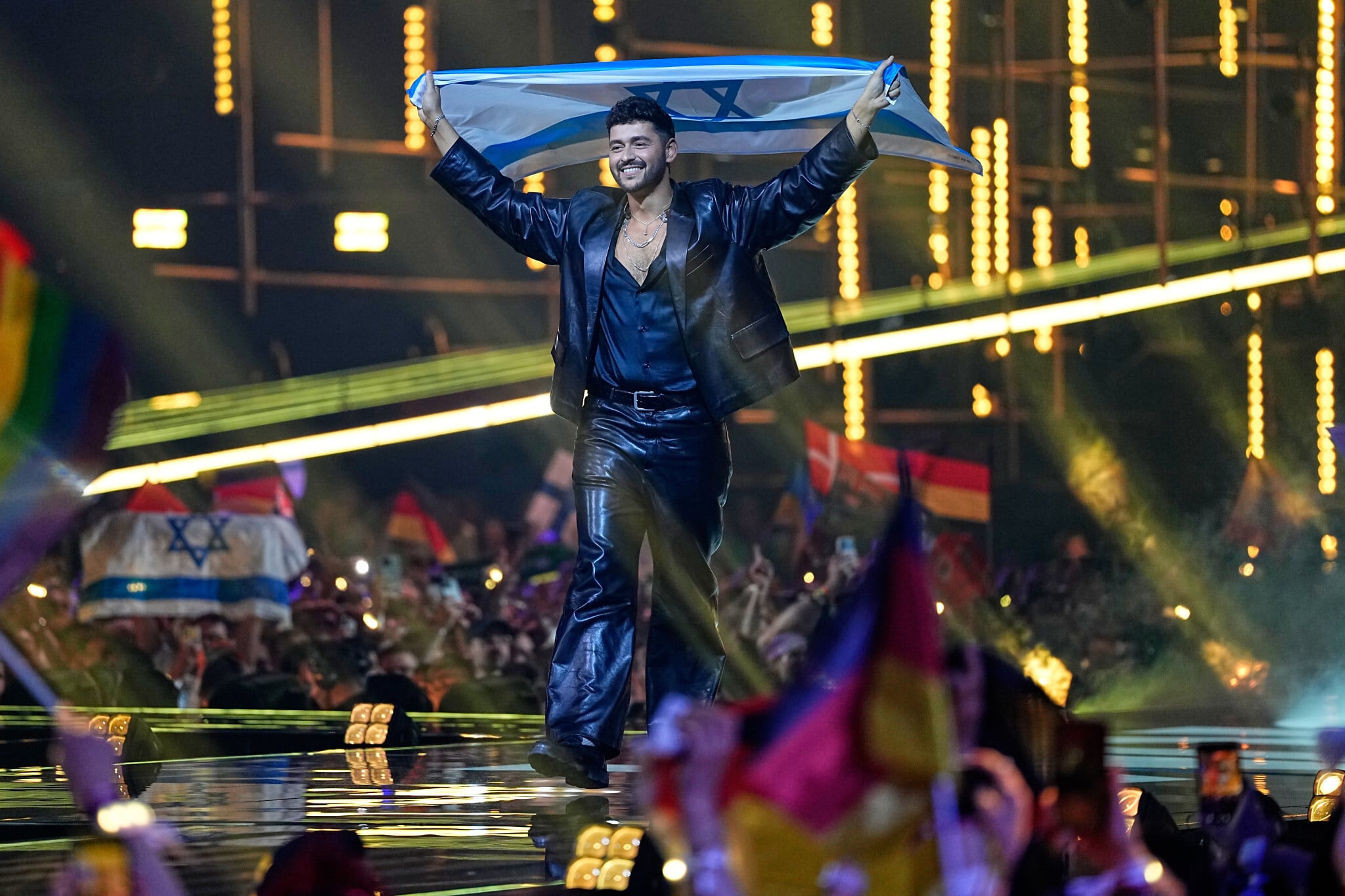
Since its launch in 1955, Eurovision has become the ultimate pop platform, catapulting Swedish icons ABBA to worldwide fame, as well as boosting the likes of Celine Dion, Cliff Richard and Olivia Newton-John.
The 2026 competition was watched by 131 million viewers, down 35 million on the previous year after five countries boycotted it over Israel’s participation, having pushed for years to oust the country over its war against Hamas in Gaza.
The Netherlands, Iceland, Spain, Ireland and Slovenia all pulled out of the contest — with the latter three refusing to broadcast the show at all.
With the 2027 contest still seven months away, it is not yet clear whether any of the boycotting countries will return to next year’s competition, although signs point to Slovenia and the Netherlands possibly reconsidering their participation.





The Times of Israel Community.