

Teva workers blockade Jerusalem industrial park as PM, CEO set to meet
Thousands of employees expected at mass protest outside Netanyahu’s office over planned job cuts amid pharma giant’s restructuring
 Add ToI as a Preferred Source on Google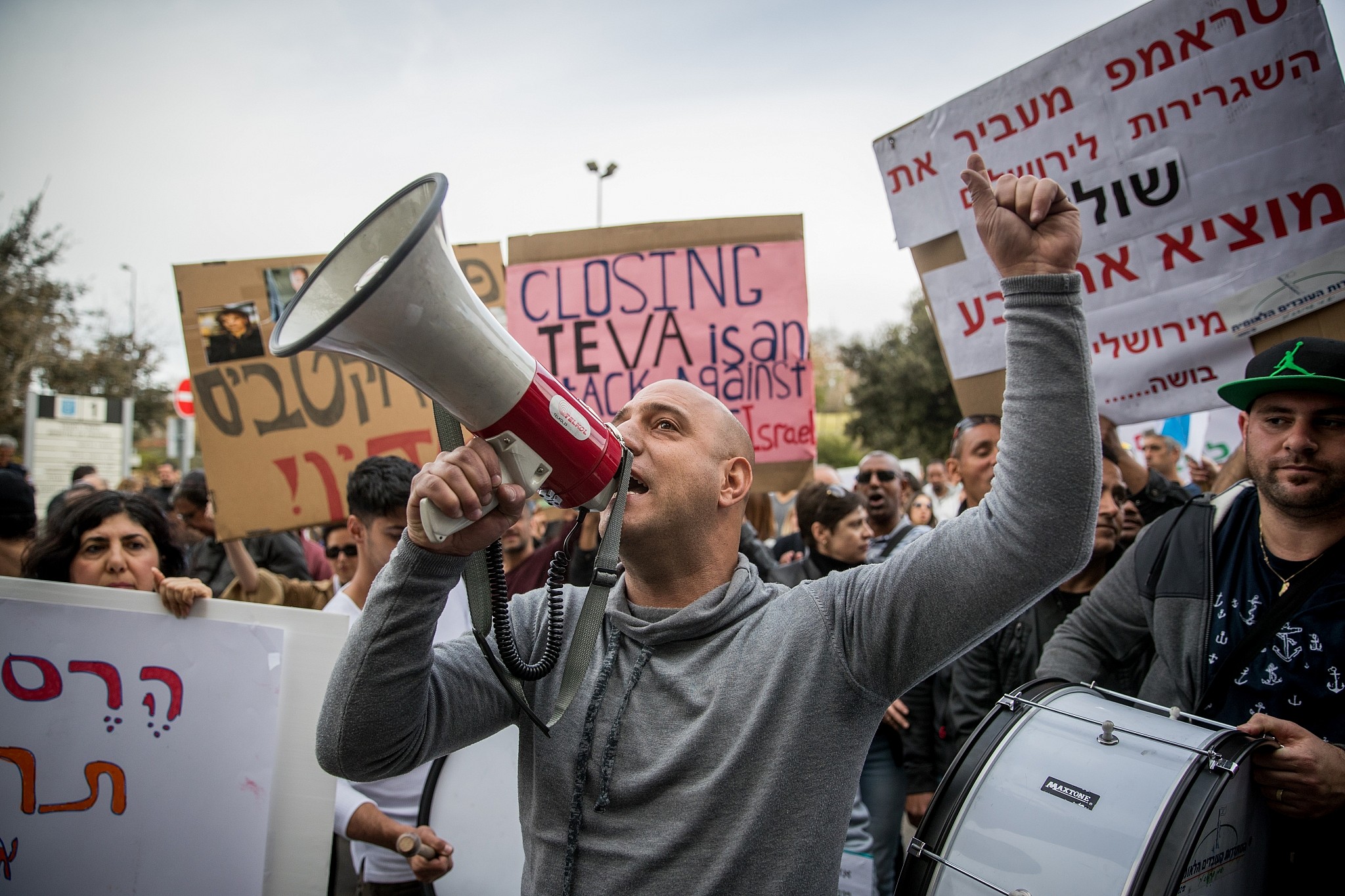
Employees of Teva Pharmaceutical Industries on Tuesday blocked the entrance to one of the capital’s major industrial zones over the threatened shuttering of the company’s two Jerusalem plants amid a global restructuring of the pharma giant that is set to slash some one-quarter of its total workforce.
Some 200 workers blocked the entry road into the Har Hotzvim technology and industry park in the north of the city, causing a traffic jam along the main Begin highway. Protesters shouted, “We’re fighting for our home. We’re willing to defend this plant with our bodies.”
Protests have occurred nearly daily since Teva on Thursday said it would lay off some 1,750 workers across the country and shut down the plants in the capital. On Sunday, the public sector in Israel held a four-hour strike in solidarity with the company’s employees.
Prime Minister Benjamin Netanyahu, together with other cabinet ministers, is set to meet Tuesday at 1 p.m. with Teva’s CEO Kare Schultz at the Prime Minister’s Office in Jerusalem to discuss ways to save jobs in Teva’s Israeli operations.

Labor unions from the company’s various plants plan a massive protest outside the PMO during the meeting, with organizers saying thousands were expected at the rally.
Teva has been saddled with debt after its $40 billion acquisition of the generics arm of rival Allergan was completed last year.
The acquisition has been accompanied by low prices for generics, particularly in the United States, a major market.
The company’s restructuring plan, announced last week, will see the firing of 14,000 Teva workers worldwide over the next two years, more than a quarter of Teva’s global workforce of over 55,000.
On Tuesday morning, Itzik Ben Simon, chairman of the workers union at the Teva tablets factory in Jerusalem, was optimistic, telling fellow workers that “we received a message last night from sources very close to the prime minister that said [plants in] Jerusalem won’t close.”
He added: “Friends, this is our critical day, this is the money time. After the announcement by the prime minister and Teva’s CEO [expected after their meeting], we may have to change all our plans.”
As part of ongoing protests, workers on Monday went on strike at the company headquarters in Petah Tikvah, the Teva Medical factory in Ashdod, and the Teva Planetex factory in Netanya. At Teva Kfar Saba, 250 workers were to hold a half day strike between 12 and 4 p.m.
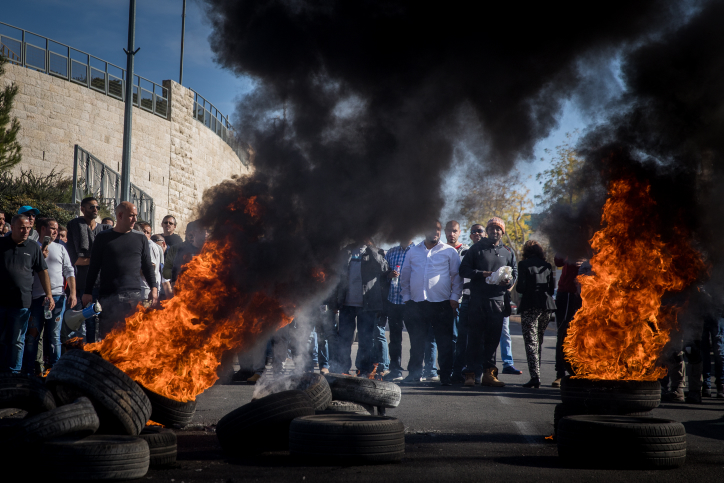
In Jerusalem, workers led by Ben Simon threatened on Monday to blow up one of the company’s factories in Jerusalem if a final decision is made to shut down the facility as part of planned job cuts that would slash one-quarter of the drug manufacturer’s workforce.
“Our factory is a ticking bomb, we have a stockpile of explosive and poisonous materials — the whole country should be on alert,” Ben Simon told Hadashot news.
Ben Simon was among 200 workers who had barricaded themselves into the factory the day before, and then spent the night at the site. The protesting workers had prevented managers from leaving the building, while other people — including relatives of the employees — burned tires outside, according to Hebrew reports.
“If the decision is eventually made by [Prime Minister Benjamin] Netanyahu and by the finance minister [to close the factory] we will cross red lines. If they try to save NIS 20 million, the blowing up of the Teva factory will cost around $220 million,” he said.
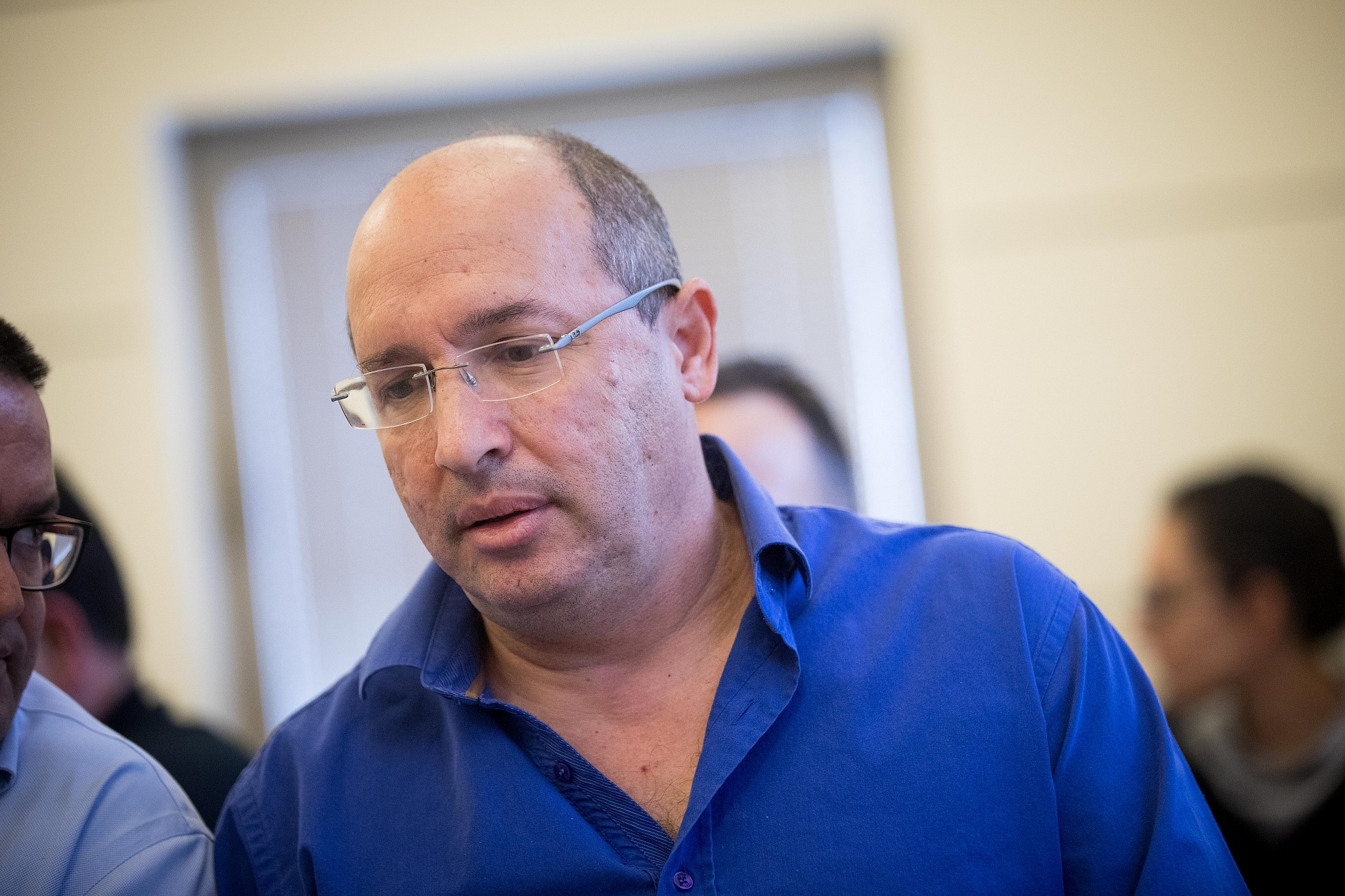
Histadrut labor umbrella chief Avi Nissenkorn urged the government to find a solution to the crisis on Sunday.
“The campaign for blue and white and saving local industry must begin with protection of workplaces,” Nissenkorn said, referring to the colors of Israel’s national flag. “The government and the Teva administration have the responsibility to bring an end to this crisis. Firings are a last resort, and all the relevant bodies must join together in order to minimize the impact on workers and to ensure that Teva, with all its factories, remains in Israel.”
Rallies against the layoffs were held in Jerusalem, the coastal cities of Ashdod and Netanya, and the central Israel city of Petah Tikva on Sunday. Demonstrators briefly blocked the entrance to the capital before police removed them from the highway. In Ashdod, the employees torched tires outside the local Teva offices. Demonstrators also disrupted traffic in Petah Tikva.
A massive solidarity strike with the Teva workers paralyzed the country’s public sector from 8 a.m. until noon Sunday.
The strike — the biggest to hit the country in several years — shut down banks, the Tel Aviv Stock Exchange, post offices, government offices, the Knesset, ports, airports, insurance companies, the courts, post offices, phone companies, Israel Electric Corporation, health services, universities, local municipalities and regional councils, along with Teva facilities across the country.
AFP contributed to this report.










The Times of Israel Community.