

The Israeli decision that could ignite the West Bank
The government’s ongoing freeze of tax transfers to the PA, punishment for Abbas’s ICC gambit, could be far more dangerous than anything The Hague might do

 Add ToI as a Preferred Source on Google
Avi Issacharoff, The Times of Israel's Middle East analyst, fills the same role for Walla, the leading portal in Israel. He is also a guest commentator on many different radio shows and current affairs programs on television. Until 2012, he was a reporter and commentator on Arab affairs for the Haaretz newspaper. He also lectures on modern Palestinian history at Tel Aviv University, and is currently writing a script for an action-drama series for the Israeli satellite Television "YES." Born in Jerusalem, he graduated cum laude from Ben Gurion University with a B.A. in Middle Eastern studies and then earned his M.A. from Tel Aviv University on the same subject, also cum laude. A fluent Arabic speaker, Avi was the Middle East Affairs correspondent for Israeli Public Radio covering the Israeli-Palestinian conflict, the war in Iraq and the Arab countries between the years 2003-2006. Avi directed and edited short documentary films on Israeli television programs dealing with the Middle East. In 2002 he won the "best reporter" award for the "Israel Radio” for his coverage of the second intifada. In 2004, together with Amos Harel, he wrote "The Seventh War - How we won and why we lost the war with the Palestinians." A year later the book won an award from the Institute for Strategic Studies for containing the best research on security affairs in Israel. In 2008, Issacharoff and Harel published their second book, entitled "34 Days - The Story of the Second Lebanon War," which won the same prize.

Monday in Ramallah. The beginning of the month. An illusory quiet embraces everything here. Israel Defense Forces soldiers stand at the checkpoint; reservists who don’t even bother checking who is entering the city. A few hundred meters away, in north Ramallah, Palestinian forces are spread along the main road, and they also look somewhat bored.
At this moment, the main difference between the two groups is that the Palestinian troops receive only a portion of their salaries. The Palestinian Authority is only paying its clerks and soldiers 60% of their monthly salaries. The reason? The Israeli decision to freeze the transfer of tax revenues that belong to the PA, in the wake of the Palestinian decision to sign the Rome Protocol, allowing it to join the International Criminal Court on April 1.
Anger isn’t yet felt among the residents, only helplessness. You don’t hear too many voices raised against the PA over this. There is a measure of understanding with regard to the situation.
But the question is how long this silence will last. By the beginning of next month, the economic situation is expected worsen. The PA is currently unable to secure loan guarantees from banks to pay March salaries, even partly.
In such a situation, the hundreds of thousands of people who make a living from PA salaries, directly or indirectly, will find themselves with no income, and the main economic engine in the West Bank will grind to a halt. The private sector in the West Bank is not a source of growth, and the high unemployment level is an indication of the dependence on the government.
But in Israel, this reality barely interests anybody. Everyone is busy with the elections. And in these elections, there seems to be some quiet guideline from the campaign advisers not to discuss the Palestinians. It’s understandable when we’re talking about the Likud and the right-wing parties. But it’s not clear why the parties in the center, and certainly the left, have nothing to say. Presumably, the Palestinian issue has become a burden for politicians and it bores potential voters. And as long as the Palestinians are quiet, it looks like things will remain this way.
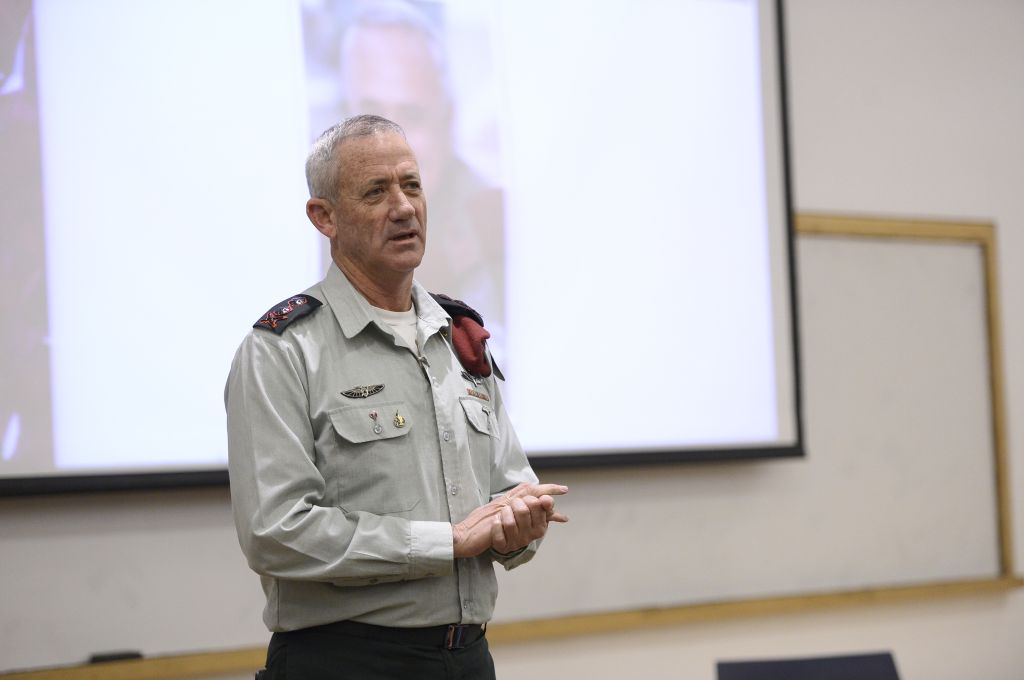
One wonders, too, why the security establishment, which is aware of the problem and the potential explosiveness of the West Bank, prefers to remain quiet or make do with leaks from “security officials.” This week, the outgoing Chief of General Staff Benny Gantz decided to break the silence. Suddenly we heard a warning from him that could have been taken as semi-political, even though it likely wasn’t. Gantz, who reads the intelligence reports and knows the reality, said in a conference at the Interdisciplinary Center Herzliya that there is no doubt the negotiations with the Palestinians are important to Israel.
“This issue is important to us, it is important for ourselves, it is important for our connections with the international community,” he said, and it was as if he said nothing. An article from my colleague (at Hebrew news site Walla!) Amir Bohbot this week — about the preparations in the IDF Central Command for a possible escalation in the West Bank in April, around the salary issue — apparently did not move a single hair on the prime minister’s head.
Where does the army’s concern come from? The calculation is quite simple. According to senior Palestinian sources, the message received from Israel is that Prime Minister Benjamin Netanyahu has no intention of renewing the money transfers any time soon, and certainly not before the elections, since the move will be seen as weakness. After that, a few weeks will pass before the next government is created, whether headed by Netanyahu or someone else. So, until May, no change on the issue is expected.
For the PA clerks and soldiers, members of the internal security forces and others, that means there will be no full salary payments for more than four months. This could be a fatal context for escalation.
For now, the PA is lowering its confrontational profile against Israel. If Netanyahu wins on March 17, and there is no change in his policy toward the PA, the status quo may not be maintained.
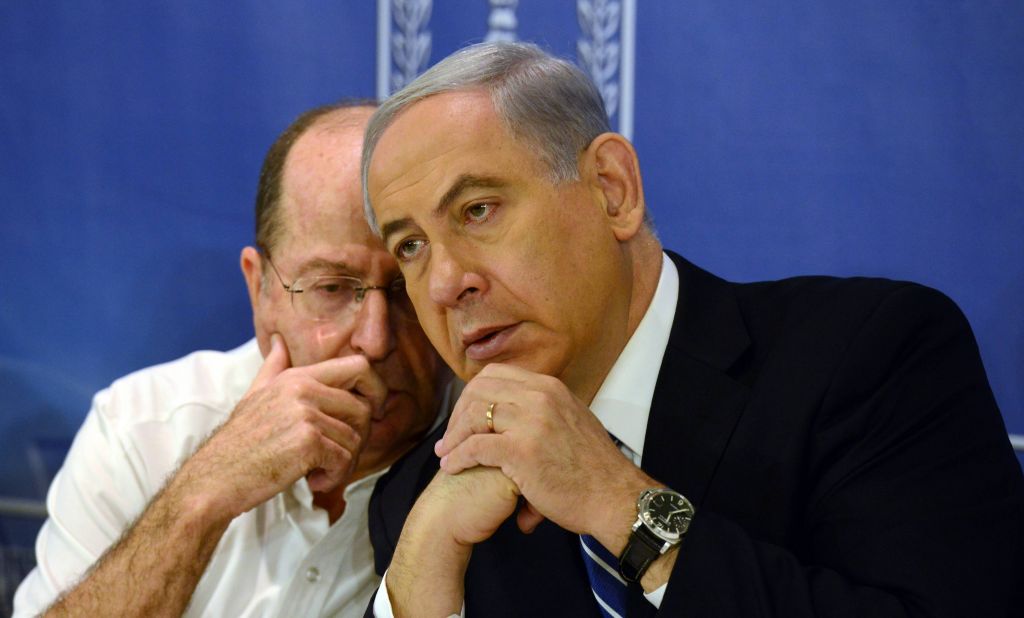
And again, in the security establishment — heads of the Shin Bet and IDF commanders — they are well aware of this possibility, but they are not informing the public. Everyone fears that it will be seen as meddling in politics and in the political branch’s decision making.
But it can be said with certainty: The decision by Netanyahu and Defense Minister Moshe Ya’alon to freeze the tax transfers is not beneficial to Israel. It hurts the country’s core interests, and this is not a political statement. Preventing the payment of PA salaries will not help Israel, and it makes a violent escalation in the territories more likely.
Do they understand this is in the Israeli security establishment? Absolutely. Do Netanyahu and Ya’alon understand this? The answer is yes. But in their eyes, this is the way to stop the PA bid to indict Israel for war crimes at The Hague. They might be right, but the path they have chosen is potentially more dangerous than anything the Palestinians could do at the ICC.
Does the decision not to cancel the money freeze stem from political calculations? You’d have to be naïve to think it doesn’t.
‘We are not the SLA’
In late February, the PLO Central Council will meet in Ramallah to debate one issue — stopping the security coordination with Israel. Fatah officials are putting heavy pressure on PA President Mahmoud Abbas to cease the cooperation. Despite the political tensions, both Israelis and Palestinians say the security coordination is better than it’s ever been.
An example of this took place last week. The Israel Police published a picture of a Palestinian suspected of planning a terror attack in Israel. The information was brought to the PA, and within hours the man was arrested. Was a major attack prevented? Not necessarily. It is possible that someone tried to incriminate the man during an interrogation. But the way it was handled shows how dependent Israel is on the coordination, just as the PA is.
“And what can be said to these men in the security forces?” a senior Palestinian asked me, unleashing a diatribe. “Why shouldn’t they receive salaries? They are preventing attacks against Israel, and Israel is preventing them from putting bread on the table. Soon the PA won’t have money to buy gas for the security vehicles. How do you want us to operate then? And let’s say these people don’t have money, do you really expect them to be more moderate? What are you trying to do, destroy your partner in the war on terror? Those who arrest Islamic State, Hamas, and Islamic Jihad members? What will happen if the PA falls, have you thought about that? What will you get then? Netanyahu and Ya’alon think the security forces are [former Israeli proxy, South Lebanon Army General Antoine] Lahad’s Army?
“Let’s make it clear to you. We do not, and we didn’t come to serve Israel’s interests. And if we are harmed, be certain that it will reach you too. In the end, the security coordination will stop and the PA will stop operating, and you will have to deal with the chaos or with something like Hamas or Jabhat al-Nusra and IS. Is that what you want?”
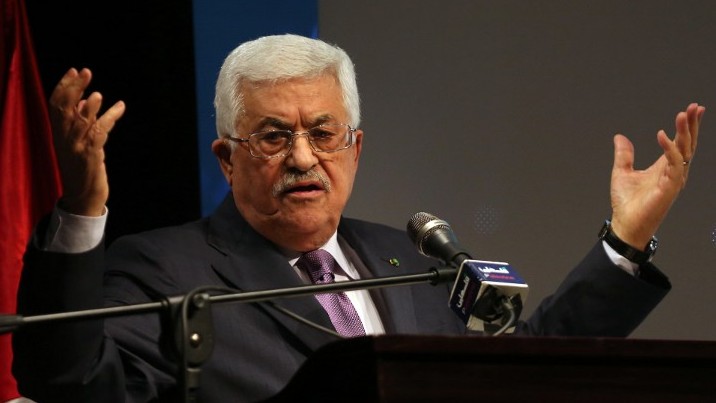
The widespread assumption among Israel’s political leadership is that Abbas and his men don’t have the courage to stop the coordination with Israel. In their eyes, Abbas is making empty threats, but won’t do anything that hurts him or the PA. They might be right. But security officials disagree. To them, Abbas has reached a stage in which he fears for his future and that of the PA even if he continues cooperating.
The lack of a political horizon, the rise of a right-wing government, ongoing settlement construction, and attacks on Palestinians by settlers, and of course, the financial situation — which will quickly worsen in the coming months — all could lead to significant anger against Abbas and the PA, and he could be forced to do something. And that something may well be halting coordination with Israel.
And why aren’t we hearing about this? Because it doesn’t interest anyone when we can be talking about Sara Netanyahu’s recycling habits.







The Times of Israel Community.