

UK could start easing virus lockdown next week, says Johnson
Top scientific adviser Neil Ferguson, whose warning over coronavirus helped shape country’s lockdown, quits for breaching the rules himself
 Add ToI as a Preferred Source on Google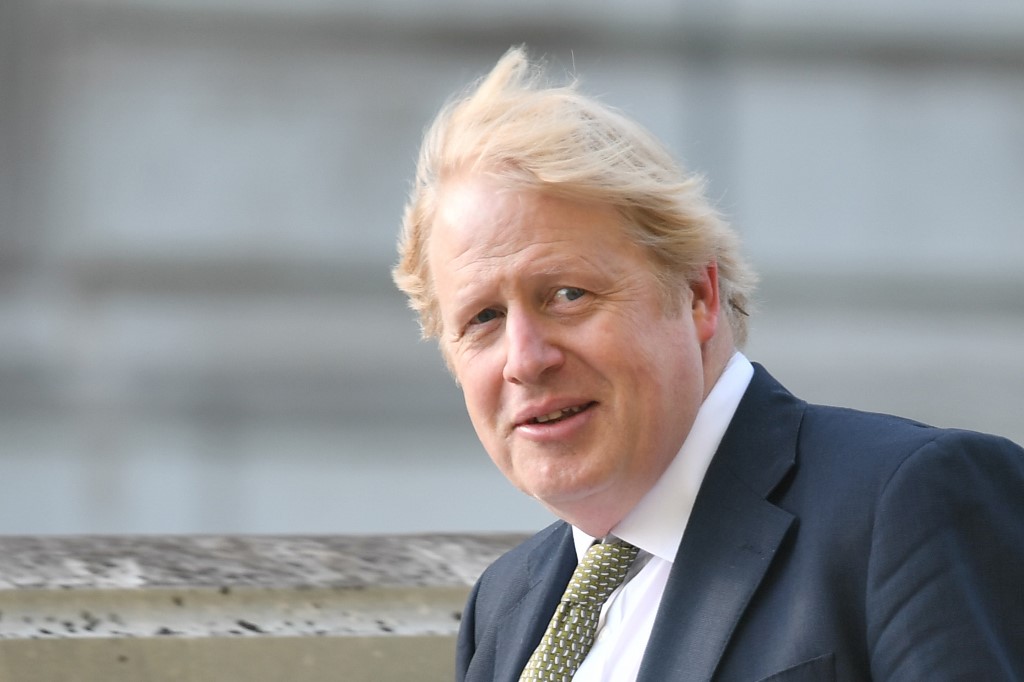
LONDON, United Kingdom — British Prime Minister Boris Johnson said Wednesday he could begin to ease a nationwide coronavirus lockdown next week, but warned he would do nothing that would risk a new surge of cases.
He was speaking the day after Britain overtook Italy to become the worst-hit country in Europe, with more than 32,000 deaths related to COVID-19 — behind only the United States in the global rankings.
Johnson said that “every death is a tragedy,” calling the statistics “appalling,” but said there was not yet enough data to make international comparisons.
In particular, he said he “bitterly regrets” the deaths in nursing homes, which stand at more than 6,000, but added that there had been a “palpable improvement” in the last few days.
The wider death rate is coming down, six weeks after the government imposed stay-at-home orders to stem the rate of infection, and the lockdown measures are up for review on Thursday.
Speaking in parliament for the first time since he himself was hospitalized with coronavirus, Johnson said the government would review the data and he would set out the next steps on Sunday.
“We’ll want if we possibly can to get going with some of these measures on Monday. I think it would be a good thing if people had an idea of what is coming,” he said.
However, the government has previously stressed that measures would only be lifted gradually.

Johnson repeated on Wednesday: “It would be an economic disaster for this country if we were to pursue a relaxation of these measures now in such a way as to trigger a second spike.”
It was the first time Johnson had appeared at his weekly prime minister’s question time (PMQs) in the House of Commons since March 25 — two days later he announced he had tested positive for coronavirus.
The 55-year-old was later admitted to hospital, spending three nights in intensive care.
He returned to work last week, but missed PMQs on April 29 after his partner Carrie Symonds gave birth to their first child together.
Johnson unveiled a new goal to reach 200,000 coronavirus tests a day by the end of May, double the 100,000 target reached only last week.
The government is currently trialing a “track-and-trace” system using a dedicated phone app that it hopes will be able to identify localized outbreaks of coronavirus.
“A fantastic testing regime is going to be absolutely critical to our long-term economic recovery,” Johnson said.
Scientific adviser resigns after failing to follow his own advice
Separately, one of the top scientists advising the government on the coronavirus outbreak resigned on Tuesday after breaking lockdown rules.
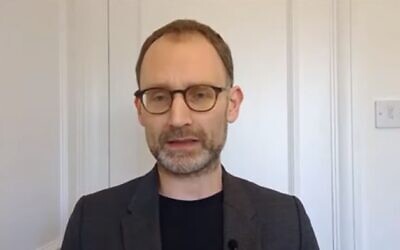
Professor Neil Ferguson, an epidemiologist at Imperial College of London, said he had made an “error of judgement” after media reports that he had allowed his married lover to visit him at home.
Ferguson developed models that predicted hundreds of thousands would die unless the UK imposed drastic restrictions to slow the spread of the coronavirus. His advice was key in triggering Britain’s lockdown in March. Under the rules, people are barred from visiting friends and family that they don’t live with.
Ferguson quit the government’s scientific advisory panel after the Daily Telegraph newspaper reported that a woman he is in a relationship with had crossed London to visit him at his home.
Ferguson said in a statement that he had “made an error of judgment and took the wrong course of action.”
“I deeply regret any undermining of the clear messages around the continued need for social distancing to control this devastating epidemic,” he said.
Health Secretary Matt Hancock said Ferguson was “a very eminent and impressive scientist,” but “took the right decision to resign.”
He told Sky News that the social distancing rules “are there for everyone, they are incredibly important and they are deadly serious. They are the means by which we have managed to get control of this virus.”
Ferguson has become a well-known figure in Britain, making frequent media appearances during the outbreak. On March 18, he tweeted that he had a fever and cough, symptoms of COVID-19, and that there was a small risk he had infected others.
Ferguson is the second scientific adviser in the UK to quit after failing to follow their own advice. Catherine Calderwood resigned as Scotland’s chief medical officer last month for twice traveling from Edinburgh to her second home.









The Times of Israel Community.