

Western allies watch Russia for invasion pretext, dismiss unverified troop pullback
Diplomats to huddle at Munich security confab, which Moscow has so far declined to attend; Britain, US say Russia has increased troops, as Kremlin claims more tanks withdrawn
 Add ToI as a Preferred Source on Google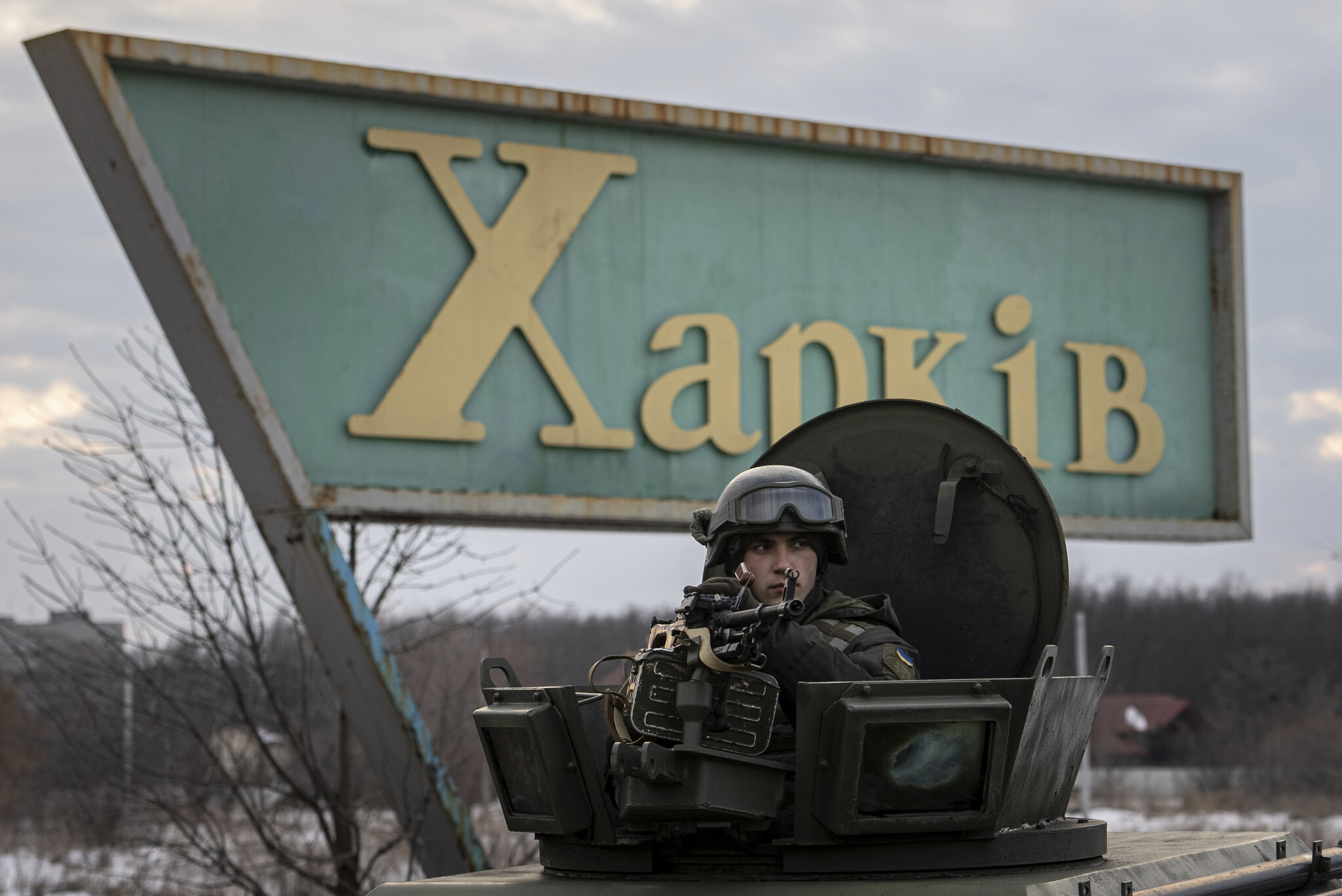
Western allies were on high alert Friday for any attempts by the Kremlin to create a false pretext for a new war in Europe, after the US issued some of its starkest, most detailed warnings yet about how a Russian invasion of Ukraine might unfold.
Germany accused Russia on Friday of endangering Europe’s security with demands that recall the Cold War, as Western leaders arrived for a Munich Security Conference set to be dominated by the Ukraine crisis.
Fears are growing in the West that Russia is on the verge of invading its neighbor, with the United States warning of a possible attack in the “coming days.”
Ahead of the annual, three-day conference’s opening ceremony, German Foreign Minister Annalena Baerbock said Moscow needed to show “serious steps towards de-escalation.”
“With an unprecedented deployment of troops on the border with Ukraine and Cold War demands, Russia is challenging fundamental principles of the European peace order,” Baerbock said in a statement.
Western fears focus on an estimated 150,000 Russian troops — about 60% of Russia’s overall ground forces — posted around Ukraine’s borders. The Kremlin insists it has no plans to invade, but it has long considered Ukraine part of its sphere of influence and NATO’s eastward expansion an existential threat. A key demand in this crisis is that NATO promise never to allow Ukraine to join.
Moscow claimed early Friday that it was withdrawing more tanks and other armored vehicles from areas near Ukraine’s border after running war games that had raised concerns in the West.
Claims of pullbacks in recent days have been disputed by the United States, NATO and Ukraine, who all said they had seen no evidence of a retreat.
“Another military train carrying personnel and military equipment belonging to tank army units of the western military district returned to their permanent bases in the Nizhny Novgorod region after completing scheduled exercises,” the Russian defense ministry said in a statement.
Separately, it said 10 warplanes were pulled back from the Moscow-annexed Crimean peninsula.
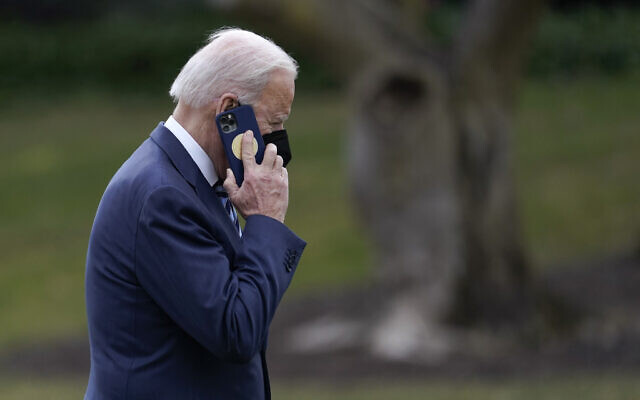
US President Joe Biden sounded unusually dire Thursday, as he warned that Washington saw no signs of a promised Russian withdrawal — but instead saw more troops moving toward the border with Ukraine, indicating Moscow could invade within days.
“Every indication we have is they’re prepared to go into Ukraine, attack Ukraine,” Biden told reporters at the White House. He said the US has “reason to believe” that Russia is “engaged in a false flag operation to have an excuse to go in,” but he did not provide details.
Biden planned to speak by phone Friday with trans-Atlantic leaders about the Russian military buildup and continued efforts at deterrence and diplomacy.
US Secretary of State Antony Blinken revealed some conclusions of US intelligence, part of a strategy designed to expose and pre-empt any invasion planning. The US has declined to reveal much of the evidence underlying its claims.
Before traveling to Munich, Blinken told the United Nations to expect an offensive in the “coming days,” likely preceded by a pretext to justify military action.
Some feared such a moment had arrived on Thursday when a spike in shellings on the front line damaged an eastern Ukrainian kindergarten and Russian-backed separatists blamed Kyiv for escalating hostilities. The region already has been the site of fighting since 2014 that has killed 14,000.
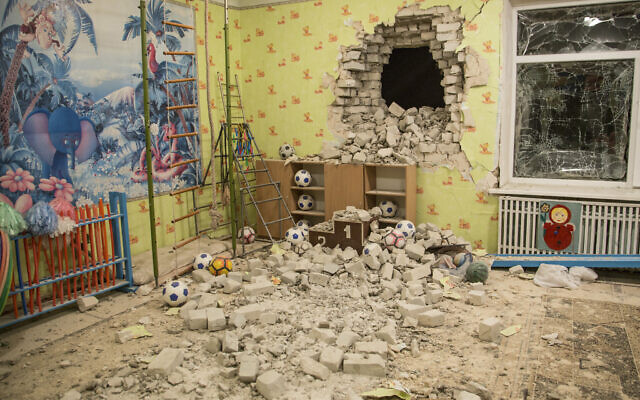
Separatist authorities in the Luhansk region reported an increase in Ukrainian government shelling along the tense line of contact. Separatist official Rodion Miroshnik said rebel forces returned fire.
Ukraine disputed the claim, saying separatists had shelled its forces but they didn’t fire back. The Ukrainian military command said shells hit a kindergarten in Stanytsia Luhanska, wounding two teachers, and cut power to half the town.
Ukrainian President Volodymyr Zelenskyy tweeted that the kindergarten shelling “by pro-Russian forces is a big provocation.”
Kremlin spokesman Dmitry Peskov countered with the same: “We have repeatedly warned that the excessive concentration of Ukrainian armed forces in the immediate vicinity of the line of demarcation, coupled with possible provocations, could pose a terrible danger.”
Moscow meanwhile, has so far declined to attend the Munich gathering, but the United States said Blinken would meet his Russian counterpart, Sergey Lavrov, next week — provided no invasion had occurred before then.
“It is a loss that Russia is not taking advantage of this opportunity,” Baerbock said.
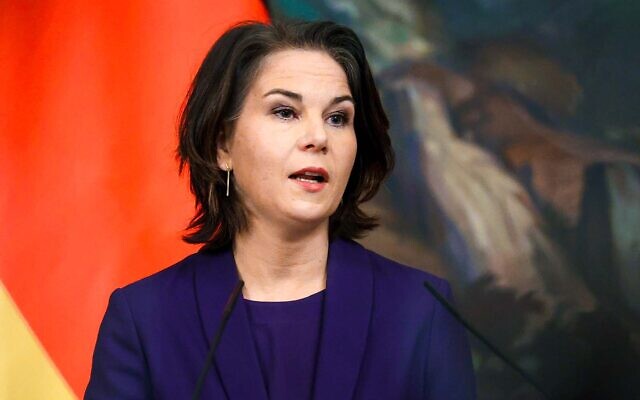
She added that the conference offered a chance “to discuss how we can still counter the logic of threats of violence and military escalation with the logic of dialogue”.
Also traveling to Munich are US Vice President Kamala Harris, UN chief Antonio Guterres, EU Commission head Ursula von der Leyen, NATO chief Jens Stoltenberg and Ukrainian President Volodymyr Zelensky.
Foreign ministers from the Group of Seven club of rich nations — including France, Britain, the US and Japan — will discuss the Ukraine crisis on the conference sidelines Saturday.
The talks will be hosted by Baerbock, whose country currently holds the G7 presidency.
“Even tiny steps towards peace are better than big steps towards war. But we also need serious steps towards de-escalation from Russia,” she said.
“Declarations of willingness to talk must be backed up by real offers to talk. Declarations of troop withdrawals must be backed up by verifiable troop withdrawals.”

British Defense Secretary Ben Wallace said after previous announcements that the West has seen “an increase of troops over the last 48 hours, up to 7,000.” That squared with what a US administration official said a day earlier.
Citing “possible aggravation,” Ukraine’s armed forces announced late Thursday that evacuations were planned for some communities along the conflict-ridden border, particularly from the separatist-held city Donetsk.
Violence has ebbed and flowed along the eastern front line, where Kyiv has been locked in conflict with Moscow-backed rebels for almost eight years.
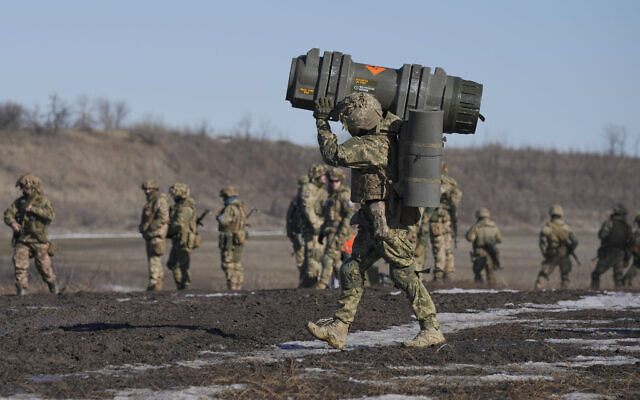
Following Thursday’s artillery fire at the kindergarten, Ukrainian and Western leaders reiterated calls for Russia not to exploit the border tensions to launch its feared offensive.
President Vladimir Putin has made clear that the price for removing any threat would be Ukraine agreeing never to join NATO and for the Western alliance to pull back from a swath of eastern Europe, effectively splitting the continent into Cold War-style spheres of influence.
Ukraine is far from being ready to join NATO but has set this as part of a broader goal to integrate with the democracies of western Europe, making a historic break from Russia’s orbit.



The Times of Israel Community.