

Why Netanyahu was smart to go 1st, and why Liberman may yet be the man to watch
Talks on a unity coalition are deadlocked, and may ultimately go nowhere. But Blue and White is being outmaneuvered and Likud is winning the PR battle, too
 Add ToI as a Preferred Source on Google
Shalom Yerushalmi is the political analyst for Zman Israel, The Times of Israel’s Hebrew current affairs website
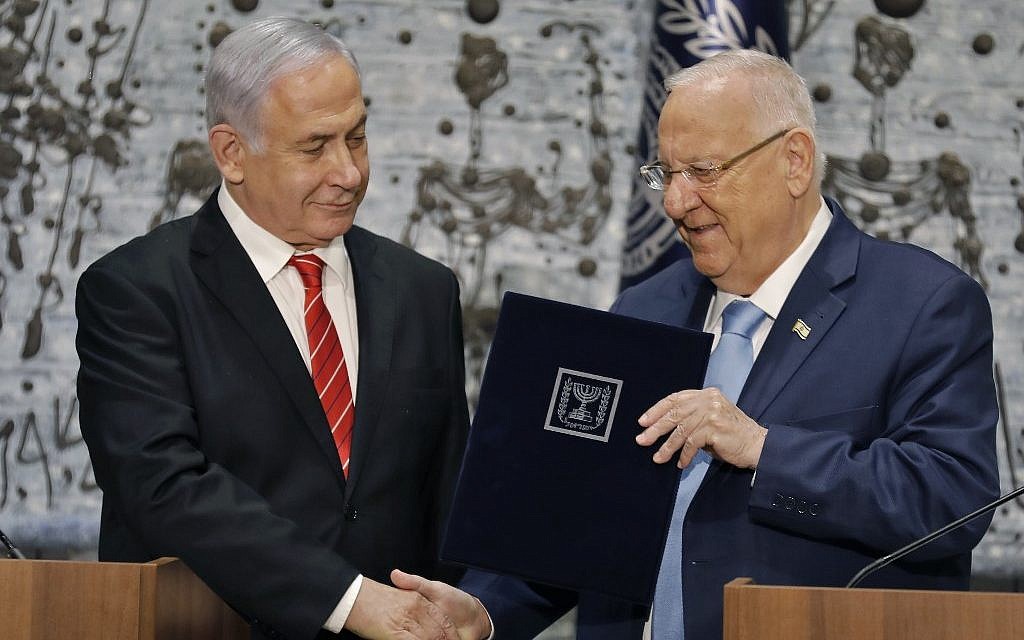
Over the past week, President Reuven Rivlin has proven that he is a creative politician, one determined to untangle the political Gordian Knot Israel has been facing since the September 17 elections produced a deadlock between Prime Minister Benjamin Netanyahu’s Likud and Benny Gantz’s Blue and White party.
Likud won 32 Knesset seats and Blue and White secured 33, and after Rivlin had met with all faction leaders, the right formed a 55-seat bloc to the left’s 54 (only 44 of whom would actually sit in a Gantz-led government), prompting Rivlin to give Netanyahu first crack at hammering out a coalition.
But the chances of either Netanyahu or Gantz putting a Knesset majority together are low. Knowing this, the president has come up with an original, even daring compromise, well outside the political box.
Rivlin proposes a power-sharing model: The Likud and Blue and White will receive an equal number of ministers, and Netanyahu and Gantz will each be in office as prime minister for two years, with Netanyahu first. During those first two years, should Netanyahu be indicted in any of the three separate corruption investigations he faces, he would step down and Gantz would assume the premiership.
Ostensibly, both parties would be hard-pressed to find a better offer, but as the two sides met to try and stitch together a unity agreement, it soon became clear there was a core issue to overcome: Who, exactly, was Likud representing?
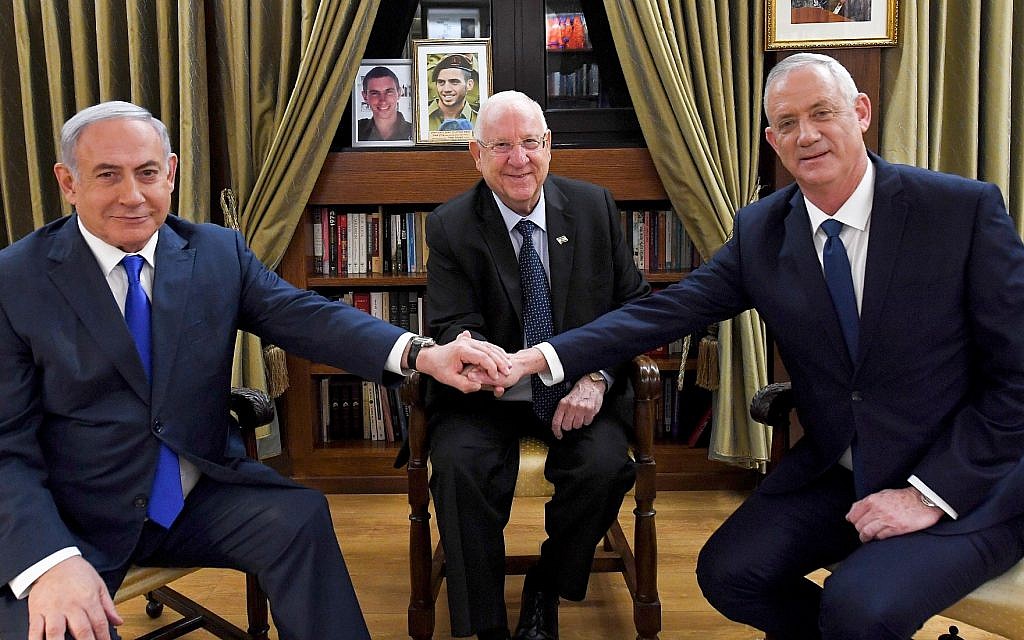
MK Yariv Levin, heading the negotiations on Likud’s behalf, made it clear at the first meeting between the two sides on Tuesday that he represents the entire 55-strong right-wing bloc, namely Likud, ultra-Orthodox parties Shas and United Torah Judaism, and Yamina (the faction comprising the New Right, Jewish Home and National Union parties). In other words, Likud plus all the parties with which Blue and White promised its voters it would not share the government table; the parties Yisrael Beytenu party leader Avigdor Liberman calls “Haredi and messianic.”
Across the negotiating table, Yoram Turbowicz, whom Blue and White tasked with heading unity talks, insisted that his party views Levin as representing only the Likud.
In other words, the negotiating parties can’t even agree on who they’re negotiating for.
Why Netanyahu wanted to go first
Likud officials argued that according to Rivlin’s proposed compromise, Netanyahu would have to share the ministerial spoils with his right-wing partners anyway, meaning that the Likud would have fewer ministers than Blue and White. If that is the case, why would the latter care who the Likud represents in the unity talks?
But Blue and White knows that there is more to this than just the number of portfolios. In a government where Netanyahu has 55 Knesset members, Gantz would only have Blue and White’s 33 seats — or at best 39 if you count Labor-Gesher, as everyone understands the Democratic Camp and the Arab-dominated Joint List would never agree to join such a coalition. So no matter how this cookie crumbles, it won’t be into even pieces.
Netanyahu couldn’t have agreed to Rivlin’s proposal faster. In the absence of a feasible consensus, for a start, he is better off looking like the leader who agreed to everything the president suggested; he will be able to remind the public of this if a third election is called.
But Netanyahu also wants to arrive at his pre-indictment hearing with Attorney General Avichai Mandelblit, set for October 2, as an incumbent prime minister, regardless of the nature of the government he may or may not head further down the road. This way, if he decides to strike a plea bargain, the premiership will be his chip to trade; he could offer to step down in exchange for a favorable deal.
Blue and White, however, is again failing to make the public see why it turned down Rivlin’s proposal. All it has to do is underscore that the price being asked of the party and its supporters is too high, that it would be a breach of the promise to form a secular government and not join a Netanyahu-led coalition, and that the other side is not being made to compromise on its campaign promises to a parallel extent. The public, or at least Blue and White’s electorate, would understand.
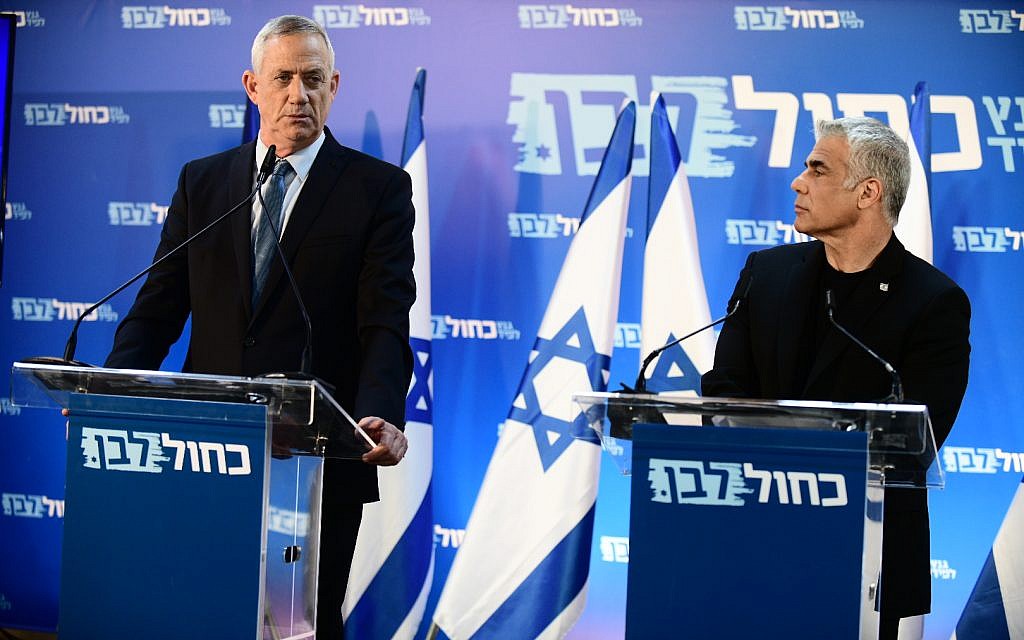
Instead, none of Blue and White’s leaders has been able to relay a clear message to the public explaining not only why they rejected Rivlin’s proposal, but also why they made every effort not to have Gantz be selected as the first candidate to try to form a government.
Addressing the faction on Thursday, Gantz sounded less than convincing, speaking from notes as he called on Netanyahu to come to the negotiating table “with clean hands, without [political] blocs or [media] spins.” That’s fine as a slogan, but he can’t credibly accuse the president of orchestrating a media spin.
Targeting Lapid
Trying to score more points, meanwhile, the Likud is sparing no effort to portray Blue and White’s No. 2, Yair Lapid, as a petulant child whose behavior could ruin national unity for everyone.
In fact, however, Lapid is being completely loyal to Yesh Atid’s campaign promises; he should hardly be chastised for not zigzagging politically.
Blue and White is an alliance comprising three parties: Gantz’s Israel Resilience Party, Lapid’s Yesh Atid, and Moshe Ya’alon’s Telem. Of Blue and White’s leaders, Lapid is the most unbending, and he has not moved on his promise not to sit in government with Netanyahu “for even one minute.”
In general, the animosity politicians feel toward Netanyahu corresponds with how badly he has hurt them. In 2014, Netanyahu fired then-finance minister Lapid, while Ya’alon resigned as Netanyahu’s defense minister in 2016. Neither of them wants to serve in a Netanyahu government again, and neither is willing to believe a word Netanyahu says, especially when he talks about stepping down.
Gantz, on the other hand, was tapped for a fourth year as IDF chief of staff by Netanyahu and therefore has a more conciliatory approach when it comes to the prime minister. Several Blue and White lawmakers are convinced that if it was only up to Gantz, he would have accepted Rivlin’s proposal.
In this context, a senior Likud minister told this reporter that the only way to reach a compromise in the unity negotiations is if Blue and White dissolves. “As things stand, it’s either that or [a third] election.”
Watch Liberman
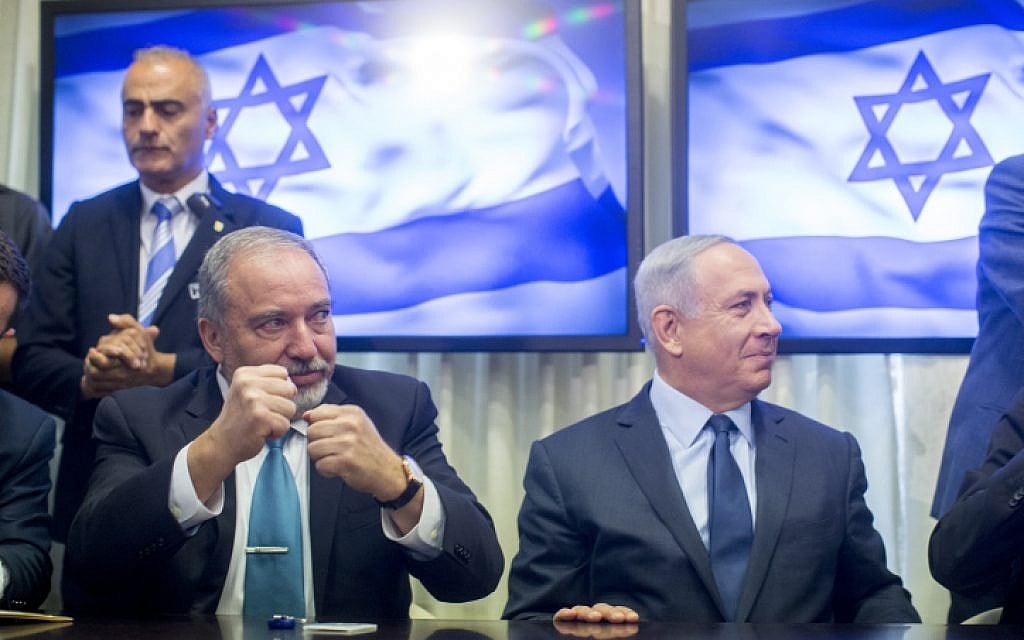
Tapped to assemble the government, it is clear that Netanyahu doesn’t really believe he will be able to complete this task. But, you never know, an opportunity could present itself. In this respect, the man to watch is Liberman.
Yisrael Beytenu’s chair — the would-be kingmaker who refused to partner with Netanyahu after April’s elections and is again largely responsible for the political stalemate since his party, which won eight Knesset seats, this time endorsed neither Netanyahu nor Gantz for prime minister — could conceivably yet change his stance.
“Liberman is waiting for an official invitation to a meeting with Netanyahu,” one of his associates told this reporter. That hits a rather different note than Liberman’s usual “if it’s not a secular-liberal unity government — don’t call me” line.
The Likud and Blue and White negotiating teams are scheduled to meet again on Sunday. As things stand, it doesn’t look like either side is willing to listen to the other. Might Liberman introduce a whole new tune?
A version of this article first appeared in Hebrew on The Times of Israel’s sister site, Zman Yisrael.


The Times of Israel Community.