

With Shoah speech attacking Iran and NY Times, PM displays post-election resolve
Three weeks after he won new term, prime minister’s blistering Holocaust memorial address underlines his personal conviction that he is uniquely capable of leading Israel

 Add ToI as a Preferred Source on Google
David Horovitz is the founding editor of The Times of Israel. He is the author of "Still Life with Bombers" (2004) and "A Little Too Close to God" (2000), and co-author of "Shalom Friend: The Life and Legacy of Yitzhak Rabin" (1996). He previously edited The Jerusalem Post (2004-2011) and The Jerusalem Report (1998-2004).
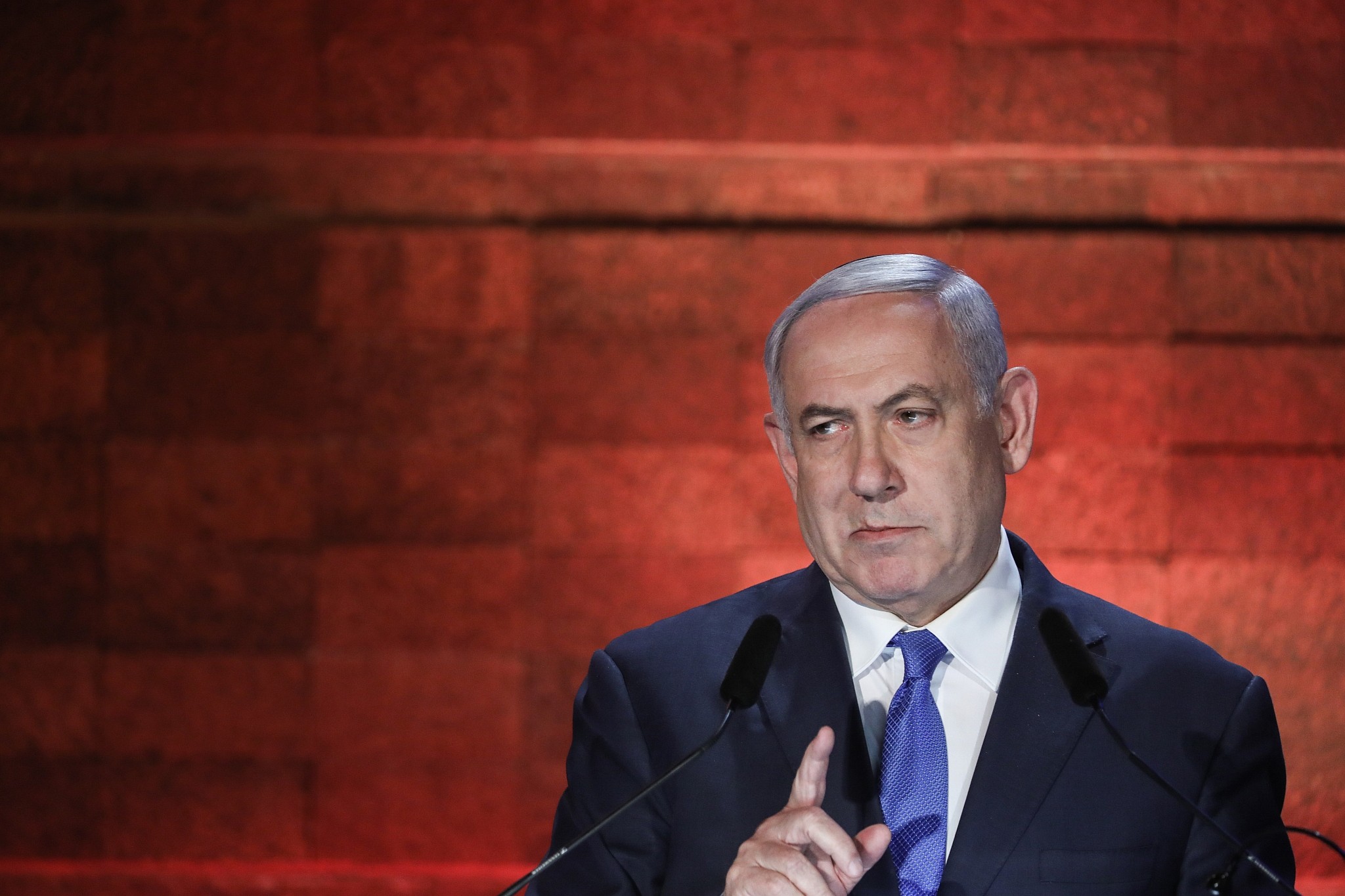
In a fiery, spellbinding performance of less than 20 minutes on Wednesday night, Israel’s Prime Minister Benjamin Netanyahu showcased the oratorial mastery that helped him win reelection just three weeks ago, and showcased, too, his personal conviction that he is uniquely qualified to lead the Jewish state.
Addressing the nation at the start of the annual Holocaust Remembrance Day, Netanyahu delivered an address (Hebrew) that built from astonishing stories of Holocaust suffering and heroism, as told to him by a group of survivors with whom he had met on Tuesday, to a resounding assertion of Israel’s legitimacy and denunciation of its critics.
Speaking at the Yad Vashem Holocaust Memorial Museum in Jerusalem to a large audience that heard him in absolute silence, and to a nation watching on TV, the prime minister hailed survivors such as Fanny Ben-Ami, who as a 13-year-old led a group of children to safety in Switzerland from France but who turned back when she realized that a three-year-old girl in their group had been left behind in the demilitarized zone. “Fanny went back to get her,” the prime minister marveled; she “zig-zagged under gunfire” to bring the toddler to safety: “An angel of salvation, aged 13.”
He went on to detail visits he has made in recent years to European countries “whose land is soaked with the blood of our brothers and sisters, and where we were turned into human dust,” but that have today become some of Israel’s greatest admirers and supporters. In these lands, he said, “I felt terrible pain at the disaster that befell us,” but simultaneously “immense pride to represent our people, that rose from the ashes in our independent state.”
Unable to protect themselves, millions of Jews in the Diaspora were condemned to their deaths, he recalled bitterly. “In exile, our abysmal weakness doomed us to our fate.” But now, restored to their homeland, the Jews have achieved “a miracle of revival” and their country has become a rising world power.
For all of Israel’s achievements, Netanyahu said, it dare not be complacent in the face of its enemies. This assertion, he insisted, preempting critics who accuse him of whipping up fear among Israelis, was not a case of “artificial scaremongering.” Even the greatest world powers must always be aware of the dangers they face, he noted. Indeed, “awareness of danger is a condition for living.”
The “paradox” of Israel’s revival, he said, was that it has been accompanied by an ongoing rise in anti-Semitism. “The extreme right, the extreme left and extremist Islam,” he said, “agree on only one thing: hatred of the Jews.”
“This hatred is expressed in despicable attacks on worshipers at synagogues, as took place a few days ago in San Diego and before that in Pittsburgh; in the desecration of Jewish cemeteries, and in the publication of caricatures and article dripping with hate, even in newspapers considered respectable ” — a reference to last week’s anti-Semitic cartoon in the New York showing Israeli guide-dog Netanyahu leading a blind US President Donald Trump.
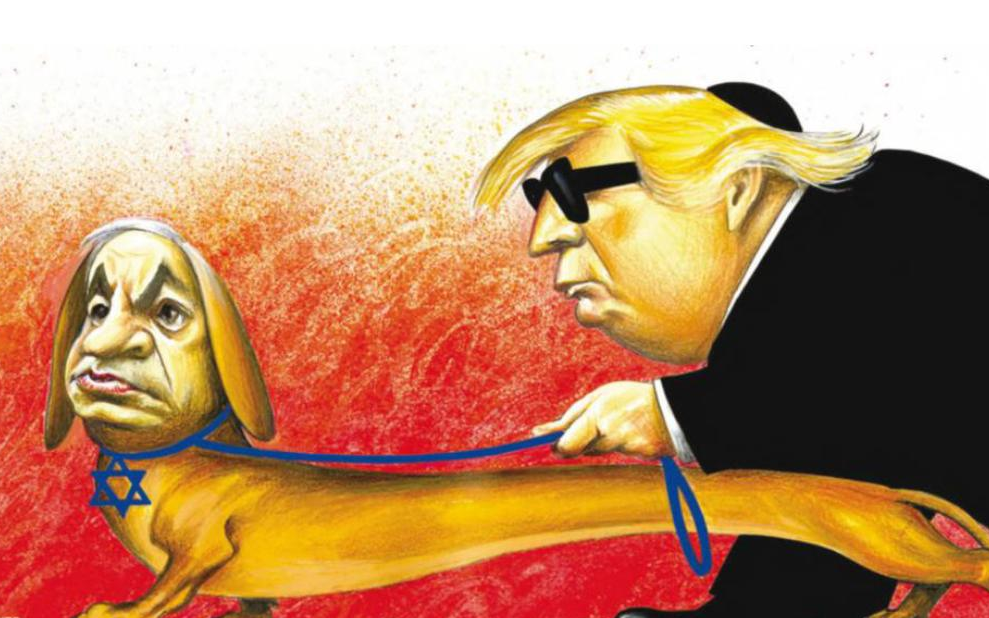
Such material was not legitimate criticism, he argued, but “hatred — systematic, poisonous, false — aiming relentlessly to undermine the legitimacy of the Jewish nation state.”
As he has done year after year in these annual Holocaust Day speeches, Netanyahu cited Iran as the latest entity seeking to eliminate the Jewish nation, and declared that “Israel will not present its neck for the slaughter.” Rather, it would defend itself, with one of the world’s strongest armies, he said. “To those who seek to wipe us out, I say, precisely from this place: We have returned to the stage of history, to the front of the stage… We have beaten our enemies in the past, and with God’s help we will beat you.”
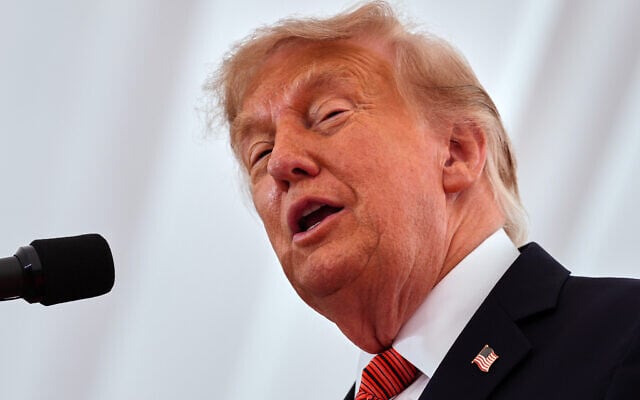
Netanyahu also hailed Trump for standing with Israel in this battle. Now that the US had withdrawn from the Obama-era 2015 nuclear accord, was sanctioning Iran, and had branded Iran’s Revolutionary Guards a terror group, Israel was no longer alone.
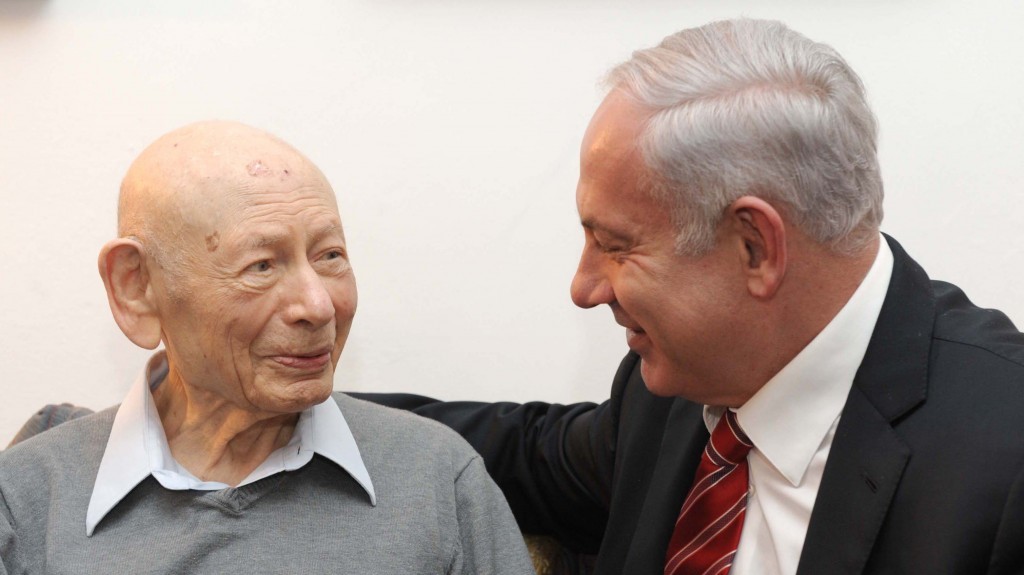
Finally, Netanyahu recalled his late father, the historian Benzion, who he said had bequeathed him the imperative to repel existential threats to the Jewish people. The obligation he had received from his father, said the prime minister, was summed up in the command: “Never again.”
Netanyahu spoke not merely with his trademark assurance, but with ferocity. Three weeks ago, he was standing on Netanya beach, wiping away sweat, as he implored Israelis enjoying a day off work for the elections to shake off the sand and go vote for him. His election victory — against the most significant political threat he has faced for years in the shape of ex-IDF chief-of-staff Benny Gantz’s Blue and White party — was a triumph of personal will. He threw himself utterly into the campaign, using means fair and sometimes foul, tirelessly pitching for every conceivable vote.
It is not cynical to suggest that he believed he had to win re-election in order to bolster his prospects of escaping the allegations of corruption that threaten him. It is not out of place to note in a piece on Holocaust Remembrance Day that, in this same battle against his accusers, he has been battering away at the credibility of Israel’s vital democratic institutions, our civilizing hierarchies — opposition politicians, free press, cops and prosecutors. But Netanyahu also believes he had to win because he is certain that he, and only he, can keep this country safe and thriving in the face of its enemies. Wednesday night’s blistering speech was almost incandescent proof of that.







The Times of Israel Community.