

Agreeing to disagree
Little goes unchallenged in the press as papers report on Abbas’s claims against Netanyahu and a new Education Ministry plan that could blacklist some left-wing artists
 Add ToI as a Preferred Source on Google
Joshua Davidovich is The Times of Israel's Deputy Editor
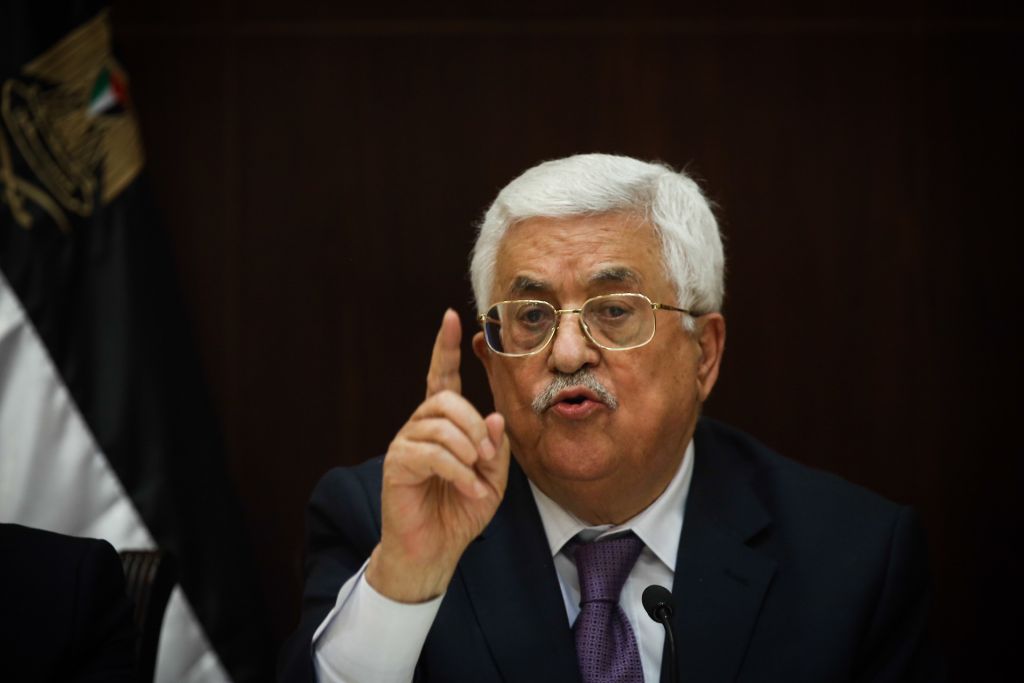
The Israeli print press has something of a Rashomon quality Friday morning, which is unsurprising in a region where few narratives are allowed to stand unchallenged. While readers of Israel Hayom may come away feeling like the world is embracing Israel, which wants nothing more than peace talks, Yedioth Ahronoth browsers will get the impressions that Israel is refusing to negotiate with the peace-willing Palestinians.
Meanwhile, Haaretz itself seems to have bipolar disorder, at once both slamming Education Minister Naftali Bennett for a new cultural schools initiative, and defending him in his tiff with Prime Minister Benjamin Netanyahu.
“Abu Mazen: Netanyahu doesn’t want to meet with me,” screams the main headline of Yedioth, quoting Palestinian Authority President Mahmoud Abbas, who hosted a gaggle of Israel journalists at his Ramallah headquarters a day earlier.
Nahum Barnea, who was among the group, writes that “as always with the Palestinians, it’s hard to figure out what’s the message, what’s the spin, and why exactly now.”
The last two are good questions, unanswered by Abbas’s main message on the lack of peace talks and stalled efforts to get them underway.
“There’re no negotiations between me and Netanyahu, but there are daily contacts between the bureaus,” he is quoted saying.
“He refuses to say who is making contact on the Israeli side, if he means attorney [Yitzhak] Molcho or COGAT head Gen. [Yoav] Mordechai, but insists the contacts are taking place,” Barnea writes. “The one name he remembers is former minister Silvan Shalom. ‘He would call here from time to time,’ he says. When he is reminded that he resigned, he says with a smile ‘in the past.’ The goal of the contacts, according to Abbas, is setting up a meeting between him and Netanyahu, and perhaps a lower-level preparatory meeting. ‘Two months ago I turned to Netanyahu, but he didn’t get back to me,’ he says.”
Israel Hayom also covers the story, but leads with Netanyahu’s office’s denial of the Abbas claim. “This is an attempt by Abbas to erase his responsibility for not engaging in talks. Even in Davos, Netanyahu called for talks without preconditions.”
Indeed, across the tabloid, it’s the Netanyahu version of reality that rules the day, as it leads with the prime minister’s trip to the World Economic Forum in Davos, and does his office’s job of acting as a mouthpiece.
Starting with the headline “The world already understands: Israel is not the enemy,” a direct quote from Netanyahu, all the way to Netanyahu’s meeting with Alibaba founder Jack Ma, who is quoted expressing interest in entering the Israeli market, the paper’s travelogue of Netanyahu’s Swiss trip is all smiles and good feelings, except of course for Netanyahu’s own fear-tastic public statements.
“The prime minister’s second day at Davos was frenetic to me,” Hezi Sternlicht writes in the paper. “On top of many diplomatic meetings, the prime minister was interviewed in the main hall of the conference, expressed worries over the nuclear deal with Iran, and called on Abbas to come to the negotiating table.”
Haaretz seems to care little about Netanyahu’s glad-handing in Switzerland and instead focuses on issues closer to them that actually affect most Israelis, like a plan the paper reports being pushed forward that, it says, would blacklist writers and others who don’t toe the Jewish Home line from the school curriculum.
“According to one official who participated in ministry discussions on the reform, two of the criteria debated for approving artistic works were a declaration of loyalty on the artist’s part and a commitment to performing in West Bank settlements. It is unclear whether these requirements will be included in the final plan,” the paper reports, going on to detail the creation of a complicated “color” system of labeling books based on how much approval from the ministry they get, including the dreaded red track, which the paper reports is likely a blacklist.
“With no clear criteria and with people who are directly subordinate to the education minister or who seek to please him, the red track is expected to include all works that don’t suit Bennett’s political positions, like those that might be based on the book Borderlife by Dorit Rabinyan,” a source is quoted telling the paper.
Bennett on Twitter Friday morning responded to the report by calling it “malarkey” and saying the plan would allow school to be more inclusive.
He may have been reading Haaretz in the first place, because page 3 of the paper includes some rare support for the right-wing minister, after he ran up against Netanyahu over his handling of security affairs during the week.
“Of all the speakers at the event, Bennett put on the best show of opposing the government — of which he’s a member. He compared the Netanyahu government to the government of Golda Meir, in referring to the mistaken ‘concept’ that brought disaster on Israel in the 1973 war,” Yossi Verter writes in his weekly political roundup. “Afterward, Bennett went out of his way to cast his remarks in a substantive light, shorn of political interests. His speech was in fact serious and thorough, and shed light on problematic corners in the political and security performance of the Netanyahu government.”
Bennett’s tussle with Netanyahu was just a minor aside, though, compared to the biggest story of the week — the murder of mother Dafna Meir after a terrorist broke into her West Bank home and stabbed her to death.
Bits and pieces about the woman Meir was, and the circumstances of the killing, have come out it dribs and drabs over the last five days, and Yedioth sums it up with a heartbreaking long-form article putting all the pieces together, including an “interview” with Meir’s husband, Natan, though writer Yifat Ehrlich notes he refuses to call it that.
“For Natan, it is not pleasant with the media around him. He clarifies that he’s not giving interviews, but sitting shiva, and invites the journalist to take part in it, to console, to speak about his wife without posing, without performances of sad faces for the cameras. ‘I understand that Dafna is no more,’ Natan says. ‘It is hurtful and sensitive. Once there was a picture of her in one of the women’s magazines and she was so excited, really was crazy about it. I told her, Dafna, what do you need this for? But she loved it. She wanted to be famous.’”






The Times of Israel Community.