

The mourning after
The death of Rabbi Ovadia Yosef produced an outpouring of grief in the streets of Jerusalem and an outpouring of op-eds in the press
 Add ToI as a Preferred Source on Google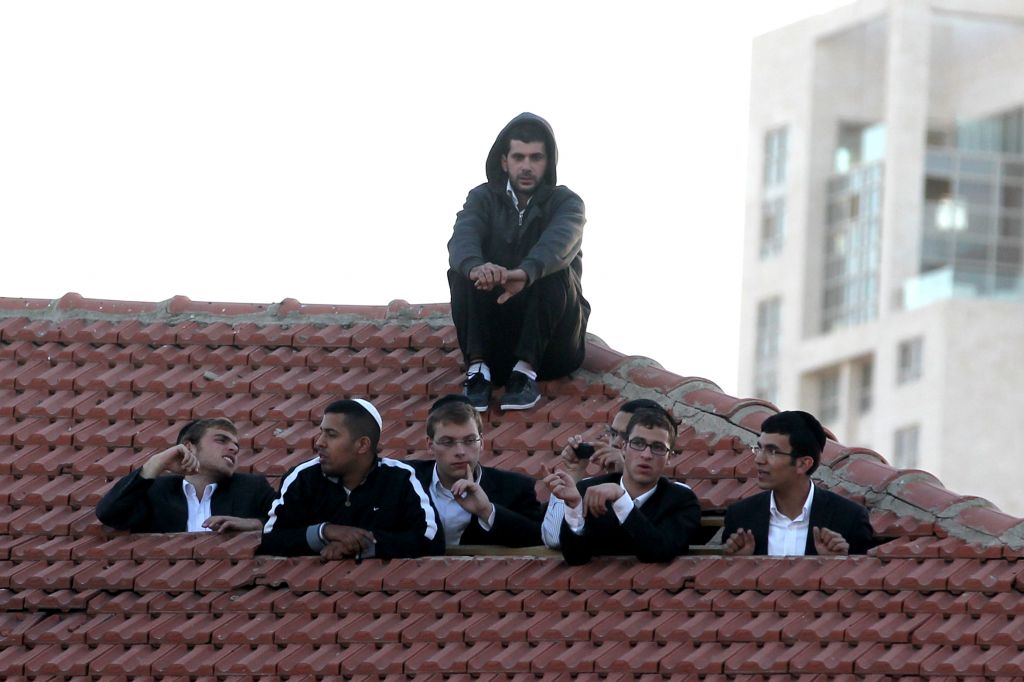
Only one story dominates the Israeli papers on Tuesday: the death of Rabbi Ovadia Yosef. The funeral of Yosef, the former chief rabbi and the spiritual leader of the Shas political party, drew an estimated 800,000 mourners to Jerusalem Monday night and an extraordinary number of eulogies in the press.
The eulogies
Israel Hayom has the highest-profile eulogies for the late rabbi, with those of political heavy hitters finding spots in the first pages of the paper. The front page has teasers for nine eulogies/op-eds about Yosef along with the simple headline, “Rabbi Ovadia Yosef 5681–5774 (1920–2013).” Inside the paper’s first two eulogies are from President Shimon Peres and Prime Minister Benjamin Netanyahu.
Peres calls Yosef a friend and teacher and a gift to the Jewish people. “He was just a great person. Greatness cannot be measured, it is felt in the spirit moving, piercing obscure corners and bringing a great light in unexpected places.”
Netanyahu calls Yosef a scholar who took advantage of every moment he had to study Torah. “What characterizes a true scholar? Just knowing that despite the enormous wisdom, he is still a student. He has more to learn, more room to grow and develop. In this respect, Rabbi Ovadia was a scholar in every fiber of his being.”
Former interior minister and current Shas party No. 2, Eli Yishai, pens a three-paragraph eulogy calling Yosef a rabbi for all. “He was a rabbi for all of Israel. He was a rabbi of the common people and the rabbi of scholars,” Yishai writes. He concludes his short piece by saying, “Our generation had a precious gift, priceless — and our hearts broke the day we had to return it.”
Yedioth Ahronoth may not have the big-name eulogies but it has more coverage, with 24 pages of articles and op-eds (compared to Israel Hayom’s 21). Nahum Barnea leads Yedioth’s coverage with an op-ed that focuses on what a unifying force Yosef was in Israel. Barnea points out the power that Yosef held, noting that even mourners from communities Yosef may have crossed in his lifetime came to the funeral. “Mourners even came in from the settlements, even though they remember very well that Rabbi Ovadia gave permission for the Oslo agreement,” Barnea writes. Barnea concludes that Yosef succeeded in changing the Israeli religious and political landscape in ways that no movement before had.
Maariv’s coverage leads off with a eulogy from Shas’s leader, Aryeh Deri, who says the pain of Yosef’s passing hurts him more than his own father’s death. “On a personal level, you are my leader, my teacher and moral compass. Now I feel that I don’t have a father, and the pain is much greater than the day that my own father died.” Deri concludes with what he sees as the silver lining: “The only light at the end of the tunnel is that we know your will and testament. We know what you told us all the time — to remain united and cohesive. Continue to rally around the Council of Torah Sages, around the sages of Israel. Continue what you started, do more to spread the Torah and to help the poor.”
Haaretz’s coverage of the death of Yosef includes an in-depth look at his life, and its editors assess the conflicted legacy of the rabbi. “His ultimate importance was his serving as a symbol of leadership for hundreds of thousands of Mizrahim – Jews of Middle Eastern and North African descent… and he helped them feel pride in their culture and roots.” The paper also praises what it views as his courageous ruling to give up land for peace. However, the piece calls Yosef a divisive figure whose nasty statements about gentiles, the Supreme Court, and Israel’s secular population served to distance him from large segments of Israeli society.
The next step?
In addition to the remembrances of Yosef, there is intense speculation as what will happen to Yosef’s political party, Shas, now that he has died. In Israel Hayom, Matti Tochfeld writes that the search for Yosef’s successor has actually been going on for years, without any success. Tochfeld says the infighting among Shas members over succession “looks like squabbling sailors aboard a ship that crashed into an iceberg.” According to Tochfeld, no one can replace Yosef: “Rabbi Ovadia carried on his back this vast system called Shas. No one will fill his shoes. All the hopes of Shas’s leaders are now embodied in one word: inertia.”
Writing in Maariv, Shlomo Yerushalmi takes note of the diversity of the funeral procession and wonders if anyone can unite Israeli society like Yosef did. Sephardi Chief Rabbi Yitzhak Yosef said at his father’s eulogy, “The skies of yesterday are not the skies of today,” and Yerushalmi uses that as a jumping off point to highlight the trouble Shas faces. Yerushalmi looks at the political message of the younger Yosef, who warned people against leaving the movement. “[Yitzhak Yosef] cannot believe that after death everyone will jump on the bandwagon of joy, camaraderie and connection,” Yerushalmi writes. With the clouds of a growing storm in Shas on the horizon, Shas may have its core to rely on, “and only them,” Yerushalmi concludes.
Finally, Yedioth says despite the funeral being over, that doesn’t mean an end to the enormous crowds. Writing that the Jerusalem police had little time to prepare for the enormous funeral, which they had anticipated might take place Tuesday (the article headline says it all, “4,000 police against hundreds of thousands”), it notes that things mostly went off without a hitch. Of the hundreds of thousands in attendance, only three hundred people were injured, and none of them seriously. Now that the funeral has ended, Jerusalem police still expected thousands to arrive in Jerusalem over the next seven days (the traditional mourning period) to pay respects to the family and to visit the fresh grave of Rabbi Yosef.




The Times of Israel Community.