

A play for a pandemic, performed at a former leper colony
Director Aya Kaplan says audiences need this cathartic adaptation of I.L. Peretz’s short story about patients isolated from their communities, at Jerusalem’s Hansen House
 Add ToI as a Preferred Source on Google
Jessica Steinberg, The Times of Israel's culture and lifestyles editor, covers the Sabra scene from south to north and back to the center

There may be no better time for a play about a plague than mid-pandemic, and no better location than the Hansen House, once the home for Jerusalem’s lepers.
Director Aya Kaplan was well aware of the ironies when she chose the 19th century building and grounds for “A Wedding in Times of Plague,” which premiered Wednesday night.
“The story of Jerusalem couldn’t happen in any other place in Jerusalem, or Israel,” said Elisheva Mazya, artistic director at the Khan Theatre, which co-produced the tragicomedy with Hansen House.
“A Wedding in Times of Plague” will be performed throughout the summer, with dates and tickets available at the Hansen website.

The two-hour production is a play within a play, based in part on Yiddish writer’s I. L. Peretz’s short story, “In Times of Plague.” The year is 1950 in Jerusalem, and the leper colony’s German doctor, nurses and some patients are leaving the colony for good.
In a bid to raise spirits, the patients and staff put on a play about a cholera plague in a European shtetl. Everyone, including the Christian staff and patients, dons the garb of European Jews and acts out the tragicomic circumstances of a village trying to outrun cholera, accompanied by four musicians.
Prior to that, however, is the opening of “A Wedding in Times of Plague,” as the audience — divided into four groups — is led around the grounds and rooms of Hansen House, and introduced to the lepers, made up with skin sores and with bandaged hands, feet or faces.
They’re a mostly sad bunch, frustrated by their solitude and separation from family and friends, seeking some kind of life for themselves despite the blow they’ve been dealt.
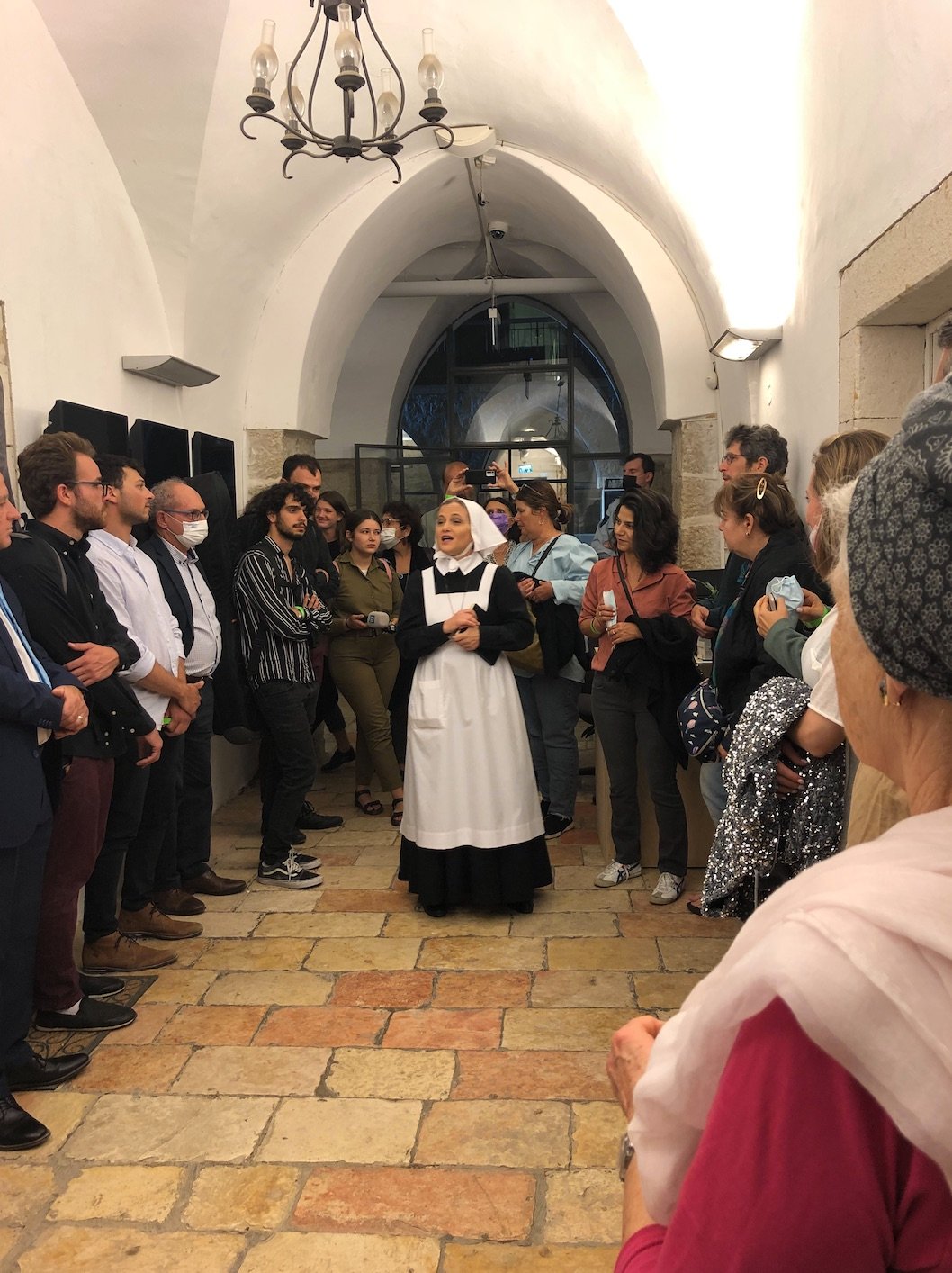
“I was kicked out of my village,” says Jamal, one of the leper patients. “No one wants me near them.”
David and Yaara are two leper patients in love but Yaara, who is Arab, is leaving the colony to go live at her brother’s house. And a new patient, an engineering student whose leprosy was recently discovered in his eye, is loath to leave his life and enter the colony, which is just a few blocks from his family’s home.
Just like the Peretz story in which two characters wait in the forest for the plague to end, this new take on that classic focuses on the lepers, those who have been left out of the community and act in a play about that very idea.
“They’re given the play to get over their fear of what they have to deal with,” said Kaplan. “It shows the power of theater even in pandemics and war. It’s like air for the soul.”
There are side jokes about Moderna vaccines and sanitizing gel, social distancing and quarantines, bringing the tale even closer to the realities at hand.
As Kaplan researched Hansen House to determine which time period to set the play in, she noted that 1950 was a complicated period for the asylum. It had been established in 1887 by the Protestant community, then purchased by the Jewish National Fund in 1950 following Israel’s independence, and remained active as a clinic until 2000.
When JNF took over the colony of Christians, Muslims and Jews living together, some of the Muslims left, said Kaplan.
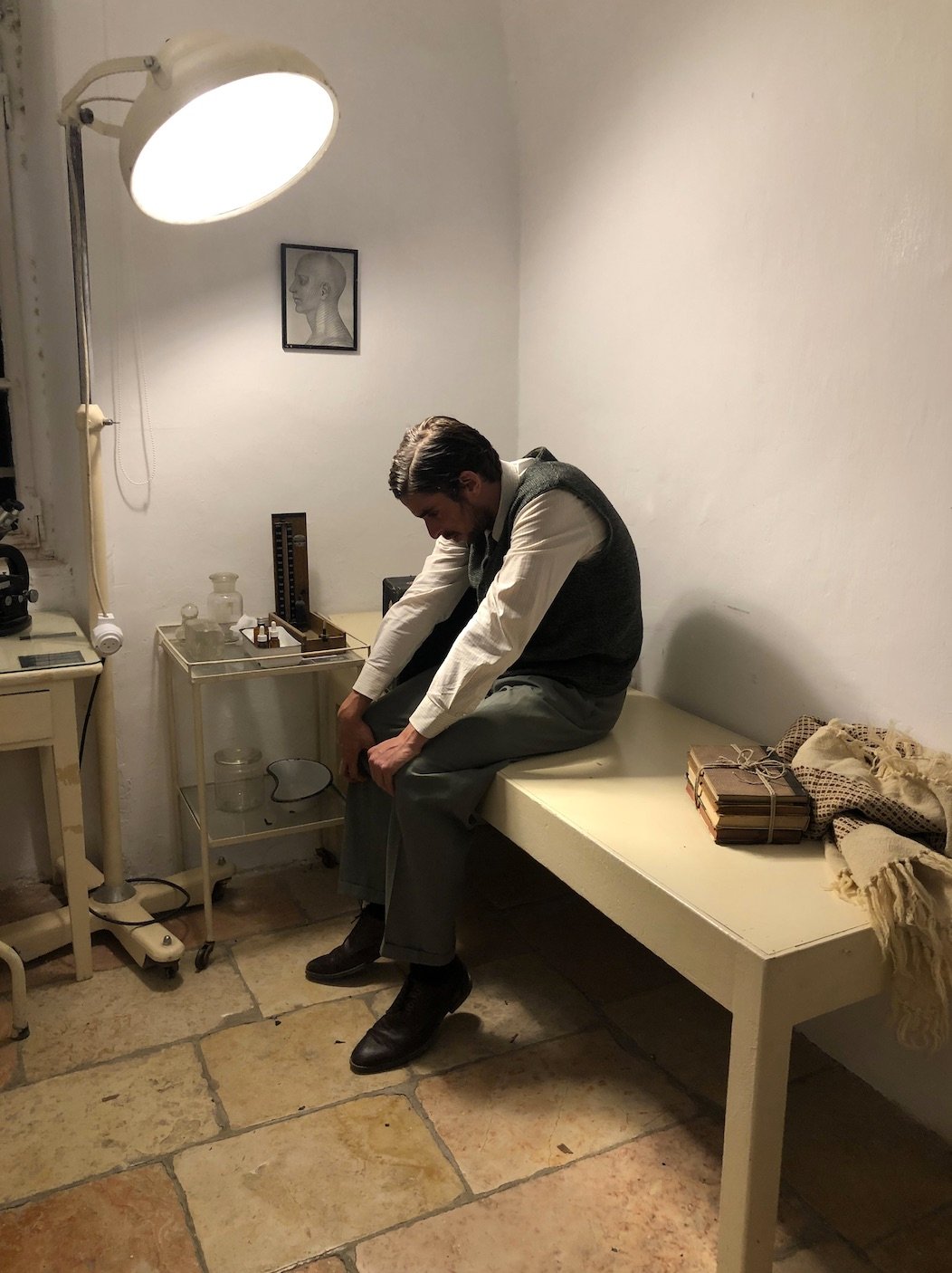
“There was a play of identities,” said Kaplan. “When you’re a leper, you’re no longer anything else, the leprosy takes all your identity. It changes your looks and distances you from your family. These people were behind the walls, they were brothers in leprosy.”
The concept of the play’s structure came to Kaplan when she toured Hansen with members of the Khan Theater staff, as they talked about ways to work together. Throughout the pandemic, Kaplan, a freelance theater director, wanted to do a play that would react to the coronavirus.
Kaplan and her troupe of Khan actors wrote the play together, rehearsing each new scene as it was written.
“It’s a redeeming kind of event. It takes the audiences into this space and breaks down the walls,” she said. “The audience needed it for their own catharsis.”










The Times of Israel Community.