

Annexation minus: 6 things to know for June 16
After UAE ambassador pens op-ed in Hebrew paper against Israeli sovereignty, former US peace envoy Jason Greenblatt weighs in, says the move is not illegal
 Add ToI as a Preferred Source on Google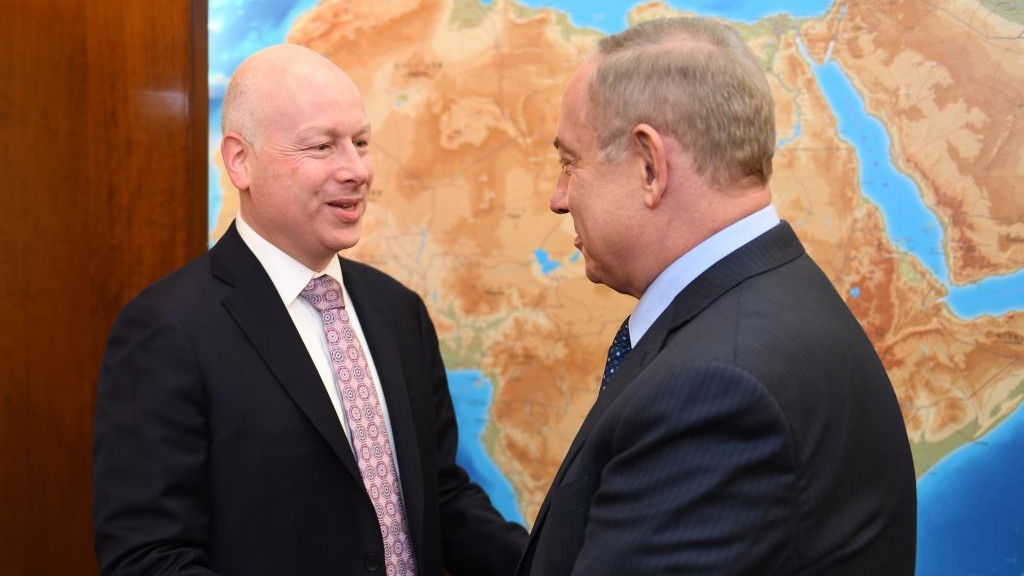
1. Will he or won’t he (annex): Fifteen days before Prime Minister Benjamin Netanyahu’s July 1 target date to begin annexation of portions of the West Bank, the prospect of a far-reaching move by that date appears increasingly unlikely.
- What could happen, pundits predict, is a more limited annexation next month. As Netanyahu has said in the past that the Palestinians could have a demilitarized “state minus,” by extension the Israeli step under consideration could be called “annexation minus.”
- “There is still no final map, no green light from the United States or agreements between coalition partners Likud and Blue and White,” writes Noa Landau in Haaretz. “Even the tiresome negotiations about extending the school year [due to the coronavirus] seem more promising at this stage than the negotiations on applying Israeli sovereignty to the territories.
- “However, in the past week, there is a growing sense among all involved in the issue, that a limited step [of annexation] is not off the table. The support of Blue and White for the process hinges on the ability to present the move as part of a broader diplomatic plan, or on the international and regional support or silence, or even accompanied by a gesture toward the Palestinians — and on it not being a unilateral move. It’s almost an impossible mission.”
- The United States has conditioned the advancement of annexation on the support of Netanyahu’s coalition partners, Defense Minister Benny Gantz and Foreign Minister Gabi Ashkenazi, according to reports and leaked comments by Netanyahu.
- But, notes Landau: “While Blue and White hopes to find a compromise that will magically transform a unilateral annexation into a diplomatic process, the coalition deal allows Netanyahu to try and gain US support for a limited move that he could then bring up for a vote. He has a majority. It’s only up to him and the Americans. In such a case, no one will be able to resolve Blue and White’s conundrum. Perhaps only the Palestinians, if they agree, despite it all, to come to the negotiation table.”
- In the pro-Netanyahu Israel Hayom, by contrast, the front-page headline cites a quote from the prime minister: “Going toward sovereignty, full steam ahead,” referring to annexation of the Jordan Valley and the settlements — some 30% of the territory.
2. Former architect of US peace plan weighs in: In an op-ed for the pro-Netanyahu Israel Hayom, former US negotiator Jason Greenblatt writes a column headlined: “Applying Israeli law in Judea and Samaria is not illegal.”
- He is responding to a Yedioth Ahronoth column by the UAE’s ambassador to the US, Minister of State Yousef Al-Otaiba, on Friday in which he warned Israel against annexation.
- Writes Greenblatt: “I will put it this way: I am forcefully opposed to parts of the ambassador’s column. For example, I do not agree that extending Israeli sovereignty to the areas under consideration is an illegal land grab. The US administration agrees with me, and that’s why President Donald Trump’s vision for peace enables this idea. I personally support the move, but my personal opinion is not relevant. I’m not Israeli. The decision on whether to advance this step must be taken by the democratically elected Israeli government.
- “I also strongly oppose the term ‘Palestinian territory.’ This is not Palestinian territory. This is disputed territory, and the only way to resolve this conflict is if both sides come to the negotiating table and try, together and directly, to reach an agreement. However, we have not managed to bring the sides to this situation, and that’s one of the main reasons we formulated the vision for peace in this formulation.”
- Greenblatt notes that he respects al-Otaiba and any position the UAE may adopt on annexation. But he underlines that the Gulf ambassador attended the unveiling of the US peace plan in Washington in January and says the burgeoning ties between Israel and Gulf states are more important than disagreements on the Palestinians.
3. How will Hamas respond? Meanwhile, security officials again complain to Haaretz they are being kept in the dark on annexation and therefore can’t prepare accordingly for a violent flare-up should it go ahead.
- “The IDF is refraining from taking a public stance on annexation, but privately officials say the security forces feel the main threat the army is meant to counter in the coming years is in the north. They say an escalation of violence in the West Bank could harm the preparedness for threats in this area [the northern border] and will force a reallocation of the army budget. The defense establishment is also concerned about the ramifications of annexation of the West Bank and Jordan Valley on relations with Jordan and Egypt and other Middle Eastern countries, which have been considered a moderating force in recent years.”
- “According to intelligence assessments, if annexation goes ahead, Hamas will feel compelled to respond,” adds Haaretz. “The assessments are that the organization will again send its fighters to clash with the security forces near the security fence, and a wider escalation in Gaza is also possible if serious clashes break out in the West Bank. In the meantime, security forces believe Hamas is not interested in an escalation of violence.”
- Hamas has warned it is planning a response to Israeli annexation. On Monday night, for the first time in months, a rocket was fired across the Gaza border, landing in an open area in southern Israel.
- The rocket fire came as another cache of Qatari aid was delivered to the Gaza Strip.
- According to Haaretz, negotiations for a possible swap between Israel and Hamas for the remains of Israeli soldiers and two live captives have been put on hold.
- “It appears the swap for the captives and missing that has been discussed recently is no longer on the agenda, and in recent weeks there have been no discussions between Israel and Hamas via mediators. Israel believes the organization, which feared a serious outbreak of the coronavirus in Gaza, is encouraged by the low infection rates and understands the Strip isn’t expected to suffer a real crisis. Therefore, the exchange, which included bringing medical equipment into the country, is no longer relevant.”
4. The virus is here, there, everywhere: COVID-19 infection rates are continuing to rise, albeit slowly, but health officials appear confounded by the pattern of the spread.
- Yedioth Ahronoth leads its coverage with an outbreak of the coronavirus at Tel Aviv’s Ichilov Hospital.
- Eleven staff members at the hospital have been diagnosed with the coronavirus. Three doctors, two nurses and six other staff members were diagnosed with the pathogen and the hospital believes the infection was spread during team meals during work as well as during a goodbye party for an intern, in which virus rules on mask-wearing and gatherings were not observed. The outbreak is concentrated in the internal medicine ward of the hospital.
- Both Yedioth and Haaretz note that south Tel Aviv and neighboring Jaffa are the new virus hotspots. Yedioth says that 324 people have been diagnosed with COVID-19 in the past two weeks from the city, 140 of whom are asylum seekers.
- It says 73% were infected “at home,” 10% were exposed to a sick person in a shared living space, 9% were exposed at school, 5% exposed during leisure activities and 3% in their workplace.
- But despite the rise in these areas, the Health Ministry has stressed that the virus is spreading across the country, with its sources largely eluding authorities.
- “Right now, we don’t have markers to detect who is spreading the virus, as we did in the beginning. We don’t know where we need to be particularly careful, and where we need to carry out more tests — and this is the problem,” Sigal Sadetzky, head of public health services in the Health Ministry, told the Kan public broadcaster on Monday.
- This is backed up by Health Ministry breakdown of data since the weekend, which has labeled 468 of the 648 cases diagnosed between June 12 and 15 as coming from towns and cities all around the country that are not flagged as having high infection rates. Just five of the new cases are found among Israelis who came from abroad.
5. Another health crisis evades notice: Yedioth also highlights disturbing figures from the Health Ministry signaling a sharp rise in strokes in the country in a four-year period.
- Between 2014 and 2018, the number of yearly stroke cases soared by a whopping 10 percent, rising from 17,001 to 18,930.
- It says 19% of patients who suffered a stroke in 2018 were under the age of 60.
- The report does not provide an explanation for the trend, but urges those who experience symptoms to immediately seek medical care.
6. Cash for lawmakers and businesses: The Knesset late Monday and Tuesday also advances two laws.
- It first passes a bill that allows ministers to give up their positions as Knesset members in order to enable a different member of their party slate to take their spot in parliament. The so-called Norwegian Law was approved in its second and third readings with 66 votes in favor and 43 against. It required a majority of 61 votes to pass.
- The Norwegian Law has faced criticism for increasing government expenditure by maintaining ministers as well as the lawmakers to taking their places in the Knesset.
- The law allows any MK who is appointed to a cabinet post to resign temporarily from the Knesset, thereby permitting the next candidate on the party’s list to enter parliament in his or her stead. Under the bill’s new rules, if that minister later resigns from the cabinet, they would automatically return to the Knesset.
- At least 12 ministers or deputies are expected to eventually use the Norwegian Law, introducing a similar number of new MKs to the Knesset at an estimated cost of around NIS 20 million ($5.7 million) a year.
- The Knesset in the early hours of Tuesday morning also approved a stimulus bill to grant funds to businesses that bring back workers who were placed on unpaid leave due to the coronavirus crisis.
- The measure will provide up to NIS 7,500 ($2,150) for each employee who returns to work in the month of June, and NIS 3,500 ($1,000) for each worker who came back in May.





The Times of Israel Community.