

As draft crisis escalates, Haredi leaders downplay danger to troops in war
Hardline rabbinic rhetoric now echoing across yeshivas, with students told those demanding they enlist are ‘stupid’ and ‘hate’ God, and that Torah study alone defends Israel
 Add ToI as a Preferred Source on Google
Sam Sokol is a former political correspondent at The Times of Israel. He was previously a reporter for the Jerusalem Post, Jewish Telegraphic Agency and Haaretz. He is the author of "Putin’s Hybrid War and the Jews"
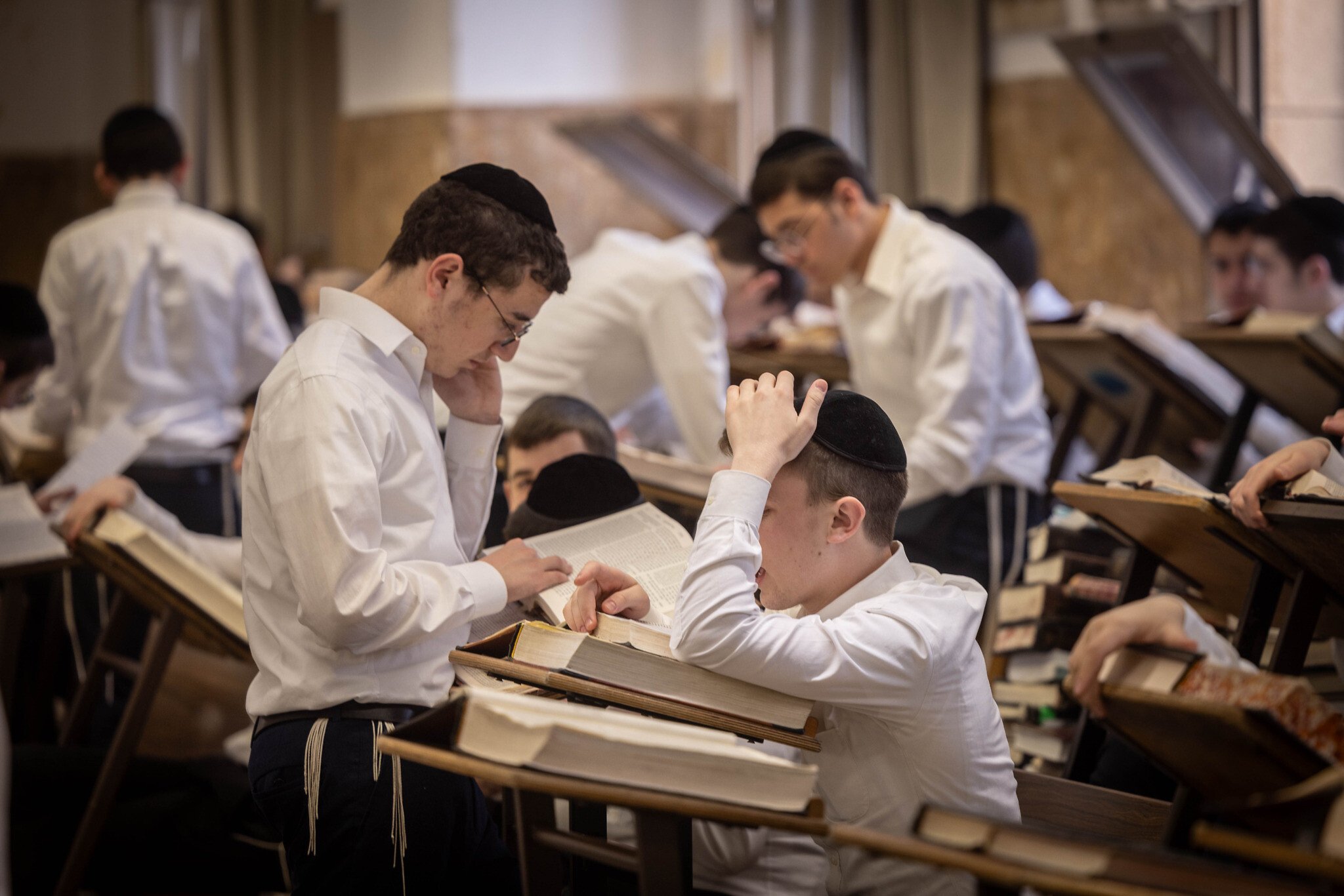
Addressing a conference of the Yeshiva Students’ Committee last Thursday evening, senior ultra-Orthodox politician Moshe Gafni (United Torah Judaism) slammed the government’s push to conscript yeshiva students, describing it as a “war against the Torah world” reminiscent of Roman religious persecutions.
While quickly condemned by both opposition and coalition lawmakers, Gafni’s was far from the most radical statement to come out of the conference, which highlighted a significant escalation in the ultra-Orthodox community’s rhetoric in response to the so-called “conscription crisis.”
This trend can be seen both in increasingly belligerent public statements by the country’s most prominent rabbis as well as newspaper headlines calling for a “war” against conscription. In one case, a well-known rabbi even called on yeshiva students to “desecrate Shabbat” if it helped them avoid the draft.
This is the rhetoric to which tens of thousands of ultra-Orthodox yeshiva students are being exposed — an uncompromising worldview that depicts non-Haredi Israelis as either evil or foolish, while downplaying the costs of the ongoing war in Gaza to justify refusal.
Rabbis in Haredi yeshivas tell their students that “the IDF is the worst thing that can be,” one Hasidic graduate of the yeshiva system, who plans on enlisting, told The Times of Israel on Wednesday.
In many yeshivas, students are told to stay away from the army, he said, speaking on condition of anonymity because of the sensitivity of the matter. When it comes to national religious Israelis who do serve and who are part of the push to draft Haredim, ultra-Orthodox leaders don’t refer to them as religious, he said. Under the influence of rabbis, the students say, “We will die and not be drafted.”
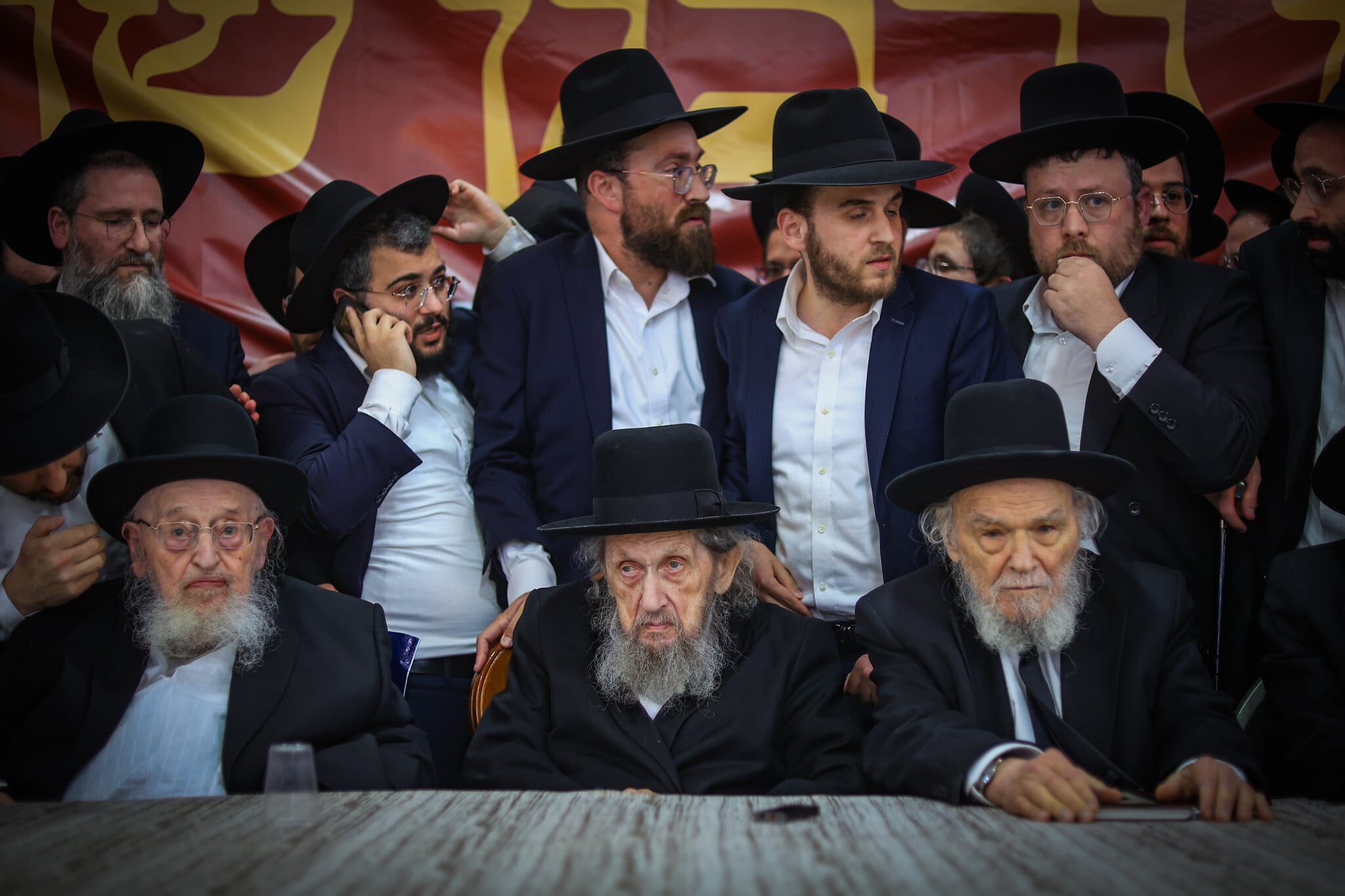
Last summer, the High Court of Justice ruled that longstanding mass exemptions for these yeshiva students were illegal. Since then, the IDF has significantly stepped up its efforts to recruit the eligible Haredi men, sending out 54,000 conscription orders in July alone.
Some 80,000 ultra-Orthodox men aged between 18 and 24 are currently believed to be eligible for military service, but have not enlisted. The Israel Defense Forces has said it urgently needs 12,000 recruits, due to the strain on standing and reserve forces amid the ongoing war against Hamas in Gaza and other military challenges.
‘We have no connection with them’
Addressing the same conference as Gafni last week, Chaim Peretz Berman, a top rabbi at Bnei Brak’s Ponevezh yeshiva, dismissed national-religious Israelis’ claim that they have paid a disproportionate price during the war while Haredim evade service, calling them “ignoramuses” who were “very, very, very stupid” for trying to teach Haredim how to observe the Torah.
Many Jews who advocate for Haredi military service “hate” God and the Torah and “are lying when they say they want us to go to the army,” he insisted, according to excerpts from his speech published in the Haredi press.
Rabbi Yigal Rosen, the dean of Petah Tikva’s Or Yisrael yeshiva, made similar comments at the gathering, saying only “a very low percentage” of those who serve in the military are risking their lives in combat, and that many are merely support personnel who are not on the front lines.
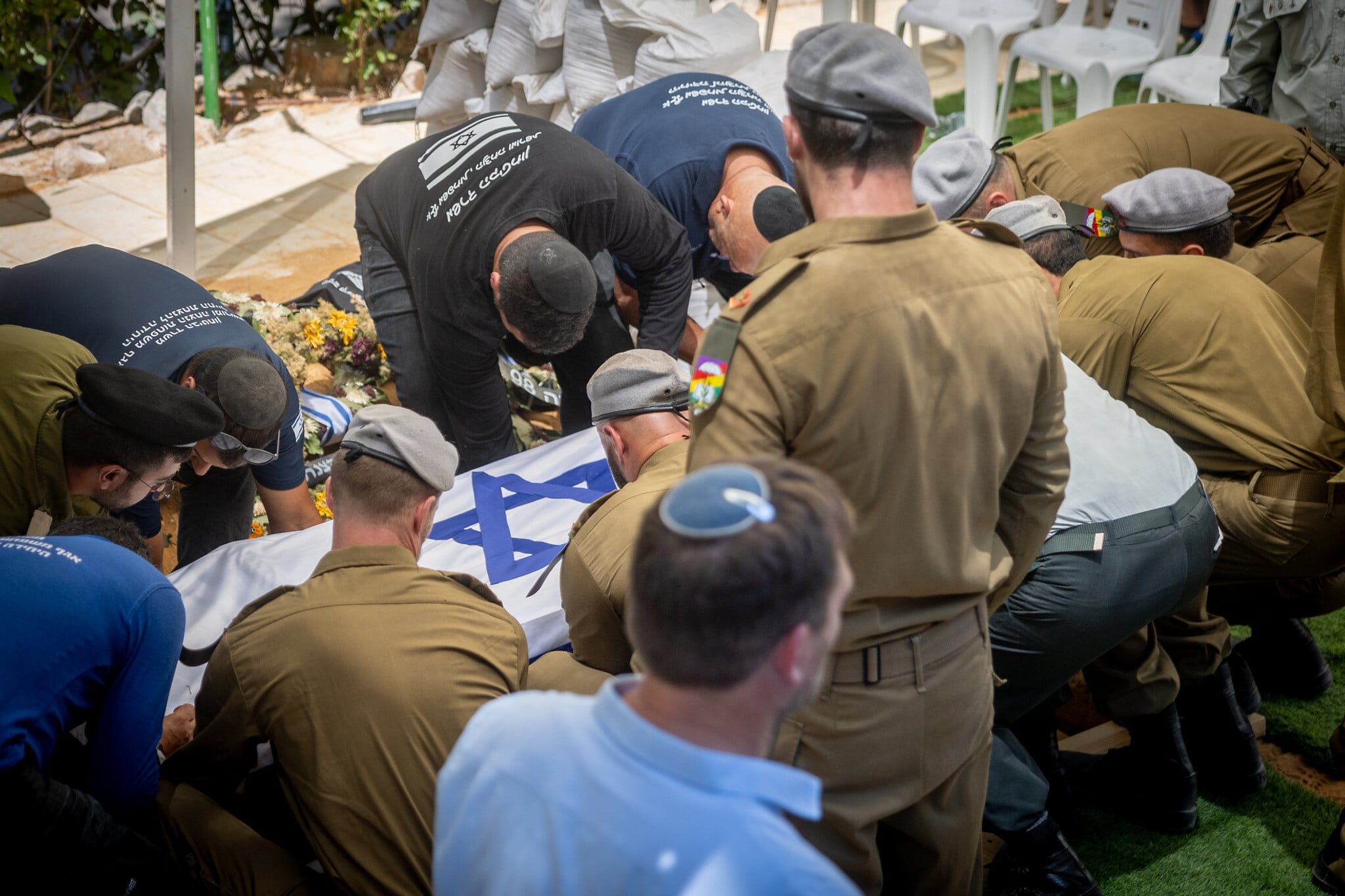
He wondered aloud how many Air Force personnel have died in Gaza. He suggested they should “go to Gaza, to Rafah, so that they’ll be at risk. Why shouldn’t they be at risk?”
“We and only we are the defenders” of Israel, he continued, arguing that “to come and say, ‘You’re not at risk, we’re at risk,’ is factually incorrect.”
Berman and Rosen’s comments echoed those of United Torah Judaism chairman Yitzhak Goldknopf, who last month sparked widespread outrage when he said it was none of the Haredi community’s concern if other Israelis are dying while fighting in a war, while they refuse to pitch in.
When asked about Haredi leaders’ new, more belligerent tone earlier this month, a senior Haredi political source told The Times of Israel that he believed the entire Haredi community “has now become the Jerusalem Faction,” referring to an extremist ultra-Orthodox group that regularly holds raucous demonstrations against the enlistment of yeshiva students.
Beyond dismissing the concerns of secular and national-religious Israelis, some rabbis have gone so far as to insist that the Haredi and non-Haredi communities constitute two distinct nations.
The current situation makes it “clear that there is the world of Torah, and there is the other side that we have no connection with, whether they have a kippah on their heads or not, we have no connection with them, these are two peoples that have no connection,” Rabbi Yisroel Bunim Schreiber, the dean of Jerusalem’s Netiv HaDaat yeshiva, recently declared.
Schreiber has a history of extreme statements. During a talk with yeshiva students in Jerusalem following October 7, he insisted that there was “no need to express gratitude to soldiers fighting in Gaza any more than to street cleaners.”
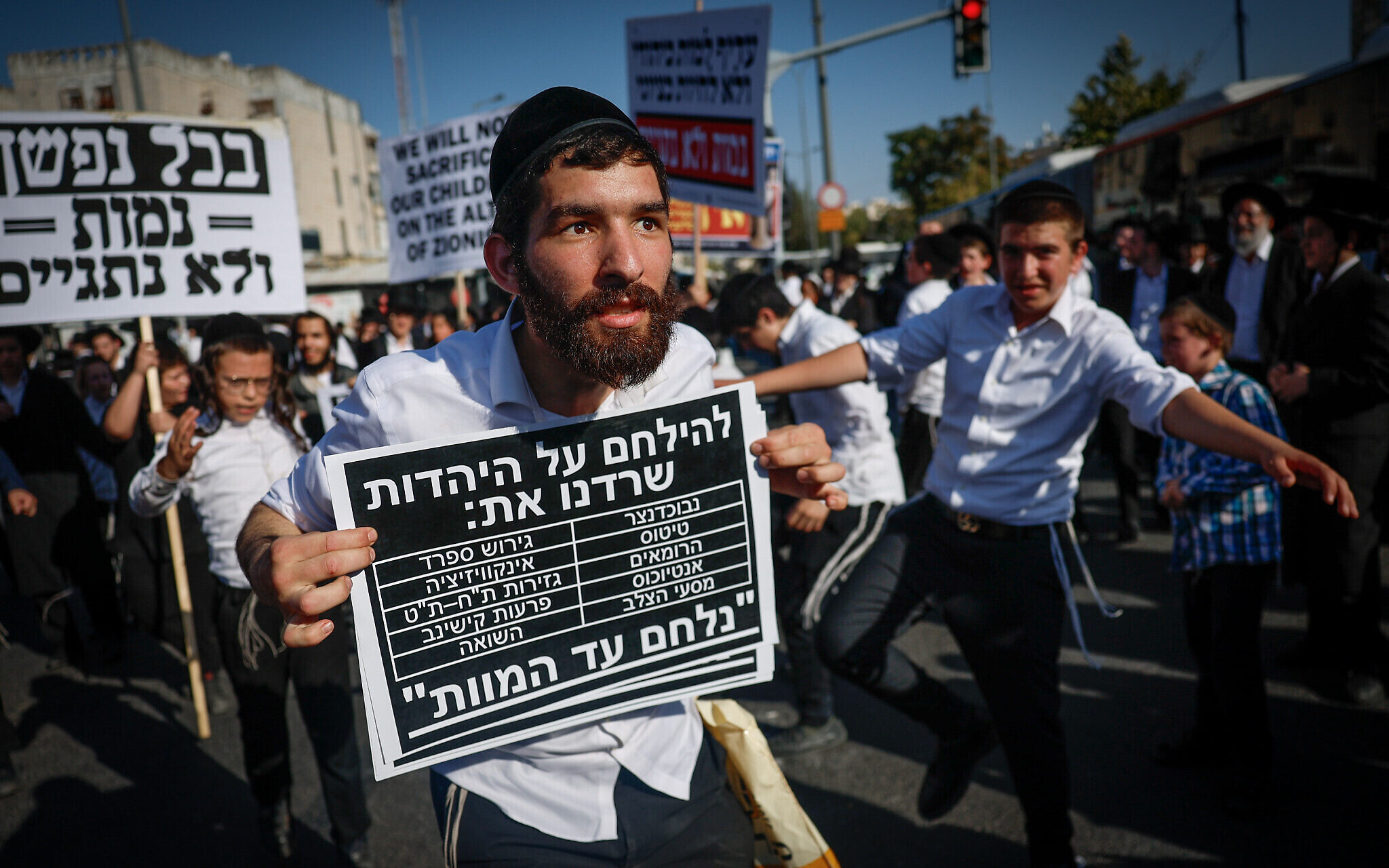
In fact, Schreiber said last week, far from focusing on the soldiers, the current war against Hamas should serve as a wake-up call to the Haredi community to focus more on their religious studies. He called the enlistment push a good thing because it would cause yeshiva students to stop taking learning for granted and “to increase the sense of the lofty goal of Torah study.”
“The Holy One, blessed be He, sent us a situation where we will study Torah despite the economic difficulty,” he said, referring to economic sanctions on draft dodgers.
During a recent talk with students at Bnei Brak’s Orchot Torah yeshiva, Rabbi Baruch Dov Diskin told students that while “everyone individually has nothing to fear,” the fact that God had allowed the current crisis to occur meant that the community should be concerned and strengthen its observance.
And while some yeshivas are sending their students to protest against the draft, Diskin seemed to advocate the opposite approach, telling his listeners to ignore what was happening outside the walls of the study hall.
“The less you hear, the less worries you have,” he said.







The Times of Israel Community.